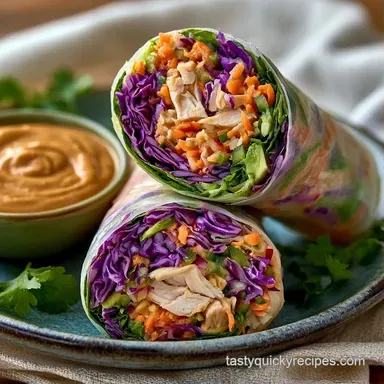
Healthy Chicken Vegetable Rice Paper Rolls
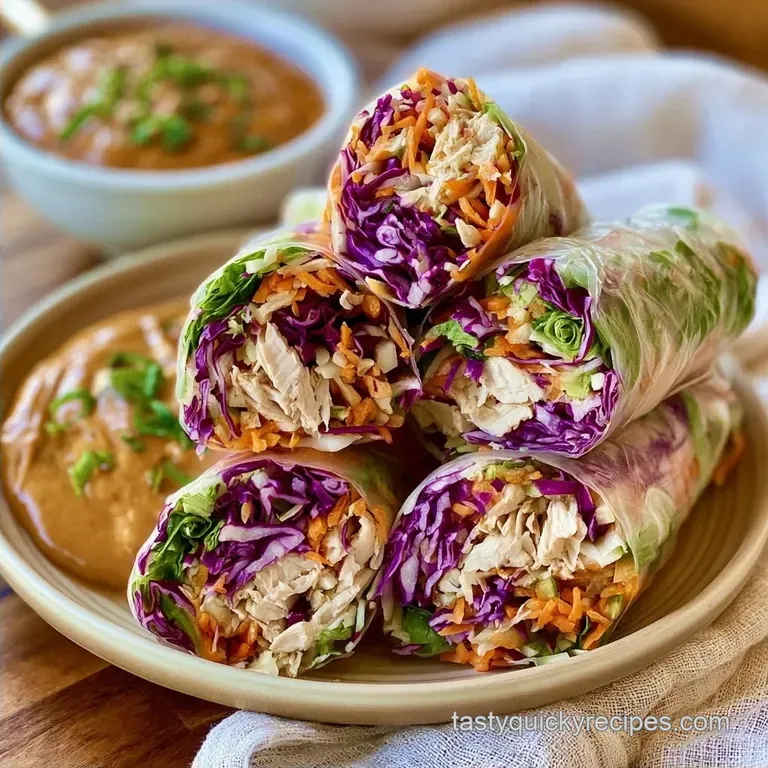
- Time: 20 min active + 10 min cook
- Flavor/Texture Hook: Crunchy, fresh vegetables with a rich, savory peanut dip
- Perfect for: High protein meal prep or a light, energizing lunch
- Fresh and Healthy Chicken Rice Paper Rolls
- What Each Ingredient Does
- The Basic Tool Kit
- Putting Your Rolls Together
- Preventing Common Rolling Errors
- Troubleshooting Common Issues
- Smart Swaps and Variations
- Scaling Your Batch
- Debunking Common Myths
- Storage and Zero Waste
- The Best Serving Pairings
- Recipe FAQs
- 📝 Recipe Card
The scent of fresh mint and lime always takes me back to the street stalls of Ho Chi Minh City. In Vietnam, these rolls are more than just a snack. They represent a balance of elements, cooling the body during humid afternoons with raw vegetables and light proteins.
It's a dish meant to be shared, assembled with care, and eaten with your fingers.
I love how this recipe brings that same nourishing energy into a modern kitchen. We're combining lean protein with a rainbow of raw produce to keep you from that midday slump. These Chicken Rice Paper Rolls are a great way to pack nutrients without feeling weighed down.
You can expect a meal that feels light but keeps you full. The key is in the contrast, pairing the warmth of the seared chicken with the snap of cold cabbage and carrots. Let's get into how to make these without the wrappers splitting.
Fresh and Healthy Chicken Rice Paper Rolls
The goal here is nourishment. Most people struggle with the rice paper, but it's actually quite simple once you understand how the water interacts with the starch. We want the wrap pliable, not mushy.
Structural Base: Placing the lettuce and chicken first creates a flat platform. This stops the smaller veggies from poking through the paper.
Protein Prep: Searing the chicken quickly keeps it juicy. This provides the savory depth needed to balance the fresh mint.
Fast vs. Classic Methods
| Feature | Fast Sear (This Recipe) | Classic Poach | Impact |
|---|---|---|---|
| Cook Time | 10 minutes | 20 minutes | Saves time |
| Flavor | Savory, browned | Mild, clean | More depth |
| Texture | Firm bite | Soft, tender | Better crunch |
What Each Ingredient Does
Getting the balance right ensures the rolls don't fall apart. Every item has a job, from the acidity in the sauce to the fiber in the cabbage.
| Ingredient | What It Does | Best Swap |
|---|---|---|
| Rice Paper | Holds everything together | Soy based wraps (for soy free) |
| Peanut Butter | Adds creaminess and fats | Almond butter (nutty flavor) |
| Butter Lettuce | Provides a structural wall | Romaine (sturdier but tougher) |
| Vermicelli | Adds bulk and chew | Thin rice noodles or shredded cabbage |
The Basic Tool Kit
You don't need much for this. A large skillet for the chicken and a wide, shallow bowl for the water are the essentials.
I suggest using a flat plastic cutting board for the rolling process. The rice paper can stick to wooden or stone surfaces, making it a pain to lift. A simple whisk is also necessary for the sauce to ensure there are no clumps of peanut butter.
Putting Your Rolls Together
Phase 1: Rapid Protein Prep
- Toss sliced chicken breast with soy sauce, sesame oil, and minced garlic in a bowl. Note: This marinates the meat while you prep veggies.
- Heat neutral oil in a skillet over medium high heat.
- Sear chicken in a single layer for 3–4 minutes per side until golden brown and cooked through.
- Remove from heat and let rest for 5 minutes. Note: Resting keeps the juices inside the meat.
Phase 2: The Veggie Mise en Place
- Julienne the carrots, cucumber, and cabbage into thin, matchstick strips.
- Whisk peanut butter, hoisin, lime juice, and soy sauce in a small bowl.
- Gradually whisk in warm water and sriracha until a velvety, pourable consistency is reached.
Phase 3: The Precision Roll
- Dip a rice paper sheet in warm water for a few seconds until pliable, then lay it flat.
- Layer butter lettuce and cooked chicken in the center. Note: This creates the base.
- Add carrots, cucumber, cabbage, mint, cilantro, and vermicelli noodles on top.
- Fold in the sides and roll tightly from the bottom up to secure the Chicken Rice Paper Rolls.
Chef's Note: If you're in the mood for something without meat, my Vegetable Rice Paper Rolls are just as refreshing.
Preventing Common Rolling Errors
The most frustrating part of this recipe is when the paper rips. Usually, this happens because of over hydration or over stuffing. If the paper feels too slippery, you've soaked it too long.
Troubleshooting Common Issues
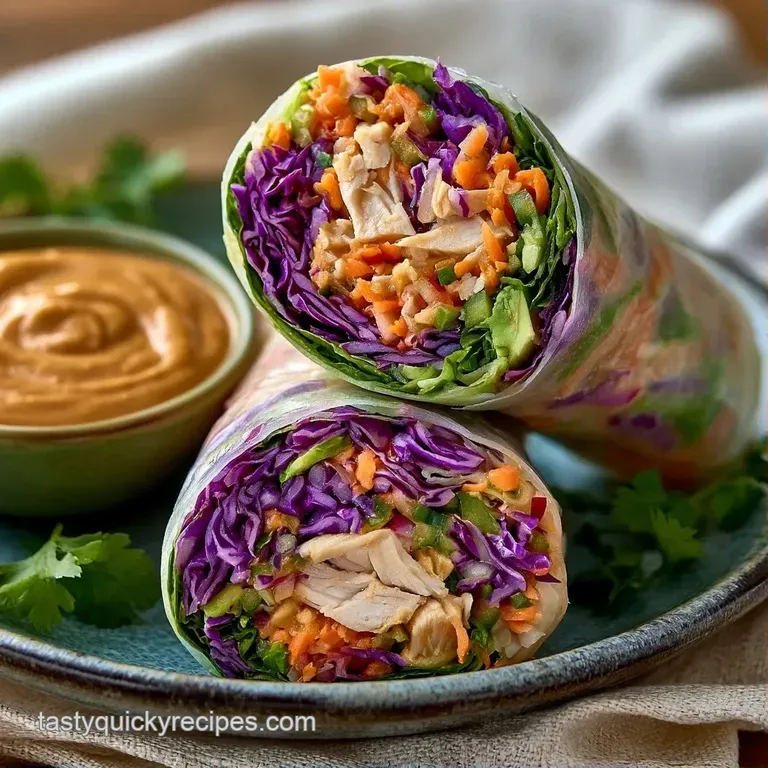
| Issue | Solution |
|---|---|
| Why Your Wrapper Tears | Tearing often happens when the filling is too bulky or the paper is too wet. If you pile the vegetables too high in the center, the tension snaps the rice paper. Keep your piles lean and long. |
| Why Your Sauce Separates | Peanut butter is a fat, and lime juice is water. If they aren't whisked properly, they split. Adding the warm water slowly helps the emulsion stay stable. |
| Why Your Rolls Stick | Rice paper is naturally sticky. If you lay the finished rolls directly on each other, they will fuse into one giant mass. Quick Fix Table |
Smart Swaps and Variations
You can easily tweak this to fit your dietary needs. The beauty of these rolls is that the filling is modular. For a low carb version, simply skip the vermicelli noodles and double the shredded cabbage.
If you want a vegan swap, replace the chicken with smoked tofu strips. Sauté them with the same soy and garlic marinade for a similar savory hit. For an extra zesty kick, add a pinch of lime zest directly into the chicken marinade.
You can also whip up a peanut sauce in 5 minutes if you want a different flavor profile.
Modification Guide
| Original Ingredient | Substitute | Why It Works |
|---|---|---|
| Chicken Breast | Smoked Tofu | Similar texture. Note: Great for vegan diets |
| Peanut Butter | Tahini | Creamy and nutty. Note: More earthy, less sweet |
| Butter Lettuce | Kale | More nutrients. Note: Much tougher to roll |
Scaling Your Batch
When making a larger amount of Chicken Rice Paper Rolls, don't try to sear all the chicken at once. If the pan is too crowded, the meat will steam instead of brown, and you'll lose that savory crust. Work in two batches to keep the heat high.
For the peanut sauce, you can double the recipe easily. However, only increase the sriracha by 1.5x. Heat builds up quickly in larger volumes, and you don't want the spice to overpower the lime.
If you're cutting the recipe in half, use 4 sheets of rice paper and 1/2 lb of chicken. Reduce the searing time slightly as smaller batches often cook faster.
Debunking Common Myths
One common belief is that searing meat "seals in the juices." This is simply not true. Moisture loss happens regardless of how you start the cook. The sear is actually about flavor, creating a brown crust that adds depth.
Another myth is that you need to soak rice paper for several minutes. In reality, a 3 to-5 second dip is enough. The paper continues to soften as you lay it on the counter. If you soak it too long, it becomes impossible to handle.
Storage and Zero Waste
Store these rolls in an airtight container lined with a damp paper towel. This prevents the rice paper from drying out and becoming rubbery. They stay fresh in the fridge for about 2 days.
I don't recommend freezing these. The raw vegetables will release water as they thaw, turning your rolls into a soggy mess. If you must prep ahead, store the fillings separately and roll them fresh.
To avoid waste, use your leftover veggie scraps. The ends of the carrots and cabbage can go straight into a freezer bag for future stocks. Since we use chicken breast here, you won't have bones, but if you use thighs, save those for a quick broth.
The Best Serving Pairings
These rolls are a complete meal, but they shine when paired with other light Vietnamese inspired sides. A chilled glass of iced tea with lime helps cut through the richness of the peanut sauce.
For a fuller spread, serve them alongside a fresh papaya salad or a bowl of steamed edamame. This makes the Chicken Rice Paper Rolls the center of a balanced, energizing platter.
If you have leftover peanut sauce, it works as a great dip for raw celery or apple slices the next morning. It's a simple way to keep your energy up between meals.
Recipe FAQs
What do you put in chicken rice paper rolls?
Sautéed chicken breast and fresh vegetables. Fill the wrappers with seared chicken, carrots, cucumber, red cabbage, vermicelli noodles, butter lettuce, mint, and cilantro.
Are rice paper rolls actually healthy?
Yes, they are highly nutritious. They combine lean protein from chicken breast with a variety of raw vegetables and fresh herbs.
What are common mistakes when making rice paper rolls?
Overfilling the wrapper or over soaking the paper. Too much filling creates tension that snaps the rice paper, while too much water makes the wrapper fragile and sticky.
What are Vietnamese rice paper spring roll wrappers?
Dried sheets made from rice flour and water. Once dipped in warm water, they become pliable and translucent, acting as a thin skin for the fillings.
How to eat Vietnamese rice paper rolls?
Dip them into the peanut sauce. Use the sauce made from peanut butter, hoisin, lime juice, and sriracha to add a creamy, savory contrast to the fresh vegetables.
Is it true that rice paper rolls can be frozen for later?
No, this is a common misconception. Freezing causes raw vegetables to release water during thawing, which turns the rolls into a soggy mess.
How to prevent the rice paper from tearing?
Keep the filling piles lean and long. Avoid piling vegetables too high in the center to reduce tension on the wrapper. If you enjoyed mastering this balance of textures, see how we manage similar hearty components in our smoky blackeyed peas.
Chicken Rice Paper Rolls