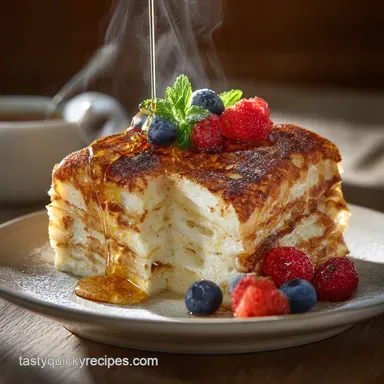
Hootenanny Giant Puffed Pancake

- Time: 5 min active + 25 min baking + 2 min rest
- Flavor & Texture: Crispy, browned edges with a tender, custardy center
- Perfect for: A wholesome weekend brunch for a group
Hootenanny The Classic Giant Puffed Pancake
Have you noticed how some pancakes remain flat while others scale the sides of the pan like a golden fortress? This is far from your typical griddle cake. It's a baked masterpiece that uses heat and air, not baking powder, to achieve its lift.
This dish delivers a great boost of morning fuel. The blend of eggs and whole milk provides lasting nourishment, ensuring you stay full and sharp until the afternoon.
Expect a magnificent rise during baking, followed by a gentle deflation as it cools. It's a visually impressive way to serve a group without the hassle of flipping cakes individually for an hour.
Recipe Quick Specs
This recipe is designed for a 10 inch skillet. It yields 6 generous wedges.
| Method | Time | Texture | Best For |
|---|---|---|---|
| Classic Oven | 32 mins | Towering and crisp | Special brunch |
| Stovetop | 10 mins | Flat and soft | Fast weekdays |
Gathering Your Essentials
- 1/2 cup whole milk
- 3 large eggs
- 1/2 cup all-purpose flour
- 1 tbsp granulated sugar
- 1/2 tsp salt
- 1 tsp vanilla extract
- 3 tbsp unsalted butter
For a puff that reaches the rim, you need ingredients that create a stable but airy structure. The eggs provide the lift, while the flour gives it enough body to hold the shape.
Whole milk adds a rich, creamy base that keeps the center tender. If you use low-fat milk, the pancake may not brown as deeply. The touch of sugar helps the edges caramelize, giving you those toasted notes that contrast with the soft middle.
| Original Ingredient | Substitute | Why It Works |
|---|---|---|
| Whole Milk (1/2 cup) | Oat Milk (labelled gluten-free) (1/2 cup) | Similar thickness. Note: Adds a subtle nutty flavor |
| AP Flour (1/2 cup) | gluten-free Blend (1/2 cup) | Provides structure. Note: Texture will be slightly denser |
Equipment You'll Need
A 10 inch cast iron skillet is the gold standard here. Cast iron holds heat better than any other material, which is what forces the batter to climb.
You'll also need a blender. While you can whisk the batter by hand, a blender incorporates more air and ensures there are no lumps. A smooth batter is the only way to get a consistent puff.
How to Make It
Phase 1: Preparing the Heat
Place your 10 inch cast iron skillet inside the oven. Preheat the oven to 425°F (220°C). The pan must be searing hot before the batter hits it.
Phase 2: Creating the Smooth Batter
Put 1/2 cup whole milk, 3 large eggs, 1/2 cup all-purpose flour, 1 tbsp granulated sugar, 1/2 tsp salt, and 1 tsp vanilla extract into a blender. Process for 20-30 seconds until the batter is completely smooth and slightly frothy. This ensures a velvety texture.

Phase 3: The Sizzle and Bake
Carefully pull the hot skillet from the oven. Drop in 3 tbsp unsalted butter. Swirl the pan until the butter is melted and bubbling.
Immediately pour the batter into the center of the pan. Let it spread naturally. Do not stir it. Return the skillet to the oven.
Bake for 20-25 minutes. Do not open the oven door. You want the edges to be deeply golden and the center to be set. The internal temperature should reach 160°F/71°C. The center should still have a slight jiggle.

Phase 4: Finishing Touches
Remove the skillet from the oven. Let the pancake rest for 2 minutes. This allows the structure to firm up before you slice it into 6 wedges.
Fixing Common Issues
Pancake Didn't Puff
This usually happens because the skillet wasn't hot enough. If the butter isn't sizzling and bubbling the moment you pour the batter, the steam won't form quickly enough to push the edges upward. Make sure the pan preheats for the full time.
Gummy Center
A gummy middle often means the oven door was opened too early. The sudden drop in temperature causes the steam to condense and the structure to collapse before the flour and eggs are fully set. Trust the timer and resist the urge to peek.
Rapid Deflation
It is natural for the pancake to sink slightly after leaving the oven. To minimize this, let it rest for exactly 2 minutes. Slicing too early can cause the steam to escape too quickly, leading to a flatter result.
Mix Up Your Toppings
The classic way is a squeeze of lemon and a dusting of powdered sugar. But you can lean into different flavors to change the mood of your meal.
The Sweet Route
I like adding a handful of fresh blueberries or sliced bananas to the center of the pancake immediately after it comes out of the oven. A drizzle of maple syrup or a dollop of Greek yogurt adds a nice protein boost.
The Savory Twist
Skip the sugar and vanilla in the batter. Instead, add a pinch of black pepper and some grated parmesan cheese. Top the finished pancake with smoked salmon or sautéed spinach and a poached egg for a savory nourishment.
Leftovers and Prep
Batter Storage
You can prepare the batter up to 2 hours in advance. Keep it refrigerated, but let it rest at room temperature for 30 minutes before baking to help with the rise.
Reheating Tips
Skip the microwave, as it can make the crust rubbery. Instead, warm slices in a toaster oven or heat at 350°F (175°C) for 5 minutes to restore the crispness of the edges.
Zero Waste
If there is a bit of batter left in the blender, pour it into a small greased ramekin and bake it along with the main pancake for a tiny extra treat.
What to Serve Beside

Since this is a rich, energizing dish, pair it with something bright and fresh. A side of sliced oranges or a bowl of mixed berries cuts through the richness of the butter and eggs.
For extra protein, serve it with beef bacon or turkey sausage. A hot cup of black coffee or a glass of cold orange juice completes the meal.
How It All Puffs
Heat Reaction: The scorching cast iron pan creates an immediate sear on the bottom. This anchors the batter and forces the expansion to move upward.
Steam Action: Since baking powder isn't used, the lift comes from the moisture in the milk and eggs. As these heat up, they turn into steam, inflating the batter like a balloon.
Recipe FAQs
Why did my Hootenanny fail to puff up or collapse immediately?
Opening the oven door during baking causes the temperature to drop and the pancake to deflate.
Tip: Keep the door closed until the full 20–25 minutes have passed.
Are Dutch babies very eggy?
The high ratio of eggs to flour creates the characteristic custard-like center and high rise.
Tip: Ensure the batter is processed until completely smooth to help the pancake lift.
Is it normal for the butter to smoke slightly?
Yes, the butter should be bubbling and smoking slightly to ensure the batter puffs immediately upon contact.
Tip: Pour the batter into the pan quickly to maintain the high skillet heat.
Would a baking dish work instead of a cast iron skillet?
A metal baking dish works, though it does not distribute heat as evenly as cast iron.
Tip: Preheat the dish in the oven just as you would with the skillet.
Giant Puffed Pancake in 32 Minutes