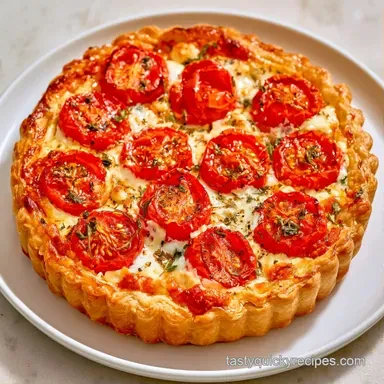
Tomato Goat Cheese Tart with Puff Pastry
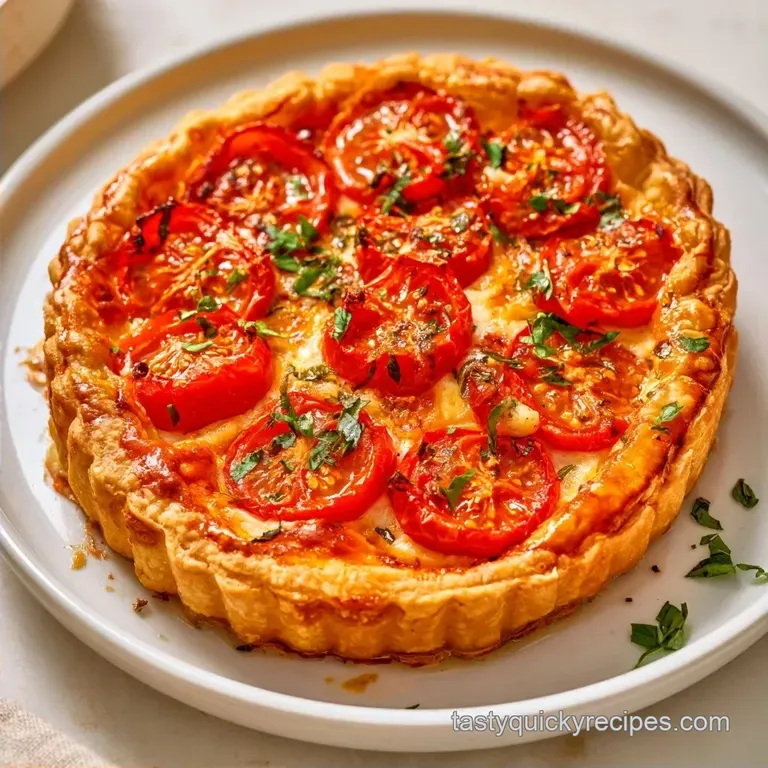
- Time: 15 min active + 25 min bake
- Flavor/Texture Hook: Shattering crisp pastry with creamy, tangy cheese
- Perfect for: A hearty brunch or a satisfying appetizer
- Simple Tomato Goat Cheese Tart Recipe
- Why These Flavors Just Work
- Gathering Your Essentials
- Tools for the Job
- Putting the Tart Together
- Fixing Common Tart Issues
- Changing Up the Flavors
- Adjusting the Recipe Size
- Debunking Tart Myths
- Storing and Saving Leftovers
- What to Serve Alongside
- Recipe FAQs
- 📝 Recipe Card
Simple Tomato Goat Cheese Tart Recipe
Picture the crunch of a golden, flaky pastry giving way under your fork. Then comes the punch of zesty, creamy goat cheese balanced by the intense, concentrated sweetness of roasted tomatoes. This combination transforms a mundane midday meal into something that feels like a decadent occasion.
I learned the hard way why the process matters. At a gathering years ago, I tried to cut corners by omitting the layer of cheese. The outcome was a limp, soggy disappointment essentially tomato soup on a damp cracker. That failure taught me the precise technique needed to ensure a firm, delicious tart.
This Tomato Goat Cheese Tart prioritizes structural integrity. By pairing a rich, buttery crust with a vibrant topping, you get a dish that feels sophisticated without being heavy. It’s a fast kitchen victory that looks high effort, achieved through a few clever shortcuts.
Why These Flavors Just Work
The Cheese Buffer: Applying goat cheese directly to the dough forms a protective fat layer. This prevents tomato juices from soaking in, ensuring the base remains crisp rather than soggy.
High Heat Burst: A temperature of 400°F (200°C) forces the puff pastry to expand quickly. This helps the layers lift and gives the edges a rich, deep brown color.
DIVTABLE_0
Before starting the process, here is a breakdown of how the ingredients work together. If you have noticed tarts becoming soggy, the culprit is typically excess moisture. Cherry tomatoes are ideal here as they retain their structure better than larger sliced varieties.
Gathering Your Essentials
For the base, you'll want a high-quality frozen puff pastry. I usually go with a brand like Pepperidge Farm because it's consistent. The goat cheese should be softened to room temperature, which makes it way easier to spread without tearing the delicate dough.
What Each Ingredient Does
| Component | Purpose | Substitute Notes |
|---|---|---|
| Puff Pastry | Provides a buttery, crisp base | Phyllo dough: Lighter but more fragile |
| Goat Cheese | Adds tang and blocks moisture | Feta: Saltier and grainier |
| Cherry Tomatoes | Concentrated sweetness | Grape tomatoes: Slightly firmer |
| Balsamic Glaze | Adds a sweet, acidic finish | Honey: Sweeter but lacks the acidity |
The Shopping List
- 1 sheet (17.3 oz / 490g) frozen puff pastry, thawed Why this? High fat content ensures a hearty rise
- 1 tbsp (15ml) olive oil
- 4 oz (113g) goat cheese, softened Why this? Creates a moisture barrier and adds tang
- 1 ½ cups (225g) cherry tomatoes, halved
- 1 tsp (2g) dried oregano
- ½ tsp (1g) flaky sea salt
- ¼ tsp (1g) cracked black pepper
- 2 tbsp (8g) fresh basil leaves, torn
- 1 tsp (5ml) balsamic glaze
Tools for the Job
While you don't need professional equipment, a few specific items will simplify the process. A large baking sheet is essential, and parchment paper is a must; baking puff pastry directly on a metal pan usually results in a sticky mess.
I suggest using a small offset spatula for the cheese, though a dull butter knife works just as well. You want to create a smooth, even layer that covers the surface but leaves the outer edge clear.
Putting the Tart Together
Preparing the Canvas
Set your oven to 400°F (200°C). Line a baking sheet with parchment paper to ensure the tart doesn't stick. Unroll the puff pastry and use a knife to lightly score a 1 inch border around the edge.
Be careful not to cut through the dough completely; you are simply creating a guide for the pastry to rise and form a natural frame for your toppings.
Layering the Flavors
Spread the softened goat cheese evenly inside the scored area, using a spatula to press it right up to the line. Arrange the halved cherry tomatoes cut side up on top of the cheese; this prevents the juices from soaking into the cheese too quickly.
Brush the exposed pastry edges with olive oil for a golden, glossy finish. Season the entire tart with dried oregano, salt, and black pepper.
The Golden Bake
Place the tray on the center oven rack. Bake for 20–25 minutes until the pastry is mahogany colored and the tomatoes have slightly charred at the edges. The edges of the tart should be puffed and standing tall.
The Finishing Touch
Remove the pan from the oven and allow the Tomato Goat Cheese Tart to rest for 5 minutes. This step is essential for the cheese to set, making it easier to slice without the toppings shifting. Just before serving, garnish with torn fresh basil and a drizzle of balsamic glaze.
Fixing Common Tart Issues
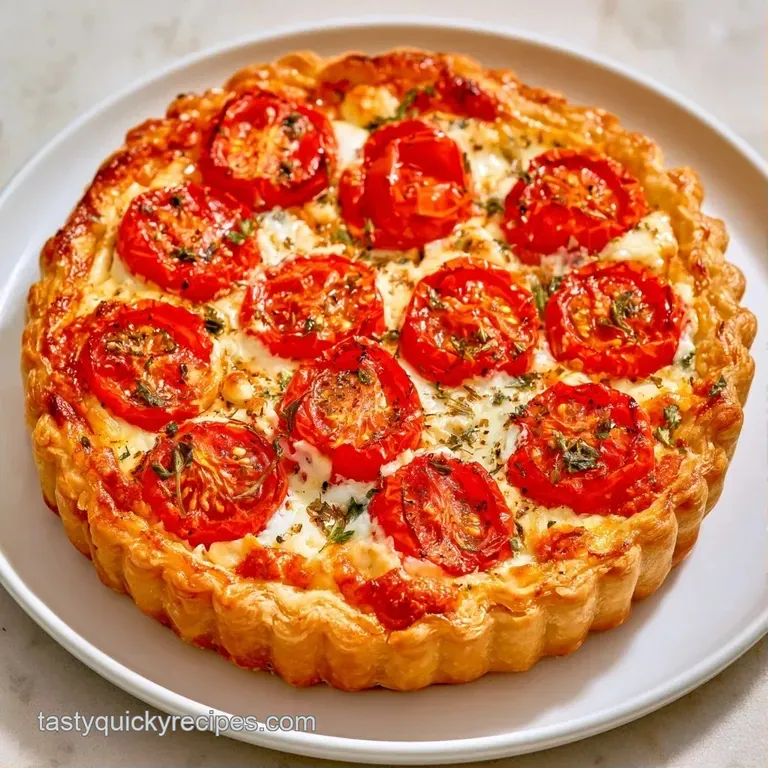
When you're first making a Tomato Goat Cheese Tart, you might run into a few hiccups. Most of them come down to temperature. If your puff pastry is too warm, it loses its structure and won't puff up. If it's too cold, it might crack when you try to unroll it.
Fixing the Soggy Center
This usually happens if the tomatoes were too wet or if the cheese layer was too thin. If you're using very juicy tomatoes, slice them and let them sit on a paper towel for 10 minutes first. Serious Eats' testing shows that draining moisture from vegetables prevents a gummy crumb in baked goods.
Preventing Cheese Burn
If your oven runs hot, the goat cheese can brown too quickly before the pastry is cooked through. If you see the cheese darkening too fast, just slide a piece of foil loosely over the top for the last 5 minutes.
Handling Warm Dough
If the dough feels sticky or starts to stretch, put it back in the fridge for 10 minutes. It needs to be cool to keep those layers of butter separate.
| Problem | Fix |
|---|---|
| Soggy bottom | Drain tomatoes on paper towels |
| Flat edges | Ensure oven is fully preheated to 400°F |
| Burnt cheese | Cover loosely with foil |
Changing Up the Flavors
After mastering the standard Tomato Goat Cheese Tart, feel free to experiment with the toppings. I enjoy placing thinly sliced red onion beneath the tomatoes for a bit of zing. You can also replace the oregano with fresh thyme if you prefer a more earthy flavor.
To change things up, try substituting the goat cheese with a thin layer of Marinara Sauce. This shifts the flavor profile toward a deep dish pizza, though it is less tangy than the original version.
When including this in a larger spread, it pairs wonderfully with a Mediterranean Pasta. The tart's bright acidity balances the heartiness of the pasta, ensuring the whole meal feels cohesive.
Chef Note: For an extra salty punch, sprinkle some grated Parmesan over the goat cheese before layering the tomatoes. This creates a savory crust that's hard to beat.
Decision Shortcut:
- For a crispier base: bake on a preheated baking sheet.
- For more tang: stir a teaspoon of lemon zest into the goat cheese.
- For sweeter tomatoes: roast the halves for 5 minutes before assembling.
Adjusting the Recipe Size
If you're feeding a crowd, it's easy to double this recipe. Just use two sheets of puff pastry and two separate baking sheets. Don't try to crowd too many toppings onto one sheet, or the steam won't escape, and you'll end up with that soggy bottom we're trying to avoid.
For a smaller appetite, you can cut the pastry sheet in half. This makes two smaller rectangular tarts. Reduce the bake time by about 5 minutes, as the smaller mass will heat through faster.
When doubling, keep the salt and oregano at about 1.5x rather than a full 2x. Spices can sometimes become overwhelming when scaled up linearly.
Debunking Tart Myths
You might hear people say you need to blind bake puff pastry to keep it from getting soggy. That's not true here. Because we're using a thick layer of goat cheese as a fat barrier, the dough is protected from the vegetable juices.
Another common mistake is adding fresh basil before the tart goes in the oven. Trust me, don't do this. Fresh basil turns black and tastes bitter when exposed to high heat for 20 minutes. Always add your fresh herbs after the bake.
Storing and Saving Leftovers
This Tomato Goat Cheese Tart is best fresh, but leftovers are still great. Store any remaining slices in a plastic tub and keep them chilled for about three days. To avoid the dreaded "reheat sogginess," don't use the microwave.
Instead, pop the slices back in the oven at 350°F (175°C) for about 8 minutes. This crisps the bottom back up and melts the cheese without making the crust chewy.
To avoid waste, don't toss the tomato stems or the ends of the basil. You can throw them into a freezer bag with some onion scraps and carrot peels to make a vegetable stock later. Even the leftover bits of puff pastry can be twisted with cinnamon and sugar for a quick snack.
What to Serve Alongside
Since this tart is so rich and savory, you want sides that provide a fresh contrast. A simple arugula salad with a lemon vinaigrette is the gold standard here. The bitterness of the greens balances the creamy goat cheese.
If you're serving it as a hearty brunch, some fresh berries or a sliced melon would work well. For a dinner party, a chilled glass of Sauvignon Blanc matches the acidity of the tomatoes and the tang of the cheese.
This dish is satisfying enough to be a light lunch, but when paired with a crisp salad, it becomes a full meal. Just remember to slice it while it's slightly warm for the best experience.
According to USDA FoodData Central, goat cheese is a dense source of protein and fat, which is why this tart feels so filling even without a side of meat. It's the kind of meal that fuels your afternoon without leaving you feeling sluggish.
Recipe FAQs
How to assemble the tomato goat cheese tart?
Score a one-inch border into the puff pastry, spread softened goat cheese inside, and top with cherry tomato halves.
Tip: Use an offset spatula to get the cheese perfectly even.
Is it true you must pre-bake puff pastry before adding toppings?
No, and here's why. Puff pastry rises and crisps best when baked with the toppings for the full 20 25 minutes.
Tip: Ensure the pastry is thawed but still cold for the best lift.
Which pastry works best for this tart?
Frozen puff pastry creates the ideal flaky, golden base for the creamy cheese.
Tip: If you loved the savory balance here, see how we use similar flavor profiles in our creamy roasted beet sauce.
Does the puff pastry need to be blind baked to avoid a soggy bottom?
That's a myth. The high heat of 400°F and the scoring technique keep the center crisp despite the toppings.
Tip: Let the tart rest for five minutes after baking so the cheese sets.
Tomato Goat Cheese Tart