Sticky Bun Cake: Buttery and Pecan Glazed
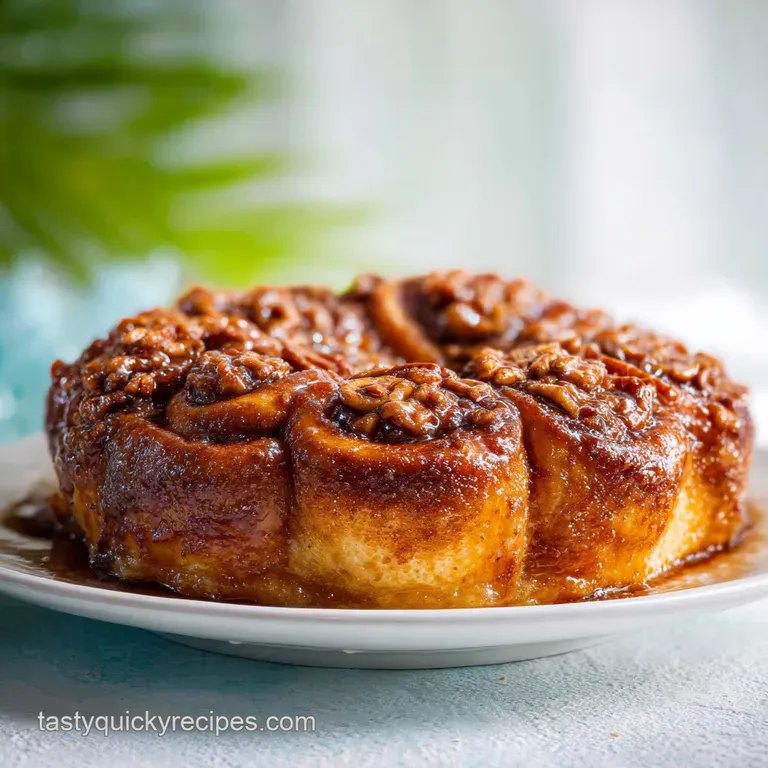
- Time: Active 25 minutes, Passive 50 minutes, Total 75 minutes
- Flavor/Texture Hook: Silky soft cake topped with a shatter crisp pecan caramel
- Perfect for: Holiday brunch, stress free entertaining, or a cozy weekend treat
- Mastering the Ultimate Sticky Bun Cake
- Secrets of the Perfect Crumb
- Essential Baking Metrics
- The Necessary Flavor Elements
- Essential Kitchen Tools
- Step-by-Step Baking Guide
- Troubleshooting Texture Problems
- Smart Flavor Variations
- The Logic of Reverse Creaming
- Secrets of Oven Physics
- Storage and Reheating Tips
- Freezing Guidelines
- Best Serving Ideas
- Recipe FAQs
- 📝 Recipe Card
Mastering the Ultimate Sticky Bun Cake
Forget the yeast. Forget the three hour rise that usually ends in disappointment. Most people think you need to be a professional baker with an entire Sunday free to get that gooey, caramelized pecan topping we all crave. That's a total myth.
I used to think the same until I realized the cake version of this classic hits every single flavor note of a traditional bun without any of the dough kneading drama.
Imagine the smell of bubbling brown sugar and toasted pecans wafting from your oven. It's that specific, warm aroma that makes your neighbors suddenly find a reason to knock on your door. This recipe is my secret weapon for when I want maximum "wow" factor with zero stress.
It’s dense enough to feel indulgent but soft enough to melt the second it hits your tongue.
We aren't just making a cake; we’re creating an experience. We’ll be using a specific mixing technique to ensure the crumb is velvety rather than coarse. I’ve made every mistake possible from sticking cakes to grainy caramel so you don’t have to.
Let’s get into the details of how to make this irresistible treat that will have everyone asking for your "secret" recipe.
Secrets of the Perfect Crumb
Fat Coating: By mixing butter directly into the flour before adding liquids, we coat the protein strands. This prevents excessive gluten from forming, which ensures the cake stays tender and soft instead of rubbery.
Lactic Acid Magic: The full fat sour cream provides acidity that breaks down the flour's structure. This results in a tighter, more luxurious crumb that holds its shape under the heavy caramel topping.
Caramel Stability: Using honey or corn syrup in the base prevents sugar crystals from relinking. This keeps your topping glossy and fluid rather than turning into a hard, brittle candy shell that’s impossible to slice.
Temperature Control: Room temperature ingredients are non negotiable here. When eggs and dairy are at the same temperature as the creamed butter, they emulsify perfectly, creating a smooth batter that rises evenly without large, unsightly air pockets.
| Method | Prep Time | Resulting Texture | Best For |
|---|---|---|---|
| Traditional Yeast | 3 hours | Airy, bready, chewy | Authentic Sunday mornings |
| Box Mix Hack | 10 minutes | Light, spongy, artificial | Last minute emergencies |
| This Cake Recipe | 25 minutes | Dense, velvety, rich | Elegant brunches and gifts |
This comparison shows why the scratch made cake method is the sweet spot for flavor and effort. You get the richness of a pound cake combined with the gooey satisfaction of a sticky bun, all while saving hours of proofing time.
Essential Baking Metrics
| Ingredient | Science Role | Pro Secret |
|---|---|---|
| Sour Cream | Moisture & Acid | Always use full fat for the richest mouthfeel and best structure |
| Saigon Cinnamon | Flavor & Aroma | This specific variety has a higher oil content for a bolder punch |
| Baking Powder | Chemical Leavening | Ensure it is fresh to lift the heavy batter through the swirl |
| Pecans | Texture & Fat | Raw halves toast perfectly inside the sugar glaze as the cake bakes |
When we look at the components of a Sticky Bun Cake, every gram matters. Using 240g of sour cream might seem like a lot, but it's the engine that drives the moisture. Without it, the 360g of flour would feel like a desert.
We also have to talk about the 225g of softened butter in the batter. This isn't just for flavor. In the reverse creaming method, that butter is physically shielding the flour from the water in the eggs. It's a mechanical barrier that keeps the crumb velvety.
If you love these warm, spiced profiles, you might also enjoy exploring other traditional favorites like my Indian Pudding recipe, which uses similar spice notes for a deep, comforting dessert experience.
The Necessary Flavor Elements
- 115g Unsalted butter, melted: Why this? Creates the base for the liquid gold caramel topping.
- 165g Light brown sugar, packed: Why this? The molasses content ensures a deep, toffee like flavor profile.
- 30ml Honey or light corn syrup: Why this? Prevents the sugar from crystallizing and becoming grainy.
- 150g Raw pecan halves: Why this? They toast in the butter sugar mix for a crunchier bite.
- 2g Fine sea salt: Why this? Balances the intense sweetness of the caramel topping.
- 110g Light brown sugar (for swirl): Why this? Distributes sweetness throughout the middle of the cake.
- 12g Ground Saigon cinnamon: Why this? Offers a much more intense, spicy sweet aroma than standard cinnamon.
- 10g All purpose flour (for swirl): Why this? Prevents the cinnamon sugar from sinking into a single layer.
- 360g All purpose flour, sifted: Why this? Provides the structural foundation for the dense crumb.
- 300g Granulated sugar: Why this? Sweetens the batter and helps with the fine crumb structure.
- 10g Baking powder: Why this? The primary lift source to keep the cake from being a brick.
- 5g Salt: Why this? Sharpens the vanilla and butter flavors in the cake batter.
- 225g Unsalted butter, softened and cubed: Why this? Essential for the reverse creaming method to coat the flour particles.
- 240g Full fat sour cream, room temp: Why this? Adds fat and acidity for an incredibly tender texture.
- 3 Large eggs, room temperature: Why this? Provides structure and helps with the emulsion of the batter.
- 15ml Pure vanilla extract: Why this? Rounds out the flavors and adds a floral sweetness.
| Original Ingredient | Substitute | Why It Works |
|---|---|---|
| Sour Cream (240g) | Greek Yogurt (Full fat) | Similar acidity level. Note: Result may be slightly tangier |
| Honey (30ml) | Maple Syrup | Liquid sugar profile. Note: Adds a distinct woodsy flavor to the glaze |
| Pecans (150g) | Walnuts | High fat content. Note: Slightly more bitter, earthy flavor profile |
Essential Kitchen Tools
To get the results we want, a few specific tools make life much easier. First, you really need a 10 inch Bundt pan. An ungreased pan is actually the secret for the caramel base the sugar and butter create their own non stick barrier, and the cake needs the sides of the pan to "climb" as it rises.
A stand mixer is your best friend here. While you can use a hand mixer, the reverse creaming method requires a steady, low speed while you drop in cubes of butter. It’s hard to do that solo with a hand held unit without making a mess.
A paddle attachment is better than a whisk because we want to incorporate the butter without whipping too much air into the batter.
Finally, a small, heavy bottomed saucepan is vital for the pecan base. You want even heat distribution so the sugar doesn't burn in spots before the honey and butter have fully unified.
step-by-step Baking Guide
1. Mastering the "Goo" Base
Whisk the 115g melted butter, 165g brown sugar, 30ml honey, and 2g salt in a saucepan over medium heat until the sugar is fully dissolved and the mixture is bubbling. Pour this liquid gold immediately into your 10 inch Bundt pan and scatter the 150g of pecan halves evenly across the bottom.
2. The Spiced Swirl
Whisk together the 110g brown sugar, 12g Saigon cinnamon, and 10g flour in a small bowl. Note: The tiny bit of flour here acts as a "glue" to keep the swirl from separating the cake layers later.
3. Mixing the Base
Combine the 360g sifted flour, 300g granulated sugar, 10g baking powder, and 5g salt in your stand mixer. Mix on low for 30 seconds until the dry ingredients are perfectly blended.
4. Reverse Creaming Batter
Add the 225g of softened butter cubes one-by-one while the mixer is running on low. Continue mixing until the mixture looks like fine, sandy breadcrumbs and no large chunks of butter remain.
5. Emulsifying Liquids
Whisk the 240g room temperature sour cream, 3 eggs, and 15ml vanilla in a separate jug. Slowly pour this into the dry mixture with the mixer on low until the batter becomes thick, smooth, and pale.
6. Layering Strategy
Spoon exactly half of your batter into the Bundt pan over the pecans. Level it out gently with a spatula, then sprinkle the cinnamon swirl mixture evenly over the surface.
7. Final Batter Layer
Top the cinnamon swirl with the remaining batter. Use a knife to gently swirl the layers together if you want a marbled look, but don't touch the pecan base at the bottom.
8. The Golden Bake
Slide the pan into a preheated oven at 175°C (350°F). Bake for 50 minutes until the top is golden and a skewer comes out clean.
9. Critical Five Minute Flip
Remove the pan from the oven and set a timer for exactly 5 minutes. Note: If you wait too long, the caramel will harden and lock the cake in the pan forever.
10. The Grand Invert
Place a large cooling rack or serving plate over the pan. In one confident motion, flip it over. Lift the pan slowly until the cake releases with a satisfying "thwack".
Troubleshooting Texture Problems
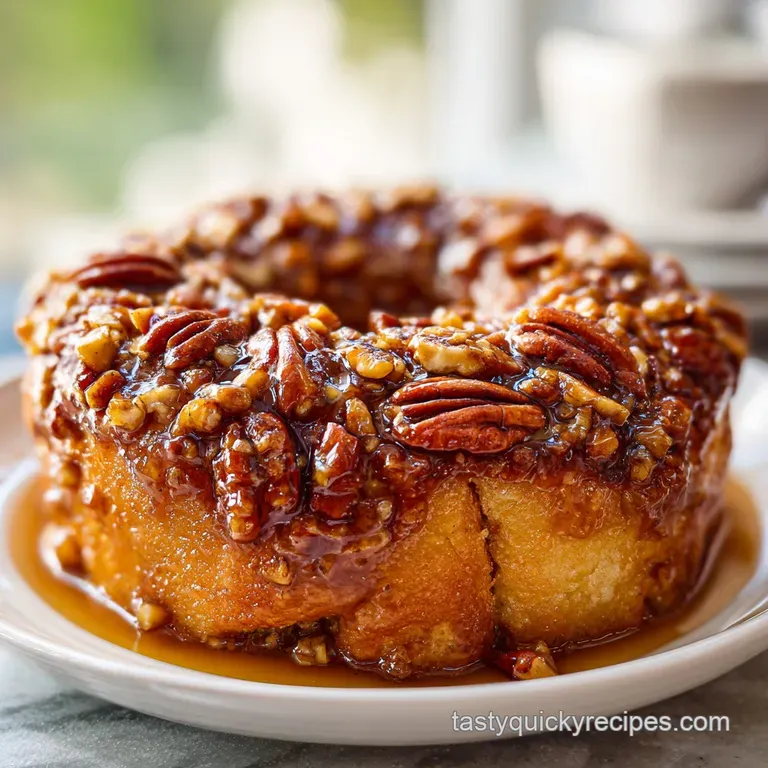
Fixing Pan Stick
If you lift the pan and hear nothing, or if it feels "stuck," don't panic. This usually happens if the sugar cooled too fast or if the pan had a very intricate design. Take a warm, damp kitchen towel and wrap it around the bottom of the inverted pan for 2 minutes.
The steam will loosen the caramel and help it release.
Fixing Swirl Gaps
Sometimes you slice into a Bundt and the top half of the cake just falls off the bottom half. This is usually because the cinnamon swirl was too dry or too thick. To prevent this, always ensure you add that small 10g of flour to the swirl it helps the batter "grab" onto the sugar layer.
Fixing Dry Crumb
If your cake tastes like sawdust, the culprit is almost always over mixing or over baking. Once you add the liquid ingredients to the flour butter mixture, only mix until it’s smooth. Every extra second of mixing develops more gluten, which turns "velvety" into "tough."
| Problem | Root Cause | Solution |
|---|---|---|
| Glaze is rock hard | Overcooked the base | Only simmer until sugar dissolves, don't boil it to "hard ball" stage |
| Cake is gummy | Cold ingredients used | Ensure sour cream and eggs are room temp to prevent the batter from breaking |
| Pecans are burnt | Pan was too close to heat | Bake on the middle rack and check at 45 minutes for darkness |
- ✓ Always use room temperature dairy and eggs for a perfect emulsion.
- ✓ Sift your flour to ensure there are no lumps in the reverse creaming stage.
- ✓ Set a literal timer for the 5 minute cooling period before flipping.
- ✓ Pat your pecans dry if they feel oily before adding them to the base.
- ✓ Check your oven temperature with an external thermometer to ensure accuracy.
Smart Flavor Variations
If you want to take this Sticky Bun Cake in a different direction, you have plenty of room for creativity. For a "Boozy" version, add 30ml of dark rum or bourbon to the pecan base before pouring it into the pan.
The alcohol burns off, leaving behind a deep, charred oak flavor that pairs beautifully with the brown sugar.
For those who need to avoid nuts, you can swap the pecans for a mixture of rolled oats and sunflower seeds. It won't be exactly the same, but you’ll still get that textural contrast against the soft cake. If you're looking for a different kind of sweet crunch for a party spread, my White Trash Snack Mix is another great option to have on the table alongside this cake.
| Feature | Standard Recipe | Premium Upgrade | Impact |
|---|---|---|---|
| Cinnamon | Grocery Brand | Ground Saigon | Much deeper, spicier aroma |
| Salt | Table Salt | Maldon Sea Salt | Better "crunch" and flavor pop |
| Extract | Vanilla Essence | Vanilla Bean Paste | Beautiful black specks and richer taste |
The Logic of Reverse Creaming
Most cakes start by beating butter and sugar together to trap air. This recipe uses the reverse method, where we beat butter into the flour first. By doing this, we are effectively waterproof ing the flour. When we eventually add the sour cream and eggs, the flour can't absorb the water as quickly.
This is the secret to why this cake has such a tight, velvety crumb that feels almost like a high end doughnut.
Another reason this works is the sugar ratio. With 300g of granulated sugar in the batter and another 165g in the glaze, the sugar actually acts as a tenderizer. It interferes with the coagulation of egg proteins and the development of gluten, keeping the structure soft.
It's a delicate balance of chemistry that results in something that feels much more sophisticated than a standard pound cake.
Secrets of Oven Physics
The 50 minute bake time at 175°C (350°F) is calibrated for the density of this batter. Because of the heavy caramel on the bottom (which becomes the top), the heat has to penetrate through the pan and the sugar before it even hits the cake.
This is why we don't use a higher temperature; we need the center to bake through before the sugar base burns.
Storage and Reheating Tips
This cake is surprisingly resilient. You can store it on the counter, covered, for up to 3 days. The sugar in the glaze acts as a natural preservative, keeping the top of the cake moist.
If you find the glaze is starting to get a bit "weepy" or sticky, you can move it to the fridge, but it will firm up the crumb significantly.
For zero waste, if you have a few slices left that are starting to get a bit dry, don't throw them out. You can actually turn them into the most incredible French Toast you've ever had. Dip the slices in a basic egg milk wash and sear them in a pan. The caramel topping will re melt and create a crispy, toasted crust.
Freezing Guidelines
If you want to make this ahead of time, it freezes beautifully. Wrap the fully cooled cake (or individual slices) in a double layer of plastic wrap and then a layer of foil. It will stay fresh in the freezer for up to 2 months.
To serve, thaw it overnight in the fridge and then let it come to room temperature on the counter before unwrapping.
Best Serving Ideas
While this cake is a star on its own, a few additions can make it legendary. Serving a warm slice "A La Mode" with a scoop of high-quality vanilla bean ice cream is the gold standard. The cold cream melts into the warm cinnamon swirl, creating a makeshift sauce that is just heavenly.
If you’re serving this for brunch, a dollop of unsweetened whipped cream or a side of fresh raspberries can help cut through the richness. The acidity of the fruit balances the 37g of fat per serving perfectly.
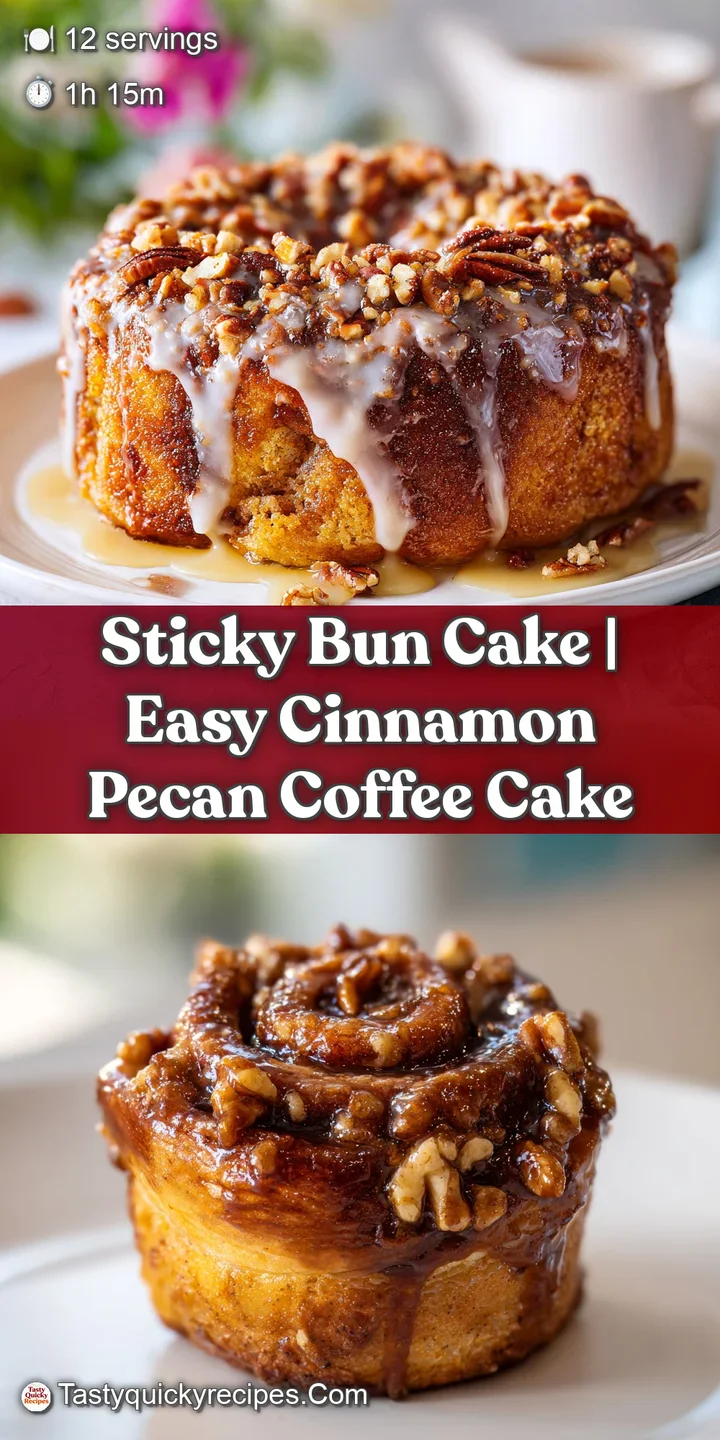
Trust me, once you flip this cake and see that shimmering, pecan studded glaze, you won’t need much else to impress your guests. It’s a showstopper every single time.
For more information on the history of this style of baking, look into the evolution of "Gugelhupf" or traditional European Bundt cakes. The method of layering sugar and fat at the bottom of the pan has been used for centuries to ensure a beautiful presentation without the need for additional frosting or decoration.
Recipe FAQs
Is it necessary to wait exactly 5 minutes before inverting the pan?
Yes, this timing is critical for the caramel base. Waiting 5 minutes allows the sugar butter mixture to set just enough so it clings to the cake rather than running off, ensuring a perfect release from the Bundt pan.
How to ensure the cake does not dry out?
Follow the reverse creaming method strictly by coating the flour in fat before adding liquids. This technique prevents gluten over development, resulting in a tender crumb; if you mastered this method here, you can see how the same fat-first approach creates perfect sugar cookie textures.
Is it true the sour cream can be replaced with milk?
No, this is a common misconception. The acidity in the sour cream is required to react with the baking powder, providing the lift and moisture balance that keeps this specific cake rich and tender.
How to achieve a clean inversion without the pecans sticking?
Pour the caramel and pecan base immediately into the pan while it is still warm and bubbling. This ensures the mixture is fluid enough to distribute evenly before it begins to thicken, preventing clumping.
Can the cake be stored in the refrigerator?
Yes, but only if you prefer a firmer crumb. While the high sugar content keeps it fresh on the counter for 3 days, refrigeration will cause the butter and caramel to solidify, making the texture much denser.
How to prevent the cinnamon swirl from sinking to the bottom?
Layer the batter in two distinct stages. Spoon half the batter into the pan first, sprinkle the cinnamon sugar mix across the surface, then cover completely with the remaining batter to anchor the swirl in the middle.
How to tell if the cake is fully baked at the 50-minute mark?
Insert a skewer into the center of the cake; it should come out clean. Rely on this visual cue rather than just the clock, as oven temperatures can fluctuate and affect the total bake time.
Sticky Bun Cake
Ingredients:
Instructions:
Nutrition Facts:
| Calories | 654 kcal |
|---|---|
| Protein | 7g |
| Fat | 37g |
| Carbs | 76g |
| Fiber | 2g |
| Sugar | 54g |
| Sodium | 285mg |
