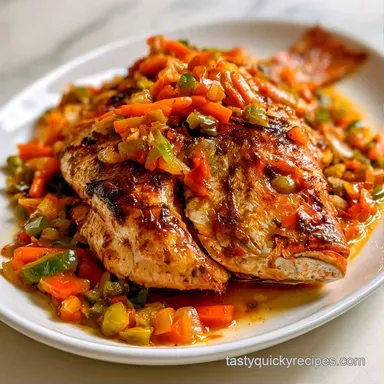
Jamaican Red Snapper with Escovitch Sauce
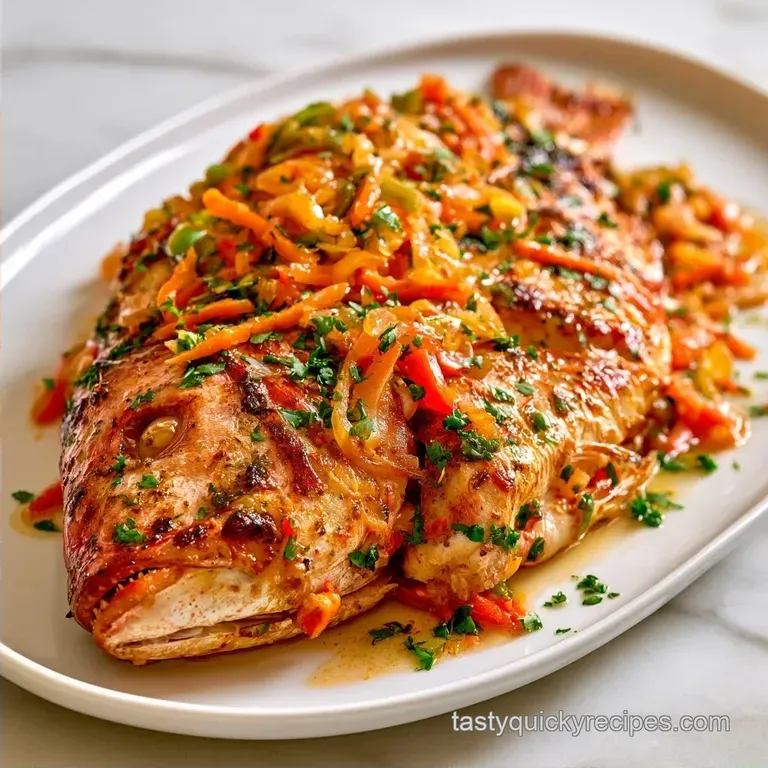
- Time: 15 min active + 25 min cook
- Flavor/Texture Hook: Tangy, zesty, and shattering crisp skin
- Perfect for: Family Sunday lunch or Caribbean themed dinners
- Jamaican Red Snapper with Escovitch Sauce
- The Essential Ingredients
- Ingredient Deep Dive
- Recipe Specs
- Kitchen Tools Needed
- Bringing It Together
- Fixing Common Glitches
- Adjusting the Portion
- Debunking Fish Myths
- Keeping It Fresh
- Plating for Impact
- Swaps and Twists
- Critical Sodium Level
- Recipe FAQs
- 📝 Recipe Card
The smell of frying fish and pungent vinegar is the scent of a proper Caribbean weekend. I remember my aunt used to take over the kitchen every Sunday, and the whole house would smell like lime and scotch bonnet.
It wasn't just about the food, but the way everyone gathered around the counter, arguing over who got the crispest piece of skin.
This dish is all about that balance of heat and acid. You have the richness of the fish, the sharp bite of the cane vinegar, and the slow burn of the peppers. It's a bold meal that feels like a celebration, even if it's just a Tuesday night.
We're making a version of Jamaican Red Snapper that keeps the soul of the original but cuts down on the heavy oil. You'll get that deep mahogany color and the snap of the vegetables without feeling weighed down. It's fuss free, flavorful, and honestly, way better than any restaurant version I've had lately.
Jamaican Red Snapper with Escovitch Sauce
The key to this recipe is the moisture control. Most people just throw the fish in the pan, but that leads to steaming instead of searing. By scoring the skin and patting it bone dry, we allow the heat to penetrate the thickest parts of the fish quickly.
Bone Dry Skin: Removing surface moisture prevents the fish from sticking and helps the flour create a thin, crisp shell.
Cane Vinegar: This specific vinegar provides a mellow sweetness that cuts through the oil of the fish better than white vinegar.
Scoring the Flesh: Those diagonal cuts aren't just for looks, they let the lime and allspice soak into the meat.
| Method | Time | Texture | Best For |
|---|---|---|---|
| Pan Seared | 25 mins | Shattering crisp | Quick weeknight dinner |
| Deep Fried | 40 mins | Heavy crunch | Large parties |
| Baked | 30 mins | Tender/Soft | Health conscious meals |
The Essential Ingredients
For this to work, you need a fresh whole snapper. Don't bother with frozen fillets if you can avoid it, as the bone helps the fish hold its shape during the sear.
For the Fish & Marinade
You'll want a whole red snapper, cleaned and scaled. The lime juice and garlic provide the base, while the allspice gives it that unmistakable Caribbean aroma. I usually use a pinch more allspice if I want a deeper, earthier tone.
For the Authentic Escovitch Sauce
The sauce is where the magic happens. The combination of julienned carrots and onions creates a texture that acts like a relish. The scotch bonnet peppers provide the heat, but you can slice them lengthwise and remove the seeds if you're cooking for people who can't handle the spice.
Ingredient Deep Dive
| Ingredient | Role | If You Don't Have It |
|---|---|---|
| Red Snapper | Main Protein | Sea Bass or Grouper (similar firmness) |
| Cane Vinegar | Acid/Tang | Apple Cider Vinegar (slightly sweeter) |
| Scotch Bonnet | Heat/Fruitiness | Habanero (similar heat, less fruity) |
| Allspice | Earthy Base | Clove and Cinnamon mix (small pinch) |
Recipe Specs
Grab your ingredients and get them ready. I like to have everything sliced and diced before the fish even touches the pan because once the oil is hot, things move fast.
- Whole Red Snapper: 2 lbs, cleaned and scaled
- Lime juice: 1 tbsp
- Garlic: 2 cloves (minced) + 3 cloves (smashed)
- Salt: 1 tsp + 1/2 tsp
- Black pepper: 1/2 tsp
- Dried thyme: 1 tsp
- Ground allspice: 1/2 tsp
- All purpose flour: 1/4 cup
- Cane vinegar: 1/2 cup
- Onion: 1 medium, sliced into rings
- Carrot: 1 large, julienned
- Bell pepper: 1 medium, sliced
- Scotch bonnet peppers: 2, sliced
- Extra virgin olive oil: 1 tbsp
- Vegetable oil: 2 tbsp
Kitchen Tools Needed
A heavy duty pan is a must. I typically use cast iron since its superior heat retention stops the fish from sticking to the surface.
- Cast iron or stainless steel skillet: For searing over high heat.
- Wire cooling rack: This is a necessity; placing the fish on a plate will cause the bottom to steam and turn soggy.
- Paper towels: To dry the fish thoroughly.
- Sharp chef's knife: To get those precise, thin julienned carrots.
Bringing It Together
Let's get started. Ensure your fish has reached room temperature before you begin, as cold fish often cooks unevenly in a hot pan.
- Use paper towels to pat the red snapper completely dry. Score the skin with 3-4 diagonal cuts on each side. Note: This helps the seasoning penetrate the center.
- Rub the minced garlic, lime juice, salt, pepper, thyme, and allspice into the cavity and the scores. Marinate for 15 minutes at room temperature.
- Lightly coat the fish in flour, shaking off any excess to ensure the crust remains thin.
- Warm 2 tbsp of vegetable oil in a pan over medium high heat until it shimmers.
- Sear the fish for 5-7 minutes per side until the skin is a deep mahogany color and releases easily.
- Move the fish to a wire rack to rest, which helps preserve the crispiness.
- In that same pan, sauté the sliced onion, julienned carrot, bell pepper slices, smashed garlic, and scotch bonnet peppers in 1 tbsp olive oil.
- Stir in the salt and cane vinegar, simmering briefly until the vegetables are slightly softened but still have a snap.
- Spoon the hot vegetable mix over the rested snapper.
Chef's Note: If the oil begins to smoke too much, reduce the heat slightly. You're looking for a sizzle, not a fire.
Fixing Common Glitches
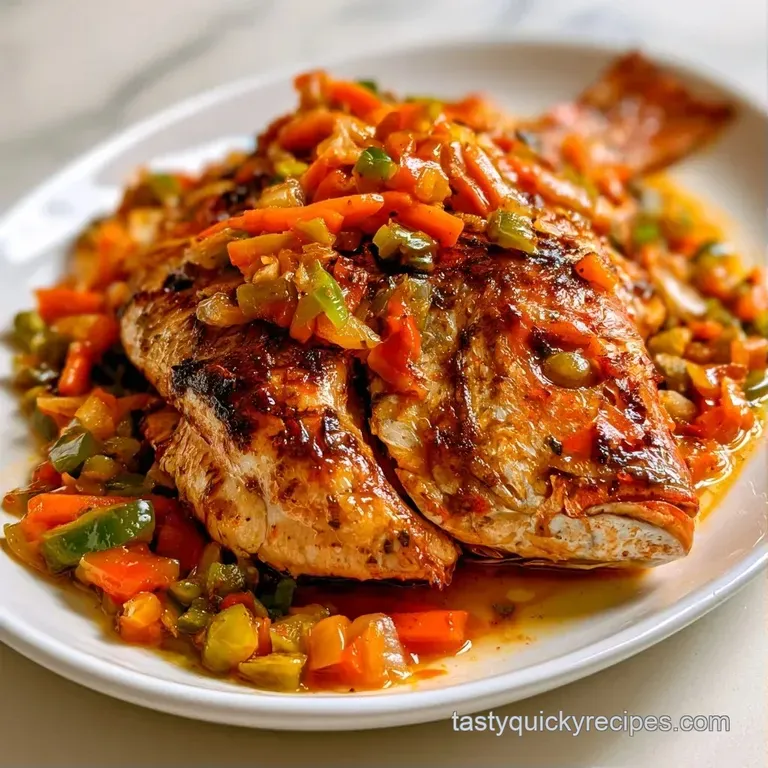
One of the most frustrating things is when the skin tears. It usually happens because we're too impatient. The fish will naturally release from the pan once the crust has formed. If you tug at it too early, you're just pulling off the best part.
Fixing Pan Sticking
This happens when the oil isn't hot enough or the fish was damp. Wait for the oil to shimmer. Don't move the fish for at least 5 minutes. For a different texture, try my baked snapper fillets if you're worried about the pan.
Managing Too Much Acid
If the sauce tastes too sharp, you can add a tiny pinch of brown sugar or a teaspoon of honey. This balances the cane vinegar without making it a dessert.
Avoiding Overcooked Flesh
Snapper cooks fast. Use a meat thermometer to check the thickest part of the fish. USDA guidance puts the safe internal temperature at 145°F.
| Problem | Root Cause | Solution |
|---|---|---|
| Skin Tearing | Moved fish too early | Wait for the "natural release" |
| Soggy Crust | Placed on flat plate | Use a wire cooling rack |
| Sauce Too Spicy | Too many bonnet seeds | Remove seeds before slicing |
Adjusting the Portion
This recipe is easy to halve if you are cooking for two. Simply opt for a smaller skillet to ensure the oil doesn't spread too thin, which allows the fish to sear evenly.
For larger groups, I suggest frying in batches. Avoid overcrowding the pan to keep the heat high, preventing the Jamaican Red Snapper from boiling in its own liquids. When quadrupling the recipe, scale the salt and spices by 1.5x only, as excessive allspice can become bitter.
| Goal | What to change |
|---|---|
| Lighter meal | Reduce flour to a dusting |
| More heat | Add one extra scotch bonnet |
| Milder flavor | Swap allspice for paprika |
Debunking Fish Myths
You'll often hear that searing fish "seals in the juices." That's just not true. Moisture loss happens regardless of how you start the cook. The sear is actually about flavor and texture, creating that brown crust that makes the dish taste rich.
Another one is that you must deep fry for authentic results. While common in some spots, a over high heat pan sear gives you the same mahogany finish with way less grease.
Keeping It Fresh
If you have leftovers, keep them in a sealed tub in the cooler for up to 2 days. The fish will lose its crunch, but the flavor stays. When reheating, I suggest using an oven or air fryer at 350°F for 5 minutes to crisp the skin back up.
Avoid the microwave, as it makes the fish rubbery.
Don't throw away the fish head or bones if you bought the fish whole. Toss them in a pot with water, onion, and celery to make a quick fish stock. It's a great base for a seafood chowder or a rice pilaf.
Plating for Impact
This dish looks best when it's piled high. Place the snapper on a large platter and heap the escovitch vegetables right on top, letting some of the vinegar sauce drizzle down the sides.
I love serving this with a side of coconut rice and peas. The creaminess of the coconut milk balances the sharp acidity of the sauce. For a fresher touch, add a few slices of fresh avocado and a wedge of lime on the side. The bright green of the avocado against the mahogany fish looks stunning.
Swaps and Twists
You can easily pivot this recipe based on what's in your pantry. If you're in a rush, my pan fried snapper is a great alternative that skips the heavy veg topping.
For a Jamaican Red Snapper Curry Twist
Instead of the vinegar sauce, sauté the vegetables with 2 tbsp of Jamaican curry powder and a splash of coconut milk. Simmer until thick and pour over the fried fish.
For a Jamaican Red Snapper Brown Stew
Skip the flour dredging. Brown the fish in oil, then simmer it in a pot with brown sugar, soy sauce, ketchup, and the same vegetables used for the escovitch. This results in a silky, rich sauce rather than a tangy one.
For a Grain Free Swap
If you're avoiding gluten, replace the all purpose flour with almond flour or cornstarch. Cornstarch actually gives a slightly crispier shell, though it lacks the toasted flavor of wheat flour.
Critical Sodium Level
1150 mg 1,150 mg of sodium per serving (50% 50% of daily value)
The American Heart Association recommends a daily sodium limit of no more than 2,300 mg, and ideally no more than 1,500 mg for most adults to maintain heart health.
Tips to Reduce Sodium in Your Red Snapper
-
Slash Added Salt-30%
The 1 tsp and 1/2 tsp of salt are the primary sodium sources. Eliminate or reduce these by 75% to significantly drop the sodium count.
-
Amp Up the Acidity-15%
Increase the lime juice and cane vinegar. The brightness from the acids mimics the flavor of salt and enhances the fish's natural taste.
-
Boost Aromatics-10%
Add an extra clove of minced garlic and a bit more sliced onion. Stronger aromatics provide depth that reduces the craving for salt.
-
Maximize Spices
Use more dried thyme, allspice, and black pepper to build a complex flavor profile that doesn't rely on sodium.
Recipe FAQs
Is red snapper a good fish to eat?
It is an excellent choice for those who enjoy a mild, sweet flavor and firm texture. The meat holds up well to bold spices and high heat searing.
Do Jamaicans frequently use red snapper in their cooking?
Yes, it is a staple in Caribbean cuisine. It is often paired with vinegary sauces to balance the richness of the fish.
How to get the skin perfectly crisp on the snapper?
Pat the skin bone dry with paper towels before scoring and dredging in flour. Sear in shimmering oil for 5-7 minutes per side until the fish releases easily from the pan.
Which spices work best for this type of fish?
Use a blend of dried thyme, ground allspice, salt, and black pepper. These aromatic spices complement the sweetness of the snapper and the acidity of the lime juice.
Is it true that you must deep fry snapper to get a mahogany color?
This one's false: Pan-searing in a small amount of oil with a light flour dusting achieves the same deep color. This method keeps the dish lighter while maintaining a shattering crisp skin.
Could I use grouper instead of snapper for this recipe?
Grouper is an excellent substitute due to its similarly firm texture. If you liked this bold balance of flavors, explore how we apply a similar approach to acidity in our roasted red pepper soup.
What's the best way to prepare the Escovitch sauce?
Sauté sliced onion, carrot, bell pepper, smashed garlic, and scotch bonnet peppers in olive oil. Stir in cane vinegar and salt, simmering briefly before pouring the hot mixture over the fish.
Jamaican Red Snapper