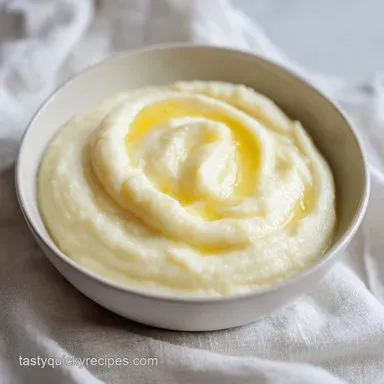
Creamiest Mashed Cauliflower with Garlic and Butter

- Time: 5 min active + 15 min cook = Total 20 mins
- Flavor/Texture Hook: Velvety smooth with a nutty garlic punch
- Perfect for: Keto dinners, hearty holiday sides, or fueling a busy weeknight
- Creamiest Mashed Cauliflower with Garlic and Butter
- The Secret to Rich Flavor
- Cooking Method Comparison
- Component Analysis
- Gathering Your Essentials
- Required Kitchen Gear
- Step by Step Cooking Guide
- Solving Common Mash Issues
- Customizing Your Side Dish
- Adjusting the Portion Size
- Truths About Cauliflower
- Storage and Waste Tips
- Best Pairings for Mash
- Recipe FAQs
- 📝 Recipe Card
Creamiest Mashed Cauliflower with Garlic and Butter
Ever wonder why most cauliflower mash tastes like wet cardboard or, worse, just smells like a boiled cabbage patch? It's usually because people treat cauliflower like a potato, but these two vegetables have a completely different relationship with water.
If you just boil and mash, you're essentially eating cauliflower flavored water.
This is the ultimate recipe for the Creamiest Mashed Cauliflower with Garlic and Butter. I remember the first time I tried to make a "healthy" mash for a dinner party, and it was a disaster - it was runny, bland, and honestly, a bit depressing.
I realized that to get that satisfying, hearty feel, you have to aggressively manage the moisture and lean into the fats.
The contrast here is what makes it work. You have the bright, earthy base of the cauliflower clashing with the rich, velvety weight of cream cheese and butter. It's not just a substitute for potatoes, it's a stand alone side that fuels your body without leaving you feeling sluggish.
Trust me on this, once you get the garlic just right, you won't even miss the spuds.
The Secret to Rich Flavor
You can't just throw everything in a blender and hope for the best. There are a few things happening here that turn a bland vegetable into something that feels decadent.
- The Steam Exit: Letting the drained florets sit for 2 mins allows the surface moisture to evaporate. This prevents the "soup" effect and keeps the mash thick.
- Fat Binding: The combination of butter and cream cheese creates a stable emulsion. The cream cheese acts as a thickener and adds a slight tang that cuts through the richness.
- Aromatic Infusion: Sautéing the garlic in butter first transforms the flavor from a raw, sharp bite to a mellow, nutty aroma.
- High Speed Homogenization: Using a food processor instead of a potato masher breaks down the fibrous structure of the cauliflower, creating a silky texture.
Cooking Method Comparison
Depending on your schedule, you might wonder if there's a better way to soften the veg. While boiling is the fastest, roasting changes the flavor profile entirely.
| Method | Time | Texture | Best For |
|---|---|---|---|
| Stovetop Boil | 15 mins | Silky & Velvety | Classic, creamy side dishes |
| oven roasted | 30 mins | Nutty & Dense | Deeply caramelized flavor |
| Steam Basket | 12 mins | Clean & Light | Maintaining maximum nutrients |
The stovetop method is my go to because it allows the cauliflower to absorb the salted water, seasoning the vegetable from the inside out before the butter and cream take over.
Component Analysis
Understanding what each ingredient does helps you tweak the recipe without breaking the emulsion.
| Ingredient | Science Role | Pro Secret |
|---|---|---|
| Cauliflower | Bulk & Structure | Cut florets uniformly for even cooking |
| Unsalted Butter | Flavor Carrier | Brown it slightly for a toffee note |
| Cream Cheese | Stabilizer/Thickener | Use room temperature for smoother blending |
| Heavy Cream | Texture Modifier | Warm it slightly to avoid "shocking" the mash |
Gathering Your Essentials
For this to be truly satisfying, don't skimp on the quality of your fats. I've tried using low-fat cream cheese or margarine, and honestly, don't even bother. It ruins the mouthfeel and leaves you craving something more.
- 1 medium head of cauliflower, cut into florets, approx 2 lbs (900g) Why this? Provides the hearty base and bulk
- 4 tbsp (57g) unsalted butter Why this? Adds richness and carries the garlic flavor
- 4 cloves (12g) garlic, minced Why this? Essential for that savory, nutty punch
- 2 oz (56g) cream cheese, softened Why this? Creates the velvety, thick consistency
- ½ cup (120ml) heavy cream Why this? Ensures a silky, pourable texture
- ½ tsp (3g) salt Why this? Enhances all other flavors
- ¼ tsp (1g) cracked black pepper Why this? Adds a subtle, sharp contrast
- 1 tbsp (4g) fresh chives, finely chopped Why this? Brightens the rich fats with a fresh hit
If you're looking for a swap, here's what actually works.
| Original Ingredient | Substitute | Why It Works |
|---|---|---|
| Heavy Cream (½ cup) | Full fat Greek Yogurt (½ cup) | Similar thickness. Note: Adds tang and more protein |
| Butter (4 tbsp) | Ghee (4 tbsp) | Higher smoke point. Note: Adds a deeper, nuttier taste |
| Cream Cheese (2 oz) | Mascarpone (2 oz) | Higher fat content. Note: Much creamier, less tangy |
Adding a bit of Greek yogurt is a great way to make this a healthy cauliflower mash that still feels indulgent.
Required Kitchen Gear
You don't need a professional kitchen, but a few specific tools make the difference between "chunky" and "velvety".
- Large Pot: For boiling the florets.
- Colander: Essential for the "steam exit" phase.
- Small Sauté Pan: To toast the garlic in butter.
- Food Processor: I highly recommend a standard one like a Cuisinart or Ninja to get that professional smoothness.
- Rubber Spatula: To scrape every bit of that gold out of the processor.
Step by step Cooking Guide

Let's get into it. Follow these steps exactly, and you'll banish the watery mash forever.
- Break the cauliflower into small, uniform florets. Note: This ensures they all finish cooking at the same time.
- Bring a pot of salted water to a boil. Add cauliflower and cook for 8-10 minutes until fork tender.
- Drain the cauliflower in a colander. Let it sit for 2 minutes until the visible steam stops billowing.
- Melt the butter in a small pan over medium heat. Sauté the minced garlic for 1-2 minutes until it smells nutty and turns a pale gold.
- Transfer the drained cauliflower into a food processor.
- Add the garlic butter mixture, softened cream cheese, and heavy cream.
- Pulse the mixture until it is velvety and completely smooth.
- Stir in salt and pepper by hand. Note: Over processing the salt can sometimes make the texture too airy.
- Garnish with finely chopped fresh chives before serving.
Chef's Tip: If you want an even deeper flavor, try adding a tiny pinch of nutmeg. It doesn't make it taste like dessert, but it brings out the sweetness of the cauliflower.
Solving Common Mash Issues
Even with a good plan, cauliflower can be temperamental. Most issues stem from too much water or not enough fat.
Stopping the Wateriness
This is the most common complaint. If your mash looks like a soup, you likely skipped the "steam exit" or didn't drain the pot well enough. You can fix this by putting the mash back in a pan over medium heat for 3-5 minutes to simmer off the excess liquid.
Banish the Cabbage Smell
That "sulfur" smell happens when cauliflower is overcooked. Stick to the 8-10 minute window. If it still smells too strong, a squeeze of fresh lemon juice at the end neutralizes the odor with acidity.
Adding Extra Protein
For those looking for a more fueling meal, you can swap the cream for cottage cheese. Just blend it thoroughly so you don't have curds in your mash.
| Problem | Root Cause | Solution |
|---|---|---|
| Runny texture | Excess water in veg | Simmer in a pan for 5 mins |
| Grainy mouthfeel | Cold cream cheese | Soften cheese before blending |
| Bland taste | Under seasoned | Add salt in small increments at the end |
Common Mistakes Checklist:
- ✓ Did you let the cauliflower steam dry for 2 mins?
- ✓ Is your cream cheese fully softened?
- ✓ Did you sauté the garlic instead of boiling it?
- ✓ Are your florets cut to a similar size?
- ✓ Did you avoid over processing the final seasoning?
Customizing Your Side Dish
Once you have the base down, you can take this in a few different directions depending on what you're serving. If you're craving a high protein boost, adding a tablespoon of parmesan cheese blends in perfectly.
For a deeper, nutty flavor, you can roast the garlic cloves in the oven first rather than sautéing them. This creates a "Roasted Garlic Cauliflower Mash" that is incredibly rich.
If you're going for a "Cauliflower Mash Keto" powerhouse, stick to the heavy cream and butter - the fats are exactly what you need for satiety.
If you're making this for a vegan friend, swap the butter for a high-quality vegan butter and use cashew cream instead of heavy cream. You can replace the cream cheese with a blended mixture of soaked cashews and lemon juice. It's surprisingly close to the original.
Since this is such a rich side, it needs something with a strong profile to balance it out. I love serving this alongside a classic pot roast where the meat juices can mingle with the mash.
Adjusting the Portion Size
Scaling a mash is easier than scaling a cake, but you still have to be careful with the seasonings.
Scaling Down (½ Batch): Use a smaller pot to avoid evaporating too much water. Reduce the cooking time by about 20% since there's less mass in the pot. I suggest beating one egg yolk into the cream if you want extra richness for a small portion.
Scaling Up (2x-4x Batch): Do not simply quadruple the salt and pepper - start at 1.5x and taste as you go. Work in batches when using the food processor; if you overfill it, you'll get "pockets" of unblended cauliflower, and you'll lose that velvety finish.
Decision Shortcut:
- If you want more tang → add 1 extra oz of cream cheese.
- If you want it fluffier → whip in the food processor for 30 seconds longer.
- If you want a richer gold color → brown the butter until it smells like hazelnuts.
Truths About Cauliflower
There are a few myths floating around that make people hesitant to try this dish. Let's set them straight.
Myth: "It always tastes like cabbage." Truth: Only if you overcook it. When you sauté the garlic and use high fat additions like cream cheese, the sulfur notes are masked by the richness, leaving you with a savory, buttery flavor.
Myth: "It's not as filling as potatoes." Truth: While it has fewer carbs, the addition of butter and cream provides the lipids needed for satiety. It fuels your day without the "carb crash" that often follows a massive plate of mashed potatoes.
Myth: "You have to use a blender for it to be creamy." Truth: A blender can actually over aerate the mash, making it fluffy like mousse rather than dense and velvety. A food processor is the superior tool here.
Storage and Waste Tips
Don't let your leftovers go to waste. This mash keeps surprisingly well if you store it correctly.
Storage: Keep it in an airtight container in the fridge for up to 4 days. It will thicken up in the cold, which is normal.
Freezing: I don't recommend freezing this specific recipe because the cream and butter can separate, leading to a grainy texture upon thawing. If you must freeze it, omit the cream and add it fresh during reheating.
Reheating: The best way to bring it back to life is in a small saucepan over low heat. Add a splash of milk or cream to loosen it up and stir gently until it's heated through.
Zero Waste: Don't throw away the cauliflower leaves! They are completely edible and taste like a cross between kale and cabbage. Toss them in the garlic butter and sauté them until crispy to serve as a garnish on top of the mash.
Best Pairings for Mash
Because this dish is so rich and velvety, you want to pair it with something that has a bit of acidity or a deep, savory sauce.
First, any roast meat is a winner. The mash acts like a sponge for gravy. I highly recommend pairing this with a classic beef gravy to create a truly hearty meal. The saltiness of the gravy cuts through the creaminess of the butter.
For a lighter option, try pairing it with seared scallops or a lemon butter salmon. The bright citrus notes of the fish provide a great contrast to the earthy, garlic heavy profile of the cauliflower. If you're doing a vegetarian feast, a roasted portobello mushroom steak with a balsamic glaze is the way to go.
The sweetness of the glaze and the richness of the mash are a match made in heaven.
Recipe FAQs
Why is my mashed cauliflower watery?
You likely skipped the steaming step. Let the drained cauliflower sit in the colander for 2 minutes to allow residual moisture to escape before blending.
Can I use frozen cauliflower instead of fresh?
No, stick with fresh. Frozen florets release significantly more water during cooking, which will make the final mash runny.
How to achieve a velvety smooth consistency?
Pulse the ingredients in a food processor. Combine the cooked cauliflower, garlic-butter, cream cheese, and heavy cream until the mixture is completely smooth.
Is it true that I need to peel the cauliflower stems to avoid lumps?
No, this is a common misconception. If you break the head into small, uniform florets and use a food processor, the stems will blend seamlessly.
Can I freeze the leftover mash?
No, I don't recommend it. The cream and butter can separate during the freezing and thawing process, leading to a grainy texture.
What should I serve with this cauliflower mash?
It pairs perfectly with rich, savory meats. Try serving it as a side for braised brisket for a comforting, high-end dinner.
How to reheat the mash without it breaking?
Heat in a small saucepan over low heat. Stir in a splash of heavy cream as it warms to restore the velvety consistency.
Garlic Cauliflower Mash in 19 Minutes