Sparkling Sugar Cookies Recipe
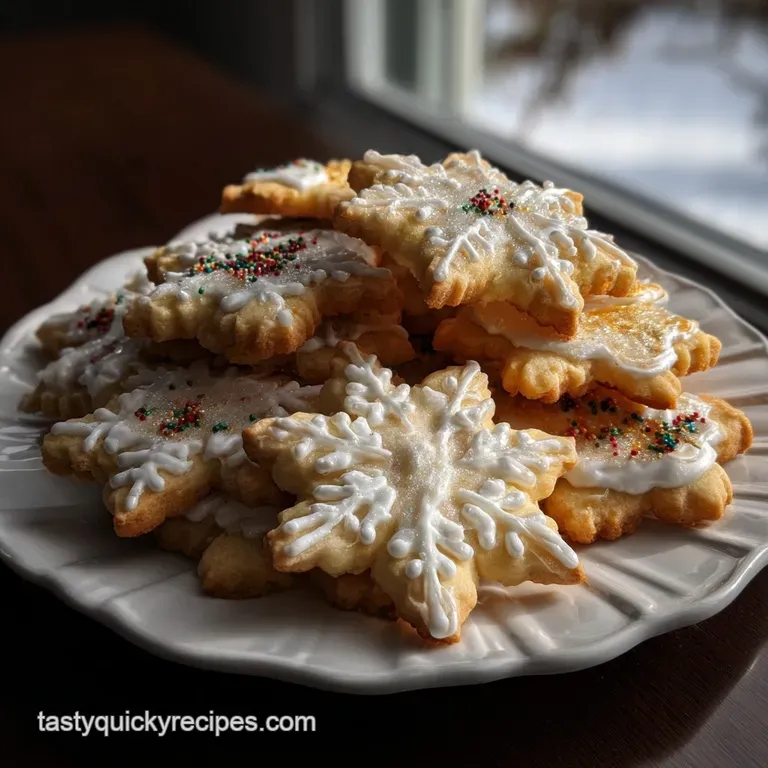
- Effort/Time: 25 minutes (Active prep to finished bake)
- Flavor Hook: Rich buttery base with a sophisticated almond-vanilla aromatic profile.
- Perfect for: New Year's Eve parties, holiday gift boxes, or elegant tea pairings.
- The Scientific Secret to Every Irresistible Festive Holiday Cookie
- Precision Timing and Yield for Festive Holiday Cookie Success
- The Essential Pantry Elements for This Festive Holiday Cookie
- Professional Tools for Achieving a Foolproof Festive Holiday Cookie
- The Step-by-Step Architecture of Your Festive Holiday Cookie
- Solving Frequent Pitfalls for Your Festive Holiday Cookie
- Creative Flavor Shifts for Your Festive Holiday Cookie
- Preserving the Magical Texture of Your Festive Holiday Cookie
- ⚗️ The Scaling Lab: The Physics of Quantity
- Styling and Pairing Your Festive Holiday Cookie for Occasions
- Recipe FAQs
- 📝 Recipe Card
The Scientific Secret to Every Irresistible Festive Holiday Cookie
There is nothing more heartbreaking than spending $40 on premium European butter and organic extracts only to pull a tray of greasy, puddle like "cookies" out of the oven. We have all been there the kitchen smells like burnt sugar, the edges are charred, and the centers are raw dough.
This usually happens because the butter was too soft or the flour-to-fat ratio was calculated by volume rather than weight, leading to a structural collapse that ruins your New Year's Eve aesthetic.
I remember my first attempt at this Festive Holiday Cookie years ago. I tried to rush the process by melting the butter in the microwave instead of waiting for a proper room temperature soften. I ended up with thin, oil-slicked wafers that shattered into dust the moment I touched them.
It was a humbling lesson in the thermodynamics of baking: fat temperature isn't a suggestion; it is the foundation of the entire gluten network.
The secret to success here is the "Tender Snap" principle. By introducing King Arthur cornstarch into the King Arthur All-Purpose Flour, we physically interfere with gluten development. This results in a cookie that doesn't become "bready" or tough, even if you accidentally over mix.
The cornstarch acts as a barrier, ensuring the protein strands remain short and fragile, creating that magical, velvety texture that pairs so well with a glass of champagne.
Precision Timing and Yield for Festive Holiday Cookie Success
Timing is the most critical element when you are preparing for a major occasion. This Festive Holiday Cookie is designed for the high pressure environment of holiday hosting. Because the total time is a mere 25 minutes, you can whip these up while your guests are finishing their main course, ensuring they are served warm and fragrant.
| Phase | Duration | Outcome |
|---|---|---|
| Prep & Mise en Place | 15 minutes | Aerated butter sugar base and sieved dry ingredients. |
| Baking | 10 minutes | Set edges with a pale, soft center for maximum shelf life. |
| Cooling | 10 minutes | Structural setting via starch retrogradation. |
The yield of 24 servings is strategically chosen for standard 12x17 inch baking sheets (like those from Nordic Ware). To maintain consistent results, you must ensure your oven has reached a stable 350°F before the first tray enters.
If you have a convection setting, remember to drop the temperature by 25°F, as the increased airflow accelerates the Maillard reaction on the cookie's surface, potentially browning the sparkling sugar before the interior is set.
The Essential Pantry Elements for This Festive Holiday Cookie
Selecting your elements is an exercise in flavor architecture. For a Festive Holiday Cookie, every ingredient must serve a dual purpose of structure and sensory delight. We aren't just looking for sweetness; we are looking for a complex, aromatic profile that feels sophisticated enough for a New Year's celebration.
- 1 cup (227g) unsalted butter, softened: Why this? Fat provides the "short" texture by coating flour proteins, preventing tough gluten chains.
- 1 cup (200g) granulated white sugar: Why this? Sucrose aids in aeration during creaming and provides the necessary crispness via caramelization.
- 1 large egg, room temperature: The lecithin in the yolk acts as a natural emulsifier, binding the fat and water based extracts into a smooth batter.
- 2 tsp (10ml) pure vanilla extract: Always use a high-quality brand like Nielsen Massey for a deep, floral aroma.
- 1/2 tsp (2.5ml) almond extract: Why this? Almond extract provides the "bakery style" scent that distinguishes holiday bakes from standard cookies.
- 2 1/2 cups (312g) all-purpose flour: The structural backbone; weighing this ensures your Festive Holiday Cookie doesn't turn out dry or crumbly.
- 2 tbsp (16g) cornstarch: Why this? Softens the flour's protein content, yielding a more delicate, professional grade crumb.
- 1 tsp (5g) baking powder: This provides the chemical lift, reacting with heat to create tiny CO2 bubbles.
- 1/2 tsp (3g) fine sea salt: Essential for balancing the high sugar content and enhancing the butter's natural flavors.
- 1/4 cup (50g) gold sparkling sugar: For the primary New Year's Eve visual.
- 1/4 cup (50g) silver sparkling sugar: Adds depth and a "chilled" look to the tray.
- 2 tbsp (25g) white pearl sprinkles: Provides a textural contrast and a high end finish.
Ingredient Chemistry Breakdown
| Ingredient | Chemical/Physical Role (Science) | The Pro Secret (Why This Matters) |
|---|---|---|
| Unsalted Butter | Solid-to-liquid phase transition | Softened butter (65°F) holds air bubbles; melted butter fails to aerate. |
| Cornstarch | Gluten inhibition via starch interference | Prevents a "bready" texture, keeping the Festive Holiday Cookie delicate. |
| Baking Powder | CO2 production via acid base reaction | Ensures a light, airy rise rather than a dense, leaden disk. |
| Fine Sea Salt | Sodium ion flavor enhancement | Suppresses bitterness and amplifies the perception of vanilla and almond. |
Professional Tools for Achieving a Foolproof Festive Holiday Cookie
To achieve a Masterclass result, you need more than just a bowl and a spoon. The physics of heat distribution in your kitchen can make or break the Festive Holiday Cookie. Using a KitchenAid Stand Mixer with the paddle attachment is non-negotiable for proper creaming.
A hand mixer can work, but it rarely achieves the same level of nitrogen incorporation that a heavy duty stand mixer provides.
Using a Lodge Cast Iron Skillet is great for some recipes, but for these cookies, you want a Nordic Ware Aluminum Baker's Half Sheet. Aluminum is a superior conductor of heat, ensuring the bottom of your Festive Holiday Cookie doesn't scorch before the top is set.
Pair this with a Silpat Silicone Baking Mat to prevent sticking and to provide a slight insulation layer that promotes even spreading.
Chef's Tip: Freeze your butter for exactly 10 minutes before you start creaming if your kitchen is warm. This "firm soft" state allows the sugar crystals to carve more air pockets into the fat, leading to a much lighter Festive Holiday Cookie.
Precision Control: Stovetop vs. Oven
While we bake the cookies in the oven, many people wonder if they can "stovetop" a cookie recipe (like a skillet cookie). Here is how they compare for this Festive Holiday Cookie:
| Method | Heat Distribution | Texture Outcome |
|---|---|---|
| Oven (Standard) | 360° Radiant Heat | Even rise, crisp edges, and consistent sparkling sugar adhesion. |
| Stovetop (Skillet) | Conductive Bottom Heat | Dense, fudgy, and "spoonable" but loses the classic cookie shape. |
| Oven (Convection) | Forced Air Circulation | Faster browning; can cause the Festive Holiday Cookie to dry out if not monitored. |
The step-by-step Architecture of Your Festive Holiday Cookie
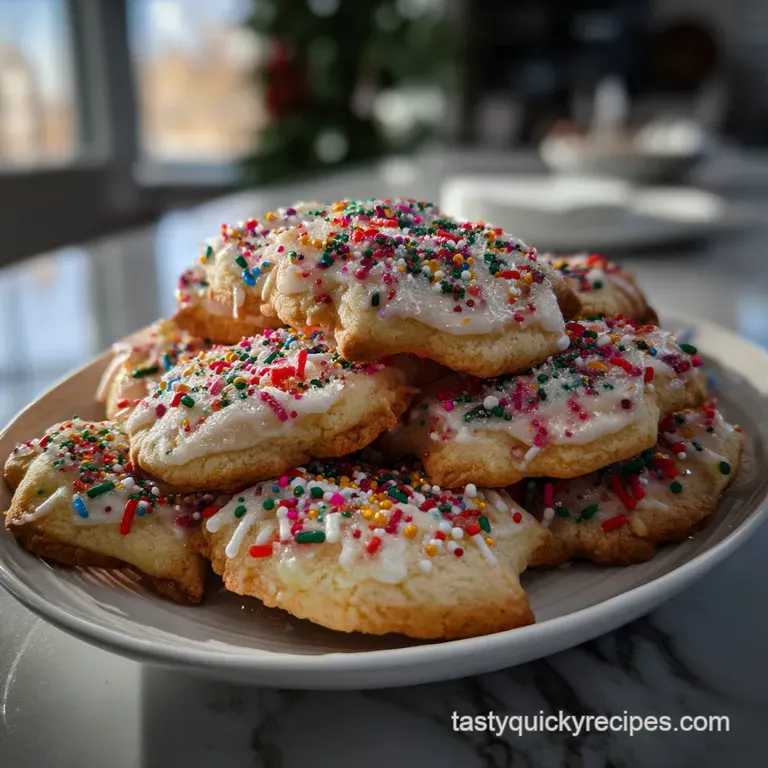
Follow these steps exactly to ensure the chemistry of the dough remains stable. Any deviation in the order of operations can lead to emulsion breakdown or "greasy" results.
- Preheat the oven to 350°F (175°C) and line your Nordic Ware sheets with Silpat mats.
- Cream the 1 cup (227g) softened butter and 1 cup (200g) granulated sugar for 3 minutes until the mixture is pale ivory and looks like whipped frosting. Note: Mechanical aeration creates the internal structure.
- Add the 1 large egg, 2 tsp (10ml) vanilla, and 1/2 tsp (2.5ml) almond extract, beating for 1 minute until the liquid is fully incorporated and the batter looks glossy.
- Whisk the 2 1/2 cups (312g) flour, 2 tbsp (16g) cornstarch, 1 tsp (5g) baking powder, and 1/2 tsp (3g) salt in a separate bowl until no clumps of starch remain.
- Incorporate the dry ingredients into the wet on low speed until just a few streaks of white remain visible. Note: Over mixing at this stage activates gluten, making the cookie tough.
- Scoop 1 tablespoon portions of dough and roll into smooth spheres until no cracks appear on the surface.
- Roll the spheres in a mixture of the gold, silver, and pearl sugars until the dough is completely obscured by the sparkle.
- Place spheres 2 inches apart on the sheet until the tray is evenly populated with 12 cookies.
- Bake for 10 minutes until the edges are just set and the tops look matte rather than shiny.
- Cool on the baking sheet for 5 minutes until the structural integrity allows for transfer to a wire rack.
Solving Frequent Pitfalls for Your Festive Holiday Cookie
Even with a perfect recipe, environmental factors like humidity can interfere with your Festive Holiday Cookie. If you find your dough is too sticky to roll, it’s likely that your kitchen is too warm, causing the butter to reach its melting point prematurely.
Why Your Cookies Spread Too Much
This is usually a result of "thermal collapse." When the butter in the dough melts before the flour proteins have had a chance to set (a process called protein denaturation), the dough simply flows outward. This can also happen if you place dough onto a hot baking sheet from a previous batch.
| Problem | Root Cause | The Fix | Pro Protocol |
|---|---|---|---|
| Flat Cookies | Butter too soft | Chill dough for 30 mins | Use a laser thermometer to ensure butter is 65°F. |
| Gritty Texture | Under creaming | Increase mix time to 4 mins | Rub batter between fingers; you shouldn't feel sugar grains. |
| No Sparkle | Dough too dry | Roll balls immediately | If dough dries, mist lightly with water before rolling in sugar. |
Creative Flavor Shifts for Your Festive Holiday Cookie
While the classic vanilla almond profile is unbeatable, you can easily pivot this Festive Holiday Cookie for different vibes. If you are looking for a more "party ready" snack, you might consider pairing these with a Festive Finger Food recipe for a sweet and savory New Year's spread.
Flavor Twist: Zesty Citrus Sparklers
Add the zest of two lemons to the sugar butter creaming stage. The acidity of the citrus oils cuts through the richness of the butter, making the Festive Holiday Cookie feel lighter and more refreshing. This version pairs exquisitely with a Classic Eggnog recipe.
Diet Swap: gluten-free Alternative
| Original Ingredient | Substitute | Why It Works |
|---|---|---|
| All-Purpose Flour | King Arthur Measure for-Measure | Contains xanthan gum to mimic gluten structure. |
| Unsalted Butter | Miyoko’s Plant Milk Butter | High fat content ensures the Festive Holiday Cookie remains tender. |
Preserving the Magical Texture of Your Festive Holiday Cookie
Storing your Festive Holiday Cookie correctly is the difference between a "shattering" treat and a "soggy" mess. Because these cookies have a high sugar content on the surface, they are prone to absorbing atmospheric moisture (hygroscopy).
- Countertop: Store in an airtight container for up to 5 days. To keep them crisp, add a single piece of white bread to the container; the bread will absorb the moisture instead of the cookies.
- Freezing: You can freeze the baked Festive Holiday Cookie for up to 3 months. Wrap them individually in plastic wrap and store in a heavy duty freezer bag.
- Reheating: To regain that "just baked" warmth, place them in a 300°F oven for 2 3 minutes. Avoid the microwave, as it will turn the sparkling sugar into a sticky syrup.
⚗️ The Scaling Lab: The Physics of Quantity
When you need to double this Festive Holiday Cookie for a large gala, you cannot simply double everything and hope for the best.
- Flavor Saturation (Salt/Spices): If doubling to 48 cookies, scale the salt and extracts to 1.5x only. Aromatics like almond extract can become "perfumey" and overwhelming if doubled linearly.
- Pan Crowding: Never try to fit 24 cookies on one tray. This drops the oven temperature too quickly, leading to "steamed" cookies that lack crisp edges. Bake in batches.
- Chemical Leavening: Scale the baking powder exactly. Too much will cause the Festive Holiday Cookie to rise and then collapse, creating a "cratered" look that ruins the sparkling sugar finish.
- Thermal Mass: A double batch of dough in a stand mixer has more mass and generates more friction heat. Check the dough temperature; if it rises above 70°F, chill it for 15 minutes before rolling.
Styling and Pairing Your Festive Holiday Cookie for Occasions
Presentation is everything for a Cute New Year recipe. To make your Festive Holiday Cookie look like it came from a high end patisserie, use a "staggered stack" on a silver platter. The gold and silver sugars will catch the ambient light of the room, creating a shimmering focal point for your dessert table.
The "If You Want X, Do Y" Shortcut: If you want a crunchier cookie, replace 2 tablespoons of sugar with brown sugar for more caramelization. If you want a softer center, pull the cookies from the oven when the centers still look slightly "wet" or shiny.
If you want more height, chill the rolled balls for 20 minutes before baking to slow the fat-melt.
Common Myths
Myth: You must use "Cookie Flour" for the best results. Truth: high-quality All-Purpose flour combined with cornstarch actually creates a more consistent "tender snap" than most specialty flours.
Myth: Salt isn't necessary in sweet cookies. Truth: Without salt, the Festive Holiday Cookie tastes "flat." Salt is the chemical bridge that allows your taste buds to register the nuances of the vanilla and almond.
Zero Waste Philosophy
Don't discard those butter wrappers! Transform: Use the butter side of the wrapper to grease your cookie sheets before applying the Silpat. Science: The trace amounts of milk solids on the wrapper provide a microscopic non-stick barrier that helps with heat distribution.
If you have leftover sparkling sugar, whisk it into a simple syrup for New Year's Eve cocktails to add a shimmering effect to your drinks.
For more inspiration on building the perfect holiday spread, check out our master list of Cookie Recipes to find the perfect companion for this Festive Holiday Cookie. Get ready to bake, sparkle, and celebrate!
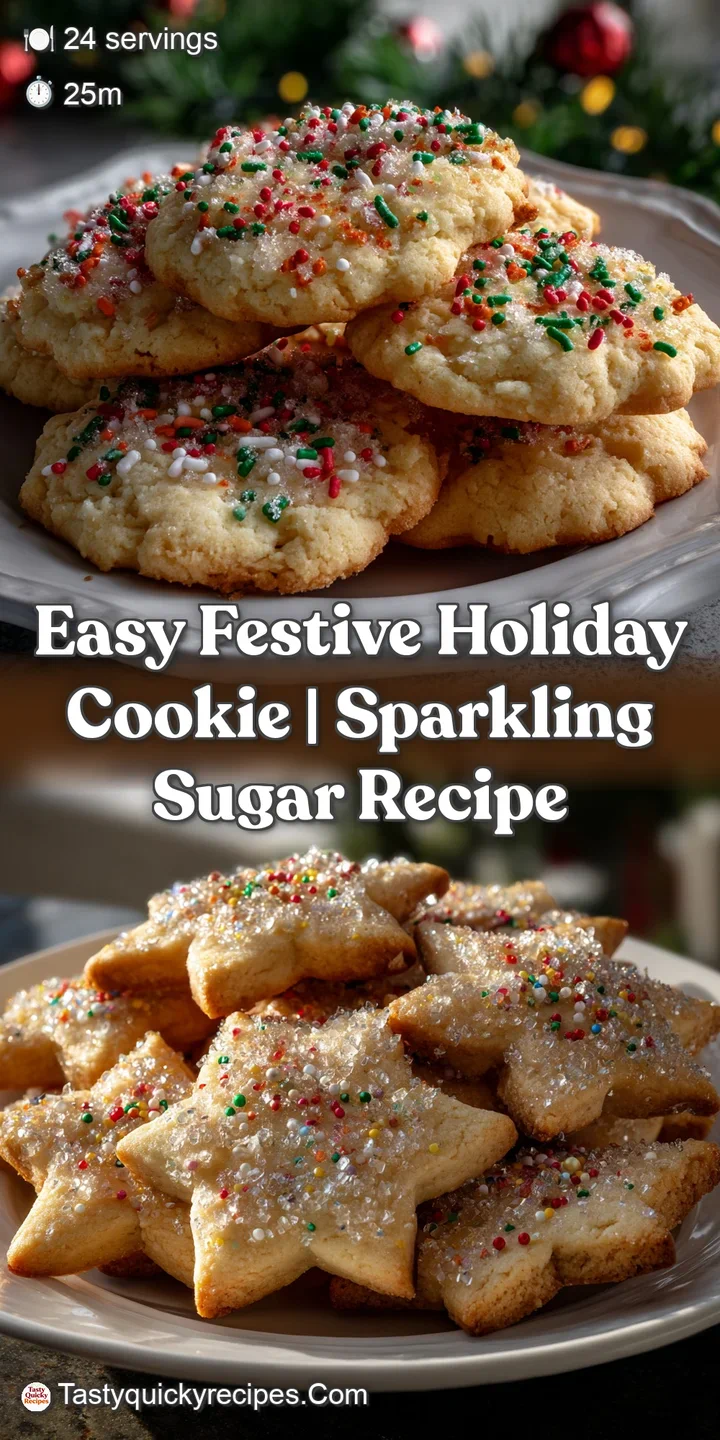
Recipe FAQs
Can I substitute the vanilla extract with imitation vanilla?
No. Imitation vanilla contains vanillin, which is sharp and lacks depth. Pure extract provides complex floral esters that the cornstarch structure relies on for its velvety finish. If you are looking for a dense, pure chocolate flavor, review the technique for deep cocoa intensity in the Crinkle Cookies: The Ultimate Fudgy Fudgy Recipe.
What is the exact science behind the cornstarch addition?
Cornstarch physically interferes with gluten polymerization in flour. Starch granules absorb water and physically separate flour proteins, resulting in shorter, weaker gluten chains that yield a tender structure.
- Inhibits tough gluten networks
- Creates a finer crumb texture
- Lowers final structural density
Should I use parchment paper or a silicone mat?
Silicone mats provide superior thermal consistency. Parchment paper can brown too quickly underneath, leading to scorching before the center is cooked through. Silicone offers consistent insulation, balancing the heat transfer from the aluminum sheet below.
Why are my cookies spreading into thin puddles on the sheet?
Butter temperature was too warm, causing early thermal collapse. When butter melts below its setting point, the fat liquefies before the flour matrix sets, leading to uncontrolled spreading.
Do I need to chill the dough before rolling or after rolling?
Chilling after rolling but before baking is marginally more effective. Chilling before rolling helps the dough come together, but chilling the formed ball slows the rate at which the butter melts in the oven, controlling outward flow. If you prefer a simple, stable frosting, you will use a similar technique for achieving a solid shell using the Sugar Cookie Icing: Royal Recipe That Hardens Flawlessly.
Myth Buster: Does high-quality sparkling sugar affect flavor?
Myth: Sparkling sugar is only for looks and has no taste impact. Reality: Higher quality sanding sugars (often larger crystal size) have a cleaner, less metallic sweetness than cheap decorator sugar. They also refract light better for superior visual appeal.
Myth Buster: Can I skip the almond extract entirely?
Myth: Almond extract is optional filler and can be omitted. Reality: Almond extract provides the crucial aromatic lift that cuts through the richness of the butter and signals "holiday baking." If you skip it, the cookies will taste overwhelmingly of plain vanilla.
Sparkling Sugar Holiday Cookies
Ingredients:
Instructions:
Nutrition Facts:
| Calories | 186 kcal |
|---|---|
| Protein | 1.7 g |
| Fat | 9.5 g |
| Carbs | 24.2 g |
| Fiber | 0.4 g |
| Sugar | 13.6 g |
| Sodium | 62 mg |
