Roasted Chicken and Vegetables: One-Pan Meal
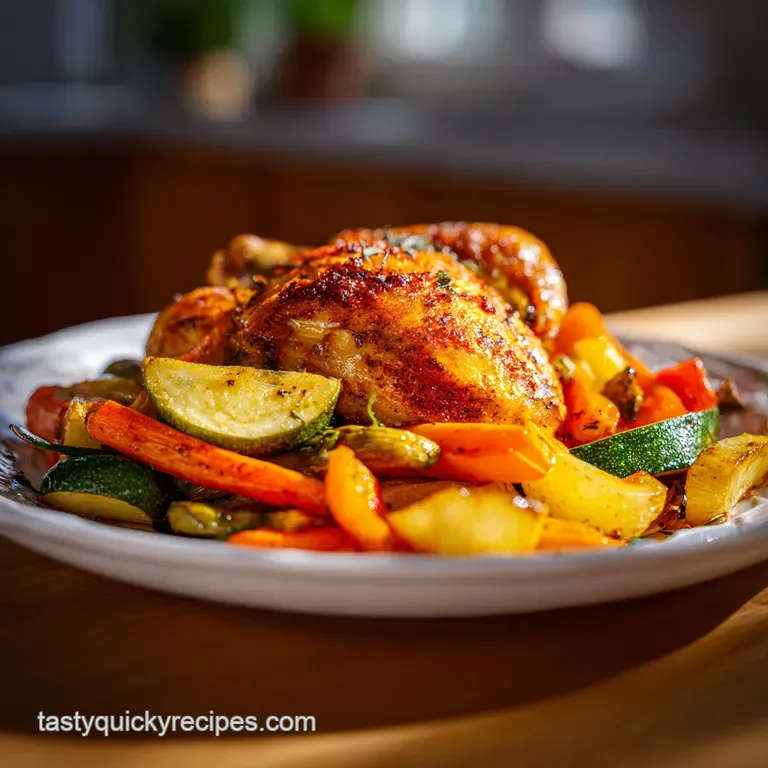
- Time: Active 15 minutes, Passive 45 minutes, Total 60 minutes
- Flavor/Texture Hook: Shatter crisp skin and jammy roasted onions
- Perfect for: Juggling weeknight chaos or effortless meal prep
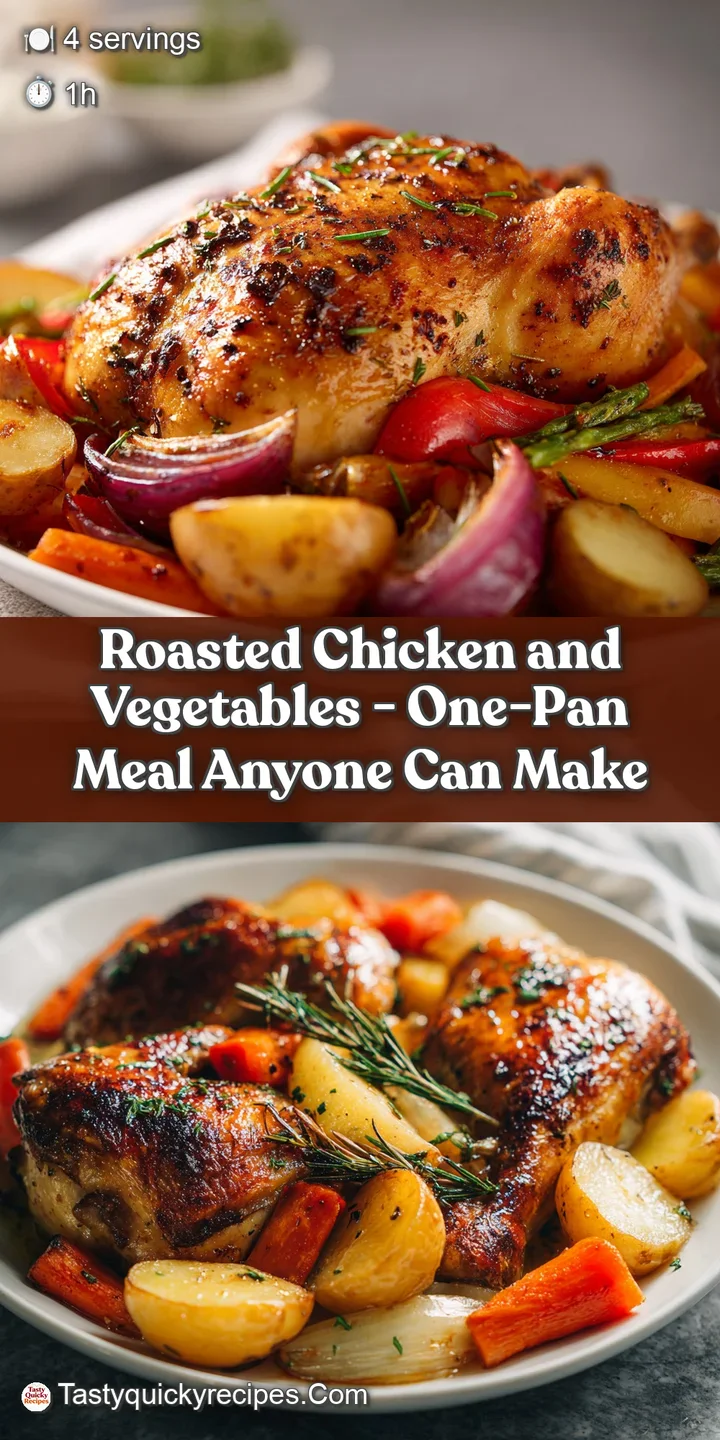
- Meal Anyone Can Make with Roasted Chicken and Vegetables
- Why High Heat Changes Everything
- Deep Dive into Recipe Components
- Minimal Tools for Easier Cleanup
- From Raw Prep to Plate
- Solving Common Roasting Obstacles Fast
- Smart Dietary and Flavor Adaptations
- Storage and Creative Leftover Uses
- Serving Ideas for Big Flavor
- Very High in Sodium
- Recipe FAQs
- 📝 Recipe Card
Meal Anyone Can Make with Roasted Chicken and Vegetables
In the sun drenched coastal villages of the Mediterranean, the hearth was once the beating heart of every home. Long before modern gadgets, families relied on the simple magic of a hot oven and a single pan to transform humble ingredients into a feast.
There is something deeply ancestral about the aroma of lemon, oregano, and poultry fat hitting a hot tray. It smells like Sunday afternoons where the only thing on the agenda was breaking bread together. Discover your new favorite weeknight meal with this simple roasted chicken and vegetables.
I remember my first attempt at this years ago; I crowded the pan so tightly that the chicken basically steamed in its own juices, turning the skin into a rubbery mess that no one wanted to touch. It was a soggy disaster. But once you understand how heat moves across a flat surface, everything changes.
You aren't just "cooking" these ingredients; you are letting the dry heat of the oven transform the sugars in the carrots and potatoes into a deep, concentrated sweetness while the chicken skin achieves that elusive, glass like shatter.
This recipe is about the beauty of the basics. We are using bone in, skin on chicken because the bone acts as an insulator, keeping the meat velvety and succulent while the skin provides the fat needed to "fry" the vegetables right there on the baking sheet.
It is a self basting system that requires almost zero intervention once it hits the oven. If you are juggling work, kids, or just a long to do list, this is the reliable back pocket meal that never lets you down.
Why High Heat Changes Everything
Surface Area Contact: Placing vegetables in a single layer ensures moisture evaporates instantly, allowing for browning rather than steaming.
Conductive Fat Transfer: The rendering chicken fat drips directly onto the potatoes, creating a confit like texture with crispy edges.
The Moisture Barrier: Patting the skin dry removes surface water that would otherwise absorb heat energy, delaying the crisping process.
The 425 Rule: High heat triggers the breakdown of amino acids and sugars faster than the internal meat can overcook.
| Servings | Ingredient Adjustments | Pan Size | Cook Time |
|---|---|---|---|
| 2 people | 1 lb chicken, 1/2 vegetables | 9x13 inch pan | 40 minutes |
| 4 people | 2 lbs chicken, full vegetables | 13x18 inch pan | 45 minutes |
| 6 people | 3 lbs chicken, 1.5x vegetables | Two 13x18 pans | 50 minutes |
When you are scaling this up for a larger family, the most important thing is to avoid the temptation to pile everything onto one tray. If those vegetables are two layers deep, they will come out mushy. Use two pans and rotate them halfway through to ensure the air circulates properly.
Deep Dive into Recipe Components
Understanding your ingredients is the first step toward kitchen confidence. We aren't just tossing things in a bowl; we are selecting specific textures that can withstand 45 minutes of intense heat.
If you used a delicate vegetable like spinach or zucchini from the start, they would vanish into a puddle of mush. Instead, we lean on sturdy roots and thick walled peppers that can take the heat and come out looking charred and beautiful.
| Ingredient | Science Role | Pro Secret |
|---|---|---|
| Yukon Gold Potatoes | High starch/medium moisture | Don't peel them; the skin holds the cube together during roasting. |
| Bone in Chicken | Thermal insulation | Leave the bone in to prevent the breast meat from drying out at 425°F. |
| Red Onion | Sugars and aromatics | Cut into thick wedges so they caramelize without burning to a crisp. |
| Garlic Cloves | Infusion | Keep the skins on while roasting to steam the garlic inside into a spreadable paste. |
Selecting the right potato is non negotiable here. While Russets are great for baking, they tend to fall apart when tossed with other vegetables. Yukon Golds have a naturally buttery texture and a thinner skin that crisps up brilliantly. For another perspective on getting that perfect bird, you might enjoy my Garlic Herb Baked Chicken which uses a similar over high heat philosophy.
Minimal Tools for Easier Cleanup
One of the biggest hurdles to cooking at home is the cleanup. This recipe is designed to minimize the "after math" of dinner. You really only need a few basic items that most people already have in their cupboards.
If you don't have a large rimmed baking sheet (often called a half sheet pan), you can use a large roasting pan, though the higher sides may trap a bit more steam.
- 13x18 inch Rimmed Baking Sheet: This provides the maximum surface area for roasting.
- Large Mixing Bowl: Essential for ensuring every inch of your vegetables is coated in oil and salt.
- Paper Towels: The secret weapon for crispy skin moisture is the enemy of the crunch.
- Instant read Thermometer: The only way to guarantee the chicken is safe without cutting into it and losing those juices.
I recommend a heavy duty aluminum or stainless steel pan. Thin, cheap pans often warp in a 425°F oven, which can lead to uneven roasting or, worse, hot oil splashing. If you find your pan is getting a bit crowded, remember that you can always use two pans.
Juggling two trays is much better than one tray of soggy food.
From Raw Prep to Plate
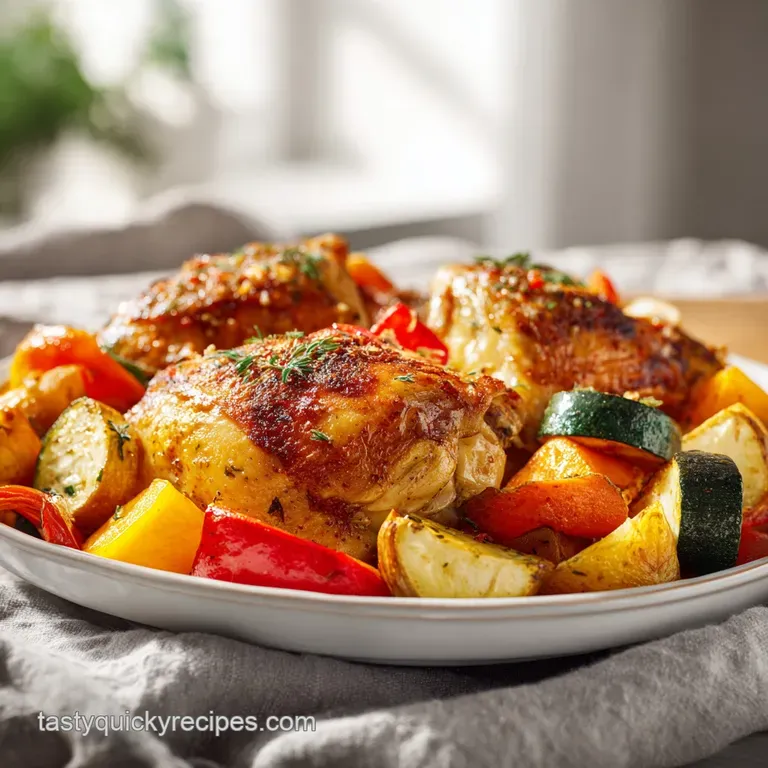
The beauty of this meal is in the rhythm. You start with the prep, get everything in the oven, and then you have 45 minutes of "me time" or "cleaning time" while the oven does the heavy lifting.
- Preheat your oven to 425°F (220°C). Note: A hot oven is crucial for immediate fat rendering.
- Toss the vegetables. In a large mixing bowl, combine the 1 lb chopped Yukon Gold potatoes, 3 sliced carrots, 1 wedged red onion, and 2 chopped bell peppers with 2 tablespoons of olive oil, 1 teaspoon of the kosher salt, and 1 tablespoon of dried oregano.
- Dry the chicken. Pat the 2 lbs of bone in, skin on chicken breasts completely dry with paper towels. until no moisture remains on the skin.
- Season the bird. Rub the remaining 1 tablespoon of olive oil and the rest of the salt (0.5 tsp) onto the chicken skin.
- Layout the tray. Spread the vegetables in a single layer on the 13x18 inch baking sheet. Note: Leave small gaps between pieces for airflow.
- Nestle the chicken. Place the chicken pieces and 4 smashed garlic cloves (skins on) among the vegetables.
- Roast. Bake for 45 minutes until the chicken skin is golden brown and the potatoes are tender.
- Check temp. Ensure an instant read thermometer hits 160°F (71°C) in the thickest part of the chicken.
- Rest and finish. Remove from the oven and let the chicken rest for 10 minutes. Squeeze fresh lemon juice from the remaining half over the tray before serving.
The 10 minute rest is the most difficult part because the smell is enticing, but it’s vital. During this time, the internal temperature will carry over to 165°F (74°C), and the juices will redistribute back into the muscle fibers.
If you cut it too soon, all that velvety moisture will end up on the pan instead of in your mouth.
Solving Common Roasting Obstacles Fast
Even with a "fail proof" recipe, things can go sideways. The most common complaint I hear is that the potatoes are still hard while the chicken is done, or the chicken skin looks pale and sad. Usually, these issues come down to how the ingredients were prepped or positioned on the tray.
Why Your Potatoes Are Still Hard
If your potatoes feel crunchy or raw while the chicken is ready, they were likely cut too large or the oven wasn't actually at 425°F. Ovens are notorious liars; some take 20 minutes to truly reach temperature even after the "beep" goes off.
| Problem | Root Cause | Solution |
|---|---|---|
| Pale Chicken Skin | Surface moisture | Pat chicken dry and don't cover it with vegetables. |
| Burnt Garlic | Exposed cloves | Nestle garlic under a piece of chicken or keep skins on. |
| Soggy Vegetables | Overcrowded pan | Use a larger pan or divide between two sheets. |
A crowded pan is the number one enemy of roasting. When vegetables are too close, they release steam. Instead of the dry oven air wicking away that moisture to create a crust, the steam gets trapped, effectively boiling your dinner.
Common Mistakes Checklist - ✓ Pat chicken completely dry with paper towels (prevents rubbery skin). - ✓ Preheat the oven for at least 20 minutes before the pan goes in. - ✓ Cut potatoes into uniform 1 inch cubes for even cooking.
- ✓ Avoid using a "cold" chicken straight from the fridge; let it sit out for 15 minutes. - ✓ Ensure vegetables are in a single layer with visible space between them.
Smart Dietary and Flavor Adaptations
This recipe is a blank canvas. While the oregano and lemon provide a classic Mediterranean profile, you can easily pivot based on what is in your pantry or your specific dietary goals. For instance, if you are looking for a leaner option, you can use bone in thighs, which are harder to overcook than breasts.
| Original Ingredient | Substitute | Why It Works |
|---|---|---|
| Yukon Gold Potatoes | Sweet Potatoes | Same roasting time; adds more fiber and Vitamin A. |
| Bell Peppers | Fennel Bulbs | Adds a sophisticated anise flavor that pairs well with chicken. |
| Dried Oregano | Dried Thyme or Rosemary | Similar woody aromatics that stand up to over high heat roasting. |
If you want a low carb version, simply swap the potatoes for cauliflower florets or radishes. Roasted radishes lose their peppery bite and become surprisingly sweet and juicy, almost like a turnip.
You can also lean into a "Mediterranean chicken with roasted vegetables" vibe by adding kalamata olives and feta cheese during the last 5 minutes of roasting.
Storage and Creative Leftover Uses
Leftover roasted chicken is a gift to your future self. It stays moist for days and can be repurposed into countless other meals. I often make a double batch just so I can have the cold chicken for salads the next day.
- - Fridge
- Keep in an airtight container for up to 4 days.
- - Freezer
- Remove meat from the bone and freeze in a zip top bag for up to 3 months.
- - Reheating
- The best way to keep the skin crispy is to use an air fryer or a 400°F oven for 5-8 minutes. Microwave reheating will make the skin soft and the meat slightly rubbery.
Zero Waste Tips: Don't you dare throw away those chicken bones or the vegetable scraps! The bones, along with the onion skins and carrot ends, are the foundation for a incredible broth. You can follow my Chicken Stock recipe to turn those leftovers into a liquid gold base for soups or risottos. It's a great way to squeeze every bit of value out of your grocery bill.
Serving Ideas for Big Flavor
While this tray is a complete meal on its own, a few finishing touches can turn it into something truly special. The pan drippings are essentially a concentrated essence of chicken and herb oil. Don't let that go to waste!
The Pan Dripping Jus
Once the chicken is resting on a carving board, I like to take the vegetables off the tray and tilt the pan to collect the juices. Whisk in a teaspoon of Dijon mustard and a splash of white wine or chicken stock. This creates a quick "pan sauce" that you can drizzle back over the meat.
Roast Chicken with Vegetables and Gravy
If you prefer a thicker sauce, you can make a quick roux with a tablespoon of butter and flour in a small saucepan, then slowly whisk in those pan drippings and some extra chicken stock. It adds a layer of comfort that is hard to beat, especially on a chilly evening.
Serve the whole tray with a side of crusty bread to soak up the lemon garlic oil left on the plate.
Roasting is more of a feeling than a strict formula. Once you see how the skin starts to bubble and the edges of the potatoes turn that perfect golden hue, you'll know you've mastered the meal anyone can make with roasted chicken and vegetables. It's fast, it's flavorful, and it brings everyone to the table.
Very High in Sodium
863 mg of sodium (38% of daily value)
The American Heart Association recommends limiting sodium intake to about 2,300mg per day, with an ideal limit of under 1,500mg for most adults.
Tips to Reduce Sodium
-
Halve the Kosher Salt-25%
Reduce the 1.5 tsp of kosher salt to 0.75 tsp. Kosher salt is a significant source of sodium, and cutting it in half will drastically lower the overall sodium content.
-
Boost Flavor with Lemon-5%
Use the juice from the half lemon you've designated for juicing. Lemon juice adds brightness and acidity, helping to compensate for reduced saltiness without adding sodium.
-
Embrace Herbs and Spices
The dried oregano and garlic provide a great flavor base. Consider adding other sodium free dried herbs like thyme or rosemary, or fresh herbs like parsley for added zest.
-
Maximize Onion and Garlic Flavor-3%
Ensure the red onion wedges and smashed garlic cloves are well distributed during cooking. Roasting them brings out their natural sweetness and savory depth, enhancing the dish's flavor profile without salt.
-
Roast Garlic Whole-2%
Instead of smashing the garlic cloves with skins on, roast them whole. This mellows their flavor and makes them creamy, and you can squeeze the roasted garlic out to mix into the dish, adding a subtle, savory sweetness.
Recipe FAQs
Is it necessary to use a convection oven for this roast?
No, this is a common misconception. A standard oven works perfectly at 425°F to achieve golden skin and tender vegetables without any special settings.
How to ensure the chicken skin stays crispy?
Pat the chicken completely dry with paper towels before adding oil. Removing surface moisture is the key to rendering fat and achieving a crisp texture; if you enjoy mastering this crispy skin technique, the same logic applies to our other poultry recipes.
Can I roast the vegetables and chicken on different pans?
Yes, but it is better to use one large 13x18 inch baking sheet. Crowding the pan prevents proper airflow, so if you must use two pans, ensure the vegetables are spread out enough to roast rather than steam.
How to know when the meal is finished roasting?
Insert an instant read thermometer into the thickest part of the chicken until it reaches 160°F. The internal temperature will climb to the safe 165°F threshold during the mandatory 10-minute resting period.
Is it true I should wash the chicken before seasoning?
No, this is a common misconception. Washing raw chicken is unnecessary and can spread bacteria in your kitchen; simply pat the meat dry to prepare it for the olive oil and salt.
How to store leftovers for the best quality?
Place the chicken and vegetables in an airtight container in the refrigerator for up to 4 days. For longer storage, remove the meat from the bone and store it in a zip-top freezer bag for up to 3 months.
How to reheat leftovers without drying out the meat?
Warm the chicken in an oven set to 400°F for 5 to 8 minutes. Using the oven rather than a microwave helps keep the skin from becoming soft and maintains the texture of the roasted vegetables.
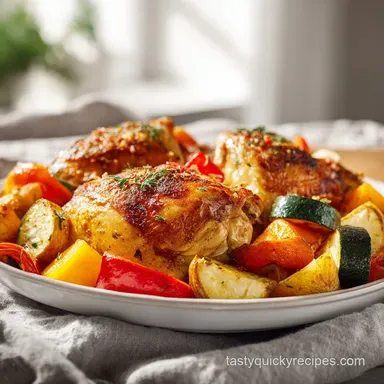
Roasted Chicken And Vegetable Dinner
Ingredients:
Instructions:
Nutrition Facts:
| Calories | 518 kcal |
|---|---|
| Protein | 48.2 g |
| Fat | 21.8 g |
| Carbs | 31.1 g |
| Fiber | 3.5 g |
| Sugar | 5.8 g |
| Sodium | 863 mg |
