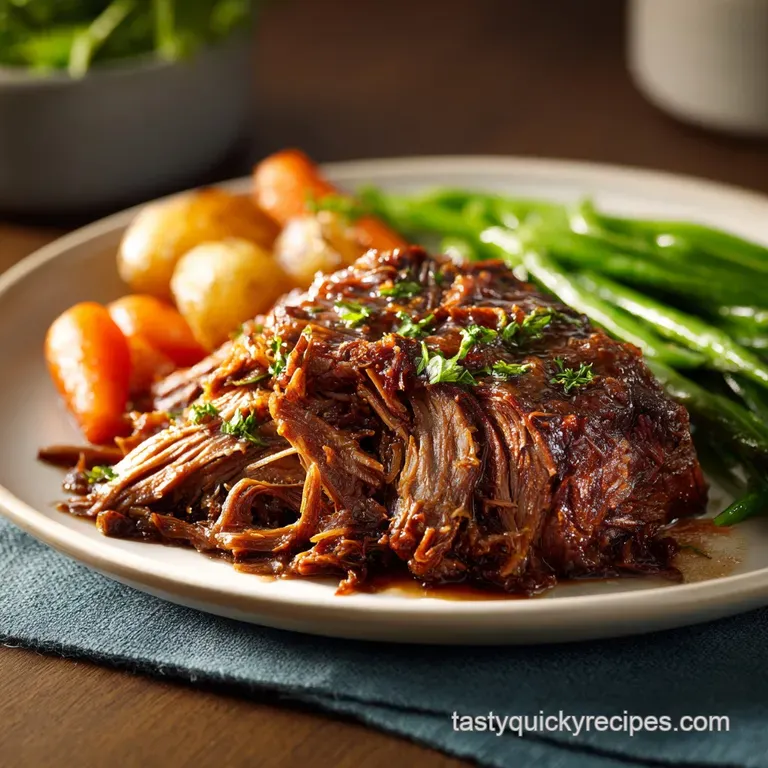
Crock Pot Roast: Fork Tender Beef
- Time: Active 20 minutes, Passive 8 hours, Total 8 hours 20 minutes
- Flavor/Texture Hook: Velvety gravy and fall apart tender beef
- Perfect for: Sunday family dinner or hands off weekday meal prep
- Why This Low and Slow Method Works Wonders
- Selecting the Best Components for Peak Flavor
- Minimal Tools Required for This One Pot Meal
- Easy Steps to Follow for a Perfect Roast
- Fixing Common Issues with Your Slow Cooker Roast
- Simple Ingredient Swaps for Busy Weeknights
- Scaling This Recipe Up or Down
- Storage and Waste Reduction for Better Leftovers
- The Best Ways to Plate and Enjoy Together
- High in Sodium
- Recipe FAQs
- 📝 Recipe Card
The second I hear that aggressive sizzle of beef hitting a hot cast iron pan, I know it's going to be a good day. There is something about the aroma of browning meat mixed with the earthy scent of rosemary that just makes a house feel like a home.
I remember the first time I tried making a Crock Pot Roast; I was juggling a toddler in one hand and a phone in the other, trying to figure out why my previous attempts always turned out like shoe leather.
It took a few "tough" lessons, but I finally realized that the secret isn't just the slow cooker itself it’s how you treat the meat before it ever touches that ceramic pot. You want that deep, dark crust on the outside to build a foundation of flavor that no amount of seasoning can replicate later.
This recipe is the result of years of tinkering, and honestly, it’s the one my family begs for every time the temperature drops below sixty degrees.
We’re going for a texture that doesn't just cut it yields. We want carrots that are soft enough to crush with a fork but haven't turned into baby food. And the potatoes? They should be like little sponges, soaking up every drop of that wine infused beef broth.
It’s a soulful, hearty meal that feels like a warm hug at the end of a long, chaotic day.
Why This Low and Slow Method Works Wonders
The Collagen Conversion: As the beef sits at a steady low heat, the tough collagen fibers slowly melt into gelatin, which creates a silky mouthfeel and keeps the meat moist.
Aromatic Infusion: The enclosed environment of the slow cooker traps volatile flavor compounds from the rosemary and thyme, forcing them back into the fibers of the roast.
Starch Gelatinization: Yukon Gold potatoes release just enough starch during the long simmer to naturally thicken the surrounding liquid into a light gravy.
Maillard Reinforcement: Searing the meat initially creates complex sugars and umami notes that continue to develop and season the broth throughout the eight hour cycle.
| Beef Thickness | Internal Temp | Rest Time | Visual Cue |
|---|---|---|---|
| 2 Inches | 145°F (63°C) | 10 mins | Slices cleanly |
| 3 Inches | 195°F (90°C) | 15 mins | Shreds with fork |
| 4+ Inches | 205°F (96°C) | 20 mins | Falls apart completely |
Cooking a large cut like this requires patience. While we often aim for medium rare in a steak, a pot roast is all about reaching that higher internal temperature where the magic happens. If you stop too early, you'll be chewing for days. If you're looking for more beefy goodness, you might love my Chuck Roast in recipe which takes a similar approach to achieving that melt in-your mouth finish.
The Collagen Conversion Process
When you cook a 3.5 lbs beef chuck roast, you are dealing with a muscle group that did a lot of work. This means it is packed with connective tissue. Unlike a ribeye, you cannot just sear this and serve. The "low and slow" approach is a biological necessity.
By keeping the temperature steady for 8 hours, those tough white strands of collagen literally transform into liquid gold. This is what gives the meat its "velvety" texture and ensures every bite is succulent rather than stringy.
Maillard Reaction for Flavor
The Maillard reaction is that beautiful browning that happens when proteins and sugars hit high heat. While the slow cooker is great at tenderizing, it is terrible at browning. That is why we sear the roast in oil first. This step creates hundreds of different flavor compounds that don't exist in raw meat.
These flavors then dissolve into the 1 cup beef bone broth and 0.5 cup dry red wine, creating a depth of flavor that is impossible to achieve by just "dumping and starting."
Layering Your Vegetables Correctly
Physics plays a role in your slow cooker. The heating element is usually on the bottom and sides. To ensure your 1.5 lbs Yukon Gold potatoes and 1 lb large carrots cook through without turning to mush, placement is key.
Sturdier root vegetables go at the bottom where they are closer to the heat source and submerged in the liquid. This allows them to braise effectively while the meat sits on top, gently steaming and dripping its flavorful juices over them.
Selecting the Best Components for Peak Flavor
| Ingredient | Science Role | Pro Secret |
|---|---|---|
| Chuck Roast | Fat & Collagen | Look for "choice" grade with heavy white marbling for maximum tenderness. |
| Red Wine | Acid & Tannins | Use a dry Cab or Merlot; the acid breaks down protein while tannins add structure. |
| Bone Broth | Umami Base | Bone broth has more gelatin than regular broth, leading to a richer, thicker gravy. |
| Yukon Gold | Starch Control | These hold their shape better than Russets but have a creamier, buttery interior. |
Picking the right ingredients is half the battle when you're juggling a busy schedule. You want things that can stand up to 8 hours of heat. If you're curious about different ways to handle beef in the slow cooker, checking out a Beef Stew Crockpot recipe can give you a great perspective on how smaller cuts behave compared to a whole roast.
For the Main Roast
- 3.5 lbs beef chuck roast: Well marbled. Why this? Marbling melts during cooking, providing internal basting for the meat fibers.
- 2 tbsp neutral oil: For over high heat searing. Why this? Prevents smoking and allows for a deep, dark crust development.
- 2 tsp kosher salt: For seasoning.
- 1 tsp freshly cracked black pepper: Added bite.
- 2 tbsp all purpose flour: To dust the meat. Why this? Helps the sear and starts the thickening process for the gravy.
For the Aromatics & Liquid
- 1 large yellow onion: Cut into thick wedges.
- 4 cloves garlic: Smashed. Why this? Smashed garlic releases oils slowly over the 8 hour cook time.
- 1 cup beef bone broth: High protein liquid.
- 0.5 cup dry red wine: For acidity.
- 1 tbsp Worcestershire sauce: The umami bomb.
- 2 sprigs fresh rosemary: Earthy notes.
- 4 sprigs fresh thyme: Floral balance.
The Vegetable Foundation
- 1.5 lbs Yukon Gold potatoes: Halved or quartered.
- 1 lb large carrots: 2 inch chunks. Why this? Larger chunks won't disintegrate during the 8 hour slow cook cycle.
- 2 stalks celery: 1 inch pieces.
Minimal Tools Required for This One Pot Meal
You don't need a kitchen full of gadgets to pull this off. In fact, keeping it simple is part of the charm. I'm a big fan of the "less is more" approach when I'm juggling family tasks. A standard 6 quart slow cooker (like a Crock Pot or Hamilton Beach) is perfect for a 3.5 lbs roast.
You'll also want a heavy bottomed pan for the initial sear. A cast iron skillet is my go to because it holds heat like a champ, but a stainless steel pan works too.
Chef's Tip: Freeze your butter for 10 minutes before grating it into the gravy at the very end. This "cold emulsion" creates a glossy, restaurant quality finish that looks absolutely stunning.
| Feature | Stovetop/Oven | Slow Cooker (Crock Pot) |
|---|---|---|
| Control | High - easy to burn | Set and forget |
| Liquid | High evaporation | Minimal evaporation |
| Texture | Crispier top | Fully tender/braised |
While the oven is great, the slow cooker excels because it maintains a moist environment. This prevents the top of the roast from drying out, which can happen in an oven if your lid doesn't fit perfectly. If you are really in a rush, a Chicken Pot Pie recipe is another great slow cooker win that uses similar layering logic.
Easy Steps to Follow for a Perfect Roast
- Pat the 3.5 lbs beef chuck roast dry with paper towels. Note: Moisture is the enemy of a good sear; it creates steam instead of a crust.
- Season the meat generously with 2 tsp kosher salt and 1 tsp black pepper, then dust lightly with 2 tbsp all purpose flour.
- Heat 2 tbsp oil in a skillet over medium high heat until it begins to shimmer and smoke slightly.
- Sear the roast for 5 minutes per side until a deep, mahogany crust forms and the meat releases easily.
- Transfer the meat to a plate and add the 1 large yellow onion and 4 cloves garlic to the hot skillet, stirring for 2 minutes.
- Pour in 0.5 cup dry red wine to deglaze, scraping the bottom of the pan until all the brown bits (fond) are dissolved.
- Place the 1.5 lbs potatoes, 1 lb carrots, and 2 stalks celery in the bottom of the slow cooker.
- Lay the seared roast on top of the vegetables and pour the wine/onion mixture and 1 cup bone broth over everything.
- Add 1 tbsp Worcestershire sauce and tuck the rosemary and thyme sprigs around the sides.
- Cover and cook on Low for 8 hours until the meat yields to a fork with zero resistance.
1. The Flavor Foundation (Searing)
Don't skip the sear. I know it's an extra dish to wash, but the difference in flavor is night and day. When you hit that beef with high heat, you're not "sealing in juices" (that's a myth!), you're creating flavor. You want to see a "shatter crisp" crust on the edges.
That crust will eventually soften in the slow cooker, but the flavor it leaves behind in the liquid is what makes this the best Crock Pot Roast you've ever had.
2. Deglazing the Pan
After the meat comes out, the pan will be covered in dark, stuck on bits. That is pure flavor. By adding the wine while the pan is hot, you're lifting those bits off. This liquid becomes the base of your braise. If you don't do this, you're literally washing flavor down the sink.
It's a quick 2 minute step that pays massive dividends in the final gravy.
3. Layering for Success
Put the veggies on the bottom. Why? Because they take longer to soften in a slow cooker than you'd think. The beef provides a "lid" for the vegetables, trapping steam and heat. Plus, as the fat renders out of the 3.5 lbs chuck roast, it drips down and seasons the potatoes and carrots.
It’s like they’re being cooked in beef confit.
4. The Braising Liquid
We only use 1 cup of bone broth and 0.5 cup of wine. You might think, "That's not enough liquid!" Trust the process. The meat and vegetables will release a significant amount of their own moisture as they cook. If you add too much liquid at the start, you'll end up with beef soup rather than a concentrated, rich gravy.
5. The Finishing Touch (The Gravy)
Once the 8 hours are up, the liquid in the pot will be thin but incredibly flavorful. If you want a thicker sauce, you can whisk a little cornstarch with cold water and stir it in for the last 15 minutes.
Honestly, though, if you used the flour coating on the meat, the natural starches from the Yukon Golds usually do the trick perfectly.
Fixing Common Issues with Your Slow Cooker Roast
To Fix Tough Meat
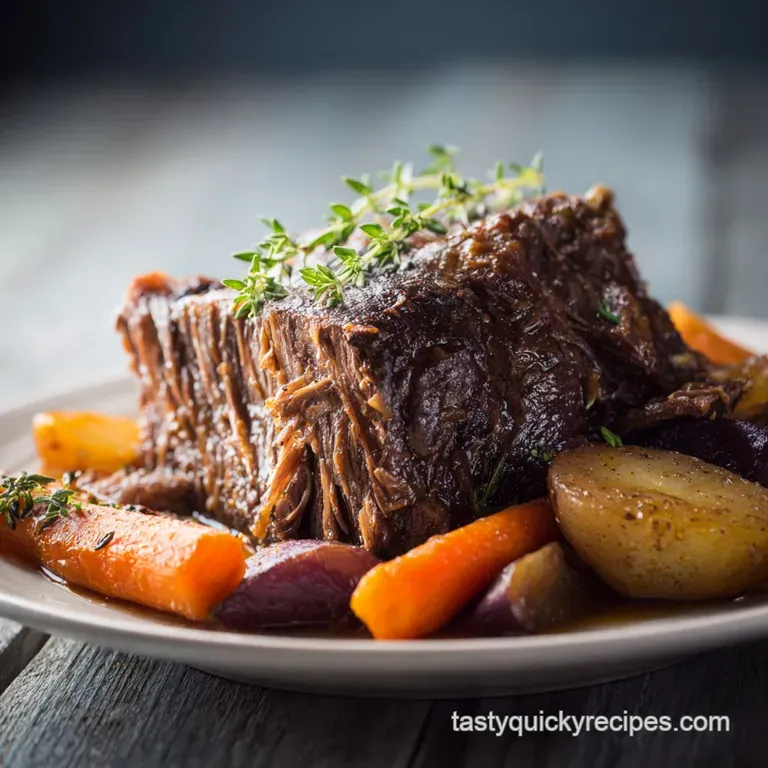
If you pull the lid off after 8 hours and the meat is still bouncy or tough, it simply hasn't cooked long enough. Every slow cooker runs at a slightly different temperature. Don't panic. Put the lid back on and give it another hour.
Toughness in a chuck roast is almost always a sign that the collagen hasn't finished its conversion to gelatin. It's rarely a sign of overcooking in a moist environment.
For a Greasy Gravy
Sometimes a particularly well marbled 3.5 lbs roast releases more fat than expected. If you see a thick layer of oil on top, don't stir it in! Use a large spoon to gently skim the surface, or better yet, dip a rolled up paper towel across the top to soak up the excess oil.
This ensures your gravy is velvety and rich, not heavy and greasy.
To Prevent Mushy Vegetables
If your carrots and potatoes are falling apart before the meat is done, you likely cut them too small. For an 8 hour cook, you need "clunky" vegetables. Carrots should be at least 2 inches long, and potatoes should be halved, not diced.
If you prefer smaller veggies, wait and add them 4 hours into the cooking cycle instead of at the beginning.
| Problem | Root Cause | Solution |
|---|---|---|
| Meat is dry/stringy | Cooked on High for too long | Always use the Low setting for 8 hours to allow fat to render. |
| Bland flavor | Skipped the searing step | Ensure meat is browned deeply before adding to the pot. |
| Gravy is too thin | Too much added liquid | Reduce broth to 1 cup; the beef will release its own juices. |
Common Mistakes Checklist
- ✓ Don't use lean meat: A round roast or sirloin tip will be dry; stick to the well marbled chuck.
- ✓ Avoid "High" setting: High heat can boil the meat, making the proteins tighten and become tough.
- ✓ Keep the lid closed: Every time you peek, you lose 15-20 minutes of heat and moisture.
- ✓ Season in layers: Salt the meat, then taste the gravy at the end and adjust again.
- ✓ Pat it dry: Seriously, if the meat is wet, it won't brown; it will just turn grey.
Simple Ingredient Swaps for Busy Weeknights
| Original Ingredient | Substitute | Why It Works |
|---|---|---|
| Red Wine (0.5 cup) | Extra Bone Broth + 1 tbsp Balsamic | Provides the necessary acidity without the alcohol content. |
| Yukon Gold Potatoes | Red Bliss Potatoes | Similar waxy texture that holds up well during long cook times. |
| Fresh Rosemary | 1 tsp Dried Rosemary | Concentrated flavor. Note: Use 1/3 the amount of dried vs fresh. |
Sometimes the grocery store is out of what you need, or you're just trying to use what's in the pantry. If you find yourself without beef, you can actually use these same aromatics for a Crock Pot Bucket recipe which works wonders with smaller cuts of beef.
The Zesty Variation: Mississippi Pot Roast
If you want a tangier version, swap the rosemary and thyme for a packet of ranch seasoning and a handful of pepperoncini peppers. Keep the 3.5 lbs chuck roast the same. It’s a cult favorite for a reason the vinegar in the peppers cuts through the fat of the beef in a way that is incredibly addictive.
Cooking Roast From Frozen
I get it sometimes you forget to thaw the meat. You can cook a Crock Pot Roast from frozen, but you must increase the cook time to 10-12 hours on Low.
Also, you won't be able to sear it effectively, so I recommend adding an extra tablespoon of Worcestershire or a splash of soy sauce to compensate for the missing Maillard flavors.
Boosting Savory Umami Depth
If you want to take the flavor to a "professional" level, add a tablespoon of tomato paste to the onions while they sauté. The concentrated tomato sugars will caramelize and add a dark, savory backbone to the gravy that makes people ask, "What is in this?" It's a tiny change that makes a massive impact.
Scaling This Recipe Up or Down
Scaling Down (Feeding 2-3 people): Use a 1.5 lb roast and halve all other ingredients. You can use a smaller 3 quart slow cooker. Reduce the cook time to about 6 hours on Low. If using a large pot for a small roast, the liquid will evaporate faster, so keep an eye on it.
Scaling Up (Feeding 12-14 people): Use two 3.5 lbs roasts. Do not double the liquid! Use 1.5 cups of broth and 0.75 cups of wine. If you double the liquid, it won't reduce properly and the flavor will be diluted. You will likely need an 8 quart slow cooker or two separate 6 quart units.
- Decision Shortcut
- If you want...
- Maximum Gravy
- Increase bone broth to 1.5 cups and add a cornstarch slurry at the end.
- Firm Vegetables
- Add the carrots and potatoes only during the last 4 hours of cooking.
- More Acid
- Add an extra tablespoon of red wine vinegar or balsamic just before serving.
Storage and Waste Reduction for Better Leftovers
- Fridge
- Keep in an airtight container for up to 4 days. The flavors actually improve on day two!
- Freezer
- This freezes beautifully for up to 3 months. Freeze the meat and gravy together to prevent freezer burn.
- Reheating
- Gently on the stove over medium low heat. Avoid the microwave if possible, as it can make the beef rubbery.
Zero Waste Tips: Don't throw away those celery leaves! Chop them up and use them as a fresh garnish they have a bright, herbal flavor. If you have leftover gravy but no meat, use it as a base for a quick beef barley soup or pour it over mashed potatoes the next night.
The bones (if you bought a bone in roast) can be tossed back into a pot with water to start a fresh batch of beef stock.
The Best Ways to Plate and Enjoy Together
When it's time to eat, I like to take the roast out and let it rest on a cutting board for about 10 minutes. This lets the fibers relax. While it rests, I'll strain the liquid into a fat separator. You're left with this gorgeous, dark "jus" that you can pour back over the shredded meat.
For the best experience, serve this in wide, shallow bowls. Place a big heap of the Yukon Golds and carrots on one side, a generous portion of the fall apart beef on the other, and ladle that silky gravy over everything. A piece of crusty sourdough bread is mandatory for mopping up the bottom of the bowl.
- Myth 1
- "Searing seals in juices." Reality: Searing is for flavor (Maillard reaction). Moisture loss happens regardless of the sear; the crust just makes it taste better.
- Myth 2
- "You must cover the meat in liquid." Reality: This is braising, not boiling. The meat only needs to be partially submerged. The steam does the rest of the work.
- Myth 3
- "High is just faster Low." Reality: High heat can actually toughen the proteins before the collagen has a chance to melt. Stick to Low for the best texture.
And there you have it. It’s not just a meal; it’s a strategy for surviving a busy week while still eating like royalty. Trust the slow cooker, trust the sear, and most importantly, trust the process. Your kitchen is about to smell incredible. For another comforting slow cooker classic, don't forget to check out my Pot Roast Crock Pot recipe for a slightly different take on this family favorite. Enjoy!

High in Sodium
845 mg mg of sodium per serving (37% of daily value)
The American Heart Association recommends limiting sodium intake to no more than 2,300mg per day for most adults.
Tips to Reduce Sodium in Your Pot Roast
-
Low-Sodium Broth-30%
Replace the regular beef bone broth with a low-sodium or no-salt added version. This is a significant source of sodium in the recipe.
-
Reduce Added Salt-25%
Decrease the amount of kosher salt used from 2 tsp to 1 tsp. Taste and adjust seasoning after cooking to avoid over salting.
-
Limit Worcestershire-20%
Worcestershire sauce is high in sodium. Reduce the amount from 1 tbsp to 1/2 tbsp, or consider using a low-sodium alternative.
-
Salt Free Seasoning
Experiment with salt free seasoning blends to enhance the flavor of your pot roast without adding extra sodium. Consider blends with garlic, onion, and other herbs.
Recipe FAQs
What is the best liquid to cook pot roast in?
Beef bone broth mixed with dry red wine. The bone broth provides gelatin for a rich texture, while the acid in the wine helps tenderize the muscle fibers.
Is it better to cook pot roast on high or low in a crock pot?
Low is significantly better for texture. Cooking on Low for 8 hours allows tough collagen to slowly convert into moist gelatin; cooking on High risks boiling the meat and tightening the proteins.
What are common mistakes when making crock pot roast?
Skipping the initial high heat sear is the biggest error. Searing creates the essential Maillard flavor base that the slow cooker cannot develop on its own; see how we use this technique for richer flavor in our Beef Stew with recipe.
Can you put a raw roast in a crock pot?
Yes, but flavor quality will suffer greatly. While the meat will cook through, you miss out on developing critical umami flavors from the Maillard reaction that only high heat searing provides.
How do I ensure my vegetables aren't mushy when the roast is done?
Place the sturdy root vegetables on the bottom layer of the pot. This positions them closer to the heating element for necessary cooking time, while the meat gently steams above them.
What should the internal temperature be for fork tender pot roast?
Aim for 195°F (90°C) for shreddable tenderness. While steaks are done around 145°F, pot roast needs this higher temperature for the connective tissues to fully break down into velvety gelatin.
Is it true that I must use a lot of liquid to cover the roast?
No, this is a common misconception; less liquid is better for gravy. Only partially submerge the meat (about one-third up the sides); the meat releases its own moisture, and too much liquid results in thin, watery sauce.
Crock Pot Roast Masterpiece
Ingredients:
Instructions:
Nutrition Facts:
| Calories | 578 kcal |
|---|---|
| Protein | 47.6g |
| Fat | 28.3g |
| Carbs | 29.4g |
| Fiber | 4.8g |
| Sugar | 5.2g |
| Sodium | 845mg |
