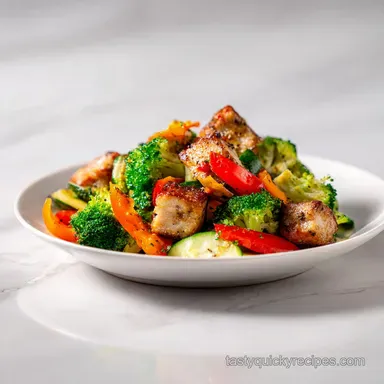
Chicken Vegetable Skillet: Healthy and One-Pot

- Time:15 minutes active + 20 minutes cooking = Total 35 minutes
- Flavor/Texture Hook: Mahogany crusted chicken with vibrant, crisp tender vegetables
- Perfect for: Fast weeknight dinner or low carb meal prep
That loud, rhythmic sizzle of chicken hitting a hot pan is the sound of victory. But let's be real, we've all been there: you throw the chicken and the veggies in together, thinking you're being efficient, and end up with a grey, watery mess.
The chicken is rubbery, and the zucchini has basically dissolved into a mushy paste. It's frustrating because the ingredients are great, but the execution turns a healthy meal into a chore to eat.
The fix isn't a fancy tool or a secret ingredient, it's all about the sequence. By treating the pan like a stage where each ingredient has its own entrance, we avoid the "steaming" trap. This Chicken Vegetable Skillet is designed to give you that over high heat sear and vibrant color without the fuss of multiple pots.
You can expect a meal where the chicken has a velvety interior and a crusty exterior, and the broccoli still has a bit of a snap. We're using a simple deglazing trick at the end to pull every bit of flavor off the pan and coat everything in a light, savory glaze.
Right then, let's get into how to actually make this happen.
The Secret to Chicken Vegetable Skillet
When you make a Chicken Vegetable Skillet, you're essentially fighting a battle against moisture. Vegetables release water as they heat up. If you crowd the pan or add them too early, that water pools, the temperature drops, and instead of searing, your food boils. This is why the order of operations is non negotiable.
The trick is the "staggered entry." We start with the chicken to get that deep brown color, remove it to make room, and then add the vegetables based on how long they take to soften. Carrots are tough, so they go in first. Zucchini is mostly water, so it goes in last.
This ensures that by the time the chicken returns to the pan, everything is finished at the exact same moment.
Trust me on this: don't be tempted to leave the chicken in the pan while you do the veggies. If you do, the chicken will overcook and turn into pencil erasers while you're waiting for the carrots to soften. Taking it out for a few minutes doesn't hurt the temperature; it actually saves the texture.
What Stops the Sogginess: High heat evaporates surface moisture quickly, allowing the food to brown rather than steam. This creates a concentrated flavor layer on the bottom of the pan that we later stir back in.
Protein Texture: Searing the chicken separately prevents the juices from leaking into the vegetables, which keeps the meat juicy and the veggies crisp.
Layered Aromatics: Adding garlic at the very end prevents it from burning and becoming bitter, keeping the scent fresh and sharp.
The Deglaze Effect: Adding a splash of broth at the end lifts the browned bits (the fond) and turns them into a cohesive sauce.
| Method | Time | Texture | Best For |
|---|---|---|---|
| Fast Sauté | 35 mins | Crispy edges, snappy veg | Weeknight rush |
| Classic Stew | 1.5 hours | Soft, integrated flavors | Sunday comfort |
| Sheet Pan | 45 mins | Roasted, caramelized | Hands off cooking |
Component Analysis
Every ingredient here has a job. We aren't just throwing things in for color; we're balancing textures and flavors. For more in depth nutritional insights, check out resources like the USDA FoodData Central or MyFitnessPal. Enjoy this breakdown of why these specific items make the cut.
| Ingredient | Science Role | Pro Secret |
|---|---|---|
| Chicken Breast | Protein Base | Cut into exact 1 inch cubes for uniform cooking |
| Broccoli | Texture/Bulk | Keep florets small so they cook in under 4 minutes |
| Chicken Broth | Flavor Bridge | Use low sodium to control the salt levels |
| Paprika | Color/Earthiness | Adds a smoky depth that mimics a grill |
Shopping List Breakdown
When grabbing your gear for this Chicken Vegetable Skillet, look for the freshest produce you can find. If the broccoli looks limp, your final dish will feel soggy. I always suggest buying the whole head of broccoli rather than the pre cut bags, as they stay crisp longer.
The Protein - 1 lb boneless, skinless chicken breast, cut into 1 inch cubes Why this? Lean protein that sears quickly without excess fat. Substitute: Chicken thighs for more moisture, but trim the fat.
The Vegetable Medley
- 2 cups broccoli florets, bite-sized Why this? Adds a crunch and absorbs the sauce. Substitute: Cauliflower for a milder taste.
- 2 medium carrots, sliced into thin rounds Why this? Provides sweetness and a firm bite. Substitute: Parsnips for an earthier flavor.
- 1 large zucchini, halved and sliced Why this? Adds a soft, velvety texture. Substitute: Yellow squash for a similar profile.
- 1 red bell pepper, chopped into 1 inch pieces Why this? Bright acidity and sweetness. Substitute: Orange pepper for a sweeter note.
- 1/2 yellow onion, diced Why this? The aromatic foundation. Substitute: Shallots for a more refined, garlic like taste.
The Flavor Base
- 2 tbsp olive oil Why this? High smoke point for searing. Substitute: Avocado oil for even higher heat.
- 3 cloves garlic, minced Why this? Punchy, savory aromatic. Substitute: 1 tsp garlic powder if fresh isn't available.
- 1 tsp dried oregano Why this? Herbaceous, Mediterranean note. Substitute: Dried thyme for a woodsy flavor.
- 1 tsp paprika Why this? Adds color and a hint of smoke. Substitute: Smoked paprika for a bolder BBQ vibe.
- 1/2 tsp salt Why this? Basic flavor enhancer.
- 1/4 tsp black pepper Why this? Subtle heat.
- 1/4 cup low sodium chicken broth Why this? Deglazes the pan and creates a light sauce. Substitute: Dry white wine for a more "restaurant" feel.
- 1 tbsp fresh parsley, chopped Why this? Fresh finish to cut through the richness. Substitute: Fresh cilantro for a zestier finish.
Equipment You'll Need
You don't need a professional kitchen for this, but the pan choice is huge. A wide, heavy bottomed skillet is your best friend here. If you use a small pan, you'll crowd the ingredients, the temperature will drop, and you'll be back to that steaming problem we talked about.
I prefer a stainless steel or cast iron skillet because they hold heat better than non stick. However, if you're worried about the chicken sticking, a high-quality non stick pan works just fine, though you might lose a bit of that mahogany crust.
You'll also need a sharp chef's knife. Since we're cutting everything into 1 inch pieces, consistency is key. If the chicken is huge and the carrots are tiny, the carrots will be mush by the time the chicken is safe to eat.
From Prep to Plate
Right then, let's get cooking. Follow these steps exactly to ensure your Chicken Vegetable Skillet doesn't turn into a soup. To get that delightful golden brown crust on the chicken, start by ensuring that your skillet is hot before adding the meat, as detailed in this searing guide.
- Toss the cubed chicken with salt, pepper, paprika, and oregano in a medium bowl. Note: Coating the meat first ensures every side gets seasoned.
- Heat olive oil in the skillet over medium high heat. Once the oil shimmers, add chicken in a single layer.
- Cook the chicken undisturbed for 3 minutes until a mahogany colored crust forms.
- Stir and cook for another 2-3 minutes until golden on all sides. Remove chicken to a plate.
- Add diced onion and carrots to the same pan. Cook for 4-5 minutes until onions are translucent and carrots soften.
- Stir in broccoli and red bell pepper. Sauté for 3-4 minutes until colors become vibrant.
- Add zucchini and minced garlic. Cook for 2 minutes until garlic is fragrant.
- Return the chicken to the pan.
- Pour in the chicken broth, scraping the browned bits from the bottom. Stir 1-2 minutes until the sauce coats everything in a velvety glaze.
- Garnish with fresh chopped parsley and serve immediately.
Chef Note: When you pour in the broth, don't just stir. Use a wooden spoon to actively scrape the bottom of the pan. Those brown bits are concentrated flavor crystals. If you leave them, you're leaving the best part of the meal behind.
Common Mistakes and Fixes

The most common issue people have with this Chicken Vegetable Skillet is the "Watery Pan Syndrome." This happens when too many vegetables are added at once, or the heat is too low. Instead of searing, the vegetables release their juices, and you end up boiling the chicken.
Another frequent mistake is overcooking the zucchini. Zucchini is like a sponge; if it stays in the pan for more than 3-4 minutes, it loses its structure and becomes limp. Always add it last, just before the chicken returns.
Why Your Chicken Is Rubbery
This usually happens if the pan wasn't hot enough when the chicken went in, or if you stirred the meat too often. The chicken releases moisture, stays in its own juices, and steams rather than sears.
Why Your Veggies Are Mushy
This is a result of adding the vegetables in the wrong order or overcrowding the pan. If the pan is too full, the steam can't escape, and the vegetables cook in a humid environment.
| Problem | Root Cause | Solution |
|---|---|---|
| Pale chicken | Heat too low | Increase to medium high; wait for oil to shimmer |
| Soggy broccoli | Overcooked | Reduce sauté time to 3 minutes; keep heat high |
| Burnt garlic | Added too early | Always add garlic in the last 2 minutes of veggie cook |
Success Checklist
- ✓ Chicken was patted dry before seasoning to ensure a better sear.
- ✓ Pan was hot enough that the oil shimmered before adding meat.
- ✓ Vegetables were added in the specific order: onion/carrot → broccoli/pepper → zucchini/garlic.
- ✓ Chicken was removed from the pan during the vegetable phase.
- ✓ Pan was deglazed with broth to incorporate all browned bits.
Ways to Customize It
Don't hesitate to make the Chicken Vegetable Skillet your own! Everyone’s palate varies, so experiment with the seasonings as suggested by how to season to perfection. The base of this recipe is very flexible.
If you want a more Asian inspired flavor, swap the oregano and paprika for ginger and soy sauce. Instead of chicken broth, use a mix of soy sauce and a teaspoon of honey. This turns the dish into a quick stir fry.
For a Mediterranean vibe, add some kalamata olives and a sprinkle of feta cheese right before serving. You could even use a homemade Chicken Stock to deepen the savory notes of the pan sauce.
Decision Shortcut
- If you want more heat, add 1/2 tsp red pepper flakes with the garlic.
- If you want a creamier finish, stir in 1 tbsp of butter with the broth.
- If you want a low carb version, skip the carrots and use extra zucchini.
Adjusting the Portion Size
Scaling this recipe requires a bit of care because the "crowding" issue gets worse as you add more food. If you're doubling the recipe, please don't just use the same skillet.
Scaling Down (Half Batch) When making this for one or two people, use a smaller 10 inch skillet. You can reduce the cooking time for the vegetables by about 20% because there's less mass in the pan to heat up.
Be careful with the garlic; 3 cloves for a full batch is great, but for a half batch, 1 large clove is usually plenty to avoid overpowering the dish.
Scaling Up (Double or Triple Batch) If you're feeding a crowd, work in batches. Sear the chicken in two separate rounds so the pan stays hot. If you crowd 2 lbs of chicken into one pan, it will steam, and you'll lose that mahogany crust.
For the liquids, don't double the broth exactly. Increase it by about 1.5x. Too much liquid will turn your skillet into a stew, and we want a glaze. Similarly, keep the salt and spices to 1.5x and taste as you go, as these can become too intense when scaled linearly.
| Goal | Adjustment | Result |
|---|---|---|
| More Protein | Add 1/2 lb chicken | Cook in batches to avoid steaming |
| More Veggies | Add 1 cup spinach | Stir in at the very end until wilted |
| Less Salt | Swap broth for water | Lighter flavor; add a squeeze of lemon |
Tackling Common Misconceptions
There's a common belief that you need to "seal in the juices" by searing meat at high heat. In reality, searing doesn't create a waterproof seal. Moisture loss happens regardless of the sear.
However, the crust created by that high heat adds an incredible depth of savory flavor that you simply can't get from poaching or baking.
Another myth is that all vegetables should be cooked until they're "soft." For a Chicken Vegetable Skillet, that's actually a mistake. The goal is "crisp tender." This means the vegetable is cooked through but still has a structural snap.
This provides a contrast to the velvety chicken and makes the dish feel fresh rather than heavy.
Some people think you need a special "stir fry" pan or a wok for this. While a wok is great for extremely over high heat cooking, a standard heavy skillet is actually better for the deglazing step. The flatter bottom provides more surface area for the "fond" to build up, which is where the magic happens.
Storage and Zero Waste
If you have leftovers, this dish holds up surprisingly well. Store your Chicken Vegetable Skillet in an airtight container in the fridge for up to 3 days.
To reheat, I strongly recommend using a skillet over medium heat with a tiny splash of water or broth. Microwaving can make the broccoli a bit mushy and the chicken rubbery. Heating it in a pan restores some of that texture and prevents the vegetables from becoming waterlogged.
This recipe doesn't freeze particularly well because the zucchini and broccoli tend to release too much water when thawing, which can leave you with a soggy mess. If you must freeze it, do so for no more than 1 month and reheat slowly in a covered pan.
Zero Waste Tips
- Veggie Scraps: Save your onion skins, carrot peels, and the ends of the zucchini in a freezer bag. Once you have enough, simmer them with water to make a basic vegetable stock.
- Broccoli Stems: Don't throw away the stems! Peel the tough outer skin, dice the inner core into small cubes, and add them in at the same time as the carrots. They have a wonderful, sweet crunch.
- Parsley Stems: Finely chop the parsley stems and add them to the pan with the garlic. They hold a lot of flavor that often goes to waste.
Best Serving Ideas
Now, all that’s left is to serve your nutritious meal. Dive in and enjoy the comforting combo of protein and veg. This Chicken Vegetable Skillet is great on its own for those keeping it low carb, but it also pairs beautifully with a few sides.
I love serving this over a bed of fluffy quinoa or brown rice to soak up that savory glaze. If you're feeling fancy, a side of toasted sourdough with garlic butter is the way to go.
If you find yourself wanting something even richer in the future, you might enjoy my Creamy Tuscan Chicken for a similar flavor profile but with a velvety cream sauce. For a simpler, lighter meal, just squeeze a fresh lemon wedge over the top of the skillet right before it hits the table. The acidity cuts through the olive oil and makes the colors of the vegetables pop.
Whether it's a Tuesday night rush or a mindful Sunday meal, this approach to the Chicken Vegetable Skillet ensures you get a high-quality result every time. Just remember: sear the meat, stagger the veggies, and don't forget to scrape the pan. Happy cooking!
Recipe FAQs
Can I make the Chicken Vegetable Skillet ahead of time for meal prepping?
Yes, it is ideal for meal prep. Store leftovers in airtight containers for up to 3 days. If you enjoyed the quick searing here, see how the same technique works in our chicken noodles.
How long does the Chicken Vegetable Skillet last in the fridge?
Up to 3 days. Reheat in a skillet over medium heat with a splash of chicken broth to restore the vegetable texture.
Is the Chicken Vegetable Skillet keto-friendly?
Yes. The combination of lean chicken and low-carb vegetables like broccoli and zucchini fits ketogenic dietary requirements.
Can I use frozen vegetables in this recipe?
No, stick with fresh. Frozen vegetables release too much moisture, causing "Watery Pan Syndrome" and preventing the chicken from searing.
What if I don’t have a large skillet?
Cook in batches. Sear the chicken and sauté vegetables in smaller groups to avoid overcrowding, which ensures they brown instead of steaming.
How can I make the Chicken Vegetable Skillet spicier?
Increase the amount of paprika. This adds a deeper, warmer flavor while staying within the original ingredient profile.
Can kids eat the Chicken Vegetable Skillet?
Yes. The dish is nutritious and has a mild flavor profile that is generally well-received by children.
Chicken Vegetable Skillet in 35 Minutes