Chocolate Chip Cookies: Chewy, Caramel-Edged Cookies
- Achieving the Benchmark: Defining the Perfect Chewy Chocolate Chip Cookie
- The Science of Chew: Why Precision Ingredients Matter
- Mastering the Mise en Place: Detailed Ingredient Notes and Alternatives
- The Baker's Benchmark Method: Step-by-Step Chocolate Chunk Cookie Preparation
- Troubleshooting Your Bake: Expert Tips for Flawless Cookies
- Maintaining Freshness: Storing Dough and Baked Chocolate Cookies
- Elevating the Experience: Perfect Pairings and Presentation
- Recipe FAQs
- 📝 Recipe Card
Achieving the Benchmark: Defining the Perfect Chewy Chocolate Chip Cookie
If there is one thing that defines the joy of home baking, it is the smell of truly phenomenal Chocolate Chip Cookies wafting through the house. That rich, caramel heavy aroma is pure alchemy.
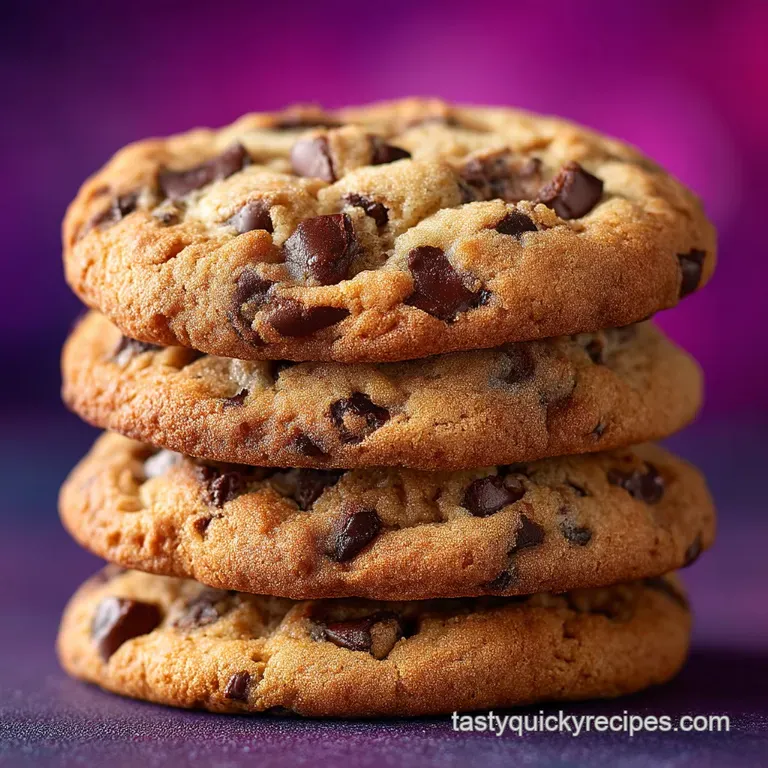
When they emerge from the oven, they must have that perfect texture: edges caramelized and crisp, leading into a deeply soft, chewy, almost fudgy center. It’s a benchmark bake, and honestly, most recipes miss the mark by miles.
Baking these cookies isn't just a treat; it’s a necessary life skill. They are fast, cheap to make (provided you already have butter), and they transform a bad day instantly. Plus, they freeze beautifully, meaning you are never more than 15 minutes away from freshly baked comfort.
We are not aiming for thin, greasy crisps here; we want thick, substantial, bakery quality Chocolate Chip Cookies every single time.
This isn’t just another set of instructions I pulled from a generic cookbook. This is the ultimate, non-negotiable technique for thick, chewy, caramel edged Chocolate Chip Cookies that I’ve spent years perfecting.
We are diving into the 'why' behind the recipe, so let’s crack on and get scientific about sugar and butter.
The Science of Chew: Why Precision Ingredients Matter
Most people think baking is just about mixing stuff, right? Wrong. Making outstanding Chocolate Chip Cookies is about controlling moisture and crystallization.
Our goal is to inhibit the dough from spreading into oblivion while maximizing the butterscotch flavor, which is why we rely heavily on dark brown sugar and precise chilling. This approach guarantees that robust, chewable texture we crave.
The Quest for the Caramelized Edge
That gorgeous, crackled, caramel-y edge is not luck; it’s science, specifically, the Maillard reaction fueled by sugar. We use a high ratio of dark brown sugar because it contains molasses.
Molasses is acidic and incredibly moist, giving the dough structure and keeping the interior soft, while still allowing the edges of these perfect Chocolate Chip Cookies to crisp up beautifully.
Using less granulated sugar prevents the cookies from becoming too dry or spreading too quickly, giving us that ideal chewy mouthfeel.
From Pantry Staple to Professional Standard
You don't need fancy equipment, but you do need attention to detail. I learned the hard way that when you swap out ingredients carelessly, the structure of your Chocolate Chip Cookies collapses.
For example, if you use margarine instead of proper butter, the water content is so high that you will end up with flat, brittle disks. Respect your ingredients, and they will respect your ultimate Chocolate Chip Cookies outcome.
Essential Baking Equipment for Spot-on Cookies
While you can technically mix this dough by hand, a stand mixer is a total lifesaver for the creaming process. Trust me, you cannot manually cream butter and sugar efficiently enough to incorporate the necessary air volume.
A digital scale is another tool I insist upon for baking consistently; volume measurements can vary wildly, but mass is always the same. If you want truly uniform Chocolate Chip Cookies , a three tablespoon ice cream scoop is mandatory for portioning.
The Power of Dark Brown Sugar (Moisture and Flavor)
I cannot stress this enough: dark brown sugar is the secret ingredient to profoundly chewy, butterscotch flavored Chocolate Chip Cookies . The darker the sugar, the higher the molasses content, which translates to superior moisture retention.
Light brown sugar works, sure, but it yields a lighter flavour profile. To achieve that deep, complex, almost toffee like flavour in the absolute best Chocolate Chip Cookies , stick to dark brown.
How Chilling the Dough Develops Flavour
Chilling the dough is non-negotiable, not just for preventing spread, but for flavor. When the dough rests, the liquid ingredients (eggs, vanilla) fully hydrate the flour and dry ingredients.
This process changes the molecular structure and intensifies all the flavors, melding the butter, molasses, and vanilla into something far richer. Skipping this step means missing out on the complex depth that defines truly spectacular Chocolate Chip Cookies .
The Role of Butter Temperature in Texture
The butter must be perfectly softened, but not melted. If it’s too cold, it won't cream properly with the sugar, resulting in dense cookies. If it's too warm or greasy, you can't incorporate air, which means your cookies will spread immediately and become flat.
Room temperature butter (about 68°F / 20°C) is soft enough to indent easily when pressed but still holds its shape. This is crucial for achieving that fluffy structure in the dough for your ultimate Chocolate Chip Cookies .
Mastering the Mise en Place: Detailed Ingredient Notes and Alternatives
Getting everything prepped before you start is my golden rule. Misplacing the baking soda while you're creaming the butter will make you frantic. Gather every single item, and let's talk about the nuances of specific ingredients needed for perfect Chocolate Chip Cookies from scratch.
Choosing the Right Chocolate: Chips vs. Chunks vs. Wafers
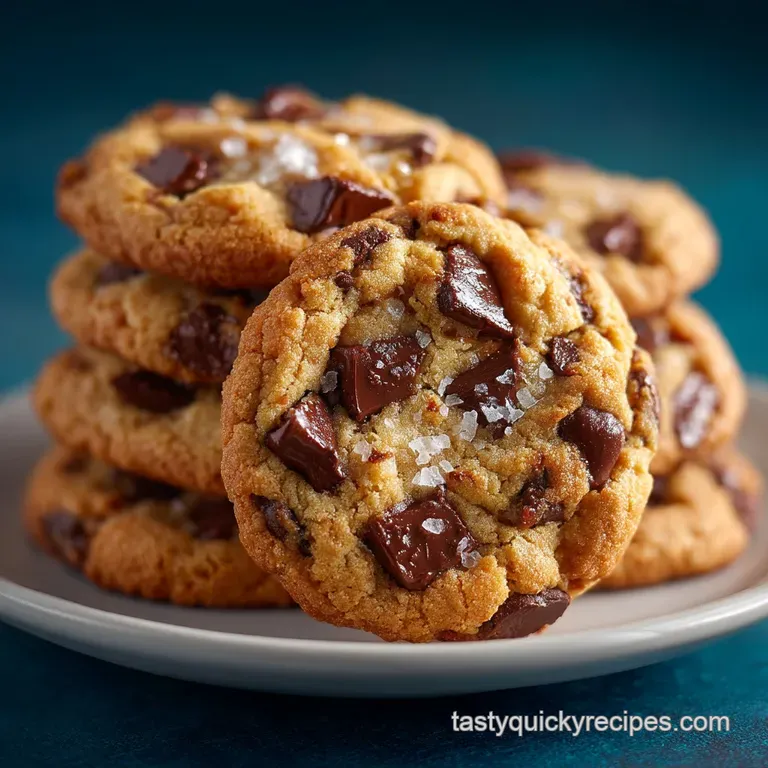
I prefer chopping up a high-quality semi sweet baking bar (50 60% cocoa solids) into large chunks. Why? Chunks create those gorgeous, gooey "melt pools" that run across the surface when they bake, making the finished Chocolate Chip Cookies look professionally made.
Chips, while convenient, retain their shape due to stabilizers, resulting in a less dramatic melted texture. If you want maximum melt, use wafers (like Callebaut).
Flour Power: Why We Use Bread Flour (or a High Protein Blend)
While this recipe calls for All-Purpose flour, if you want an even chewier texture, substitute 1/2 cup of the AP flour with bread flour. Bread flour has a higher protein content (gluten), which encourages more chew and structure, helping these massive Chocolate Chip Cookies hold their height.
Just remember the number one rule of baking: Always spoon and level your flour; never scoop directly.
Smart Swaps for Dairy and Sugar
We are dealing with a classic recipe, but sometimes life happens, and you're missing an ingredient. Don't panic. Here are some quick fixes for your mission to bake outstanding Chocolate Chip Cookies :
| Original Ingredient | Smart Swap (Equal Volume) | Notes on Impact |
|---|---|---|
| Unsalted Butter | high-quality Plant Butter Blocks | Texture will be slightly firmer; ensure the brand is low water content. |
| Dark Brown Sugar | Granulated Sugar + 1 Tbsp Molasses | Adds the moisture and depth back, essential for chewy Chocolate Chip Cookies . |
| Semi Sweet Chocolate | Milk Chocolate or White Chocolate | Milk chocolate is sweeter and melts faster; you might also enjoy using extra white chocolate in my recipe for White Trash Snack Mix with White Chocolate: The Easiest No-Bake Sweet Treat . |
| Large Eggs | Chia Seed Egg Substitute (1 Tbsp Chia + 3 Tbsp Water per egg) | Best for binding; texture will be slightly denser. |
The Baker's Benchmark Method: step-by-step Chocolate Chunk Cookie Preparation
Follow these steps precisely. This is where we ensure maximum aeration and flavour development for truly professional Chocolate Chip Cookies .
Precise Creaming: The Foundation of Structure
Creaming isn't just mixing; it's aerating. Using your stand mixer with the paddle attachment, beat the softened butter, dark brown sugar, and granulated sugar together on medium speed. This takes a full 3 to 4 minutes. Do not cut this short!
You are looking for a visible change: the mixture must be pale, fluffy, and almost doubled in volume. This aeration is what gives lift and ensures your Chocolate Chip Cookies are chewy and not flat.
Combining the Wet and Dry Ingredients
Once the eggs and vanilla are incorporated, reduce the mixer speed to the absolute lowest setting. Add the dry mixture gradually. Stop mixing when there are still visible streaks of flour remaining.
I often stop the machine when it's 80% combined, then finish the rest by hand with a spatula when I fold in the chocolate. Overmixing develops too much gluten , making your fantastic Chocolate Chip Cookies tough and bread like. Nobody wants a tough cookie.
Portioning the Dough for Uniform Baking
Use a large ice cream scoop (3 Tbsp or size 16) to ensure every cookie is uniform. Why bother? Uniformity ensures even baking across the entire batch. If you have some tiny cookies and some massive ones on the same tray, the small ones will burn before the large ones are cooked through.
Portion them onto your lined baking sheet now, or into a container if you plan on chilling them for longer than 2 hours. These precise portions make baking consistently wonderful Chocolate Chip Cookies so much easier.
Chef's Note: If you want that classic, craggy, bakery style look, don't scoop the dough perfectly. After portioning, gently tear the dough ball in half and then press the torn sides back together haphazardly. This creates those beautiful rough edges that catch the light and the sugars when they bake.
Troubleshooting Your Bake: Expert Tips for Flawless Cookies
I’ve had my share of flat, sad, greasy cookies. We’ve all been there. But I promise, once you know these fixes, you will never ruin a batch of these glorious Chocolate Chip Cookies again.
Preventing Flat Cookies: The Secret to High Lift
If your Chocolate Chip Cookies spread too much and look like greasy pancakes, the culprit is usually one of three things: 1) The butter was too soft/melted; 2) You didn't chill the dough long enough; or 3) Your flour measurement was inaccurate (you added too little).
Always ensure your butter is room temperature and not greasy, and respect the chilling time. If all else fails, pop the entire scooped baking tray into the freezer for 10 minutes before baking.
Why the Oven Temperature Must Be Accurate
An inaccurate oven temperature is the silent killer of great bakes. If your oven is too cool, the fat in the dough melts before the structure sets, leading to wide spread. If it’s too hot, the outside burns before the inside cooks. Invest $10 in an oven thermometer.
We bake these specific Chocolate Chip Cookies at 350°F (175°C) for that perfect caramelization without burning.
The Scoop and Slam Technique for Craggy Tops
I learned this trick from a famous New York bakery, and it’s genius. After 6 or 7 minutes of baking, open the oven door, lift the baking tray, and gently but firmly drop it onto the counter from about 6 inches high. This causes the hot, aerated center to deflate rapidly.
Repeat this process once more near the end of the baking time. This action creates those desirable ripples and dense inner texture, ensuring your chewy Chocolate Chip Cookies are structurally perfect.
Avoiding Burnt Bottoms: Using Insulated Sheets
If the bottoms of your cookies always burn while the tops remain pale, you are likely baking on cheap, thin metal sheets. Thin sheets conduct heat too quickly. To solve this, use insulated, heavy gauge aluminum baking sheets, or simply layer two thin sheets on top of each other.
This creates an air barrier, protecting the base of your delicious Chocolate Chip Cookies from direct heat exposure.
Maintaining Freshness: Storing Dough and Baked Chocolate Cookies
The beauty of a fantastic Chocolate Chip Cookies recipe is that it lends itself perfectly to make-ahead convenience. We need a strategy for both raw dough and finished products.
Preparing and Freezing Raw Cookie Dough Balls
This is my favorite weekend activity. Scoop all your dough into those uniform balls (Step 8), place them on a parchment lined tray, and freeze until rock solid (about 2 hours). Transfer the frozen balls into a heavy duty freezer bag or container. Label it with the date and baking temperature.
This raw dough for your perfect Chocolate Chip Cookies will last in the freezer for up to 3 months. Seriously, it is a game changer.
Best Practices for Baking from Frozen
When you get that sudden craving for fresh Chocolate Chip Cookies , pull the desired number of frozen dough balls from the freezer. Do not thaw them first. Place them directly onto the prepared baking sheet.
You will need to increase the baking time by approximately 3– 4 minutes (for a total of 13– 16 minutes). Baking from frozen actually helps prevent spreading, ensuring incredibly thick and chewy results, often even better than baking immediately after the chill!
Elevating the Experience: Perfect Pairings and Presentation
These chewy, caramel edged treats are so good, they deserve a bit of ceremony. Don’t just dump them on a plate!
When your fresh batch of the best Chocolate Chip Cookies are warm and gooey, a pinch of flaky sea salt sprinkled immediately on top elevates the experience exponentially. The salt crystals cut through the sweetness of the sugar and the richness of the butter, providing necessary contrast.
Serve them alongside a generous scoop of vanilla bean ice cream or, for the grown ups, alongside a small glass of cold, heavy cream. The texture contrast is divine. Making these ultimate Chocolate Chip Cookies at home means you always have the power to create instant joy.
I hope this recipe transforms your baking life as much as it did mine. Enjoy!

Recipe FAQs
The recipe requires mandatory dough chilling. Why is this step so important?
Chilling is critical for two reasons: it prevents spreading by solidifying the butter, and it allows the dry ingredients, especially the flour, to hydrate fully. Hydration is key to developing that rich, butterscotch like depth of flavour, giving the cookies a superior chewy texture and colour.
My cookies spread too much and turned thin and flat. What went wrong?
Excessive spreading is typically caused by insufficient chilling or butter that was too warm during the creaming stage. Ensure your butter is cool but pliable, and strictly adhere to the mandatory chilling period, as this solidifies the fat and ensures the cookies hold their structure while baking.
Using cold baking sheets for subsequent batches is also vital.
Why are the centers of my cookies cakey or dry instead of wonderfully chewy?
A cakey texture often results from adding too much flour, so always use the spoon and-level method when measuring dry ingredients. Alternatively, overmixing the dough once the flour is incorporated can develop gluten unnecessarily, making the final product tough; stop mixing immediately once you see no dry streaks of flour.
Can I use all granulated sugar instead of the specified mix of brown and white sugar?
We strongly advise against using all granulated sugar, as the high ratio of dark brown sugar is essential for the deep caramel flavour and the moist, chewy center this recipe is known for.
Granulated sugar promotes significantly more spread and a crispier, flatter cookie, fundamentally changing the target texture profile.
Can I freeze the cookie dough for baking at a later date?
Yes, scooped dough balls freeze exceptionally well and are perfect for preparing ahead. Place the scoops on a parchment lined sheet until solid, then transfer them to a freezer bag or container for up to three months. Bake the cookies directly from frozen, but add 2 4 minutes to the standard baking time.
How should I store the finished cookies to keep them fresh and maintain their chewiness?
Store baked cookies in an airtight container at room temperature for up to four days; refrigeration is discouraged as it dries them out. To maintain maximum chewiness, a popular culinary tip is to place half a slice of fresh bread inside the container; the cookies will slowly absorb the moisture from the bread, keeping them soft.
Can this ultimate chewy cookie recipe be made gluten-free?
This recipe can generally be made gluten-free by substituting a high-quality 1:1 gluten-free baking blend that contains xanthan gum. Ensure the blend you use is measured cup-for-cup. You may find the dough feels slightly softer before chilling, but the final texture should remain excellent.
Chewy Caramel Chocolate Chip Cookies
Ingredients:
Instructions:
Nutrition Facts:
| Calories | 170 kcal |
|---|---|
| Protein | 2.0 g |
| Fat | 9.0 g |
| Carbs | 20.0 g |
