Prime Rib Roast: the Ultimate Slow-Roast Guide
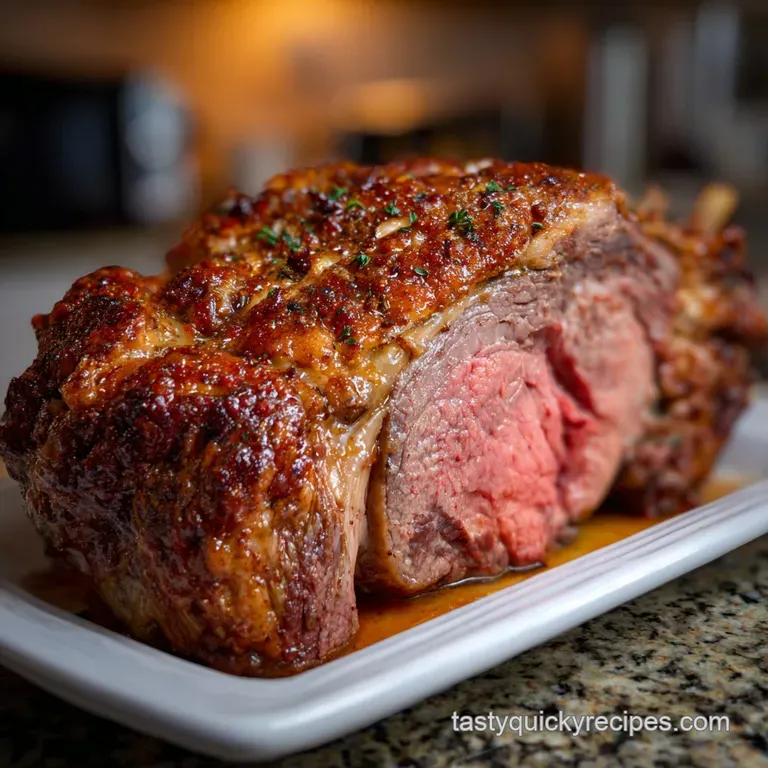
- The Ultimate Slow-Roast Prime Rib with Herb Crust
- The Majesty of the Roast: Why This Recipe Reigns Supreme
- Essential Components for the Herb Crust and Roast
- Preparing and Perfecting Your Slow-Roast Prime Rib
- The Science of Succulence: Why the Reverse-Sear Technique Works
- Mastering the Rib Roast: Chef's Pro Tips and Troubleshooting
- The Ultimate Feast: Complementary Pairings
- Storing Leftover Roast: Maximizing Freshness and Flavor
- Recipe FAQs
- 📝 Recipe Card
The Ultimate Slow Roast Prime Rib with Herb Crust
When the knife finally hits that perfect, crunchy herb crust, and you hear that shatter , you know the holiday dinner is about to begin. The smell alone rosemary, garlic, and rich, roasting fat is enough to make everyone forget they were looking at their phones 30 seconds ago.
This specific recipe for Prime Rib Roast is all about achieving edge-to-edge medium rare perfection without the dreaded gray band.
Look, I know this gorgeous cut can be intimidating, but trust me, it’s mostly passive time. It requires patience, not skill. This reverse sear technique takes the stress out of the equation because the slow cooking process is incredibly forgiving.
If you have a decent thermometer, you can absolutely master this beautiful, easy Prime Rib Roast .
We’re going to use the secret of the professional kitchen: low heat, a mandatory long rest, and a final, wicked hot blast to create a crust that locks in all those beautiful juices. Forget the old-school over high heat methods that yield uneven results.
This is the Prime Rib Roast recipe ovens were made for.
The Majesty of the Roast: Why This Recipe Reigns Supreme
I’m telling you, the reverse sear method changed my life and how I approach every high value cut. It eliminates guesswork and guarantees a rosy, moist interior every single time. The core logic is simple: cooking low and slow allows the internal temperature of the massive joint to rise slowly and evenly.
This gentle rise prevents the outer layers from overcooking before the center is done. The outcome? No gray band, just beautiful pink meat from edge to edge.
The Prime Rib: Choosing the Right Cut and Grade
The quality of your main ingredient dictates the final result, obviously. You want a Standing Rib Roast, also known as the Prime Rib Roast, taken from the rib section (ribs 6 through 12). If you can swing it, always go for a "Prime" grade or a very well marbled "Choice" grade.
That gorgeous marbling means flavor and moisture! A 3 rib roast (about 6.5 7 lbs) is perfect for a smaller group, but you can scale this recipe up easily.
Equipment Checklist for Roasting Success
You don't need a lot of fancy gear, but a few things are absolutely non-negotiable if you want the best results for your rib roast recipe ovens can produce. You must have a sturdy wire rack placed inside your roasting pan.
This elevates the roast, allowing hot air to circulate completely underneath, which is essential for uniform cooking and crust development.
The most crucial item, however, is a reliable digital probe thermometer. It should be oven safe so you can monitor the internal temperature without opening the oven door constantly.
Trying to guess the temperature of a massive Prime Rib Roast based on time is gambling with hundreds of dollars worth of food!
Timeline Planning: When to Start the Slow Roast
This is a plan ahead recipe. Seriously. The single most important step for the incredible crust is the dry brining, which needs 12 to 24 hours in the fridge. Start seasoning your roast the morning before you plan to serve it.
On the day of, remember the one-hour tempering time, plus the 30 45 minute rest before the sear, and the final 10 minute rest. You’ll be roasting for about 2 2.
5 hours, so plan backwards from your dinner time, allowing approximately 4 hours from the time the roast goes in the oven until it hits the carving board.
Essential Components for the Herb Crust and Roast
The crust is the savory counterpoint to the rich, tender meat. This isn’t just about salt and pepper; we are building a potent, aromatic layer that will dry out and crisp beautifully during the over high heat sear.
Selecting the Best Herb Combination for Maximum Flavor
I always prefer a classic blend of fresh rosemary and thyme for my Prime Rib Roast . They are robust enough to stand up to the richness of the cut and they release the most incredible fragrance as they slowly cook down into the fat cap.
If you don't have fresh herbs, please, use dried just remember the rule: use about one-third the amount of dried herbs compared to fresh.
Building the Aromatic Crust Base (Fat vs. Oil)
To get the rub to stick evenly and beautifully, you need a binder. I use a neutral oil like grapeseed because it has a high smoke point, meaning it won't burn during the searing phase. Some people use butter, but butter solids tend to burn at high heat, so save that for your mashed potatoes!
The oil creates the perfect sticky canvas for the salt, pepper, garlic, and herbs to adhere firmly to the Prime Rib Roast .
Chef's Note: The mustard powder in this recipe doesn't add a spicy flavor; it adds an incredibly subtle tang and, more importantly, a binding agent that helps the crust form a thick, deep bark when it hits the high heat.
Should the Roast be Bone-In or Boneless and Tied?
While a boneless roast is easier to slice, I strongly recommend a bone-in Prime Rib Roast . The bones act as natural insulators, ensuring the meat closest to the bottom cooks more gently. Crucially, I ask the butcher to "french" the bones (clean them) and then tie them back onto the roast. This keeps the shape uniform, insulates the bottom, and allows for much easier carving later when you simply untie the strings and pull the bones off. If you’re preparing a smaller Bonein Rib Roast Recipe: Oven Method for a Perfect Crust , the principle of insulation remains the same.
Preparing and Perfecting Your Slow Roast Prime Rib
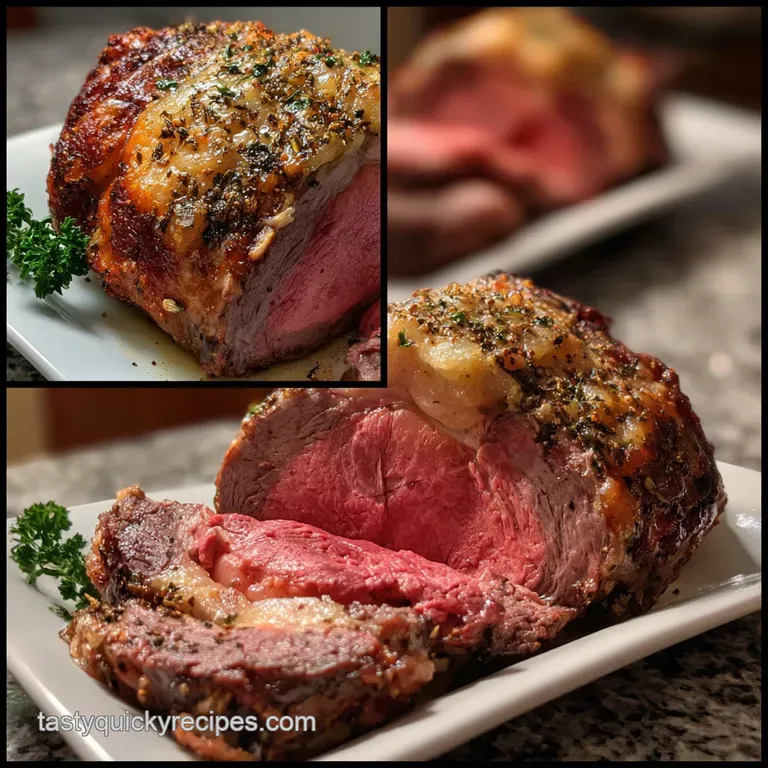
Let’s crack on with the hands-on part! Remember to read through the instructions twice.
Step 1: Tempering and Thoroughly Seasoning the Roast Joint
The dry brine is essential. Pat the Prime Rib Roast thoroughly dry seriously, drier is better. Coat it lightly in oil, then press that gorgeous herb rub into every nook and cranny. Place it uncovered on a rack in the fridge.
This air exposure is magic; it pulls moisture from the surface and starts the incredible crust formation. Then, one hour before you plan to put it in the oven, take it out and let it temper at room temperature. This ensures the center isn't ice-cold, guaranteeing even cooking.
Step 2: The Low and Slow Baking Phase
Preheat your oven to 250°F (120°C). Insert your probe thermometer into the center of the roast, avoiding bone. Place the roast in the oven and walk away. This low and slow phase is quiet and gentle.
You’ll know you’re nearing completion when your kitchen fills with the savory, pungent aroma of roasted garlic and thyme. We are aiming for an internal temp of 120°F (49°C) for medium rare.
Step 3: Achieving the over High heat Crust (The Final Sear)
As soon as the roast hits the target temperature, pull it out, even though it doesn't look done yet! Immediately crank your oven up to 450°F (230°C). This is where most people panic and skip the next vital step. Don't!
Step 4: The Mandatory Resting Period
Tent the roast loosely with foil and let it sit on the counter for a full 30 to 45 minutes. This rest is crucial for two reasons: 1) It allows the external heat gradient to equalize, ensuring the juices redistribute throughout the roast instead of flowing onto the cutting board, and 2) It gives the oven time to get screaming hot for the final searing step.
Once rested, return the roast to the over high heat oven for 10– 15 minutes until the herb crust is dark golden and deeply satisfying. This over high heat exposure seals the deal, creating the ultimate Prime Rib Roast Recipe Oven result.
The Science of Succulence: Why the Reverse Sear Technique Works
Conventional roasting (starting high, finishing low) tends to create that thick, gray, overcooked layer just beneath the crust. The reverse sear flips the script: the initial low temperature (250°F/120°C) is essentially a dehydrator that slowly brings the internal temperature up without disturbing the proteins on the outside too harshly.
The meat cooks more evenly and stays tender. Then, the short, intense burst of 450°F heat serves only one purpose: Maillard reaction glory browning the exterior fat and turning the herb crust into a magnificent, crunchy bark.
This two-stage cooking method makes for the best Prime Rib Roast you will ever experience.
Mastering the Rib Roast: Chef's Pro Tips and Troubleshooting
Edge-to-Edge Perfection: Controlling the Internal Temperature
Never guess the temperature. Pull the roast exactly when the thermometer tells you to. For a truly medium rare finish (135°F), you must pull the roast at 120°F (49°C) before the sear, and then pull it again at 130°F (54°C) after the sear.
Understanding Carryover Cooking and When to Pull the Roast
The roast continues to cook after you remove it from the oven, which is known as carryover cooking. This can increase the internal temperature by 5 10°F (3 5°C). This is why we pull the roast below the target temperature.
If you want a perfectly medium Christmas Prime Rib Recipe , you must account for this residual heat.
The Key to the Golden, Crunchy Herb Crust
It all comes down to the dry-brine and the high heat. Salt draws moisture out, which then gets blasted away during the uncovered chilling phase. This dry surface is what allows the herb mixture to crisp up rather than steam or burn during the final sear.
Avoiding the Gray Band: Don’t Make This Classic Mistake
The gray band happens when the heat is too high initially, causing the outer layers to seize and squeeze out moisture. Our low and slow approach virtually eliminates this. If you see a gray band, it means your initial oven temperature was likely too high or you skipped the tempering step.
Dealing with Uneven Roasting and Hot Spots
If you have an older oven with hot spots, make sure to rotate the pan halfway through the low-roast phase. Also, always place the roast joint in the center of the oven rack, not too close to the top or bottom element.
The Importance of Accurate Thermometer Calibration
If you suspect your thermometer is off, check it. Place the probe in boiling water; it should read 212°F (100°C). If it doesn't, adjust your temperatures accordingly. Accuracy is your best friend when attempting an Easy Prime Rib Roast .
The Ultimate Feast: Complementary Pairings
A great Prime Rib Roast deserves equally impressive sides.
- Potatoes: Creamy, cheesy gratin (Dauphinoise) or some really fantastic mashed potatoes are mandatory.
- Green: Keep it simple with steamed asparagus or green beans tossed in brown butter.
- Sauce: Save those pan drippings! Deglaze the pan with some red wine and stock to create the most incredible Au Jus . You don't want to waste a drop of that glorious flavor.
Storing Leftover Roast: Maximizing Freshness and Flavor
You got leftovers? Lucky you!
If you have any remaining Prime Rib Roast , slice it and store it in an airtight container in the refrigerator for up to 4 days. If you need longer storage, wrap individual slices tightly in plastic wrap and then foil, and freeze for up to 3 months.
The best way to reheat prime rib is gently. Don't blast it in the microwave; that’s how you get dry, tough slices. Place slices on a baking sheet, sprinkle with a few drops of beef stock or Au Jus, cover loosely with foil, and warm in a low oven (300°F / 150°C) for about 10– 15 minutes until just warmed through.
If you follow this guide, this might just be your new favorite Prime Rib Roast Recipe Oven method. Enjoy being the hero of the holiday table!
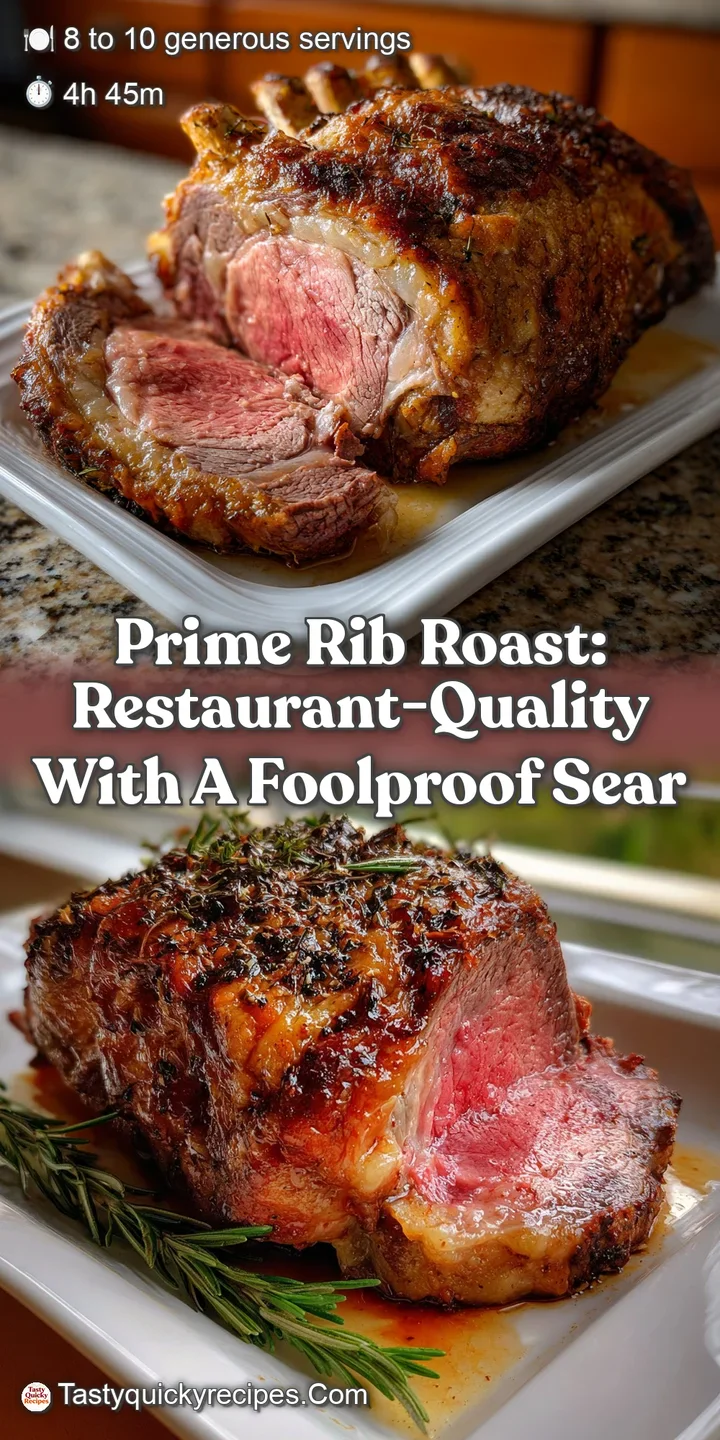
Recipe FAQs
How do I ensure I get that perfect edge-to-edge rosy pink center?
Achieving this consistent doneness relies entirely on the low-and-slow method and using an accurate meat thermometer. By roasting at a low temperature, you minimize the temperature gradient, meaning the edges won't overcook before the center catches up.
Pull the roast 5 to 10 degrees below your target finish temperature to account for carryover cooking during the resting phase.
Why is resting the prime rib so crucial, and how long should it rest?
Resting allows the contracted muscle fibers to relax and redistribute the internal juices throughout the meat. If you skip this mandatory 20 to 30-minute rest (covered loosely with foil), the juices will immediately spill out upon slicing, leaving you with dry meat and a watery cutting board.
This step is as important as the cooking itself.
When should I apply salt to the roast to get the best flavor?
Ideally, you should dry-brine the roast by heavily salting it 24 to 48 hours in advance and storing it uncovered in the refrigerator. The salt draws out moisture, dissolves into the surface liquid, and is then reabsorbed, seasoning the meat deeply.
This process also helps ensure the surface is dry, which is critical for a crispy crust.
Why isn't my herb crust crispy after the high temperature sear?
A soft crust usually results from a wet exterior or a failure to reach a high enough temperature during the final searing stage. Ensure the roast is completely dry and has come up to room temperature before you apply the final crust ingredients.
Confirm your oven reaches 500°F (or higher) to rapidly crisp the fat and crust without significantly raising the internal meat temperature.
Can I make this recipe successfully with a smaller 3-rib roast?
Absolutely, but you must follow internal temperature guidelines rather than relying on the clock for timing. Keep the oven temperatures (low and then high) consistent as directed by the recipe.
Start checking the roast's internal temperature frequently after the first hour, as the total cook time will be drastically reduced compared to a larger joint.
What is the best way to store and reheat leftover prime rib without drying it out?
Store leftover slices tightly wrapped in the refrigerator for up to four days. To reheat, slice the meat thickly, place it in an oven safe dish with a tablespoon of beef broth, cover tightly with foil, and warm slowly in a 250°F oven until just heated through.
Avoid microwaving or high heat searing, as this destroys the delicate texture and moisture.
How can I convert this recipe to a traditional, high temperature roast instead of a reverse sear?
A traditional roast starts at a very high temperature (450°F) for 15-20 minutes to achieve a crust, and then the temperature is dropped (to 325°F) for the remainder of the cooking time. While faster, this method creates a larger grey band of overcooked meat just beneath the crust.
If you use this method, pull the roast 10-15 degrees early to accommodate extreme carryover cooking.
Ultimate Slow Roast Prime Rib
Ingredients:
Instructions:
Nutrition Facts:
| Calories | 434 kcal |
|---|---|
| Protein | 27.4 g |
| Fat | 31.3 g |
| Carbs | 12.3 g |
