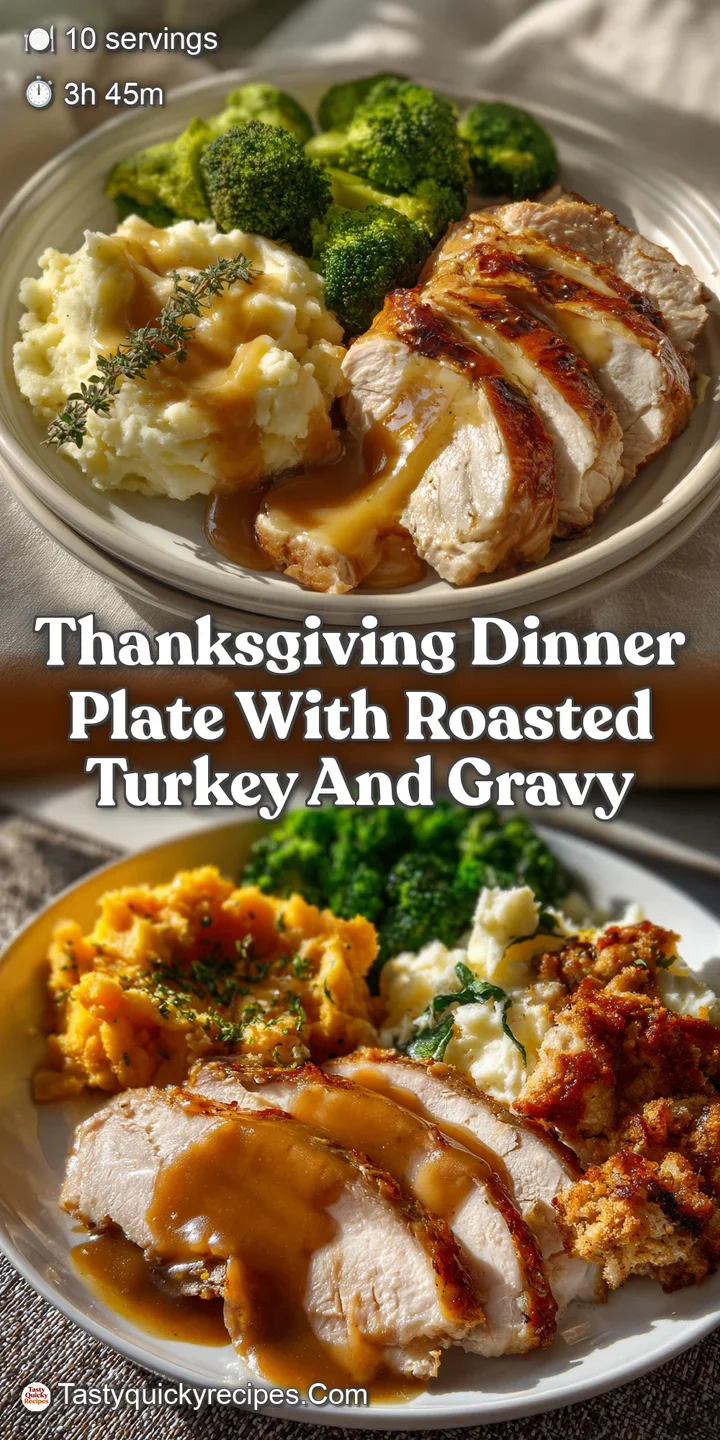
Thanksgiving Dinner Plate with Roasted Turkey and Gravy
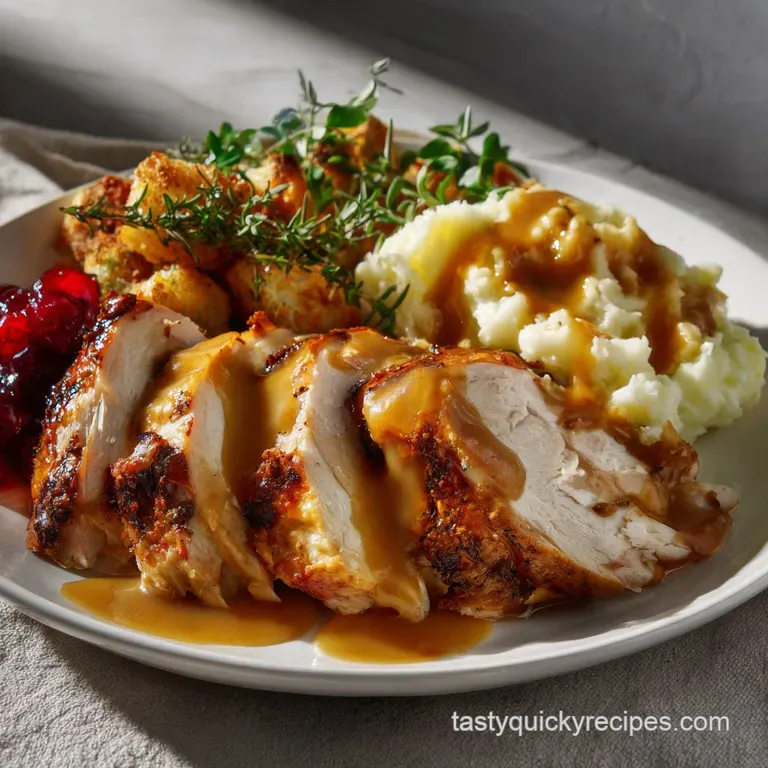
- Time: Active 45 minutes, Passive 3 hours, Total 3 hours 45 mins
- Flavor/Texture Hook: Shatteringly crisp mahogany skin paired with savory, herb-infused velvet gravy.
- Perfect for: A high-impact holiday gathering where time-efficiency and family connection are the priority.
- Make-ahead: Herb butter and turkey stock can be prepped up to 3 days in advance.
- Engineering the Ultimate Thanksgiving Dinner Plate with Roasted Turkey and Gravy
- The Culinary Physics of Golden Skin and Tender Meat
- Component Analysis: The Role of Each Element
- Selecting Your Arsenal: Ingredients and Smart Swaps
- Essential Hardware for Holiday Success
- Bringing It Together: The Three-Step Execution Timeline
- Navigating Holiday Hurdles: Fixing Common Poultry Pitfalls
- The Geometry of Scaling Your Holiday Feast
- Fact vs Fiction: Unmasking Traditional Poultry Folklore
- Preservation Protocol and Zero-Waste Transformations
- Curating the Perfect Accompaniments for Your Table
- Common Questions
- 📝 Recipe Card
Engineering the Ultimate Thanksgiving Dinner Plate with Roasted Turkey and Gravy
The holiday table often feels like a high stakes performance, but I’ve found that success lies in the physics of the prep rather than the hours spent hovering over the oven. Discover a delicious Thanksgiving dinner plate featuring roasted turkey and gravy that prioritizes moisture retention and crispy skin without the stress of traditional wet brines.
By focusing on the thermal transition of the bird, we ensure the meat stays succulent while the fat renders into the perfect base for our sauce.
We have all been there juggling side dishes while the bird looms large in the oven, praying it doesn't dry out. This method uses a over high heat start to kickstart the Maillard reaction, followed by a steady roast to reach the ideal internal temperature.
The result is a fast, flavorful centerpiece that leaves you more time to focus on the people gathered around your table.
As the aroma of fresh sage and rosemary fills the house, you will notice the skin transform from pale to a deep mahogany. This isn't just about a meal; it's about creating a focal point for the Thanksgiving Dinner Plate with Roasted Turkey and Gravy that feels both traditional and effortless.
Let's break down the science of why this method beats the old-school basted birds every single time.
The Culinary Physics of Golden Skin and Tender Meat
Efficiency in the kitchen starts with understanding how heat interacts with protein and fat.
- Dry-Brining Osmosis: Salt draws moisture out of the skin, dissolves into a brine, and is reabsorbed into the muscle fibers. This breaks down tight proteins, allowing them to hold more liquid during roasting.
- The Maillard Reaction: Applying high initial heat triggers the chemical reaction between amino acids and reducing sugars. This creates the complex, savory flavors and the distinct mahogany color we crave.
- Carryover Cooking: Large proteins like a 13 lb turkey continue to rise in temperature by 5 10°F after leaving the oven. Pulling the bird at 160°F (71°C) ensures it reaches the safe 165°F (74°C) mark without becoming stringy or dry.
- Emulsification of Gravy: By using a 1:1 ratio of turkey drippings to all-purpose flour, we create a stable roux. Adding turkey stock slowly allows the starch granules to swell and trap liquid, resulting in a velvety texture that doesn't break.
Unlike traditional wet brining, which can lead to spongy meat and soggy skin, this dry-prep method ensures the skin stays paper thin and crisp while the interior remains incredibly juicy. Executing a perfect Thanksgiving Dinner Plate with Roasted Turkey and Gravy hinges on this moisture retention.
Component Analysis: The Role of Each Element
| Ingredient | Chemical/Physical Role (Science) | The Pro Secret (Why This Matters) |
|---|---|---|
| 13 lb Whole Turkey | Protein denaturation via slow heat | Provides the structural foundation and essential collagen for the gravy. |
| Unsalted Butter | Fat-based heat conduction | Water in butter evaporates to create steam, while fat fries the skin from the inside out. |
| Kosher Salt | Osmotic pressure regulator | Deeply seasons the meat while drying the surface for maximum crunch. |
| Turkey Stock | Gelatin rich liquid base | High gelatin content provides a silky mouthfeel in the gravy without excessive flour. |
Selecting Your Arsenal: Ingredients and Smart Swaps
Building a flavorful Thanksgiving Dinner Plate with Roasted Turkey and Gravy requires high-quality fats and fresh aromatics. If you can't find a 13 lb bird, adjust the roasting time by approximately 13 minutes per pound.
The Foundation
- 13 lb whole turkey, thawed completelyWhy this? Medium size ensures even heat distribution without the exterior drying out before the core cooks.
- 3 tbsp Kosher salt (Sub: 2 tbsp Sea Salt) Why this? Large grains provide better coverage and slower dissolution for superior brining.
- 0.5 cup unsalted butter, softened (Sub: Ghee) Why this? Higher smoke point than salted butter, allowing for better browning without burning.
- 1 tbsp freshly cracked black pepper
The Aromatics
- 2 tbsp fresh sage, minced
- 2 tbsp fresh thyme, minced
- 1 large yellow onion, quartered
- 1 head of garlic, halved crosswise
- 1 bunch fresh rosemary
The Gravy and Sides
- 4 cups turkey stock (Sub: Chicken stock with 1 tsp gelatin)
- 0.25 cup turkey drippings
- 0.25 cup all-purpose flour
- 1 tbsp soy sauceWhy this? Adds glutamates for intense umami depth in the gravy.
- 4 cups creamy mashed potatoes
- 3 cups traditional herb stuffing
- 2 cups roasted Brussels sprouts
- 1 cup cranberry sauce
Essential Hardware for Holiday Success
Juggling multiple dishes requires the right tools to maintain pace and precision. I recommend a heavy duty roasting pan; thin pans can warp or cause drippings to burn.
- Large Roasting Pan with V-Rack: Lifts the bird to allow 360 degree hot air circulation.
- Digital Meat Thermometer: Non-negotiable for accuracy. I use a KitchenAid Digital Probe for real time monitoring.
- Kitchen Twine: For trussing the legs to ensure even cooking of the inner thighs.
- Fine Mesh Strainer: Essential for achieving a velvet smooth gravy from the drippings.
- Fat Separator: Quickly isolates the 0.25 cup of turkey drippings from the watery juices.
Bringing It Together: The Three Step Execution Timeline
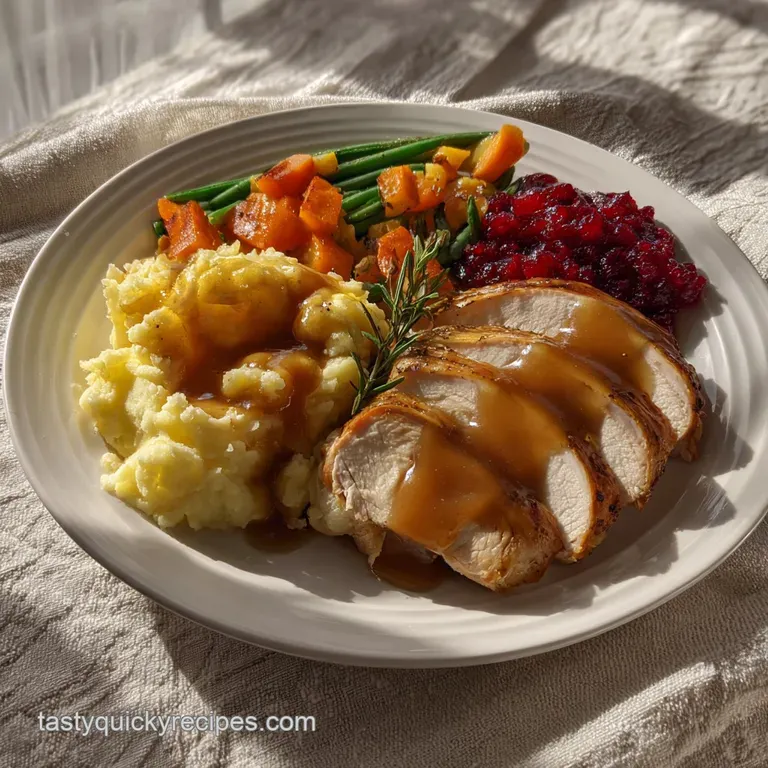
Managing a Thanksgiving Dinner Plate with Roasted Turkey and Gravy is all about the flow. Follow this timeline to ensure everything hits the table hot.
Phase 1: The Prep Flow (45 Minutes)
- Dry the turkey. Pat the 13 lb whole turkey inside and out with paper towels until the skin feels tacky and matte.
- Season the cavity. Toss the quartered onion, halved garlic head, and fresh rosemary bunch into the bird.
- Compound the butter. Mix the 0.5 cup softened butter with minced sage and thyme.
- Apply the fat. Loosen the skin over the breast and thighs, sliding half the herb butter underneath until the meat is fully coated.
- Salt the surface. Rub the remaining butter over the skin and sprinkle with 3 tbsp Kosher salt and 1 tbsp pepper.
Phase 2: The Roasting Flow (3 Hours)
- Preheat the oven. Set your oven to 425°F (218°C) for the initial blast.
- Searing the skin. Roast the turkey for 30 minutes until the skin turns light golden and begins to sizzle.
- The steady roast. Reduce heat to 325°F (163°C) and continue cooking until the thickest part of the thigh reads 160°F (71°C).
- Tent if needed. If the breast browns too quickly, cover it loosely with foil until the drumsticks reach 170°F (77°C).
Phase 3: The Finishing Flow (30 Minutes)
- The mandatory rest. Move the bird to a carving board and rest for at least 30 minutes until the juices reabsorb and the temperature peaks.
- Roux creation. Whisk 0.25 cup turkey drippings with 0.25 cup all-purpose flour in a saucepan over medium heat until it smells nutty and looks like peanut butter.
- Sauce development. Slowly whisk in 4 cups turkey stock and 1 tbsp soy sauce, simmering until the gravy coats the back of a spoon.
- Plate assembly. Slice the turkey and arrange on a plate with 4 cups mashed potatoes, stuffing, Brussels sprouts, and cranberry sauce. Drizzle the gravy over the meat. Achieving the perfect plate requires mastering both the roast and the sauce for your Thanksgiving Dinner Plate with Roasted Turkey and Gravy.
Precision Checkpoints
- Weight Check: Ensure the bird is exactly 13 lb; a larger bird will need 13 15 mins more per extra pound.
- Internal Temp: Pull the bird at 160°F (71°C) in the breast.
- Rest Time: Minimum 30 minutes. Carving too early results in 20% moisture loss.
Fast vs. Classic Comparison
| Feature | Fast Plan Based Method | Classic Low-Slow Method |
|---|---|---|
| Preparation | Dry-Brine (Tension skin) | Wet Brine (Soggy skin) |
| Roasting Time | 2.5 - 3 hours | 4 - 5 hours |
| Gravy Texture | Velvet (Soy sauce umami) | Thin (Standard stock) |
Navigating Holiday Hurdles: Fixing Common Poultry Pitfalls
Why Your Turkey is Dry
If your white meat is chalky while the dark meat is perfect, it is usually due to uneven heat. The breast is leaner and cooks faster than the fat-rich thighs. To prevent this, always start with the bird at room temperature and use the "foil tent" method described in the steps. This mirrors the technique used in our Alfredo Sauce without recipe to maintain moisture without overcooking delicate proteins. The integrity of the final Thanksgiving Dinner Plate with Roasted Turkey and Gravy depends on avoiding this outcome.
Quick Fix Table
| Problem | Cause | Fix |
|---|---|---|
| Lumpy Gravy | Added stock too fast | Blitz in a blender for 20 seconds. |
| Soggy Skin | Steam trapped under foil | Increase oven to 450°F for the last 5 mins. |
| Pale Gravy | Roux didn't cook long enough | Add 1/2 tsp of coffee grounds or extra soy sauce. |
Decision Shortcut
- If you want a deeper flavor, add 1/2 cup of dry white wine to the roasting pan.
- If you want a crispier skin, leave the turkey uncovered in the fridge for 24 hours before roasting.
- If you want a thicker gravy, simmer for an extra 10 minutes to reduce the liquid volume.
The Geometry of Scaling Your Holiday Feast
Scaling Down (For 4 5 people)
- Turkey: Use a 6 7 lb turkey breast instead of a whole bird. Reduce roasting time by 40%.
- Sides: Halve all quantities exactly.
- Gravy: Keep the full amount; leftovers are highly prized!
Scaling Up (For 20+ people)
- Flavor (Salt/Spices): Scale to 1.5x, not 2x. High salt levels can become overwhelming in large batches.
- Liquids (Soups/Sauces): Reduce stock by 10% (evaporation paradox).
- Roasts: Do not buy a 26 lb turkey; buy two 13 lb birds. Large birds often cook unevenly, leaving the outer meat dry before the bone-in center is safe to eat. This ensures a consistent Plate with Roasted Turkey and Gravy for every guest.
Fact vs Fiction: Unmasking Traditional Poultry Folklore
Myth: You must baste the turkey every 30 minutes for moisture. Truth: Opening the oven door drops the temperature by 25 50°F, extending the cook time and actually drying out the meat.
The fat is under the skin (thanks to our herb butter), so basting the exterior only makes the skin soggy.
Myth: You should wash your turkey in the sink before cooking. Truth: This is a safety hazard. Washing the bird splashes bacteria up to 3 feet around your kitchen. High oven heat is the only way to kill pathogens.
Myth: The pop-up timer is the most accurate way to check doneness. Truth: These are calibrated to 180°F (82°C), which is far past the point of being juicy. Trust a digital probe thermometer at 160°F for the best results.
Preservation Protocol and Zero Waste Transformations
Storage: Store leftover Roasted Turkey and Gravy in airtight containers in the fridge for up to 4 days. Freeze sliced turkey in gravy for up to 3 months to prevent freezer burn.
Zero Waste Tips:Turkey Carcass: Never discard the bones. Boil them with the herb stems and onion skins to create a gelatin rich stock for your next soup. Herb Stems: Save the woody stems from the rosemary and thyme.
Toss them onto the charcoal grill for aromatic smoke or add them to your stock pot. Stale Stuffing: Transform leftover stuffing into "waffles" the next morning by pressing them into a hot waffle iron. It’s a flavorful way to clear the fridge.
Curating the Perfect Accompaniments for Your Table
When assembling your final Dinner Plate with Roasted Turkey and Gravy, balance is key. The rich, salty gravy needs the acidity of the cranberry sauce to cut through the fat. This pairing strategy is similar to how a Traditional New Year recipe uses smoky pork to balance earthy legumes.
For a cohesive meal, ensure your Brussels sprouts are roasted at high heat to provide a bitter, charred contrast to the creamy mashed potatoes. If you have extra time, a splash of balsamic glaze over the sprouts adds a sweet acidity that elevates the entire Thanksgiving Dinner Plate with Roasted Turkey and Gravy.
This recipe is designed to be the anchor of your holiday, allowing you to spend less time at the stove and more time sharing stories at the table.
Common Questions
What is the optimal internal temperature for pulling the turkey out?
Pull the breast at 160°F (71°C). Carryover cooking increases the temperature by 5 10°F after removal from the oven. This preserves moisture before reaching the final target of 165°F.
Should I use salted or unsalted butter under the skin?
Unsalted butter for precision control. Salted brands vary widely in sodium content, making consistent seasoning impossible when following a precise recipe. Unsalted allows the cook to manage the exact salt load applied to the meat.
Why is my gravy lumpy despite whisking continuously?
Cold stock hitting a hot, over thickened roux causes starch shock. Adding liquid too fast prevents the starch granules from hydrating evenly, resulting in pockets of unmixed flour.
- Warm stock, never cold
- Whisk roux smooth first
- Remove pan from direct heat before adding liquid
Can I substitute turkey stock with chicken stock for the gravy?
Yes, substitute with chicken stock plus gelatin. Turkey stock provides significant gelatin content crucial for a velvety texture, which chicken stock lacks in density.
If you enjoyed mastering the roux technique here, see how the same principle of controlled thickening applies to our New Years Eve Easy Dinner Idea with Garlic Butter Steak for sauce depth.
How long should the turkey rest after roasting?
A minimum of 30 minutes is required for resting. This pause allows muscle fibers to relax and reabsorb the internal juices. Carving too early releases moisture, resulting in dry meat.
Myth: You must baste the turkey every 30 minutes for moisture.
Myth: You must baste the turkey every 30 minutes for moisture. Reality: Opening the oven door significantly drops the temperature, extending cook time. The fat applied beneath the skin is sufficient for crisping.
Is it better to roast two smaller birds or one very large one?
Two smaller birds cook more evenly than one large bird. A single massive turkey risks drying out the exterior breast meat before the deep center reaches safe temperature.
This consistency helps achieve the perfect result featured in the Christmas Dinner Recipe Idea for a Memorable Holiday Feast: Juice Heavy.
Turkey Dinner Plate Gravy
Ingredients:
Instructions:
Nutrition Facts:
| Calories | 845 calories |
|---|---|
| Protein | 86g |
| Fat | 36g |
| Carbs | 42g |
| Fiber | 4g |
| Sugar | 11g |
| Sodium | 1840mg |
