Delicious Thanksgiving Pizza Ideas to Wow: Artisanal Leftovers
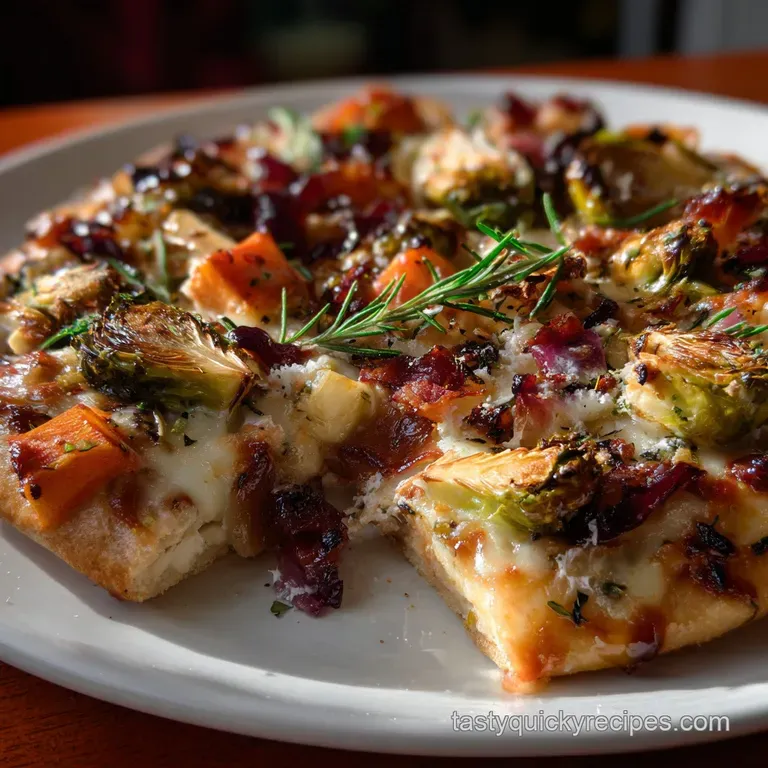
- Effort/Time: Low-effort / 32 minutes total
- Flavor Hook: Savory-sweet-umami explosion with a shattering crust
- Perfect for: Post-holiday-hosting / Casual-game-day
- The Ultimate Delicious Thanksgiving Pizza Ideas to Wow Your Guests
- The Molecular Physics of Texture: Why This Recipe Works
- Critical Culinary Specs: Dimensions of the Perfect Harvest Pie
- The Alchemy of Umami: Selecting Your Elements
- Precision Heat Distribution: The Necessary Tool Kit
- Mastering the Assembly: Key Steps for Structural Integrity
- The Soggy Crust Solution: Common Mistakes and Troubleshooting
- Flavor Architecture: Creative Variations and Substitution Protocols
- ⚗️ The Scaling Lab: The Physics of Quantity
- Preserving the Harvest: Professional Storage and Reheating Methods
- Synergistic Flavor Balancing: Sophisticated Serving Suggestions
- Recipe FAQs
- 📝 Recipe Card
The Ultimate Delicious Thanksgiving Pizza Ideas to Wow Your Guests
There is nothing more gut-wrenching than staring at $150 worth of leftover turkey and sides, only to watch them transform into a soggy, gray pile of microwave heated disappointment.
I once spent six hours meticulously roasting a heritage bird, only to ruin the leftovers by piling them onto a cheap, store-bought crust that disintegrated under the weight of cold gravy. The financial sting of wasted premium ingredients is only outmatched by the sensory failure of a limp, flavorless meal.
It was a texture less nightmare that ended in a takeout order and a bruised ego.
I spent years over complicating this process, trying to make fancy "fusion" reductions before I realized the physics of the leftovers was the problem, not the ingredients themselves.
I destroyed at least five batches of dough by adding too much cranberry sauce too early, which led to a catastrophic "soggy center" that even my Lodge Cast Iron Pizza Pan couldn't save. I learned the hard way that high moisture toppings are the enemy of a shattering crust.
It took dozens of failed Friday nights to understand how starch retrogradation in cold stuffing actually creates the perfect crispy "crouton" effect when hit with 500°F (260°C) heat.
The breakthrough came when I applied the principle of starch gelatinization to the gravy base. By treating the gravy as a high viscosity emulsion rather than a liquid sauce, I created a moisture barrier that protected the dough's gluten network.
The result is a mahogany colored crust with a velvety mouthfeel that contrasts against the snap of the turkey. This isn't just a leftover hack; it’s a masterclass in thermal mass management that produces a sizzle so loud you’ll hear it across the kitchen.
The Molecular Physics of Texture: Why This Recipe Works
The Maillard reaction drives the flavor profile, as the proteins in the turkey and the sugars in the cranberry sauce undergo non-enzymatic browning under intense heat. Simultaneously, starch retrogradation in the chilled stuffing allows it to maintain its cluster shape rather than dissolving into the cheese.
- Gluten Relaxation: Resting the 1 lb pizza dough at room temperature allows the elastic proteins to loosen, preventing the "snap back" effect and ensuring a uniform, thin base.
- Thermal Conductivity: Using cornmeal on the pan creates a microscopic air gap, allowing steam to escape and ensuring the bottom of the crust reaches a shattering crispness.
Critical Culinary Specs: Dimensions of the Perfect Harvest Pie
To achieve the results necessary for Delicious Thanksgiving Pizza Ideas to Wow, precision in timing and yield is non-negotiable.
- Recipe Yield: 4 servings
- Prep Time: 20 minutes
- Cook Time: 12 minutes
- Total Time: 32 minutes
The Alchemy of Umami: Selecting Your Elements
Selecting your components is about more than just clearing the fridge; it is about balancing pH, fat content, and hydration levels.
Ingredient Chemistry Breakdown
| Ingredient | Chemical/Physical Role (Science) | The Pro Secret (Why This Matters) |
|---|---|---|
| 1 lb Pizza Dough | Gluten network formation via hydration | Room temp dough prevents "bubbling" and uneven thickness |
| 1/2 cup Turkey Gravy | Viscous emulsion (fat-in-water) | Thickened gravy prevents moisture migration into the dough |
| 1.5 cups Mozzarella | Lipid rich protein matrix | Low-moisture variety prevents "pooling" and keeps the crust crisp |
| 1 cup Leftover Stuffing | Dehydrated starch clusters | Clusters create texture contrast against the velvety cheese |
- 1 lb pizza dough, room temperature: Why this? Cold dough resists stretching, leading to a tough, bready texture.
- 1/2 cup leftover turkey gravy, thickened: Why this? High viscosity prevents the "soggy middle" syndrome during the 12 minute bake.
- 1.5 cups low-moisture mozzarella cheese, shredded: Why this? Higher protein-to-water ratio ensures a superior melt without excess liquid.
- 1.5 cups cooked turkey breast, shredded or cubed: Why this? Lean protein absorbs the fats from the mozzarella during the over high heat blast.
- 1 tbsp Bertolli Extra Virgin Olive Oil
- 1 tsp Bob's Red Mill Cornmeal
- 1/4 cup whole berry cranberry sauce
- 1/2 tsp Diamond Crystal Fresh Cracked Black Pepper
- 2 tbsp fresh chives or parsley, minced
Precision Heat Distribution: The Necessary Tool Kit
Your tools determine the rate of heat transfer, which is the difference between a steamed flatbread and a professional grade pizza.
- Lodge Cast Iron Pizza Pan: The high thermal mass of cast iron mimics a brick oven, providing immediate heat to the bottom of the dough.
- KitchenAid Pastry Brush: Essential for evenly distributing the Bertolli Extra Virgin Olive Oil to encourage localized Maillard browning.
- Microplane Grater: If using block mozzarella, this tool ensures the finest shred for an instantaneous, even melt.
- Heavy Duty Half Sheet Pan: A secondary option if cast iron is unavailable, though it requires a longer preheat time.
Mastering the Assembly: Key Steps for Structural Integrity
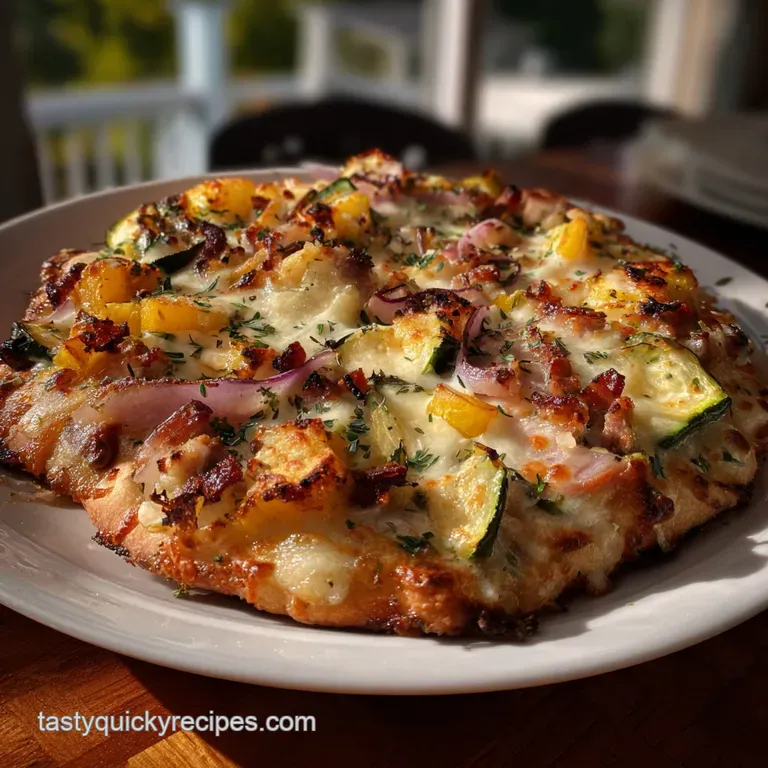
Every step in creating Delicious Thanksgiving Pizza Ideas to Wow is designed to manage moisture and maximize heat exposure.
- Preheat the oven to 500°F (260°C) with your Lodge Cast Iron Pizza Pan inside for 30 minutes until the air shimmering above the surface indicates peak heat saturation.
- Stretch the 1 lb pizza dough on a floured surface until it reaches a 12 inch diameter and becomes translucent when held to the light.
- Dust the hot pan with 1 tsp Bob's Red Mill Cornmealuntil the grains dance and smell slightly toasted.
- Transfer the dough to the pan until the edges begin to puff and sizzle immediately upon contact.
- Spread 1/2 cup thickened gravy evenly until the dough is covered but not submerged, leaving a 1 inch border.
- Distribute 1.5 cups shredded mozzarella until the gravy is barely visible through the cheese lattice.
- Layer 1.5 cups shredded turkey and 1 cup stuffing clusters until the surface is densely packed with varying textures.
- Bake for 10 minutes until the cheese is bubbling with mahogany spots and the crust sounds hollow when tapped.
- Dot with 1/4 cup cranberry sauce until the heat slightly melts the berries into the cheese crevices.
- Garnish with chives and black pepper until the herbal aroma blooms against the savory steam.
The Soggy Crust Solution: Common Mistakes and Troubleshooting
Most failures in Delicious Thanksgiving Pizza Ideas to Wow stem from a lack of moisture control or poor temperature management.
Why Your Crust Is Limp
The "soggy center" is usually caused by using cold, thin gravy or overloaded toppings. When gravy is too thin, the water molecules penetrate the dough before the heat can set the gluten structure. This creates a gummy layer known in the industry as the "trench line." This is very similar to the texture issues encountered in a Leftover Thanksgiving Turkey recipe where moisture management is the priority.
| Problem | Root Cause | The Fix | Pro Protocol |
|---|---|---|---|
| Gummy dough layer | Thin gravy base | Reduce gravy by 20% | Apply gravy while slightly warm to trigger surface setting |
| Toppings sliding off | Too much cranberry sauce | Use cranberry as a post bake garnish | Dot small amounts to maintain structural friction |
| Burnt bottom, raw top | Pan too close to the burner | Move rack to the center position | Use a pizza stone for more regulated radiant heat |
Dry Turkey Protein
If the turkey becomes "woody" or dry, it’s likely due to over exposure to direct heat. Shredded turkey has more surface area than cubed, meaning it denatures faster. The Fix: Tuck the turkey under a thin layer of cheese or toss it in a tablespoon of gravy before topping to provide a protective fat barrier.
Flavor Architecture: Creative Variations and Substitution Protocols
Adapting Delicious Thanksgiving Pizza Ideas to Wow requires an understanding of how swaps alter the cooking physics.
Substitution Table
| Original Ingredient | Substitute | Why It Works |
|---|---|---|
| Turkey Gravy | Mashed Potato Base | Acts as a starch heavy moisture barrier; results in a denser "pierogi" style crust. |
| Leftover Turkey | Rotisserie Chicken | Similar protein structure. Note: Chicken is often saltier; reduce added pepper. |
| Low-moisture Mozzarella | Sharp White Cheddar | Higher acidity and fat content. Note: Will result in more oil runoff. |
The "Sweet & Salty" Twist
For those who prefer a more aggressive flavor profile, replace the chives with fried sage leaves. The sage undergoes rapid dehydration in the oven, providing a "shatter" effect that mimics the texture of the crust. This technique is a staple in many a Heartwarming Thanksgiving Recipe focused on aromatics.
⚗️ The Scaling Lab: The Physics of Quantity
Doubling this recipe isn't as simple as 1+1. Thermodynamics dictates that the more mass you put in the oven, the more energy is required to maintain the temperature.
- Pan Crowding (Maillard Killer): Do not attempt to bake two pizzas on one rack. The second pan blocks the radiant heat, leading to one burnt bottom and one raw top. Mandatory instruction: Bake in sequential batches.
- The Evaporation Paradox: If you are scaling the gravy base for multiple pizzas, reduce added liquid by 10 15%. In a larger pot, the volume increases faster than the surface area, meaning evaporation happens slower.
- Carry Over Cooking: A 2 lb dough ball (for a double sized pizza) has significantly more thermal mass. Pull the pizza when the edges are light golden; the internal heat will continue to brown the crust for 3 5 minutes after removal.
Preserving the Harvest: Professional Storage and Reheating Methods
Storage is about arresting the process of starch retrogradation to prevent the crust from becoming "cardboard like."
- Storage: Store in an airtight container for up to 3 days. Use parchment paper between slices to prevent the cranberry sauce from migrating.
- Freezing: Not recommended for the assembled pizza due to the high water content of the gravy and cranberry sauce, which causes "ice crystal shearing" of the dough.
- Reheating: NEVER use a microwave. Reheat on a dry Lodge Cast Iron Pan over medium heat for 5 minutes, then add a teaspoon of water to the pan and cover with a lid for 60 seconds. The steam will re-melt the cheese while the direct heat restores the "shatter" to the crust.
💡 ZERO WASTE PHILOSOPHY
Don't discard the herb stems. Transform: Mince stems finely and mix into your pizza dough. Science: Herb stems contain concentrated aromatic oils that release during the baking process, scenting the entire crust from the inside out.
Synergistic Flavor Balancing: Sophisticated Serving Suggestions
The heavy, umami rich profile of Delicious Thanksgiving Pizza Ideas to Wow requires an acidic or effervescent counterpoint to cleanse the palate.
- Pairing with Beverages: A high tannin Red (Syrah) or a dry sparkling cider. The carbonation in cider physically "scrubs" the fat from the tongue, making each bite feel like the first.
- Side Dish Synergy: Pair with a bitter green salad (arugula or radicchio) tossed in a simple lemon vinaigrette. The bitterness cuts through the richness of the gravy base.
Making Delicious Thanksgiving Pizza Ideas to Wow is about respecting the ingredients you've already put so much love into. It's the ultimate "second act" for your holiday feast, turning those containers of leftovers into a meal that feels intentional, scientific, and absolutely phenomenal.
Trust me, once you hear that first crack of the crust, you’ll never look at a turkey sandwich the same way again. Let's crack on!

Recipe FAQs
What is the single most critical temperature for baking this pizza?
500°F (260°C). Extreme heat initiates the Maillard reaction quickly on the toppings while simultaneously generating enough steam energy to flash dry the dough's surface for a crisp crust.
Can I use regular, thin gravy instead of thickened gravy?
No. Thin gravy guarantees a soggy bottom crust. Liquid gravy penetrates the dough's gluten network before it can set, resulting in a gummy texture. If you enjoyed the focus on stable emulsions here, see how the same principle of moisture management applies in our Mediterranean Pizza Recipe: 30-Minute Balsamic Glaze.
Is it okay to put the dough in the oven straight from the refrigerator?
No. Cold dough resists stretching into a thin base. Gluten proteins contract when chilled, causing the dough to snap back instead of relaxing uniformly. Allowing the dough to rest at room temperature enables the gluten structure to loosen, which is essential for achieving uniform thickness across the base.
Should I shred the turkey finely or leave it in larger chunks?
Shredded turkey absorbs the most flavor. Finely shredded meat offers a greater surface area to interact with the melting cheese lipids, maximizing flavor absorption during the brief high heat bake time.
Myth: Using a pizza stone is better than cast iron for this recipe.
Myth: Pizza stones absorb moisture well but lack the rapid heat transfer capability of cast iron. Reality: Cast iron's high thermal mass provides immediate, intense heat directly to the base, which is necessary to crisp the crust before the high moisture toppings steam the dough.
What fat content cheese melts best for this application?
Low-moisture mozzarella provides superior melting consistency. High moisture cheeses release too much water during baking, which combines with the gravy, increasing the risk of a structurally weak, wet center.
Myth: Adding stuffing raw prevents it from burning.
Myth: Raw stuffing contains raw flour/egg components that can remain gummy beneath the cheese layer. Reality: Using pre-cooked stuffing allows it to crisp through starch retrogradation under intense heat, creating a desired textural contrast against the melted cheese.
Thanksgiving Leftover Pizza Magic
Ingredients:
Instructions:
Nutrition Facts:
| Calories | 648 kcal |
|---|---|
| Protein | 36.4 g |
| Fat | 21.2 g |
| Carbs | 77.5 g |
| Fiber | 3.8 g |
| Sugar | 9.6 g |
| Sodium | 1140 mg |
