Homemade Ramen: Savory Broth Shortcut
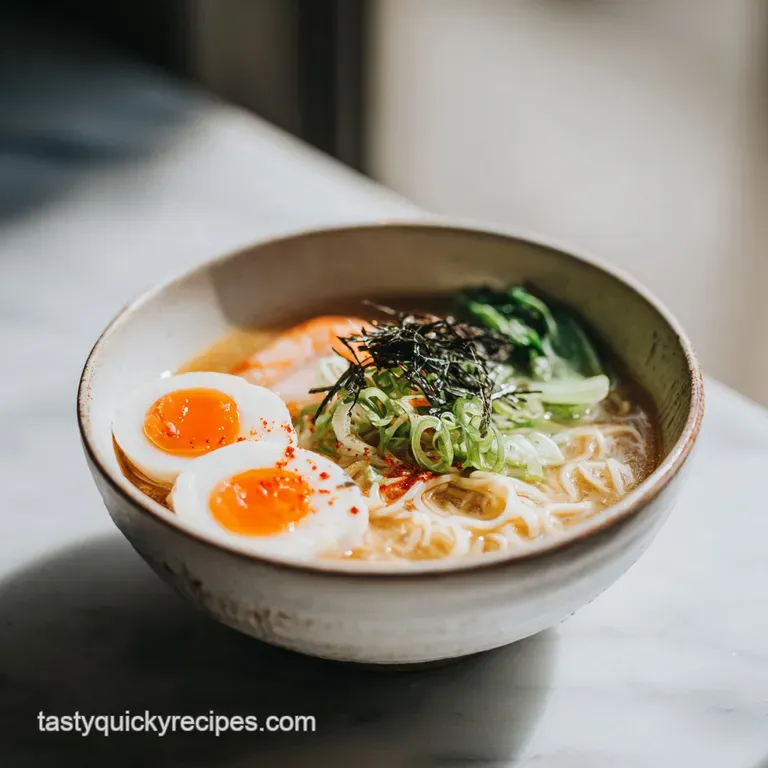
- Time: Active 15 mins, Passive 30 mins, Total 45 mins
- Flavor/Texture Hook: Savory umami broth with a velvety finish
- Perfect for: Weeknight comfort or a quick date night dinner
- Secrets To That Deep Umami Finish
- Deep Dive Into Key Components
- Essentials For Your Noodle Bowl
- Minimal Tools For Maximum Flavor
- Creating Your Bowl Step By Step
- Fixing Common Broth Or Noodle Hiccups
- Customizing Your Ramen Noodle Bowl
- Scaling For The Whole Family
- Storage Tips For Leftover Soup
- Perfect Sides For Your Ramen
- Slurp Myths Debunked
- High in Sodium (⚠️)
- Homemade Ramen FAQs
- 📝 Recipe Card
The first time I tried to make a bowl of soup at home, it was a disaster. I thought I could just boil some plain noodles, throw in a bouillon cube, and call it a day. The result was a sad, salty mess that tasted more like a chemistry experiment than comfort food.
But then I heard that unmistakable sizzle of fresh ginger hitting a hot pan, followed by the pungent, earthy aroma of smashed garlic. That was the moment I realized the secret isn't in the time you spend, but in how you build those first few layers of flavor.
Now, whenever I'm juggling a chaotic Tuesday with kids running around and a sink full of dishes, this is my go to move. It’s that specific "noodle shop" smell that fills the kitchen the kind that makes everyone wander in asking, "Is it ready yet?" We aren't making a 48 hour tonkotsu here, because honestly, who has the time?
We’re making a brilliant, fast version that hits every single note of a classic ramen house experience without the stress.
You don't need fancy equipment or a chemistry degree to pull this off. It's about working smart with what's in your pantry. We’re going to focus on getting that pork tenderloin perfectly seared and the broth just right.
I’ve made all the mistakes like overcooking the noodles into a soggy mush so you don't have to. Trust me on this, once you see how easy it is to get that silky texture, you'll never look at a "flavor packet" the same way again. Let’s crack on.
Secrets To That Deep Umami Finish
Making a phenomenal broth in under an hour sounds like a tall tale, but it’s actually grounded in some pretty cool kitchen science. Most of the flavor we love in a professional bowl comes from long chain proteins breaking down, but we can fast track that by focusing on high intensity aromatics and pre made dashi.
- Aromatic Infusion: Slicing the ginger into thick "coins" and smashing the garlic increases the surface area, allowing the hot neutral oil to extract fat soluble flavor compounds quickly.
- Glutamate Synergism: Combining chicken stock with dashi creates a "umami bomb" effect where the glutamates in the stock and the inosinates in the dashi amplify each other, making the broth taste five times more savory.
- The Maillard Reaction: Searing the pork tenderloin in toasted sesame oil creates a caramelized crust that releases complex sugars and savory notes back into the soup as it sits.
| Method | Total Time | Flavor Depth | Effort Level |
|---|---|---|---|
| Quick Home Version | 45 minutes | High/Savory | Low - One pot |
| Traditional Ramen | 12-24 hours | Very High/Creamy | High - Constant monitoring |
| Instant Packet | 5 minutes | Low/Salty | Minimal - Just boiling water |
The main difference you'll notice between this and a 12 hour broth is the viscosity. Traditional ramen uses collagen from bones to get that lip smacking thickness. In our fast version, we use toasted sesame oil and a touch of mirin to mimic that mouthfeel and provide a subtle sweetness that balances the salt from the soy sauce.
It’s a brilliant trade off for the busy cook who still wants a "wow" factor at the table.
Deep Dive Into Key Components
Understanding your ingredients is the first step to becoming a confident cook. When you know why you're adding something, you can start to play with the recipe. For example, if you're looking for an extra punch of flavor, you might want to look into a Ramen Noodle Seasoning Recipe to customize your base even further.
| Ingredient | Science Role | Pro Secret |
|---|---|---|
| Dashi | Provides essential sea saltiness and umami base | Use high-quality powder or liquid concentrate for instant depth |
| Garlic | Offers sulfurous pungency that rounds out the fat | Smash, don't mince, to prevent burning and bitterness |
| Mirin | Adds a glossy sheen and fermented sweetness | Helps emulsify the oils into the watery broth for a better "cling" |
| Fresh Ramen Noodles | Provides the essential "alkaline" snap | Always cook them in a separate pot to keep your broth clear |
Each of these elements plays a specific role in the architecture of the dish. The garlic and ginger provide the high notes, the dashi and stock provide the foundation, and the soy sauce provides the "seasoning" that ties everything together.
If you skip the dashi, the soup will feel thin and one dimensional, so don't leave it out!
Essentials For Your Noodle Bowl
This list is designed to be accessible while still staying true to that authentic profile. I’ve included some swaps because I know what it’s like to realize you’re out of one specific thing right as you start cooking.
- 1 tbsp neutral oil: Vegetable or canola works. Why this? High smoke point allows aromatics to char without burning.
- Substitute: Grapeseed oil.
- 4 cloves garlic, smashed: Why this? Smashing releases oils while keeping the garlic intact.
- Substitute: 1 tsp garlic paste.
- 2 inch piece ginger, sliced into thick coins: Why this? Coins are easy to remove before serving.
- Substitute: 1/2 tsp ground ginger (though fresh is far superior).
- 4 cups low sodium chicken stock: Why this? Low sodium gives you control over the final salt level.
- Substitute: Vegetable stock or bone broth.
- 2 cups dashi: Why this? Essential Japanese sea stock for authentic umami.
- Substitute: 2 cups water plus 1 tsp fish sauce.
- 2 tbsp soy sauce: Why this? Provides salt and the classic dark color.
- Substitute: Tamari for a gluten-free option.
- 1 tbsp mirin: Why this? Adds sweetness and a professional gloss.
- Substitute: 1 tsp sugar mixed with a splash of white wine.
- 1 lb pork tenderloin, sliced thin: Why this? Lean and fast cooking for weeknights.
- Substitute: Chicken thighs or firm tofu blocks.
- 1 tbsp toasted sesame oil: Why this? Adds a nutty, aromatic finishing touch.
- Substitute: Chili oil if you want heat.
- 600g fresh ramen noodles: Why this? Better texture and "slurp" than dried.
- Substitute: Dried ramen packets (discard the seasoning).
- Toppings: 4 soft boiled eggs, 1 cup menma, 2 stalks scallions, 4 sheets nori.
Minimal Tools For Maximum Flavor
You really don't need a kitchen full of gadgets for this. I'm a big fan of the "one pot, one pan" approach to keep cleanup easy. Juggling three different pots while trying to help with homework is a recipe for a headache, so we're keeping it simple.
- Large Dutch Oven or Stockpot: This is for your broth. A heavy bottomed pot like a Lodge cast iron helps maintain a steady simmer.
- Separate Large Pot: Only for boiling the noodles. You want plenty of water so the noodles can swim and don't get gummy.
- Cast Iron Skillet or Non stick Pan: For searing that pork tenderloin until it's golden and delicious.
- Fine Mesh Strainer: Essential for fishing out the ginger and garlic coins before you serve.
- Chef's Knife: A sharp knife makes those ginger coins and scallion curls much easier to manage.
Chef's Tip: Warm your serving bowls with a little hot tap water while you finish the broth. This keeps your ramen piping hot from the first slurp to the last drop!
Creating Your Bowl step-by-step
Follow these steps closely, and you'll have a restaurant quality meal on the table faster than you can get a delivery driver to your door. The key is in the timing don't let those noodles sit!
1. Char the Aromatics
Heat 1 tbsp neutral oil in your large stockpot over medium high heat. Toss in your 4 smashed garlic cloves and ginger coins. Let them sizzle and brown slightly for about 2 minutes. You want to see those edges getting a little dark that’s where the flavor is.
2. The High Intensity Simmer
Pour in the 4 cups chicken stock and 2 cups dashi. Bring it to a rolling boil, then immediately turn the heat down to low. Add the 2 tbsp soy sauce and 1 tbsp mirin. Cover and let it simmer for 20 minutes. This is when the ginger and garlic really marry into the liquid.
3. Flash Sear the Protein
While the broth is doing its thing, heat a skillet over medium high heat with 1 tbsp toasted sesame oil. Add your thinly sliced pork tenderloin. Sear for 2-3 minutes per side until the edges are crispy and golden.
Don't overcook it; tenderloin is lean and can get tough if you go too long.
4. Prepare the Toppings
Get your soft boiled eggs ready. If you want that legendary jammy yolk, you should definitely check out my Shoyu Eggs Recipe. Slice them in half and set aside along with your menma, scallions, and nori.
5. The Noodle Snap
In your second pot of boiling water, drop the 600g of fresh ramen noodles. Cook them for exactly 2-3 minutes (check the package) until they are firm but flexible. Drain them immediately. Do not rinse them!
6. Strain and Refine
Use your mesh strainer to remove the garlic and ginger from the broth. You want a velvety, clear liquid with no chunky bits left behind.
7. Assembly and Layering
Divide the cooked noodles between four bowls. Ladle the hot broth over the noodles, ensuring they are completely submerged.
8. Final Touches
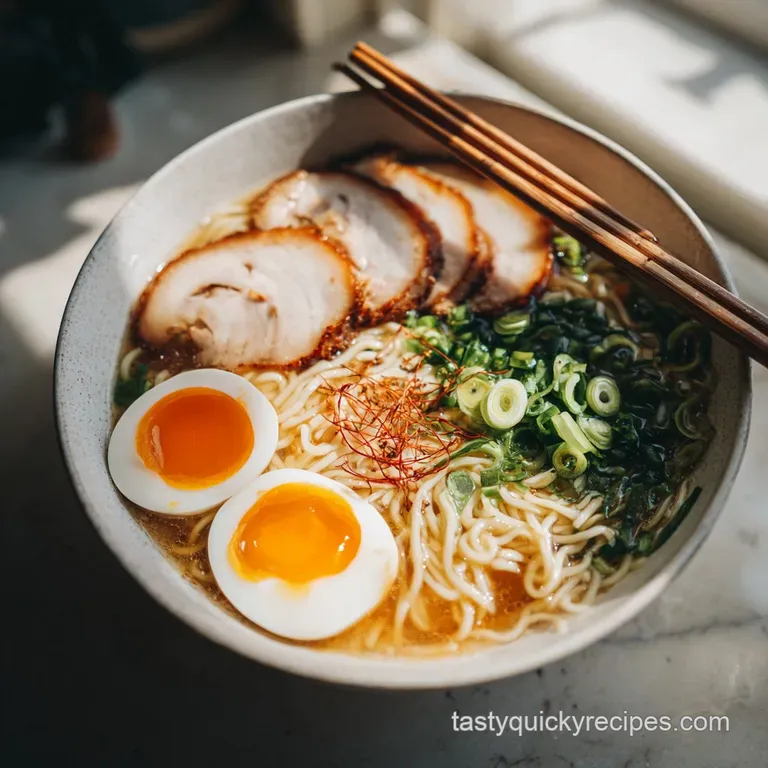
Top each bowl with a few slices of seared pork, two egg halves, a spoonful of menma, and a sprinkle of scallions. Tuck a sheet of nori into the side of the bowl right before serving so it stays crisp.
Fixing Common Broth Or Noodle Hiccups
Even the best of us run into trouble sometimes. The difference between a good cook and a great one is knowing how to pivot when things go sideways.
The Broth is Too Salty
This usually happens if your chicken stock wasn't as "low sodium" as the label claimed, or if the broth reduced too much. If the broth tastes like the ocean, don't panic. Add 1/2 cup of hot water or unsalted stock at a time until the balance is restored.
A tiny pinch of sugar can also help mask the saltiness without making it sweet.
Cloudy, Murky Toppings
If you cook your noodles directly in the broth, they release starch which turns your beautiful soup into a cloudy, thick mess. Always cook noodles in a separate pot of plain water.
If your broth is already cloudy, there's no easy way to "fix" it, but you can improve the appearance by adding a fresh drizzle of sesame oil or some vibrant green scallions to draw the eye away from the liquid.
| Problem | Root Cause | Solution |
|---|---|---|
| Tough Pork | Cooked too long over high heat | Sear quickly and remove immediately; it will warm up in the soup |
| Soggy Noodles | Sat in the hot broth too long | Serve immediately after assembly; never let noodles sit in the pot |
| Flat Flavor | Missing the dashi or mirin | Add a splash of fish sauce or a tiny pinch of brown sugar |
Common Mistakes Checklist:
- ✓ Never skip the searing of the ginger and garlic; raw aromatics won't give you that deep flavor.
- ✓ Pat the pork completely dry before it hits the skillet to ensure a proper sear rather than steaming.
- ✓ Don't overcrowd the noodle pot; give them room to move so they cook evenly.
- ✓ Ensure the broth is piping hot when you pour it over the noodles to "reactivate" them.
- ✓ Use fresh scallions only; wilted ones lose their bite and bright color.
Customizing Your Ramen Noodle Bowl
Once you've got the base down, the world is your oyster. Ramen is incredibly personal, and you can change the entire vibe of the dish with just one or two ingredients.
1. The Spicy Miso Twist
If you want a richer, funkier bowl, whisk 2 tbsp of red or white miso paste into a small amount of the hot broth, then stir it back into the main pot. Add a teaspoon of chili bean paste (Toban djan) for a heat that builds at the back of the throat. This creates a much thicker, creamier soup.
2. Vegetarian "Earth" Ramen
Swap the chicken stock for a rich mushroom broth and replace the dashi with a kombu only version. Instead of pork, use thick slices of king oyster mushrooms seared in the skillet until they look like scallops. It’s remarkably savory and satisfying even for the biggest meat lovers in the family.
Scaling For The Whole Family
When you're cooking for a crowd or just for two, you need to adjust more than just the quantities.
- For 2 People (Half Batch): Use a smaller pot for the broth. You can still use a whole egg per person! Reduce the simmering time by about 5 minutes since a smaller volume of liquid heats up faster.
- For 8 People (Double Batch): This is where it gets tricky. Do not double the salt or soy sauce immediately. Start with 1.5x and taste. You’ll need to sear the pork in batches to ensure the pan stays hot enough to get that "shatter" on the edges.
- Baking Shortcut: If you're doing a massive batch, you can actually roast the pork tenderloin in the oven at 400°F for 15-20 minutes instead of searing it in a skillet. It won't have the same crust, but it's much easier when juggling eight bowls.
Storage Tips For Leftover Soup
If you have leftovers, the golden rule is: Store the broth and noodles separately. If you put them together, the noodles will soak up all the liquid and turn into a giant, soggy sponge by morning.
- Storage: Keep the broth in an airtight container in the fridge for up to 3 days. The cooked pork can stay in a separate container for the same amount of time.
- Freezing: You can freeze the broth for up to 3 months. I like to freeze it in 2 cup portions (the size of a single bowl) so I can have a quick lunch whenever I want.
- Zero Waste: Don't throw away those scallion ends! Put the white roots in a small glass of water on your windowsill, and they’ll grow back in a week. Also, any leftover pork can be chopped up the next day and tossed into a quick stir fry.
Perfect Sides For Your Ramen
While a big bowl of homemade ramen is a meal in itself, sometimes you want to go all out. If I’m hosting friends, I love to serve this with a few small plates to keep the energy high.
A plate of crispy gyoza is the classic pairing, providing a nice crunch to contrast the silky noodles. If you're looking for something a bit different but still within that savory world, an Au Jus Recipe might seem out of place, but the technique of building a rich, beefy liquid is very similar to how we treat our ramen base.
If you have extra nori, you can make quick "seaweed snacks" by brushing them with a tiny bit of sesame oil and a sprinkle of salt, then toasting them in a dry pan for 30 seconds. They provide a wonderful "shatter" texture that kids absolutely love.
Honestly, just having a cold cucumber salad with some rice vinegar and sesame seeds is often enough to cut through the richness of the broth and leave everyone feeling satisfied.
Slurp Myths Debunked
There is a lot of "gatekeeping" in the world of ramen, but don't let it stop you from experimenting in your own kitchen.
Myth: You must boil bones for 12 hours for a good broth. Truth: While traditional tonkotsu requires that, a "Chintan" (clear) style broth like this one relies on high-quality aromatics and dashi.
You can get incredible depth in 30 minutes if you layer your ingredients correctly.
Myth: Slurping is rude. Truth: In Japanese culture, slurping your noodles is actually a compliment to the chef! More importantly, it pulls air into your mouth along with the broth, which helps cool the noodles and aerates the flavors, making them taste more intense.
Myth: Fresh noodles are always better than dried. Truth: While fresh has a better snap, high-quality dried ramen noodles (the kind without the wax coating) are a perfectly acceptable substitute for a weeknight meal. Just avoid the bottom shelf 25 cent packets if you want a truly great experience.
High in Sodium (⚠️)
1085 mg mg of sodium per serving (47% of daily value)
The American Heart Association recommends limiting sodium intake to about 2,300mg per day.
Tips to Reduce Sodium in Your Ramen:
-
Broth Swap-30%
Replace the 4 cups of low-sodium chicken stock and 2 cups of dashi with homemade or unsalted chicken broth. This significantly reduces sodium content. Flavor can be enhanced with other aromatics.
-
Soy Sauce Cutback-20%
Reduce the soy sauce to 1 tablespoon or substitute it with low-sodium soy sauce or tamari. Alternatively, use coconut aminos, which has a naturally lower sodium content.
-
Menma Modification-20%
Menma (bamboo shoots) can be high in sodium due to the pickling or brining process. Rinse the menma thoroughly before using, or consider using fresh bamboo shoots, blanched and seasoned lightly with sesame oil and pepper, instead of processed.
-
Mirin Moderation-10%
While mirin is less significant than soy sauce or stock, slightly reduce the amount used (e.g., from 1 tbsp to 0.5 tbsp) or look for a lower sodium version if available.
-
Pork Prep-10%
Ensure the pork tenderloin is unseasoned before slicing and adding it to the ramen. Avoid pre-marinated or pre-salted pork.
-
Flavor Boost
Enhance flavor with fresh herbs (cilantro, Thai basil), spices (white pepper, star anise), and citrus (lime or lemon juice) to compensate for reduced sodium. Adjust to your liking!
Homemade Ramen FAQs
What are the five main ingredients of ramen?
No single set defines it, but typically: noodles, broth, tare (seasoning), aromatic oil, and toppings. The broth provides the base flavor, the tare concentrates the salt and umami, and the toppings add texture like the soft boiled egg. If you master the layered flavor in the broth here, you'll elevate any simple noodle dish, much like how balancing flavors makes our Hot Honey Chicken Recipe successful.
What do you need to make homemade ramen?
You need basic stock components and two pots for efficiency. Essential items include chicken stock, dashi, soy sauce, fresh ginger, garlic, and fresh noodles. Using a Dutch oven for the broth and a separate pot for the noodles prevents starch from clouding your otherwise clear soup base.
How to make a simple ramen?
Heat oil, quickly sear smashed garlic and ginger until browned, then simmer with chicken stock and dashi for 20 minutes. Strain this broth, cook fresh noodles separately, and assemble by pouring the hot broth over the noodles and topping with seared pork and eggs.
How to build your own ramen?
Start by establishing your broth depth using a savory base like chicken stock combined with umami boosters like dashi. Next, incorporate your tare (soy sauce/salt) to season, introduce an aromatic oil like toasted sesame for mouthfeel, and finish with complementary toppings for texture. If you enjoy learning to balance these core components, you will appreciate the flavor control we use when building a savory base for our Chicken and Noodles Recipe.
Can I use plain water instead of dashi?
No, you should avoid substituting plain water for dashi completely. Dashi provides the foundational sea savoriness (umami) that chicken stock alone cannot replicate, resulting in a thin, one-dimensional flavor profile.
If you are out of dashi, use 2 cups of water mixed with 1 tsp of fish sauce as a last resort substitution.
Is it true that noodles must be cooked separately?
Yes, cooking noodles in the main broth will ruin the clarity and texture of your soup. Noodles release starch as they cook, which turns a clear broth murky and thickens it undesirably. Always cook them in a separate, aggressively boiling pot of water until just tender.
How can I make the broth rich without simmering for 24 hours?
Achieve richness by combining high umami liquids and layering aromatics under high heat. Use both chicken stock and dashi for synergy, and ensure you properly sear your pork tenderloin to create fond that dissolves into the liquid base. Mastering the quick extraction of flavor through intense searing is a technique that also works beautifully when making a quick glaze for our Buffalo Chicken Dip recipe crust.
Quick Homemade Ramen Recipe
Ingredients:
Instructions:
Nutrition Facts:
| Calories | 738 kcal |
|---|---|
| Protein | 52 g |
| Fat | 19.5 g |
| Carbs | 86 g |
| Fiber | 4.5 g |
| Sugar | 5.2 g |
| Sodium | 1085 mg |
