Leftover Prime Rib Hash Recipe | Texture Perfected
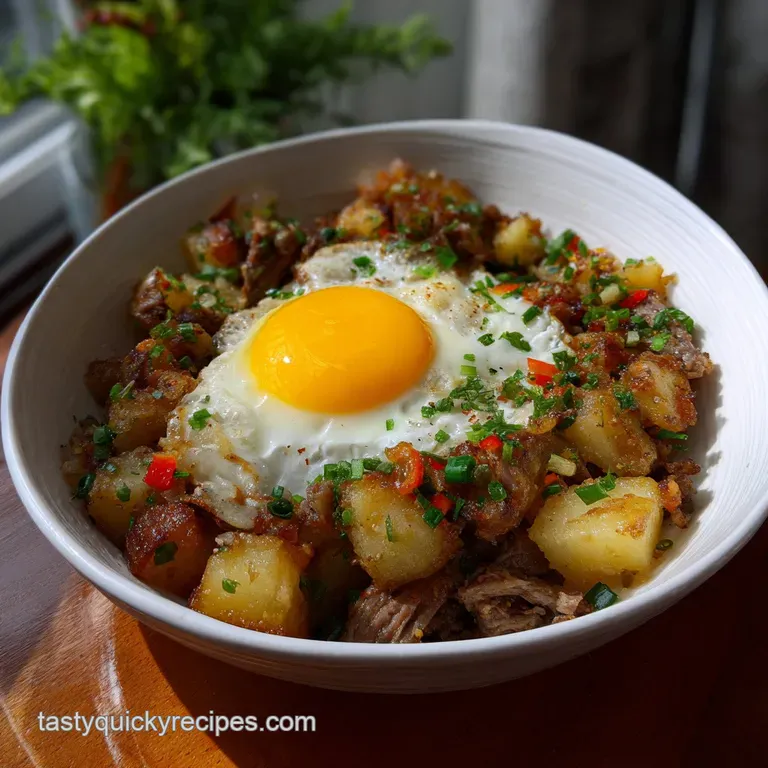
- Effort/Time: 35 minutes total (Moderate effort)
- Flavor Hook: Rich, beefy umami balanced by herbaceous rosemary and a velvety egg yolk finish.
- Perfect for: Post-holiday brunch or a high-protein "clean out the fridge" luxury meal.
- The Physics of Crisp: Why This Technique Wins
- Structural Blueprint: Time and Nutrition Metrics
- The Alchemy of Umami: Selecting Your Elements
- Precision Gear: The Tools for Thermal Success
- The Thermal Recovery Protocol: Step-by-Step Execution
- Solving Textural Failures: Troubleshooting Your Skillet
- ⚗️ The Scaling Lab: The Physics of Quantity
- Flavor Architecture: Creative Substitutions and Variations
- Preservation and Thermal Restoration Strategies
- Synergistic Pairings: How to Complete the Plate
- Recipe FAQs
- 📝 Recipe Card
Few things hurt a cook’s soul more than watching $100 worth of standing rib roast turn into gray, stringy leather in a microwave. I spent years ruining the "morning after" by tossing cold meat into a pan with wet potatoes, resulting in a soggy, depressing pile of wasted potential.
The financial sting of destroying such a premium cut is a mistake you only make once before you start obsessing over thermal mass and moisture control.
I once tried to rush a batch by overcrowding my Lodge Cast Iron Skillet, thinking the heat would compensate for the volume. Instead, the temperature plummeted, the onions released their water, and I ended up steaming the beef rather than searing it.
It was a mushy disaster that taught me everything I know now about pan crowding and the necessity of a pre-heated surface.
The secret to a world class Leftover Prime Rib Hash Recipe isn't just the meat; it's the physics of starch gelatinization. By par-cooking the 1 lb potatoes or using a over high heat fat like Epic Provisions Beef Tallow, we create a "shatter crisp" exterior that acts as a structural contrast to the tender beef.
The goal is a sensory symphony: the audible sizzle of the sear, the earthy aroma of rosemary, and the visual beauty of a perfectly golden crust.
The Physics of Crisp: Why This Technique Wins
- Starch Retrogradation: Chilled potatoes from the night before have rearranged their starch molecules, making them firmer and easier to crisp without falling apart.
- Lipid Saturation: Using beef tallow provides a higher smoke point and a deeper flavor profile than butter, allowing for a 400°F+ sear that triggers the Maillard reaction.
- Thermal Buffering: The onions and peppers act as a moisture buffer, keeping the minced garlic from scorching while adding aromatic depth to the rendered fats.
- Carry over Management: We add the 12 oz leftover prime rib at the very end because it is already cooked; we are only seeking to render the surface fat and warm the center to 110°F.
Structural Blueprint: Time and Nutrition Metrics
This Leftover Prime Rib Hash Recipe is engineered for efficiency, ensuring every component reaches its peak texture simultaneously. Mastering this ensures a repeatable success for your Leftover Prime Rib Hash Recipe every time.
| Metric | Value |
|---|---|
| Prep Time | 15 minutes |
| Cook Time | 20 minutes |
| Total Time | 35 minutes |
| Serving Size | 1.5 cups approx. |
| Yield | 4 servings |
The Alchemy of Umami: Selecting Your Elements
Selecting the right ingredients for your Leftover Prime Rib Hash Recipe is the difference between a diner side dish and a culinary masterpiece.
- 1 lb potatoes (peeled and 1/2 inch cubes): Why this? High starch content ensures a golden, crispy exterior via the Maillard reaction.
- 2 tbsp beef tallow (or unsalted butter/neutral oil): Why this? Tallow has a high smoke point and reinforces the beef’s natural profile.
- 1 cup yellow onion (finely diced): Provides a sweet, sulfurous base that caramelizes during the long potato cook.
- 1 cup red bell pepper (diced): Adds a necessary pop of acidity and color to cut through the heavy fats.
- 2 cloves garlic (minced): Fragrant aromatics that bridge the gap between the beef and the herbs.
- 12 oz leftover prime rib (1/2 inch cubes): The star of the show. Ensure it is cold when dicing for cleaner edges.
- 1 tsp Lea & Perrins Worcestershire sauce: Why this? Anchovies and tamarind provide a fermented umami boost to the beef.
- 1 tbsp fresh rosemary or thyme (finely chopped): Cut through the richness with piney, earthy volatile oils.
- 1/2 tsp Diamond Crystal Kosher Salt: Larger flakes allow for better coverage and controlled seasoning.
- 1/2 tsp freshly cracked black pepper: Provides a biting heat that balances the fat.
- 4 large eggs: The yolk serves as a natural sauce, emulsifying with the Au Jus Recipe if you have some on the side.
- 2 tbsp fresh parsley (chopped): Brightens the final presentation and cleans the palate.
Ingredient Chemistry Breakdown
| Ingredient | Chemical/Physical Role (Science) | The Pro Secret (Why This Matters) |
|---|---|---|
| Beef Tallow | Saturated fat with high thermal stability | Prevents sticking while imparting a "steakhouse" flavor profile |
| Potatoes | Starch gelatinization and dehydration | Removing surface moisture is the only way to achieve a "shatter" crunch |
| Worcestershire | Enzymatic umami enhancement | The acidity breaks down surface proteins for a faster sear |
Precision Gear: The Tools for Thermal Success
- 12 inch Lodge Cast Iron Skillet: High thermal mass is required. A thin pan will lose too much heat when the 12 oz of beef hits the surface.
- Wüsthof Chef’s Knife: A sharp blade is non-negotiable for dicing the cold prime rib without tearing the delicate muscle fibers.
- Metal Fish Turner or Spatula: You need a thin, flexible tool to get under the potato crust without breaking the cubes.
- KitchenAid Digital Thermometer: To ensure the beef doesn't exceed 120°F (to keep it medium rare).
The Thermal Recovery Protocol: step-by-step Execution
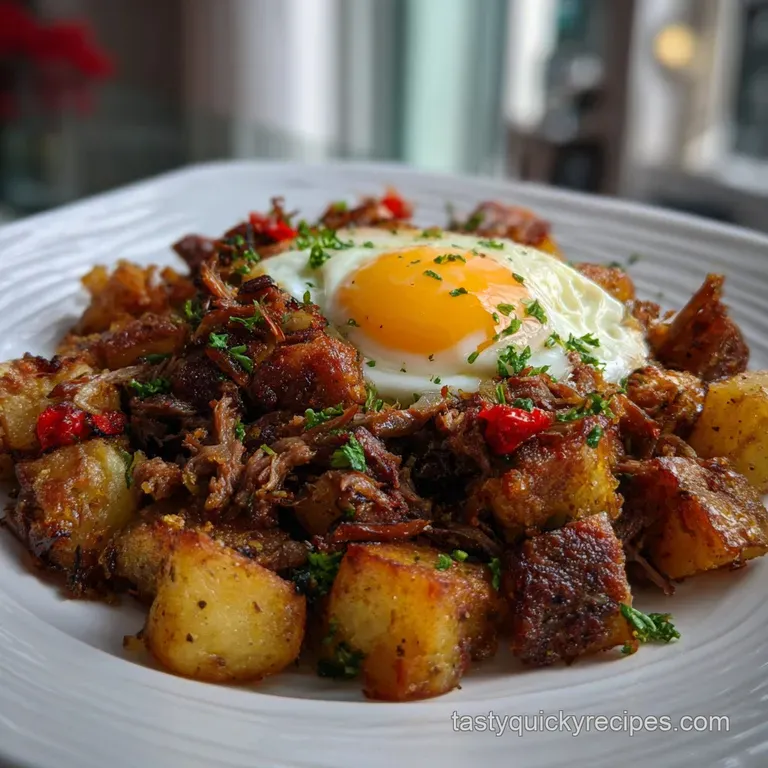
- Prep the 1 lb potatoes into uniform 1/2 inch cubes. Note: Uniformity ensures all pieces reach starch gelatinization at the same moment.
- Heat the Lodge Cast Iron Skillet over medium high heat for 3 minutes until a drop of water dances and evaporates instantly.
- Melt 2 tbsp beef tallow in the pan, swirling to coat the entire surface.
- Add the potatoes in a single layer and cook for 8 minutes undisturbed until the bottom edges turn a deep, mahogany brown.
- Flip the potatoes and add 1 cup yellow onion and 1 cup red bell pepper.
- Sauté for 5 minutes until the onions turn translucent and the pepper skins begin to blister.
- Stir in 2 cloves minced garlic and 1 tbsp rosemary until a fragrant, nutty aroma fills the kitchen (about 60 seconds).
- Integrate the 12 oz diced prime rib and 1 tsp Worcestershire sauce.
- Toss for 3 minutes until the beef fat begins to glisten and the meat is warmed through but still pink in the center.
- Create four small wells in the hash and crack one large egg into each.
- Cover the skillet for 2 minutes until the egg whites are opaque but the yolks still jiggle like jelly.
- Garnish with 2 tbsp parsley and serve immediately while the potatoes still hiss and crackle.
Solving Textural Failures: Troubleshooting Your Skillet
Why Your Hash Is Mushy
When the potatoes turn into a soft mash instead of a crispy hash, it’s usually a moisture problem. If you didn't dry the potatoes after peeling or if you overcrowded the pan, the steam gets trapped. This prevents the Maillard reaction and keeps the temperature below 212°F.
Making this a priority is essential for any successful Leftover Prime Rib Hash Recipe.
| Problem | Root Cause | The Fix | Pro Protocol |
|---|---|---|---|
| Soggy Potatoes | Excess surface moisture or pan crowding | Pat potatoes dry with a paper towel before cooking | Use a larger skillet or cook in two batches to allow steam to escape |
| Tough Beef | Protein denaturation from overcooking | Beef was added too early or heat was too high | Add the prime rib in the last 3 minutes of cooking only |
| Burnt Garlic | High heat and early addition | Garlic was added with the potatoes | Always add garlic in the final 60 90 seconds of the vegetable sauté |
⚗️ The Scaling Lab: The Physics of Quantity
When you decide to double this Leftover Prime Rib Hash Recipe for a crowd, you cannot simply double everything and expect the same results. Physics dictates a change in strategy.
- Pan Crowding (The Maillard Killer): Doubling the 1 lb of potatoes in a single 12 inch skillet will increase the volume by 100% but the surface area of the pan stays the same. The temperature will drop significantly, leading to "steaming" rather than "searing." Mandatory instruction: Cook in two separate pans or in sequential batches.
- Flavor Saturation: Scale spices (salt/pepper/herbs) to 1.5x, not 2x. Concentrated flavors in the beef and Worcestershire accumulate non-linearly.
- The Thermal Mass Effect: A larger batch of cold beef (24 oz instead of 12 oz) will suck the heat out of your cast iron instantly. You must allow the pan to recover its heat for 2 minutes between the vegetable sauté and the beef integration.
- Carry Over Heat: A larger mass of hash retains more internal energy. Pull the eggs off the heat when the whites are 90% set, as the residual thermal energy will finish the job on the way to the table.
Flavor Architecture: Creative Substitutions and Variations
If you don't have every item on the list, use these scientifically backed swaps to keep your Hash Recipe on track.
| Original Ingredient | Substitute | Why It Works |
|---|---|---|
| Beef Tallow | Duck Fat or Ghee | High smoke points (450°F+) allow for the same crisping physics without burning. |
| Yellow Onion | Shallots | Higher sugar content leads to faster caramelization; more delicate flavor. |
| Red Bell Pepper | Poblano Pepper | Similar moisture content but adds a mild, smoky heat profile. |
| Fresh Rosemary | Dried Thyme (1 tsp) | Use 1/3 the amount of dried herbs as they are more potent, but they lack the bright volatile oils. |
The Southwestern Skillet: Swap the rosemary for cumin and smoked paprika. Serve with a side of charred tortillas, perhaps even a side of Texas Roadhouse Rolls recipe if you want to lean into that buttery, steakhouse vibe.
The "Steakhouse" Style: Finish the dish with a drizzle of Lemon Pepper Sauce Recipe or a splash of Au Jus Recipe to re-hydrate the beef fibers.
Preservation and Thermal Restoration Strategies
The Leftover Prime Rib Hash Recipe is best served immediately, but if you have leftovers of the leftovers, follow these protocols.
- Storage: Place in an airtight glass container (like Pyrex) for up to 3 days in the fridge. Avoid plastic, which can trap moisture and turn the potatoes into a sponge.
- Freezing: Not recommended. The cellular structure of the potatoes breaks down when frozen, leading to a grainy, watery texture upon thawing.
- Reheating: NEVER use a microwave. It will turn your prime rib into a rubber band. Instead, reheat in a skillet over medium heat with 1 tsp of water and a lid for 3 minutes to create a steam chamber effect, then remove the lid for 2 minutes to re-crisp the bottom.
💡 ZERO WASTE PHILOSOPHY: Don't discard the fat trimmings from your prime rib. Transform: Render them down in a small saucepan to make your own "Beef Tallow" for the next batch.
Science: These trimmings contain concentrated flavor compounds (lipids) that are far superior to store-bought neutral oils. This simple step elevates any future Leftover Prime Rib Hash Recipe.
Synergistic Pairings: How to Complete the Plate
This hash is a heavy hitter, so you need items that provide acidity or light textures to balance the fat.
- Acidic Contrast: A side of pickled red onions or a simple arugula salad with lemon vinaigrette.
- The Bread Component: Toast a piece of hearty sourdough. If you're feeling ambitious, a toasted Sourdough Hoagie Roll Recipe sliced thin makes an excellent vessel for scooping up the hash and egg yolk.
- The "Dip" Factor: While usually for chips, a dollop of a cold, creamy Boat Dip Recipe can actually act as a brilliant "poor man's" horseradish cream if you're looking for a tangy finish.
- Myth
- You must boil potatoes before making hash.
- Truth
- Raw, diced potatoes cook perfectly in 15 20 minutes in a heavy skillet. Boiling often introduces too much internal moisture, which prevents the exterior from getting that "shatter" crunch.
- Myth
- Prime rib must be room temperature before cooking.
- Truth
- Cold beef is actually easier to cube into perfect 1/2 inch pieces. The heat of the skillet will bring it to temperature quickly enough without overcooking the center.
Trust me, once you master the Leftover Prime Rib Hash Recipe, you'll start making extra large roasts just so you have an excuse to make breakfast the next morning. It's about respecting the ingredient and using basic physics to get the most out of every bite. Let's crack on.
Recipe FAQs
how to make hash from leftover prime rib?
Dice cold prime rib into 1/2 inch cubes, then sear separately from the potatoes only for the last three minutes of cooking. This avoids rendering the protein tough and gray, focusing instead on warming the center while crisping the edges. A simple Au Jus drizzle adds needed moisture back to the finished product.
what do with leftover prime rib?
Shred it for tacos, dice it for hash, or dice it for an elevated omelet filling. Hash is superior because the high starch potatoes absorb residual beef fat beautifully, creating a superior flavor matrix. If you enjoyed mastering the high heat sear here, apply that principle to caramelizing onions for our Albers Cornbread: The Chefs Classic Golden Skillet Recipe.
how to cook leftover prime rib?
Add it last, cook it minimally, and use a thermometer to check the core. Residual heat from the potatoes will continue the cooking process, so aim to pull the meat when the internal temperature hits 110°F.
Too much heat denatures the remaining connective tissues, causing the texture to become dry and stringy.
how to make leftover corned beef hash?
Use rendered fat, not oil, for superior flavor. Corned beef is already heavily salted, so reduce added salt by half compared to this prime rib recipe. The higher fat content in corned beef means it needs slightly less added cooking fat to prevent sticking or burning.
What is the best fat to use for crisping potatoes?
Beef tallow offers the highest smoke point and flavor reinforcement. Tallow contains saturated fats that stabilize at high heat, enabling a Maillard reaction on the potato surface (crisping) without breaking down into bitter compounds.
Butter often burns before the starch fully gelatinizes, yielding a softer product.
Myth: Can I skip drying the potatoes?
Myth: You can skip drying the potatoes. Reality: Moisture on the potato surface must vaporize before the temperature can rise high enough to brown the starch. Excess water lowers the pan temperature, resulting in steamed, mushy potatoes instead of a crisp crust.
What technique separates diner hash from gourmet hash?
Separating the potato cook time from the beef cook time is the key. Potatoes require 10-12 minutes of undisturbed heat to form a crust, but prime rib only needs 3 minutes to warm through. Cooking them together ensures one component is ruined by the timing needs of the other.
Prime Rib Hash Recipe
Ingredients:
Instructions:
Nutrition Facts:
| Calories | 508 kcal |
|---|---|
| Protein | 31g |
| Fat | 34g |
| Carbs | 21g |
| Fiber | 4g |
| Sugar | 3g |
| Sodium | 745mg |
