Make Ahead Mashed Potatoes: Creamy & Rich
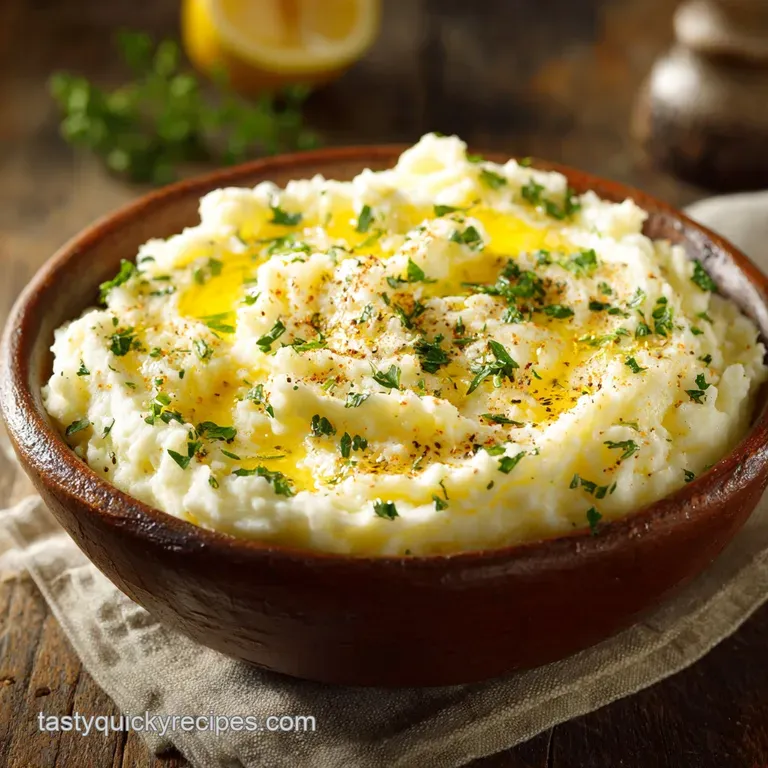
- Time: Active 15 minutes, Passive 25 minutes, Total 40 minutes
- Flavor/Texture Hook: Silky, buttery, and incredibly rich
- Perfect for: Holiday meal prep, hearty midday gatherings, or fueling a busy family weekend
- Master Your Easy Make Ahead Mashed Potatoes
- The Science Of Starch Control
- Component Analysis For Success
- Choosing The Best Rich Elements
- Gear For Velvety Potato Textures
- Step By Step Execution Guide
- Solving Common Texture Issues Quickly
- Adjusting Your Batch Size
- Adapting For Specific Diet Needs
- De Bunking Potato Preparation Ideas
- Storing And Reheating Your Potatoes
- Satisfying Pairings For Hearty Meals
- Recipe FAQs
- 📝 Recipe Card
Master Your Easy make-ahead Mashed Potatoes
I remember standing in my kitchen three years ago, staring at a pot of grey, gluey potatoes while my family waited for a big Saturday lunch. I had rushed the process, throwing cold milk into hot starch and over working the mash until it resembled wallpaper paste.
It was a disheartening midday slump moment that taught me one vital lesson: great potatoes aren't about speed; they're about managing starch and moisture with intention.
Since then, I have treated my kitchen like a little lab for fueling my family with hearty, satisfying meals. I discovered that by using a specific ratio of fats cream cheese and sour cream you create a protective barrier around the potato starch.
This prevents that dreaded "refrigerator crumble" and ensures your make-ahead Mashed Potatoes emerge from the oven or slow cooker with a texture so silky it rivals any high end bistro.
The aroma of these potatoes hitting the table is a sensory trigger for me now. It smells like clarified butter and roasted garlic, a scent that promises a fueling meal without the last minute kitchen chaos.
We’re going to walk through how to keep that texture velvety, how to avoid the "grey" effect, and how to make sure these stay rich and satisfying from the first scoop to the last.
The Science Of Starch Control
The Fat Barrier: Coating potato starch molecules with lipids from butter and cream cheese prevents them from bonding into a gummy, gluey mess when reheated.
Amylopectin Stabilization: Using Yukon Golds provides the ideal ratio of starch to moisture, ensuring the mash remains dense enough to hold its shape but soft enough to melt on the tongue.
Thermal Residual Drying: Toasting the drained potatoes in a hot pot for two minutes evaporates excess surface water, concentrating the earthy potato flavor and preventing a soggy final result.
| Servings | Potato Weight | Butter Amount | Cream Quantity | Suggested Pan |
|---|---|---|---|---|
| 4-5 people | 2.5 lbs | 0.5 cup | 0.75 cup | 8x8 Baking Dish |
| 10 people | 5 lbs | 1 cup | 1.5 cups | 9x13 Baking Dish |
| 20 people | 10 lbs | 2 cups | 3 cups | Two 9x13 Dishes |
This chart helps you visualize the volume needed for different crowd sizes, ensuring you have the right fueling capacity for your midday gathering. If you are planning a large celebration, these potatoes pair exceptionally well with a hearty Blackeyed Peas recipe to create a complete, energy dense meal.
Component Analysis For Success
| Ingredient | Science Role | Pro Secret |
|---|---|---|
| Yukon Gold Potatoes | High starch, low moisture base | Peeling them deeply removes the bitter solanine layer near the skin. |
| Full fat Cream Cheese | Emulsifier and stabilizer | The lactic acid provides a subtle tang that cuts through the heavy lipids. |
| Warmed Heavy Cream | Hydration agent | Adding cold cream shocks the starch, causing it to tighten and turn grainy. |
| White Pepper | Flavor enhancer | Provides a floral heat without the visual "specks" of black pepper. |
Choosing The Best Rich Elements
For the most satisfying results, the quality of your dairy determines the final mouthfeel. I always reach for high fat options because they provide the long lasting energy needed for a busy day.
- 5 lbs Yukon Gold potatoes: Peeled and cut into 2 inch chunks. Why this? They have a natural buttery flavor and creamy texture compared to waxy reds.
- 2 tbsp Kosher salt: For the boiling water. Why this? Seasons the potato from the inside out during the gelatinization process.
- 1 cup unsalted butter: Softened and cubed. Why this? Allows you to control the salt levels precisely.
- 8 oz full fat cream cheese: Room temperature. Why this? The key to the make-ahead stability and velvety texture.
- 1.5 cups heavy cream: Warmed. Why this? High fat content prevents the potatoes from drying out in the fridge.
- 0.5 cup sour cream: Adds a necessary zing. Why this? Breaks up the richness so the dish feels fueling, not heavy.
- 2 tsp fine sea salt: For final seasoning.
- 1 tsp white pepper: For a clean, uniform look.
- 1 tsp garlic powder: Provides a mellow, savory backbone.
If you find yourself short on cream cheese, you can substitute it with Mascarpone for a slightly sweeter, even more decadent finish. If you need a lighter midday option, Greek yogurt works as a sour cream swap, though it adds a sharper bite that may require an extra pinch of salt to balance.
Gear For Velvety Potato Textures
Three Essential Tools
- Potato Ricer or Food Mill: If you want that cloud like "shatter on-the tongue" texture, skip the handheld masher. A ricer forces the potato through tiny holes, separating the fibers without crushing the starch cells into a paste.
- Heavy Bottomed Stockpot: A thick base (like a Dutch oven) ensures even heat distribution, which is critical during the "steam dry" phase where we want to evaporate moisture without scorching the bottom.
- Silicone Spatula: Use this for the final "fold." Unlike a whisk, which incorporates too much air and can over work the potatoes, a spatula allows you to gently incorporate the warm cream and butter.
Chef Tip: Freeze your butter for 10 minutes before you start. Grate the cold butter directly into the hot, riced potatoes. The tiny shreds melt instantly and coat the starch more evenly than large cubes ever could.
step-by-step Execution Guide
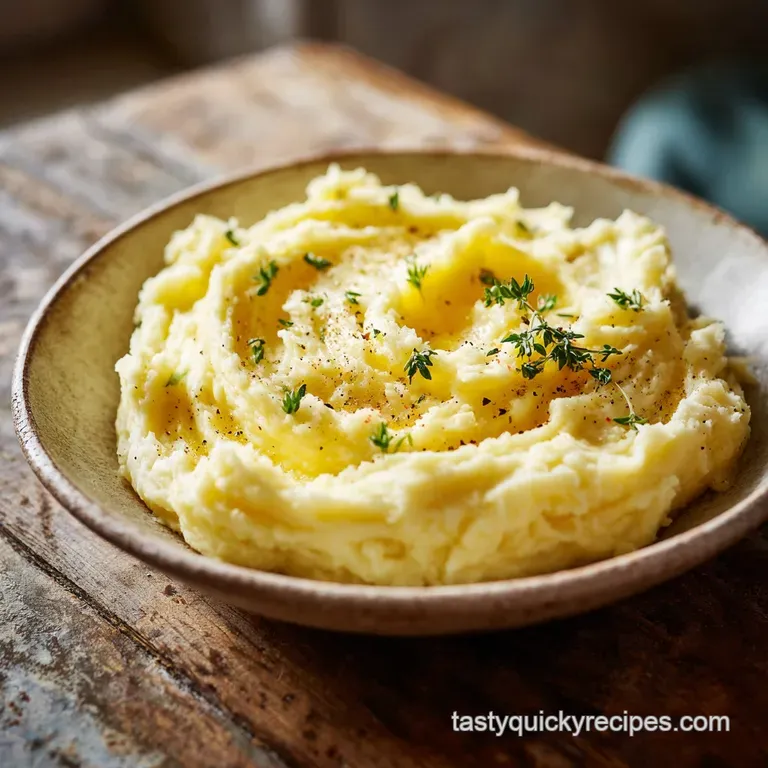
1. The Cold Water Start
Place your 5 lbs of Yukon Gold chunks into the stockpot and cover with cold water by at least 2 inches. Add the 2 tbsp of Kosher salt now. Note: Starting with cold water ensures the outside and inside of the potato cook at the same rate.
2. The Simmer Phase
Bring the water to a boil, then reduce to a steady simmer. Cook for 20-25 minutes until a fork slides into the center with zero resistance.
3. The Steam Dry Phase
Drain the potatoes thoroughly in a colander. Return them to the hot, empty pot over low heat for 2 minutes, shaking the pot constantly until a thin white film forms on the bottom. Note: This removes excess water that would otherwise make your mash "weepy" in the fridge.
4. The Ricing Stage
Pass the hot potatoes through a ricer or food mill into a large bowl. Work quickly while they are still steaming to ensure the smoothest texture.
5. The Fat Integration
Add the 1 cup of cubed butter and 8 oz of room temperature cream cheese. Stir gently until the fats have completely melted into the golden potatoes.
6. The Emulsion Phase
Slowly pour in the 1.5 cups of warmed heavy cream and 0.5 cup of sour cream. Use a folding motion with your spatula until the mixture looks glossy and uniform.
7. The Seasoning Step
Fold in the 2 tsp sea salt, 1 tsp white pepper, and 1 tsp garlic powder. Taste a small spoonful; it should feel hearty and well seasoned.
8. The Storage Seal
If serving later, transfer the mash to a buttered baking dish. Level the top and press a piece of plastic wrap directly onto the surface until no air bubbles remain.
This method is remarkably similar to the rich, dairy forward base I use for my Creamy Beef and recipe, where the goal is a satisfying, smooth sauce that coats every bite.
Solving Common Texture Issues Quickly
The Gummy Gluey Texture
This usually happens because the potatoes were over worked in a blender or food processor. The high speed breaks the starch granules, releasing them like glue. Unfortunately, you can't "un glue" them, but you can transform them into a delicious potato pancake or casserole base by adding an egg and some breadcrumbs.
Too Much Liquid
If your potatoes look more like soup than mash, it’s likely because they weren't dried enough after boiling. Next time, don't skip the "steam dry" step in the hot pot.
Discoloration Or Graying
Potatoes turn gray when exposed to air. This often happens if they sit too long before the cream and butter are added, or if they aren't covered tightly in the fridge.
| Problem | Root Cause | Solution |
|---|---|---|
| Lumpy Texture | Undercooked centers | Boil until the potato literally falls apart when poked. |
| Cold Centers | Reheated too fast | Use a slow cooker on 'Low' for 2 hours to heat through evenly. |
| Soupy Mash | Excess water in pot | Steam dry the potatoes for 2 full minutes after draining. |
Common Mistakes Checklist
- ✓ Never start potatoes in boiling water; always start cold for even cooking.
- ✓ Don't use a whisk or electric mixer; they develop too much gluten like starch.
- ✓ Always warm your cream and butter before adding them to the mash.
- ✓ Press plastic wrap directly onto the surface of the potatoes to prevent a "skin" from forming.
- ✓ Use full fat dairy; low-fat versions contain more water and will lead to a grainy texture after reheating.
Adjusting Your Batch Size
When you're fueling a larger group for a midday feast, scaling up is simple if you follow a few rules. For a double batch (10 lbs of potatoes), increase your salt and spices by only 1.5x initially, then taste and adjust. Spices can become overwhelming in large volumes.
If you are scaling down for a quiet weekend lunch, reduce the cooking time by about 5 minutes, as smaller pots of water reach a boil faster. If you're looking for another prep ahead morning option, these techniques are cousins to what I use in my Breakfast Casserole recipe, where setting the structure early leads to a better result later.
Adapting For Specific Diet Needs
Without Cream Cheese Options
If you prefer make-ahead Mashed Potatoes without cream cheese, simply replace that volume with an extra 0.5 cup of butter and 0.25 cup of heavy cream. You lose a bit of the "tang," but the richness remains high.
Slow Cooker Preparation Style
For the make-ahead mashed potatoes slow cooker method, prepare the recipe as directed, then transfer the finished mash to a buttered slow cooker. Keep it on the "Warm" setting for up to 4 hours. If it starts to look dry, stir in a splash of warm milk.
Garlic And Herb Variation
To make these even more satisfying, roast a whole head of garlic in the oven at 400°F (200°C) for 40 minutes. Squeeze the softened cloves directly into the potatoes during the mashing phase for a mellow, caramelized depth.
De Bunking Potato Preparation Ideas
Many people believe that keeping the skins on adds more "nutrients," but for a true make-ahead dish, skins can actually introduce bacteria that cause the potatoes to sour faster in the fridge. For longevity and texture, peeling is the superior choice.
Another common thought is that you can't freeze mashed potatoes. In truth, the high fat content in this specific recipe acts as an anti freeze agent. The butter and cream cheese protect the potato cells from bursting when ice crystals form, making this version perfectly freezer friendly for up to two months.
Storing And Reheating Your Potatoes
Storage: Once the potatoes have cooled slightly in their baking dish, cover them tightly. They will stay fresh in the refrigerator for up to 3 days. This makes them the ultimate Christmas dinner or holiday prep tool.
Reheating: To maintain that velvety texture, reheat the dish in a 350°F (180°C) oven, covered with foil, for 30-40 minutes. Halfway through, give them a gentle stir and add a few pats of butter to the top to restore the gloss.
Zero Waste: Don't throw away those potato peels! Toss them with olive oil, salt, and rosemary, then roast them at 400°F (200°C) until they sizzle and turn crispy. They make a fantastic, crunchy snack that ensures nothing from your 5 lb bag goes to waste.
Satisfying Pairings For Hearty Meals
These potatoes are the ultimate anchor for a midday meal that needs to keep the family energized. I love serving them alongside a thick, savory gravy and a slow roasted protein. The richness of the cream cheese makes them sturdy enough to stand up to heavy sauces without dissolving into a puddle.
For a truly fueling spread, try serving these with a side of roasted root vegetables or a crisp green salad with a sharp vinaigrette to balance the fats. Whether you're gearing up for a day of outdoor chores or a long holiday afternoon, this hearty side provides the satisfying foundation every great meal deserves.
Trust me, once you try the make-ahead method, you’ll never go back to the stovetop stress of mashing while the rest of the food gets cold.
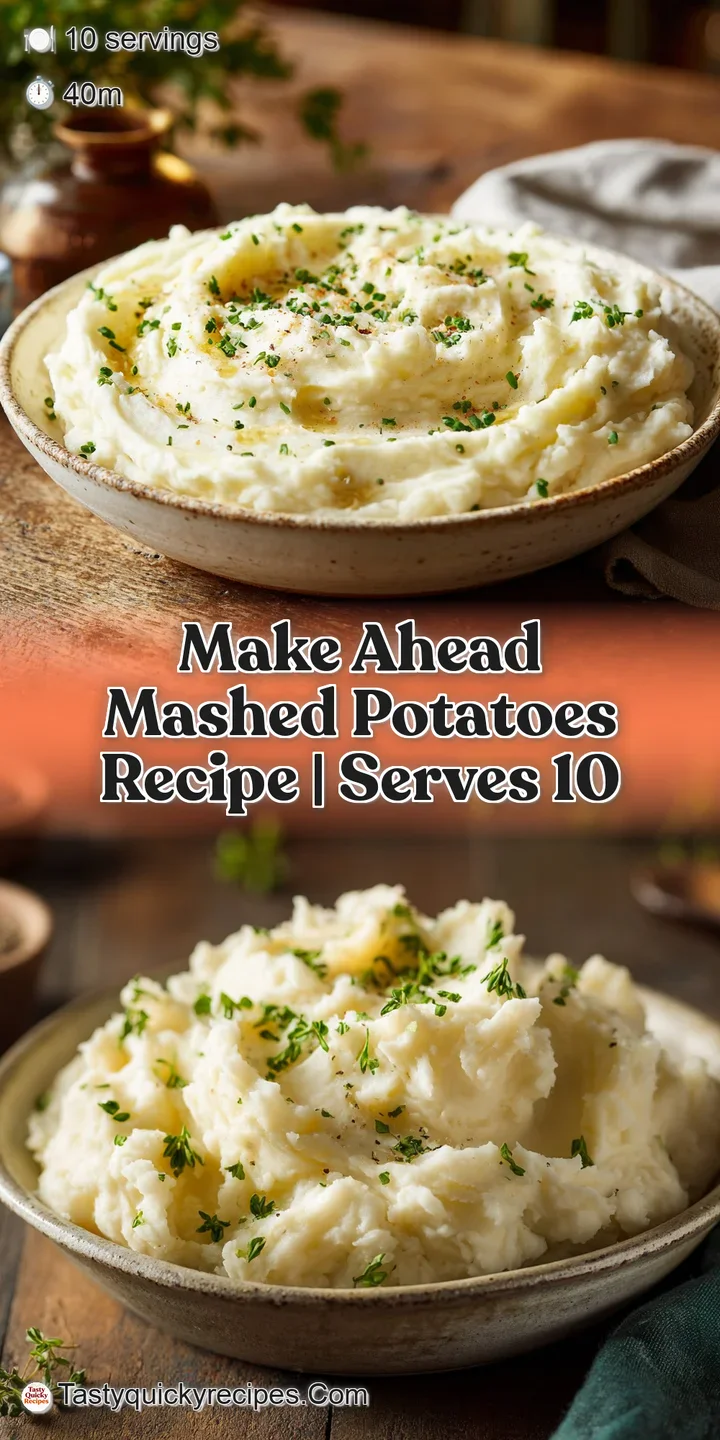
Recipe FAQs
Can mashed potatoes be prepared ahead of time?
Yes, absolutely, and this recipe is designed for it. Using cream cheese and sour cream stabilizes the starch, which prevents the potatoes from drying out or becoming gluey when stored for up to 3 days. For best results, cool them completely before sealing and refrigerating.
How to reheat mashed potatoes made ahead of time?
Cover them tightly and bake at 350°F (180°C) for 30-40 minutes. Stir halfway through and add a small pat of butter on top to restore the glossy, velvety appearance. If reheating on the stovetop, use very low heat and stir in a splash of warm milk.
How do restaurants make their mashed potatoes so good?
They focus heavily on the fat ratio and texture control. Restaurants often use a potato ricer or a food mill to prevent starch breakage, avoiding the use of blenders which cause a gluey texture.
Furthermore, they incorporate stabilizers like cream cheese or extra butter solids for that unmistakable silky mouthfeel.
Can you put mashed potatoes in a crockpot to keep them warm?
Yes, this is an excellent method for long serving times. Transfer the finished mash to a buttered slow cooker and set it to the "Warm" setting for up to 4 hours. Be sure to stir every hour and add a small splash of warm milk if they appear to be drying out on the surface.
What is the secret to mashed potatoes not turning gray in the fridge?
Proper sealing and high fat content are the secrets. Graying is caused by oxidation when the potato starch is exposed to air; press plastic wrap directly onto the surface of the mash before covering the container.
The high lipid content in this recipe also physically shields the starch molecules from moisture loss.
Is it true you shouldn't use cold milk when making mash?
False, you must warm all dairy additions. Adding cold liquid to hot, freshly riced potatoes shocks the starch, causing it to seize up and result in a gummy or grainy texture. Always warm your cream and butter before folding them in gently.
What kind of potato yields the best texture for making ahead?
Yukon Gold potatoes are the superior choice for making ahead. They offer a perfect medium starch content that results in a naturally buttery flavor and a texture that holds up exceptionally well to chilling and reheating. If you enjoyed mastering the texture control here, apply the same concept to balancing richness in our Creamy Garlic Sauce recipe.
make-ahead Mashed Potatoes
Ingredients:
Instructions:
Nutrition Facts:
| Calories | 557 kcal |
|---|---|
| Protein | 7g |
| Fat | 41g |
| Carbs | 41g |
| Fiber | 5g |
| Sugar | 4g |
| Sodium | 720mg |
