Festive Finger Food for New Years: Luxury Pork Bites
- Effort/Time: High-patience, low-active work (6 hours 30 mins)
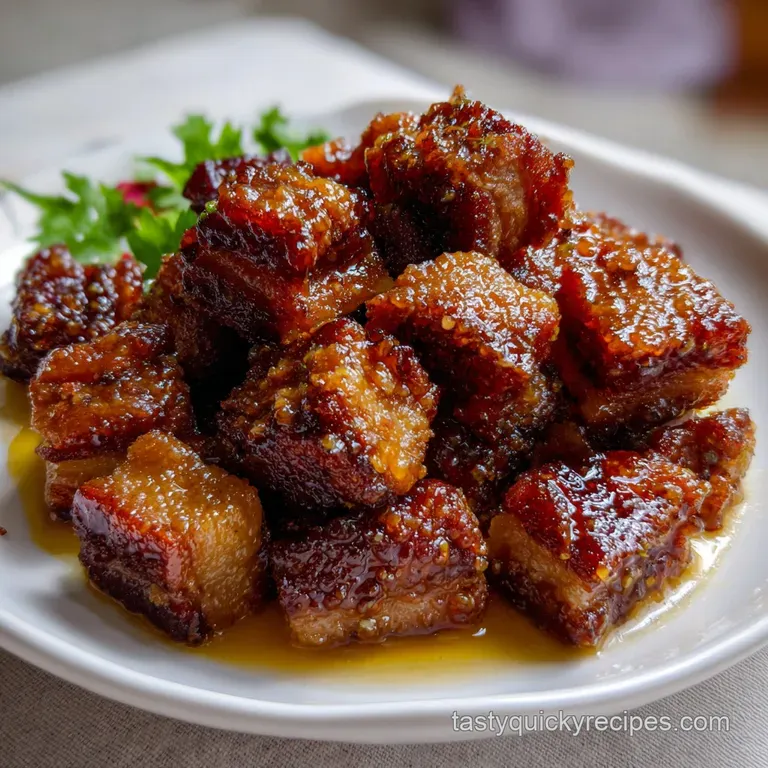
- Flavor Hook: Shattering crispy skin meets velvety, honey-glazed umami fat
- Perfect for: Crowd-pleasing New Years Eve Gatherings and upscale parties
- Master the Ultimate Festive Finger Food for New Years
- Thermodynamic Principles: Why This Recipe Works
- Precision Logistics: Yield and Timing Specs
- The Alchemy of Umami: Selecting Your Elements
- Essential Culinary Engineering: The Toolset
- The Precision Protocol: Mastering Key Steps
- Structural Integrity: Troubleshooting Common Mistakes
- ⚗️ The Scaling Lab: The Physics of Quantity
- Flavor Architecture: Variations and Smart Substitutions
- Shelf-Life Stability: Storage and Reheating Strategy
- Curated Presentation: Strategic Serving Suggestions
- Recipe FAQs
- 📝 Recipe Card
Master the Ultimate Festive Finger Food for New Years
There is nothing quite as soul crushing as spending fifty dollars on a premium slab of meat only to have it emerge from the oven with the texture of a wet eraser. I remember my first attempt at a New Years Eve spread where I served pork that was gray, flaccid, and frankly, an insult to the pig.
The financial sting of wasted ingredients was only matched by the silence of my guests as they politely chewed through rubbery fat. That technical failure wasn't a lack of love; it was a fundamental misunderstanding of connective tissue and thermal mass.
I spent years overcomplicating the process, trying to flash fry raw belly or rushing the resting phase because I was impatient to start the party. I destroyed three separate batches of pork by cranking the heat to "speed things up," only to realize that the physics of pork belly requires a slow, calculated breakdown of collagen.
You cannot negotiate with a protein structure that requires six hours to transform from gristle to silk. It took a ruined New Years Eve dinner and a very smoky kitchen for me to finally respect the science of the long braise.
The secret to this Festive Finger Food for New Years isn't a "magic" spice rub; it’s the Collagen-to-Gelatin Transformation. By simmering the 1.5 kg whole skin-on pork belly in a precise bath of 500 ml low sodium chicken stock and 120 ml dry white wine, we trigger a molecular shift.
At approximately 160°F, the tough triple helix collagen fibers begin to denature, unwinding into silky gelatin that lubricates the muscle fibers. This creates that specific, velvety mouthfeel that defines professional grade appetizers.
When you finally sear the chilled cubes, you get a "shattering" exterior and a melt-in-your mouth interior that makes every minute of the six-hour cook time worth the investment. This success solidifies why this remains the gold standard for Festive Finger Food for New Years.
Thermodynamic Principles: Why This Recipe Works
- Collagen Hydrolysis: The 6 hour slow cook at low temperature converts tough connective tissue into liquid gelatin, ensuring a velvety texture.
- Thermal Compression: Weighting the meat during the chilling phase realigns the protein fibers, allowing for clean, geometric cubes that won't fall apart during the over high heat sear.
- Maillard Optimization: The honey and soy glaze provides reducing sugars that react with the pork's amino acids, creating a mahogany colored crust and deep savory notes.
- Osmotic Pressure Control: Using Diamond Crystal Kosher Salt early in the braise seasons the meat to the core, while flaky sea salt at the finish provides a structural crunch and immediate flavor pop.
- Emulsion Stability: The apple cider vinegar in the glaze cuts through the heavy lipids (fats), creating a balanced palate that prevents "palate fatigue" after three or four bites.
Precision Logistics: Yield and Timing Specs
| Metric | Specification |
|---|---|
| Yield | 27 servings |
| Prep Time | 30 minutes |
| Cook Time | 6 hours |
| Total Time | 6 hours 30 mins (plus chilling) |
| Optimal Temp | 300°F (Oven Braise) / 400°F (Searing) |
The Alchemy of Umami: Selecting Your Elements
Selecting the right components is the difference between a greasy mess and a world class appetizer. For this Festive Finger Food for New Years, the quality of your pork belly is paramount.
Look for a slab with even layers of fat and lean meat; if the fat cap is too thin, the meat will dry out during the six-hour braise. Using a high-quality dry white wine like a Sauvignon Blanc provides the necessary acidity to brighten the 500 ml low sodium chicken stock, ensuring the final result isn't overly heavy.
Ingredient Chemistry Breakdown
| Ingredient | Chemical/Physical Role (Science) | The Pro Secret (Why This Matters) |
|---|---|---|
| Pork Belly | Gelatin extraction via collagen hydrolysis | Creates the "melt-in-mouth" texture unique to this cut. |
| Honey | Hygroscopic sugar for Maillard reaction | Attracts moisture while providing the carbon for a dark, sticky glaze. |
| Dry White Wine | Acidic deglazer and protein tenderizer | Lowers pH to help break down tough fibers while adding floral top notes. |
| Apple Cider Vinegar | Lipid surfactant / pH balancer | Cuts through the heavy fat molecules to refresh the palate. |
Essential Ingredients & Substitutions
- 1.5 kg whole skin-on pork belly: Why this? Skin provides structural integrity during the braise and becomes the "shatter" factor when seared.
- Sub: Skin off pork belly (will be less crunchy but still tender).
- 500 ml low sodium chicken stock: Why this? Liquid medium for heat transfer without over salting the reduced pan juices.
- Sub: Vegetable stock (Note: Lacks the gelatinous body of poultry stock).
- 120 ml dry white wine: Why this? Tartaric acid assists in flavor extraction and deglazing.
- Sub: Extra chicken stock with 1 tbsp lemon juice.
- 120 ml honey: Why this? High fructose content ensures rapid caramelization during the final glaze.
- Sub: Maple syrup (adds a woodsy, smoky profile).
- 1 tbsp sriracha: Why this? Capsaicin provides a counterpoint to the rich fat content.
- Sub: 1 tsp red pepper flakes.
- 1 bunch fresh chives, minced: Why this? Provides a necessary "allium bite" to break the richness of the pork.
- Sub: Scallion greens.
Essential Culinary Engineering: The Toolset
You don't need a commercial kitchen to produce Masterclass level Festive Finger Food for New Years, but you do need tools that can handle sustained, low heat and intense, high heat.
- Lodge Cast Iron Enameled Dutch Oven: This is non-negotiable for the braise. The heavy lid creates a pressurized environment that prevents the 500 ml low sodium chicken stock from evaporating too quickly, while the cast iron core maintains a perfectly steady 300°F.
- Lodge Cast Iron Skillet: For the final sear. You need a pan with high thermal mass that won't drop in temperature the second the cold pork hits the surface. A thin aluminum pan will "crash," resulting in steamed meat rather than a crispy crust.
- Digital Instant Read Thermometer (Thermapen): Precision is everything. You aren't just looking for "done"; you are looking for the 200°F internal mark where collagen has fully liquified.
- Heavy Weights (or a second pan): For the pressing phase. This is the "secret" step that ensures your cubes look like they came from a Michelin starred kitchen.
The Precision Protocol: Mastering Key Steps
- Preheat oven to 300°F (150°C). Note: Low heat prevents the muscle fibers from seizing and squeezing out moisture.
- Score the skin of the 1.5 kg whole skin-on pork belly in a crosshatch pattern. Note: Increases surface area for salt penetration.
- Nestle pork in a Lodge Dutch Oven with 500 ml chicken stock, 120 ml white wine, 3 smashed garlic cloves, 2 sprigs thyme, 1 tbsp kosher salt, and 1 tsp peppercorns.
- Braise for 5 hours until the meat is tender enough to be pierced with a dull spoon.
- Remove pork and place on a rimmed tray; top with another tray and heavy weights (like canned goods).
- Chill for 6 hours (or overnight) until the fat has completely solidified and the slab feels like a firm block of wood.
- Whisk 120 ml honey, 1 tbsp apple cider vinegar, 1 tsp sriracha, and 1 tsp soy sauce in a small bowl until a glossy, unified emulsion forms.
- Slice chilled pork into 1 inch cubes using a sharp chef's knife. Note: Cold fat slices cleanly; warm fat shreds.
- Sear cubes in 1 tbsp neutral oil in a Lodge Cast Iron Skillet for 3 minutes per side until the skin is mahogany and makes a "clink" sound when tapped.
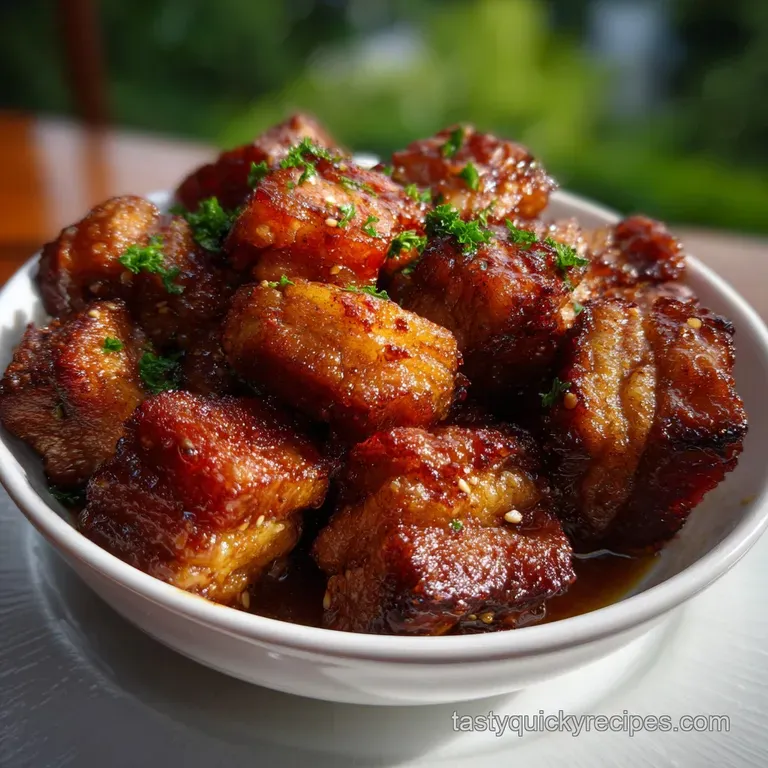
- Glaze by tossing cubes with the honey mixture for 1 minute until the sauce bubbles and clings to the pork like a sticky lacquer.
- Garnish with 1 bunch minced chives and 1 tsp flaky sea salt.
Chef's Tip: Do not discard the braising liquid! Strain it and freeze it in ice cube trays. These "flavor bombs" are pure liquid gold for an Idleon Recipes steak pie or a quick pan sauce.
Structural Integrity: Troubleshooting Common Mistakes
The most common failure in making Festive Finger Food for New Years is a lack of patience during the cooling phase. If the pork is even slightly warm when you try to slice it, the internal fat which is currently a liquid gelatin will leak out, leaving you with dry meat and a messy cutting board.
Why Your Pork Belly Falls Apart
When meat is warm, the protein structures are relaxed and the gelatin is fluid. Slicing at this stage causes mechanical stress that the loosened fibers can't handle. By chilling and weighting the meat, you are performing "culinary masonry," setting the gelatin like mortar between bricks.
| Problem | Root Cause | The Fix | Pro Protocol |
|---|---|---|---|
| Shredded Meat | Slicing while too warm | Chill for full 6 hours | Use a serrated bread knife for cleaner skin cuts if a chef's knife slips. |
| Greasy Glaze | Fat not rendered enough | Extend sear time | Pat the cubes bone dry with paper towels before they hit the skillet. |
| Tough Skin | Braising liquid too low | Add more stock/wine | Ensure the liquid comes halfway up the side of the pork slab. |
Quick Fix Table
| Problem | Cause | Fix |
|---|---|---|
| Glaze is too thin | Excess moisture in pan | Remove pork, boil glaze alone for 2 mins, then toss. |
| Skin is chewy | Steam trapped during sear | Don't crowd the pan; sear in small batches. |
| Too salty | Stock reduction | Use "Low Sodium" chicken stock and adjust salt only at the end. |
⚗️ The Scaling Lab: The Physics of Quantity
When you decide to double this recipe for larger New Years Eve Gatherings, you cannot simply double everything and expect the same results. Physics dictates a change in strategy. This scaling adjustment is key to consistently achieving top-tier Festive Finger Food for New Years.
- The Evaporation Paradox: If you use a larger pot to accommodate two slabs of pork, the increased surface area will cause your 1000 ml of stock to evaporate much faster than the 500 ml did in the smaller pot. Reduce added liquid by 15% or keep a closer eye on the level.
- Pan Crowding (The Maillard Killer): If you try to sear 54 cubes at once in one skillet, the thermal mass of the cold meat will drop the pan temperature instantly. Instead of a "sizzle" and "shatter," you will get "gray" and "steamed." Mandatory instruction: Cook in batches of 10 12 cubes.
- Carry Over Cooking: A larger mass of pork retains heat longer. When braising a double batch, pull the meat from the oven when the internal temp is 195°F; it will hit the target 200°F on the counter.
Stovetop vs Oven: The Comparison
| Method | Texture Result | Efficiency |
|---|---|---|
| Oven Braise | Uniformly tender, no hot spots | Set and forget; very reliable for Festive Finger Food. |
| Stovetop Simmer | Can lead to scorched bottoms | Requires constant monitoring; risk of uneven collagen breakdown. |
Flavor Architecture: Variations and Smart Substitutions
This recipe is a canvas for your New Year's Eve Finger Foods ideas. While the honey sriracha glaze is a classic, you can easily pivot the flavor profile without changing the fundamental physics of the pork.
Making these variations is a great way to customize your spread of Festive Finger Food for New Years.
- Asian Style Five Spice Twist: Replace the thyme and wine with star anise, ginger, and 1 tsp five spice powder in the braise. Use hoisin instead of honey for the final glaze. This is a great alternative if you are also serving a Vasilopita bread recipe and want a high contrast menu.
- Keto/Low-Carb Modification: Replace the 120 ml honey with a sugar-free maple syrup or a brown butter and garlic reduction. The pork belly itself is high fat/moderate protein, making it an excellent keto option if you skip the sugar heavy glaze.
- Smoky BBQ Variation: Use smoked paprika in the rub and finish with a reduction of apple cider vinegar and brown sugar for a "burnt ends" vibe.
Shelf Life Stability: Storage and Reheating Strategy
One of the best things about this Festive Finger Food for New Years is that it actually benefits from being made 1 2 days in advance.
- Fridge: Store the pressed, braised slab in the fridge for up to 3 days. Do not slice until you are ready to sear.
- Freezing: You can freeze the sliced, un-seared cubes for up to 2 months. Thaw completely in the fridge before searing. Do not freeze once glazed, as the honey will become gummy and the skin will lose its "shatter" quality.
- Reheating: If you have leftovers (unlikely!), reheat them in a 400°F oven for 5 8 minutes. Avoid the microwave, which will turn the crispy skin into a rubbery disappointment.
💡 ZERO WASTE PHILOSOPHY
Don't discard the pork skin scraps or the herb stems! Pork Fat (Lard): The rendered fat from the searing pan is pure flavor. Transform: Save it in a jar for roasting potatoes. Science: Higher smoke point than butter and packed with savory compounds.
Thyme Stems: Transform: Throw them into your next batch of stock. Science: Even the woody stems contain essential oils that release during long simmering.
Curated Presentation: Strategic Serving Suggestions
Presentation is the final step in making your Food for New Years Eve Gatherings feel like a professional event. These cubes are rich, so they need to be served with something that offers "olfactory lift." The visual appeal of this Festive Finger Food for New Years truly sets the tone for your celebration.
- The Plating: Serve on a dark slate board or a white ceramic platter to make the mahogany glaze pop. Use bamboo skewers for easy "grab and-go" access.
- The Pairing: These fatty bites need high acid beverages. A dry Champagne, a sharp Riesling, or even a craft cider will cut through the lipids and refresh the tongue.
- The Menu Balance: If you're looking for more inspiration, check out this 33 Main Dishes recipe collection to round out your full New Year's Eve spread. I usually pair these pork bites with something lighter, like a citrus salad or a pickled vegetable tray, to prevent the meal from feeling too heavy.
Is pork belly the same as bacon? No. Bacon is cured and smoked pork belly. For this Festive Finger Food for New Years, we use raw, uncured belly to control the salt levels and allow the honey glaze to shine without competing with heavy smoke flavors.
Can I make this in 2 hours instead of 6? Physically, no. Collagen does not care about your schedule. If you rush the heat, the proteins will shrink and become tough before the collagen has a chance to melt.
This recipe requires the "low and slow" approach to achieve that signature velvety texture.
Why is my glaze burning before the pork is hot? Honey has a high sugar content and a low burn point. Ensure your pork cubes are already warm from the sear before adding the glaze. The glaze only needs about 60 seconds of heat to emulsify and coat the meat.
Any longer and the sugars will carbonize, turning bitter.
This Festive Finger Food for New Years is more than just a recipe; it’s a lesson in patience and the beautiful chemistry of slow cooked meat. Whether you're hosting a massive New Years Eve party or a small gathering, these bites are guaranteed to be the "talk of the table." Just remember: chill it, weight it, and sear it hot.
Happy New Year!

Recipe FAQs
Is it necessary to press and chill the pork belly overnight?
Yes, chilling and weighting is critical for structural integrity. The chilling process allows the rendered gelatin to solidify, acting as a binder between muscle fibers. You can see how precise chilling impacts texture in our 7 Heartwarming Tips for Creating Stunning Thanksgiving Cheese Boards, where temperature control ensures clean slicing.
Can I use skin off pork belly instead of skin-on?
No. Skin off belly lacks the necessary collagen structure for a crisp sear. Skin-on belly guarantees the necessary "shattering" texture when finished over high heat. The skin transforms from connective tissue to a crunchy sheath during the final high temperature step.
Why does my honey glaze burn before the pork is heated through?
Honey burns because sugar caramelizes rapidly above 320°F. The glaze should only be applied after the pork cubes are already piping hot from the initial sear. You need to maintain high heat during the sear to create the crust, but the glaze application must be brief, lasting 60 seconds maximum.
- Ensure pork is hot before tossing
- Keep the tossing motion active
- Remove from heat immediately after coating
Should I braise the pork belly in a Dutch oven or a roasting pan?
A heavy Dutch oven ensures superior thermal consistency. The thick cast iron base of the Dutch oven prevents localized hotspots that cause scorching on the bottom layer of meat. A thin roasting pan will fluctuate temperature too widely, leading to uneven collagen breakdown.
Myth: Can I make this entirely in an Instant Pot to save time?
Myth: Pressure cooking achieves quick tenderness. Reality: The Instant Pot forces moisture into the meat but fails to break down collagen into velvety gelatin effectively, resulting in texture similar to tough pot roast rather than luxurious finger food.
What is the best substitute for the white wine in the braise?
Use extra stock with added acidity for balance. Wine adds tartaric acid which brightens the rich fat, preventing palate fatigue. If you skip the wine, add one tablespoon of lemon juice to the 500 ml chicken stock to mimic the necessary acidic cut for balanced flavor.
Myth: Does adding baking soda tenderize the pork faster?
Myth: Alkaline agents dramatically speed up tenderizing. Reality: While baking soda tenderizes quickly, it creates a slippery, mushy texture and imparts an unpleasant, soapy metallic flavor, destroying the desirable melt-in-your mouth quality achieved by slow hydrolysis.
Luxury Pork Belly Bites
Ingredients:
Instructions:
Nutrition Facts:
| Calories | 178 calories |
|---|---|
| Protein | 6.5 grams |
| Fat | 15 grams |
| Carbs | 5 grams |
| Fiber | 0 grams |
| Sugar | 4.8 grams |
| Sodium | 285 milligrams |
