Heartwarming Turkey Recipe with Dry Brine
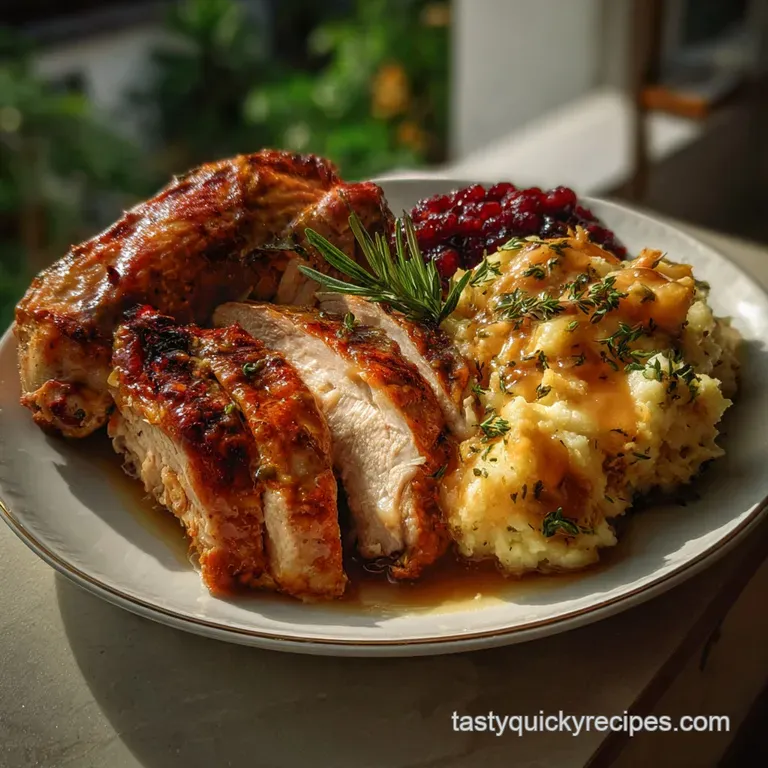
- Time: Active 45 minutes, Passive 3 hours, Total 3 hours 45 mins
- Flavor/Texture Hook: Savory, herb-infused meat with shatter-crisp skin
- Perfect for: Large family gatherings and festive holiday feasts
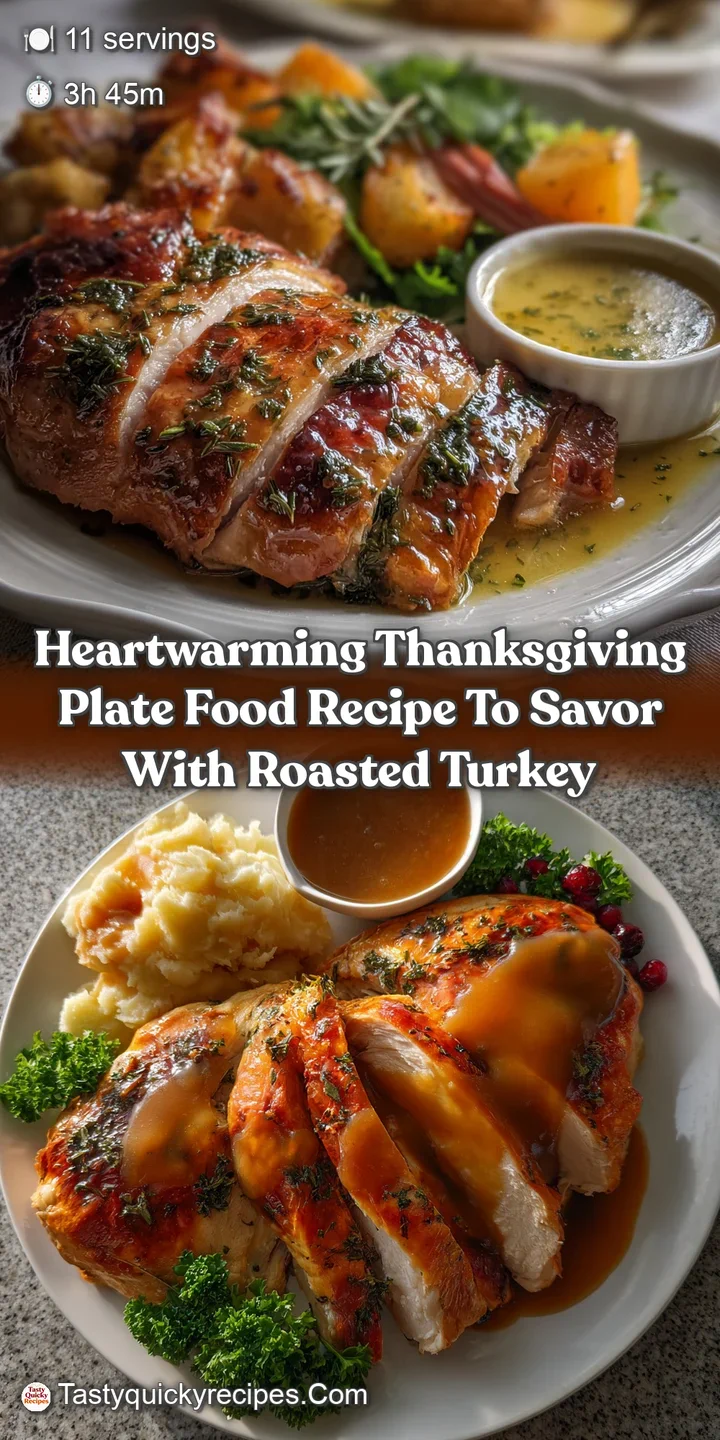
- Heartwarming Thanksgiving Plate Food Recipe to Savor with Roasted Turkey
- Scientific Secrets for Juicy Meat
- Essential Ingredients and Smart Swaps
- Necessary Tools for Holiday Success
- Detailed Preparation and Roasting Steps
- Solving Common Roasting Problems
- Exciting Flavor Variations
- Storing and Reheating Your Leftovers
- Creating the Perfect Holiday Plate
- Common Questions
- 📝 Recipe Card
The kitchen is filling with the scent of toasted sage and roasting poultry, a smell that instantly signals the start of the holiday season. We have all been there, hovering over a massive bird, worrying if the breast will be dry or if the skin will stay soft and rubbery.
Discover a heartwarming Thanksgiving plate food recipe perfect to savor alongside your roasted turkey. It is about more than just cooking meat, it is about creating a memory that everyone at the table will talk about until next year.
I remember my first year juggling three different side dishes while trying to manage a 13 lb (5.9 kg) turkey. I was so nervous I checked the thermometer every ten minutes, which only let the heat out of the oven! This method is designed to take that stress away.
By focusing on a solid dry brine and a reliable roasting schedule, we can ensure every slice is succulent. We aren't just making dinner, we are building the foundation of a festive plate that feels like a warm hug.
Right then, let's talk about what makes this specific approach a winner. We are using simple, budget friendly ingredients like yellow onions and carrots to create a natural rack for the bird. This not only flavors the meat from the bottom up but also sets us up for the most incredible pan gravy you have ever tasted.
No fancy gadgets or expensive marinades required here. Trust me on this, once you see how that skin turns deep mahogany and hears that satisfying crunch, you will never go back to basic roasting.
Heartwarming Thanksgiving Plate Food Recipe to Savor with Roasted Turkey
When we sit down for the big meal, the centerpiece has to deliver on both flavor and texture. This recipe leans heavily into the tradition of slow roasting but adds a few modern tweaks to ensure the results are consistent every time.
We are aiming for meat that pulls away from the bone and skin that has a "shatter" quality when sliced. By using a 13 lb (5.9 kg) whole turkey, we get the perfect ratio of meat to bone, ensuring there is plenty for everyone and enough leftovers for those famous next day sandwiches.
The secret to this "heartwarming" feel is the interaction between the herbs and the fat. We use unsalted butter mixed with fresh rosemary to create a barrier that bastes the bird from the inside out. As the butter melts, it carries the rosemary essence deep into the muscle fibers.
This isn't just about the turkey either, the recipe includes a built-in gravy method using turkey stock and the drippings, ensuring your plate is never dry. It is a complete system for a successful holiday meal.
Three Reasons Dry Brining Wins
Dry brining is my absolute favorite way to prep a bird because it doesn't involve hauling a giant bucket of salty water around the kitchen. When you apply the 1/4 cup (72g) of Kosher salt mixed with sage and thyme, it draws moisture out of the skin and then reabsorbs it into the meat.
This seasons the turkey all the way to the bone. It also dries out the exterior skin, which is the only way to get that professional, crispy finish without deep frying.
Two Benefits of the Aromatic Trivet
Instead of a metal rack, we use 3 large yellow onions, 4 large carrots, and 5 stalks of celery. This "trivet" serves two purposes. First, it lifts the turkey so heat can circulate underneath, preventing soggy bottom skin.
Second, as the turkey juices drip onto these vegetables, they caramelize and create a concentrated flavor base. When you later add the 2 cups (480ml) of stock to deglaze, you are getting a head start on a gravy that tastes like it simmered for days.
The Science of the 45 Minute Rest
Patience is the hardest part of this recipe, but it is non-negotiable. After three hours in the oven, those muscle fibers are tight and the juices are all pushed toward the center. If you carve it immediately, all that moisture runs out onto the board, leaving you with dry meat.
During the 45 minute rest, the temperature equalizes, and the proteins relax. This allows the juices to redistribute back into the outer layers of the meat, ensuring every bite is velvety.
Scientific Secrets for Juicy Meat
Cooking a large bird is essentially a lesson in thermodynamics. We are dealing with two types of meat, white and dark, which cook at different speeds. The science of why this recipe works comes down to the salt and the heat management.
By understanding how the proteins react to these elements, we can stop guessing and start cooking with total confidence.
- Protein Denaturation: The Diamond Crystal Kosher salt breaks down the tightly wound muscle fibers, allowing them to hold onto more water during the over high heat roasting process.
- Maillard Reaction: The sugars in the vegetables and the proteins in the skin react under heat to create hundreds of new flavor compounds and a brown crust.
- Connective Tissue Breakdown: A long, steady roast at a moderate temperature allows collagen in the legs and wings to transform into silky gelatin.
- Carryover Cooking: Even after the bird leaves the oven, the internal temperature will rise by 5 to 10 degrees as the heat from the surface moves inward.
The way we handle the 115g of unsalted butter is also vital. By softening it and rubbing it under the skin, we create a fat cap that prevents the lean breast meat from drying out. This is similar to the technique used in our Classic Thanksgiving Recipe. The fat acts as an insulator, slowing down the heat transfer to the most delicate parts of the turkey while the legs, which have more connective tissue, can take the heat longer.
| Component | Science Role | Pro Secret |
|---|---|---|
| Kosher Salt (72g) | Denatures protein to trap moisture | Apply 24 hours early for deep seasoning |
| Unsalted Butter (115g) | Provides fat for browning and insulation | Use room temp butter to avoid tearing skin |
| Mirepoix (Onions/Carrots) | Steam infuses aromatics into the cavity | Don't peel the onions for a darker gravy color |
| Turkey Stock (720ml) | Emulsifies with flour for the sauce | Use warm stock to prevent gravy lumps |
Essential Ingredients and Smart Swaps
Getting the right ingredients is half the battle. For the salt, I always reach for Diamond Crystal Kosher salt because the grains are hollow and stick to the meat better than table salt.
For the herbs, dried sage and thyme provide a concentrated earthy flavor that stands up to the long roasting time, while fresh rosemary in the butter adds a bright, resinous punch that smells like a forest in autumn.
- Kosher Salt (72g): Essential for the brine. Why this? Larger grains allow for even coverage without over salting the bird.
- Whole Turkey (5.9 kg): The star of the show. Why this? This size fits most standard ovens and feeds a crowd easily.
- Unsalted Butter (115g): Fat source. Why this? Let's you control the salt level while adding rich creaminess.
- Yellow Onions (3 large): Aromatic base. Why this? Provides sweetness and a savory backbone to the pan drippings.
- All-Purpose Flour (30g): Thickener. Why this? Standard for creating a stable roux for the gravy.
If you find yourself missing an ingredient, don't panic. You can swap many of these items without losing the "heartwarming" essence of the dish. However, keep in mind that some changes will slightly alter the final texture or flavor profile.
| Original Ingredient | Substitute | Why It Works |
|---|---|---|
| Kosher Salt (72g) | Sea Salt (fine, 50g) | Similar mineral profile but use less as it is denser. |
| Turkey Stock (720ml) | Chicken Stock (low sodium) | Nearly identical flavor profile and body. |
| Unsalted Butter (115g) | Ghee or Clarified Butter | Higher smoke point, though less "creamy" flavor. |
| Fresh Rosemary (10g) | Fresh Thyme or Oregano | Different herbal note but still provides that aromatic lift. |
Necessary Tools for Holiday Success
You don't need a professional kitchen to pull this off, but a few specific tools make the job much easier. I always use a heavy duty Lodge roasting pan because it distributes heat evenly and can go directly on the stovetop when it is time to make the gravy.
This prevents you from losing those precious browned bits (the fond) stuck to the bottom of the pan.
- Digital Meat Thermometer: A Thermapen is my go-to. Accuracy is the difference between a juicy bird and a dry one.
- Kitchen Twine: For tying the legs together (trussing) to ensure the turkey cooks as one uniform shape.
- Large Whisk: Essential for making the gravy smooth and lump free.
- Fat Separator: This helps remove the excess oil from the drippings while keeping the flavorful juices.
If you don't have a roasting pan, a large cast iron skillet or even a heavy baking sheet with high sides can work in a pinch. Just make sure whatever you use is sturdy enough to hold a 5.9 kg turkey without buckling.
A pair of sturdy tongs or "turkey lifters" is also a great investment to avoid any accidents when moving the bird from the pan to the resting board.
Detailed Preparation and Roasting Steps
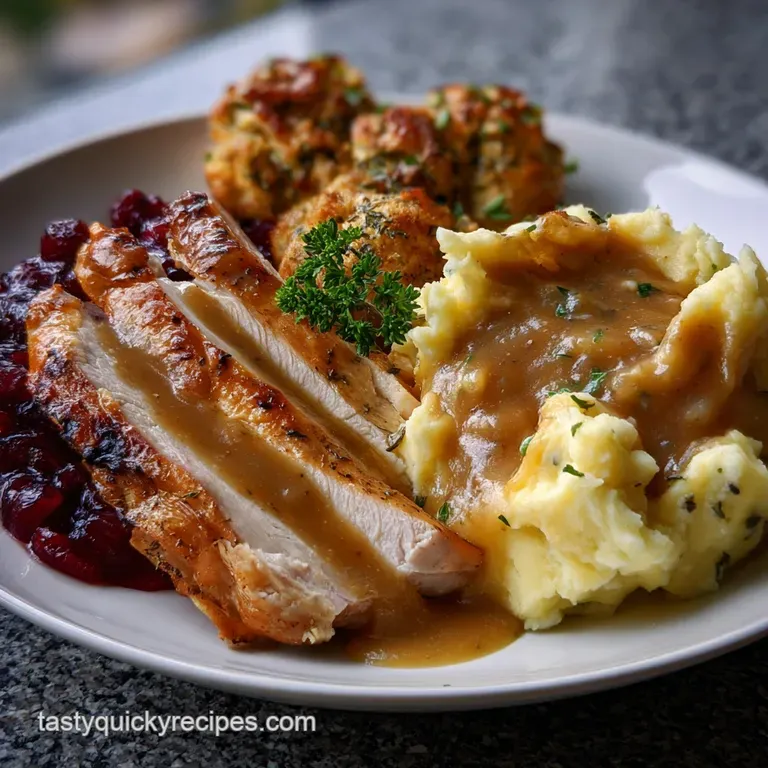
This process is broken down into four phases. We start with the dry brine to build flavor, move to the aromatic prep, roast with precision, and finish with a rich gravy. Follow these steps carefully, and I promise the results will be better than any restaurant version you have had.
Phase 1: The 24 Hour Foundation
- Mix the brine. Combine 72g Kosher salt, 12g cracked black peppercorns, 4g dried sage, and 4g dried thyme in a small bowl.
- Prep the turkey. Pat the 5.9 kg turkey completely dry with paper towels. Note: Dry skin equals crispy skin.
- Apply the seasoning. Rub the salt mixture all over the outside and inside the cavity. Place it on a tray, uncovered, in the fridge for 24 hours.
Phase 2: The Aromatic Transformation
- Temper the meat. Take the turkey out of the fridge 1 hour before roasting. This helps it cook more evenly.
- Prepare the butter. Mix 115g softened butter with 10g finely minced fresh rosemary.
- Stuff the skin. Gently loosen the skin over the breast and thighs with your fingers, then slide the rosemary butter underneath. Spread it until it covers the meat completely.
Phase 3: The Precision Roast
- Build the trivet. Place the quartered yellow onions, carrots, and celery in the bottom of your roasting pan. Pour in 480ml of turkey stock.
- Position the bird. Place the turkey on top of the vegetables. Roast at 325°F (165°C) for about 3 hours until a thermometer reads 165°F (74°C) in the thickest part of the thigh.
- The Rest. Move the turkey to a carving board. Let it sit for 45 minutes until the juices settle and the skin sets.
Phase 4: The Gravy Alchemy
- Make the roux. Strain the pan drippings into a fat separator. Melt 2 tbsp of the fat in the roasting pan over medium heat and whisk in 30g flour until it smells nutty and looks like peanut butter.
- Finish the sauce. Gradually whisk in 720ml warm turkey stock and 5ml Worcestershire sauce. Simmer until thick and velvety, then season to taste.
Solving Common Roasting Problems
Even the most seasoned cooks run into issues when dealing with a holiday feast. The key is to stay calm and know how to pivot. Most turkey "disasters" are easily fixed if you catch them early enough.
For example, if your skin is looking a bit pale halfway through, you might need to adjust your oven rack or increase the heat slightly.
Why Your Turkey Skin Is Rubbery
Usually, this happens because there was too much moisture in the oven or the skin wasn't dried properly before cooking. If you find yourself in this situation, don't lose hope. During the last 20 minutes of cooking, you can brush the skin with a little extra melted butter and turn the oven up to 400°F (200°C).
This rapid heat will help render the remaining fat and crisp up the exterior.
Why the Breast Is Dry but Legs Are Pink
This is the classic "uneven cooking" struggle. Because the breast is leaner, it finishes faster than the dark meat. To fix this, you can "shield" the breast with a piece of aluminum foil once it reaches 150°F (65°C).
This reflects the heat away from the white meat while allowing the legs to continue climbing toward that 165°F (74°C) mark.
| Problem | Cause | Fix | Pro Tip |
|---|---|---|---|
| Pale Skin | Not enough heat/fat | Increase temp to 400°F at the end | Brush with honey butter for extra glow |
| Lumpy Gravy | Stock added too fast | Use a whisk or immersion blender | Always use warm stock, never cold |
| Dry Meat | Overcooking | Smother with hot gravy immediately | Pull the bird at 160°F; carryover does the rest |
Exciting Flavor Variations
Once you have the master recipe down, you can start playing with the flavor profile to suit your family's preferences. For instance, if you want something a bit different for the new year, you might consider pairing the turkey with a Traditional New Year recipe. The earthy peas go remarkably well with the savory notes of the turkey.
1. The Citrus Sage Twist
Instead of rosemary, use the zest of two oranges and one lemon in your butter rub. Replace half of the turkey stock in the roasting pan with fresh orange juice. This creates a bright, acidic profile that cuts through the richness of the meat.
It is a fantastic variation if you are serving other heavy side dishes like sweet potato casserole or creamed corn.
2. The Smokey Maple Glaze
During the last 30 minutes of roasting, brush the turkey with a mixture of maple syrup and a teaspoon of smoked paprika. This gives the skin a deep, lacquer like finish and a hint of woodsy smoke. It is a total crowd pleaser and pairs perfectly with a Texas Roadhouse Rolls recipe to soak up all that sweet and smoky glaze.
Storing and Reheating Your Leftovers
Leftovers are arguably the best part of Thanksgiving. You can store the carved turkey in the fridge for up to 4 days in an airtight container. To keep it from drying out, pour a little bit of the leftover gravy over the meat before sealing the lid.
This creates a "moisture lock" that keeps the turkey tender even after a trip to the microwave.
Freezing: You can freeze cooked turkey for up to 3 months. I recommend freezing it in small portions with a little stock so you can pull out exactly what you need for a quick soup or casserole. Zero Waste: Never throw away the carcass!
The bones, along with the roasted carrots and onions from the pan, are gold. Simmer them in a large pot with water and a splash of apple cider vinegar for 4 to 6 hours to create a rich, homemade bone broth.
Creating the Perfect Holiday Plate
Serving a Thanksgiving plate is an art form. You want a balance of textures and colors to make the meal feel special. I like to slice the breast meat against the grain into thin medallions and keep the skin attached to each slice. Arrange the dark meat in a separate pile on the platter to give people their preference.
1. The Perfect Pairing
The roasted turkey is the king, but it needs a supporting cast. I always serve mine with a tart cranberry sauce to provide a "zip" that wakes up the palate. A heavy, creamy mash or a Sourdough Hoagie Roll Recipe transformed into stuffing are traditional companions that never fail to satisfy. The bread's tanginess provides a beautiful contrast to the savory herbs in the turkey.
2. The Architecture of the Plate
When you are plating, think about "The architecture of the plate." Start with a base of stuffing or mash, lay two slices of turkey over the top, and then ladle the gravy so it hits both the meat and the sides. This ensures that every forkful has a bit of everything.
Don't forget a sprinkle of fresh parsley at the very end to give the plate a "pop" of green color.
FAQ: Troubleshooting Your Feast
Myth: You must baste every 30 minutes to keep it juicy. Truth: Opening the oven door drops the temperature by 25 50 degrees. Constant basting actually dries out the bird by extending the cooking time and steaming the skin.
Myth: Rinsing the turkey in the sink makes it safer. Truth: Rinsing actually spreads bacteria around your kitchen. High heat in the oven is what kills the bacteria. Simply patting it dry with paper towels is the safest and best method for crispy skin.
Myth: The "pop-up" timer that comes with the bird is accurate. Truth: Those plastic timers are notoriously unreliable and often pop when the turkey is already overcooked. Always trust a high-quality digital thermometer over a plastic insert.
Decision Shortcut: If you want the juiciest meat possible, do a 24 hour dry brine. If you want the best gravy of your life, roast the bird on a bed of fresh vegetables.
If you want to avoid a "turkey emergency," use a digital thermometer and pull the bird at 160°F (71°C).
Scaling Guidelines:For a smaller crowd (6 7 people): Buy a 3 kg turkey breast instead of the whole bird. Reduce salt to 2 tbsp and roasting time to 1 hour 15 mins.
For a huge crowd (20+ people): I highly recommend roasting two 13 lb (5.9 kg) turkeys rather than one massive 25 lb bird. Smaller turkeys cook more evenly and stay much juicier. For the brine, double the salt and spices but keep the gravy liquid (stock) to about 1.5x the original amount.
Cooking this heartwarming Thanksgiving plate food recipe perfect to savor alongside your roasted turkey is a labor of love that pays off the moment you see your family digging in. It is about the sizzle in the pan, the velvety texture of the gravy, and the laughter around the table. Enjoy every bite!
Common Questions
What is the ideal resting time for the roasted turkey?
45 minutes. Meat fibers relax during rest, allowing juices to redistribute evenly. Carving too early causes moisture loss onto the board.
Can I use salted butter instead of unsalted butter for basting?
Unsalted butter. Salted varies 80-200mg sodium. Unsalted = control.
Why is my turkey skin rubbery instead of crispy?
Cold cheese causes clumping. Temp shock denatures proteins.
- Remove from heat
- Add gradually
- Use fresh grated
What is the function of resting the turkey for 45 minutes?
It allows residual heat to equalize temperature. This process, known as carryover cooking, ensures the whole bird reaches the safe temperature evenly, making carving easier.
Does dry brining eliminate the need to baste the turkey?
Yes, constant basting is unnecessary. The salt draws moisture into the meat, and fat under the skin insulates the breast.
Should I use a pop-up timer instead of a thermometer?
Myth: Pop-up timers are accurate gauges for doneness. Reality: They are unreliable and often pop after the meat is already overcooked. Always rely on a digital thermometer calibrated to the thigh.
What can I substitute for the turkey stock in the gravy recipe?
Chicken Stock (low sodium). The primary goal is a savory liquid base for the roux; chicken stock has a similar flavor profile and body. If you master the roux technique here, see how the same method applies to creating a smooth sauce for our Eggnog: Classic Cooked, Rich Boozy Holiday Sipper Recipe.
Heartwarming Turkey Recipe
Ingredients:
Instructions:
Nutrition Facts:
| Calories | 465 kcal |
|---|---|
| Protein | 56g |
| Fat | 23g |
| Carbs | 4g |
| Fiber | 1g |
| Sugar | 1g |
| Sodium | 840mg |
