Ribeye Roast: Foolproof Herb-Crusted Perfection
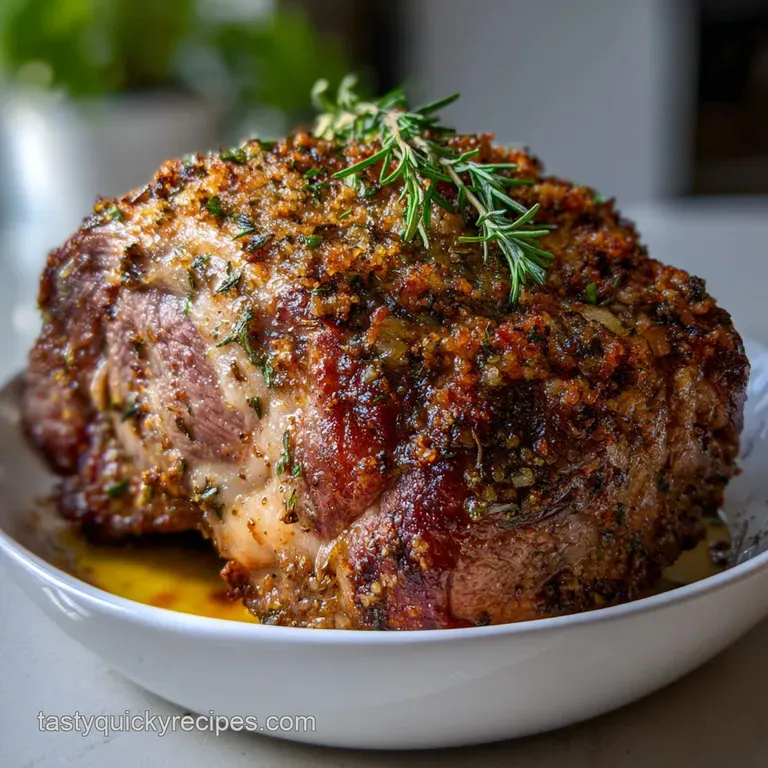
- Mastering the Centerpiece: Why Reverse Sear is Supreme
- Preparing Your Ribeye Roast: Essential Ingredients Checklist
- The Foolproof Reverse Sear: Step-by-Step Execution
- Achieving Perfection: Expert Tips and Troubleshooting
- Extending the Feast: Storing and Reheating the Roast
- What to Serve With Your Ultimate Ribeye Roast
- Recipe FAQs
- 📝 Recipe Card
That glorious sound of an herb crust shattering under a knife? That deep, savory aroma that whispers “fancy dinner party” while you’re still in your pajamas? That’s the magic of a perfect Ribeye Roast .
It’s the centerpiece that makes every jaw drop the moment you carry it to the table.
People always assume this is a fussy, complicated dish, reserved only for professional chefs or holiday panic. Lies! Seriously, making a spectacular Ribeye Roast is far less intimidating than mastering hollandaise or juggling four side dishes at once.
It requires minimal hands-on effort and mostly relies on waiting patiently for temperature changes.
I spent years messing up roasts either burnt outside and raw inside, or grey and dry throughout. But once I discovered the reverse sear method, my life changed. Forget guessing; this technique guarantees an edge-to-edge perfect pink interior and the crunchiest crust imaginable.
This Best Ribeye Roast Recipe uses science, not luck. Let's crack on.
Mastering the Centerpiece: Why Reverse Sear is Supreme
The old-school method blasts the roast with high heat right away, which causes the exterior fat and muscle fibers to seize up and push moisture inward, resulting in that horrible grey band around the edges. The reverse sear is brilliant because it flips that logic entirely.
You slow roast the Ribeye Roast at a low temperature first, gently warming the entire internal structure evenly.
Precision Cooking: The Flavor and Texture Advantage
This low and slow approach allows the connective tissue and fats within the Ribeye Roast to melt slowly, basting the meat from the inside out. Once the core temperature is nearly perfect, we hit it with a super over high heat sear for just a few minutes.
This process locks in all those melted juices and creates a thick, dark, and highly aromatic crust.
The Science of the Perfect Medium Rare Interior
We are aiming for uniform cooking. By holding the oven at 250°F (120°C), you ensure that the temperature gradient from the center to the edge is razor thin. This means when you slice into your Ribeye Roast , you won't see that sad, overcooked ring; you will see glorious pink from corner to corner.
Choosing Your Cut: Boneless vs. Bone-In Rib Roast
I usually opt for boneless for easy carving, but the bone adds insulation and flavor during the cook. If you go bone-in, the cooking time will be longer, and you must make sure the thermometer probe avoids touching the bone (it holds heat differently). The fundamentals of the reverse sear remain the same, though. If you want a deep dive on handling the standing rib roast, check out my full guide on the Bonein Rib Roast Recipe: Oven Method for a Perfect Crust for specifics on trussing the bones back on.
Essential Equipment for Roasting Success
You can’t cheat the temperature gods. Period. If you take away one thing from this whole recipe, let it be this: You absolutely must use a reliable digital probe thermometer. You insert it once at the start, and it tells you exactly when to pull the Ribeye Roast .
Without it, you are throwing money and deliciousness into the wind.
Achieving the Edge-to-Edge Pink Interior
The key here is low temperature and patience. Because the heat is so gentle, the transition from the beautifully cooked medium rare interior to the exterior is slow and controlled. Remember, the cooking process is not a race. Let the slow oven do its job on your Ribeye Roast .
How the Herb Crust Develops Maximum Aroma
We use fresh herbs pressed into olive oil and garlic. Olive oil (or butter, if you prefer) acts as the binding agent, helping the aromatic elements stick firmly to the roast. During the slow cook, these herbs dry out beautifully and their essential oils infuse the fat on the surface.
When the over high heat sear hits, those dried herbs crisp up instantly, creating a texture that crackles.
The Critical Role of Resting the Roast
We rest the Ribeye Roast twice in this method. The long rest after the slow cook is essential because it allows the intensely pressurized juices, which have gathered toward the center, to flow back out and redistribute throughout the meat.
If you skip this, the juices will explode onto your carving board when you slice, leaving you with dry meat.
Preparing Your Ribeye Roast: Essential Ingredients Checklist
A simple, perfect Ribeye Roast doesn't need a thousand ingredients. It needs quality ingredients that work together harmoniously.
Selecting the Best Grade of Roast
If your budget allows, go for Prime or at least Choice grade. Marbling is your friend here; those streaks of intramuscular fat are what melt during the slow cook, creating the incredible tenderness of this cut.
If you can’t find a ribeye, this method works well on a high-quality sirloin, though the fat content will be lower.
The Ultimate Herb Blend for the Crust
We are keeping it classic: Rosemary and thyme. They are robust, fragrant, and stand up perfectly to the rich flavor of the Ribeye Roast .
- Rosemary: Use fresh sprigs, finely minced. If you only have dried, use half the amount and soak them briefly in the oil first.
- Thyme: Fresh leaves stripped from the stem are best. You can substitute with dried oregano if thyme is totally unavailable, but the flavor will lean more Mediterranean.
- Garlic: Use fresh cloves, minced fine. If you must substitute, use 1/2 teaspoon of granulated garlic powder per clove but honestly, use fresh.
Salt, Fat, and Flavor Agents: Specific Recommendations
The dry brine is key, so use kosher salt. Table salt is too fine and too strong; kosher salt allows for even coverage without overpowering the meat.
| Ingredient | My Recommendation | Substitution |
|---|---|---|
| Fat Binder | Extra Virgin Olive Oil | Melted unsalted butter or avocado oil. |
| Main Seasoning | Kosher Salt (for brining) | Coarse sea salt. Avoid regular iodized table salt. |
| Aromatics | Fresh Rosemary/Thyme | Dried versions (use sparingly) or Italian seasoning blend. |
Chef’s Note: Do not skip the 12 24 hour uncovered dry brine. This process draws moisture from the surface, creating a perfect environment for the herbs to stick and guaranteeing the crispy crust we are aiming for on this Ribeye Roast .
The Foolproof Reverse Sear: step-by-step Execution
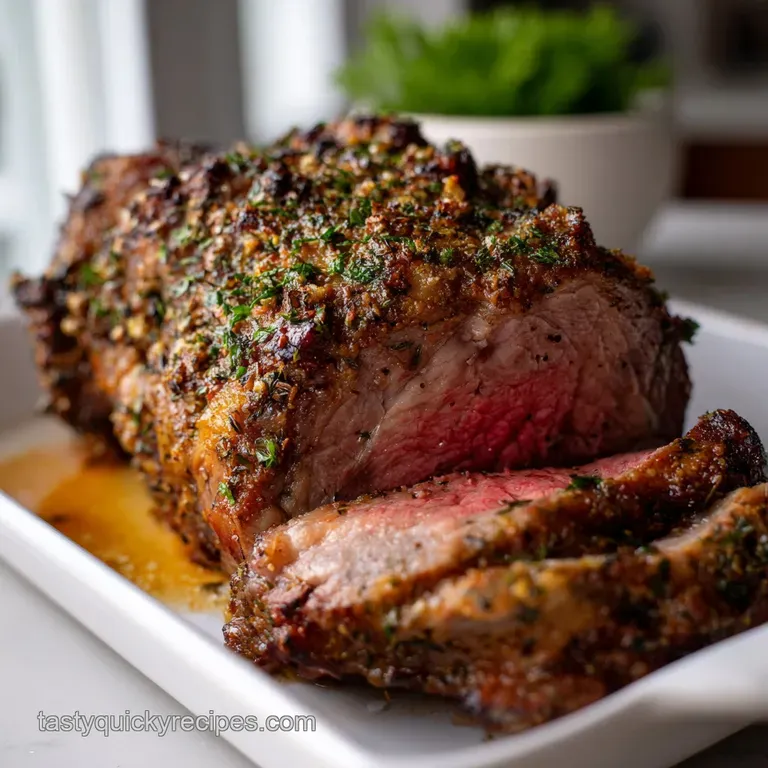
This is where the magic happens. Trust the thermometer, not the clock.
Prep: Tempering and Applying the Flavor Crust (Pre-Roast Prep)
Remove the Ribeye Roast from the fridge at least an hour before you plan to cook it. This step, called tempering, helps ensure it cooks evenly. Mix your herb and garlic blend with the olive oil and pepper. Press this mixture firmly onto the roast, ensuring the sides are coated too.
It should look like a thick, aromatic blanket.
Slow Roasting: Setting the Core Temperature (The 'Roast' Phase)
Set your oven low 250°F (120°C). Place the herb crusted Ribeye Roast on a wire rack set over a roasting pan. The rack is critical for allowing air to circulate, guaranteeing even browning. Insert your probe thermometer and wait.
This slow roast might take 2 to 3 hours depending on the size and shape of your specific cut.
The over High heat Finish: Developing the Crispy Exterior (The 'Brown' Phase/Sear)
When your thermometer hits 125°F (52°C) for medium rare, pull the Ribeye Roast immediately. Do not cut it! Cover it loosely with foil and let it rest for a full 30 minutes. While it rests, blast your oven up to 500°F (260°C).
After the rest, return the roast to the screaming hot oven for 6 to 10 minutes. Watch it like a hawk. You are looking for a deep, crunchy brown crust not black, burnt herbs!
Measuring Internal Temperature and Carryover Cooking
Remember the rule: we pull the roast 5°F (3°C) before the final desired temperature. During the 30 minute rest, the internal temperature will climb this is carryover cooking, and it's essential for achieving that perfect final level of doneness without overshooting.
Achieving Perfection: Expert Tips and Troubleshooting
When to Pull the Roast for Ideal Doneness
The most critical moment is pulling the roast at the right core temperature. If you want a final temperature of 130°F (54°C) (a beautiful medium rare), you must remove the Ribeye Roast when the thermometer reads 125°F (52°C).
If you wait until 130°F, you'll end up closer to 135°F or 140°F after resting.
Common Pitfalls to Avoid During the Sear
My biggest mistake when I first tried the reverse sear was burning the garlic. Since the herbs are dried out from the slow cook, they can go from golden brown to charcoal black in seconds under 500°F heat. Keep an eye on the roast during the over high heat phase.
If you notice the crust getting too dark too fast, simply move it to a lower rack in the oven.
The Importance of Trussing a Boneless Ribeye
A boneless Ribeye Roast is often irregularly shaped. If it’s not tied tightly, the thinner ends will cook much faster than the center, ruining the edge-to-edge consistency. Use butcher’s twine every 1 2 inches before the dry brine stage.
Tying it into a uniform cylinder ensures even cooking, which is crucial for maximizing the efficiency of the reverse sear.
Extending the Feast: Storing and Reheating the Roast
Leftovers from a Ribeye Roast are a beautiful thing. Don't waste them by storing them incorrectly!
Safely Storing Leftover Roast Slices
The roast will stay fresh for 3 to 4 days in the refrigerator. Slice any remaining meat and store it in an airtight container. If you leave the slices whole, they retain moisture better than if you shred them.
Best Practices for Freezing Cooked Ribeye
Yes, you can freeze it! If you know you won't use it within four days, wrap individual slices of the Ribeye Roast tightly in plastic wrap, then place them in a freezer bag, squeezing out all the air. It will last perfectly well for up to three months.
I love pulling out these frozen slices to make incredible French Dip sandwiches later.
Reheating Without Drying Out the Meat
Never microwave leftover roast slices it turns them instantly rubbery. The best method is gentle, low heat. Place the slices in an oven safe dish, add a tablespoon or two of water or leftover jus, cover tightly with foil, and heat in a 300°F (150°C) oven for about 10– 15 minutes until just warmed through.
This steam method prevents that beautiful Ribeye Roast from losing its tenderness.
What to Serve With Your Ultimate Ribeye Roast
A magnificent roast deserves magnificent sides!
I always recommend having a sharp, creamy sauce to balance the richness. A simple horseradish cream is non-negotiable for me. For a carbohydrate, you could go with my creamy San Giorgio Lasagna Recipe: Classic Beef, Ricotta Sunday Roast Flavor if you want a hearty, layered side, or just stick to the classics. The traditional pairing of Yorkshire Puddings, crispy on the outside and hollow within, is essential for soaking up the glorious juices from the Ribeye Roast . You can't beat it.
This Herb Crusted Ribeye Roast is truly the simplest way to produce a jaw-dropping meal. It’s perfect for holidays like Christmas or just an elevated Sunday dinner. Honestly, once you nail this reverse sear method, you'll never go back to the old way. Happy roasting! If you need a method specifically for the Prime cut, my Prime Rib Roast Recipe: Perfect Reverse Sear for Medium Rare is tailored for that ultra premium experience!
Recipe FAQs
Why is an instant read thermometer essential for the reverse sear method?
The reverse sear method relies entirely on monitoring the precise internal temperature, not time, to achieve a perfect edge-to-edge medium rare (125°F). Removing the roast too early or too late will compromise the even cooking and uniformity that this technique is designed to deliver.
How do I ensure my herb crust is crunchy and doesn't burn during the sear?
First, ensure the roast is patted completely dry before applying the herb paste, as moisture inhibits crust formation. During the high heat searing phase, monitor the crust constantly and place the roast on a lower rack if you notice the herbs browning too quickly under the upper heating element.
My roast came out dry, even though I cooked it to medium rare. What went wrong?
The most common cause of dry meat is skipping or shortening the crucial resting period before carving. Another possibility is taking the final internal temperature measurement incorrectly, perhaps hitting a pocket of fat or bone instead of the center of the densest muscle mass.
Can I use a bone-in ribeye roast instead of a boneless one?
Yes, you absolutely can, and many chefs prefer bone-in for its added flavor and moisture retention. However, the bone acts as an insulator, so you should anticipate slightly longer cooking times during the slow roast phase to reach your target internal temperature.
Why is letting the Ribeye Roast rest so important after the sear?
Resting allows the muscle fibers, which tighten during cooking, to relax and evenly redistribute the internal juices throughout the meat. Skipping this crucial 20-30 minute step results in a massive loss of moisture when you carve, leaving the meat significantly less tender and flavorful.
How should I adjust the cooking time if my roast is much larger or smaller than specified?
Cooking time is only an estimate for the slow roast phase; always rely exclusively on the internal thermometer reading, regardless of the roast size. A larger roast will take longer to reach the pre-sear temperature of 115°F 120°F, while a smaller roast may cook much faster.
What is the best way to store and reheat leftover ribeye roast?
Store leftovers tightly wrapped or in an airtight container in the refrigerator for up to 3 days. To reheat without compromising texture, slice the roast and warm the pieces briefly in a skillet with a little beef broth, or use a very low oven (250°F) until just warmed through.
Foolproof Herb Crusted Ribeye Roast
Ingredients:
Instructions:
Nutrition Facts:
| Calories | 455 kcal |
|---|---|
| Protein | 26.7 g |
| Fat | 32.7 g |
| Carbs | 17.4 g |
