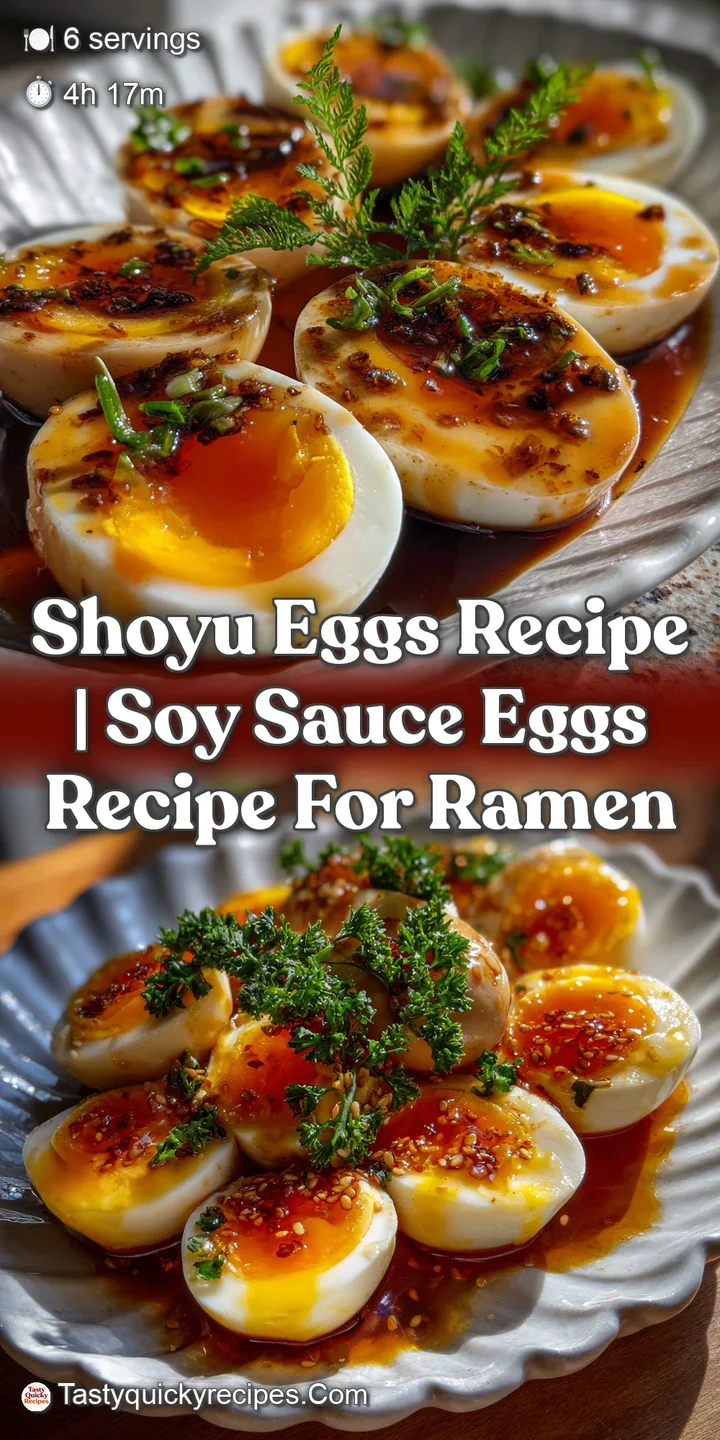
Shoyu Eggs Recipe: Jammy Ramen Eggs
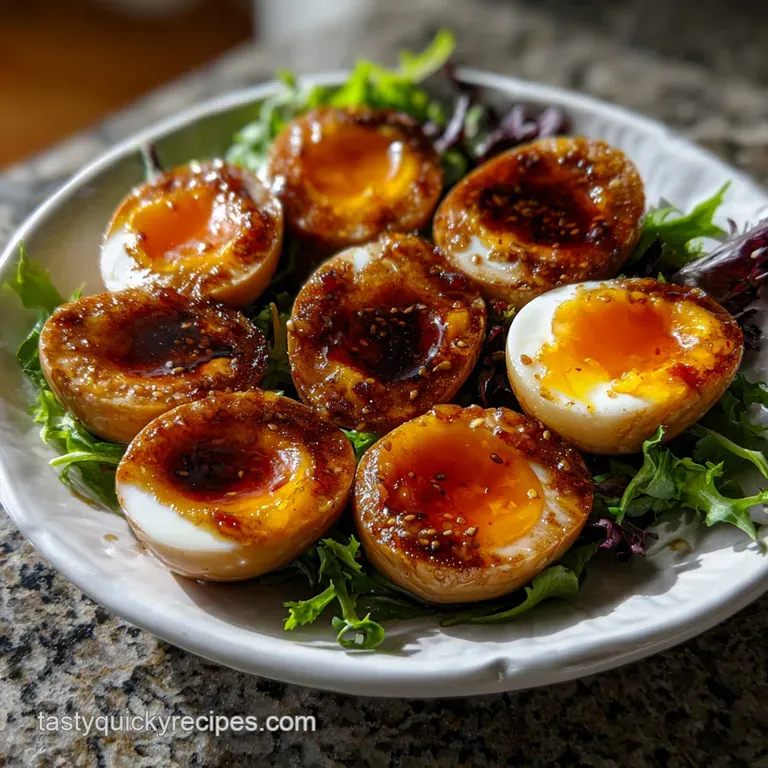
- Effort/Time:7 minutes of active cooking with a 4 hour make-ahead marination.
- Key Flavor Hook: A savory-sweet balance of aged soy sauce, mirin, and aromatic ginger.
- Perfect for: Ramen toppings, high-protein snacks, or a savory breakfast-on-the-go.
- The Ultimate Jammy Shoyu Eggs Recipe (Shoyu Tamago)
- What Are Shoyu Eggs (Japanese Soy Sauce Eggs)?
- Why This Shoyu Eggs Recipe Works
- Essential Ingredients and Substitutions
- Step-by-Step Instructions for the Best Shoyu Eggs Recipe
- Expert Tips and Common Mistakes to Avoid
- Common Myths
- Storage and Food Safety Guidelines
- Creative Serving Suggestions and Pairings
- Shoyu Eggs FAQs
- 📝 Recipe Card
The Ultimate Jammy Shoyu Eggs Recipe (Shoyu Tamago)
Listen, if you haven’t experienced the absolute joy of cracking open a soy-marinated egg over a steaming bowl of noodles, you are missing out on one of life’s greatest simple pleasures.
I remember the first time I tried to make these; I overcooked the eggs until the yolks were chalky and grey, and then I let them sit in the marinade for three days until they tasted like salt licks. It was a disaster.
But after years of tinkering in my kitchen and pestering every ramen chef who would talk to me, I’ve finally mastered this shoyu eggs recipe.
The smell of the marinade alone is enough to make your mouth water. When you simmer that soy sauce with smashed garlic and fresh ginger, the whole kitchen begins to smell like an authentic Tokyo noodle shop. It’s a warm, salty, slightly sweet aroma that promises something special.
Getting that "shatter" of the eggshell and peeling back the skin to reveal a perfectly stained, mahogany colored exterior is incredibly satisfying. Whether you're a meal prep master or just someone who wants a fancy snack, this shoyu eggs recipe is going to change your fridge game forever.
What Are Shoyu Eggs (Japanese Soy Sauce Eggs)?
Shoyu eggs, also known as Shoyu Tamago or Ajitsuke Tamago (Ajitama), are soft boiled eggs that have been marinated in a soy-based liquid to infuse them with color and flavor. Traditionally served as a centerpiece in ramen, these eggs are prized for their "jammy" yolks a texture that is neither liquid nor solid, but a thick, spreadable custard.
The beauty of this shoyu eggs recipe lies in its versatility. While they are the gold standard for ramen toppings, they also function as a standalone snack or a protein boost for avocado toast.
The marinade typically consists of soy sauce, mirin (Japanese sweet rice wine), sugar, and aromatics like ginger and green onion. Over a period of several hours, the salt and sugar in the marinade penetrate the egg white and begin to "cure" the yolk, resulting in a complex flavor profile that hits every part of your palate.
Why This Shoyu Eggs Recipe Works
This shoyu eggs recipe works because it utilizes controlled thermal denaturation to set the egg whites while keeping the yolks tender, followed by an osmotic marination process that seasons the egg from the inside out.
By using a precise 7 minute boil and an immediate ice bath, we halt the cooking process at the exact moment the yolk reaches a jammy consistency.
The Origin of Shoyu Tamago
The history of seasoned eggs in Japan is closely tied to the evolution of ramen culture. Originally, eggs were simply hard boiled and served plain. However, chefs realized that by soaking the eggs in the leftover braising liquid from chashu (pork belly), they could create a more cohesive dish.
This shoyu eggs recipe pays homage to that tradition by using a balanced brine that mimics those deep, meaty flavors without requiring you to braise a whole pork belly first.
The Science Behind the Perfect Jammy Yolk
Cooking an egg is a lesson in chemistry. Egg whites (albumen) begin to coagulate at around 140°F (60°C), while yolks require a slightly higher temperature of about 149°F (65°C) to set.
By boiling the eggs for exactly 7 minutes, we allow the whites to fully firm up into a velvety structure while the center of the yolk stays just below the setting point.
When you plunge them into an ice bath, the residual heat is sucked out instantly, preventing the yolk from reaching that "rubbery" stage.
Balancing Salt, Sweet, and Umami
The marinade isn't just for color; it's a curing agent. The 0.5 cup of Soy Sauce provides the salt, while the 0.5 cup of Mirin and 2 tablespoons of Sugar provide the sweetness. This balance is crucial. If the marinade is too salty, it will draw too much moisture out of the egg, making it tough.
The sugar acts as a buffer, softening the harshness of the salt and creating that signature "umami" mouthfeel that lingers after every bite.
Ramen Shop Quality in Your Kitchen
To get that professional look, we use a specific technique: the Ziploc bag hack. By placing the eggs and marinade in a sealed bag and squeezing out the air, the eggs are 100% submerged in the liquid.
This ensures an even, consistent brown stain across the entire surface of the egg, avoiding those awkward white bald spots you get when the eggs bob at the surface of a bowl.
Essential Ingredients and Substitutions
To make the best shoyu eggs recipe, quality ingredients are paramount. I always reach for a high-quality Japanese soy sauce like Kikkoman and a genuine mirin (not "mirin style" seasoning if I can help it).
If you're feeling fancy, using a KitchenAid Digital Scale to measure your ingredients can ensure the balance is perfect every time.
| Original Ingredient | Best Substitute | Why It Works |
|---|---|---|
| Soy Sauce (0.5 cup) | Tamari (0.5 cup) | Tamari provides a similar deep umami and salty profile. Note: It is naturally gluten-free but can be slightly more intense, so you may need 1 extra Tbsp of water. |
| Mirin (0.5 cup) | Dry Sherry + 1 tsp Sugar | Sherry mimics the fermented acidity of mirin. Note: Adds a slightly more alcoholic/nutty note than traditional mirin. |
| White Sugar (2 tbsp) | Brown Sugar or Honey | Provides the necessary sweetness for the cure. Note: Brown sugar adds a molasses depth; honey adds a floral note and makes the marinade thicker. |
| White Vinegar (1 tbsp) | Apple Cider Vinegar | Helps break down the calcium in the eggshell for easier peeling. Note: ACV adds a subtle fruity tang but doesn't affect the internal flavor. |
The Role of Soy Sauce and Mirin
Soy sauce is the backbone of this shoyu eggs recipe, providing the salt needed for the curing process. Mirin, on the other hand, adds a unique luster to the egg's surface and a subtle sweetness that balances the salt. If you've ever had a Lemon Pepper Sauce Recipe: Ready in 10 Minutes, you know how important that balance of acid and salt is it's the same principle here!
Adding Depth with Aromatics
We use 2 cloves of smashed garlic and a 1 inch piece of ginger to infuse the marinade with warmth and pungency. Don't skip the green onion! It adds a fresh, grassy note that cuts through the richness of the egg yolk. These aromatics transform a simple salty liquid into a complex "jus." Speaking of savory liquids, if you love deep flavors, you should definitely check out my Au Jus Recipe Easy: 15 Minute Rich Savory Dipping Sauce for your next roast beef night.
gluten-free and Low-Sodium Swaps
If you are watching your salt intake, you can use a low-sodium soy sauce. However, keep in mind that the marination time might need to be extended by an hour or two since there is less salt to drive the osmosis. For a gluten-free version, Tamari is your best friend.
It has a richer, slightly thicker consistency that coats the eggs beautifully.
step-by-step Instructions for the Best Shoyu Eggs Recipe
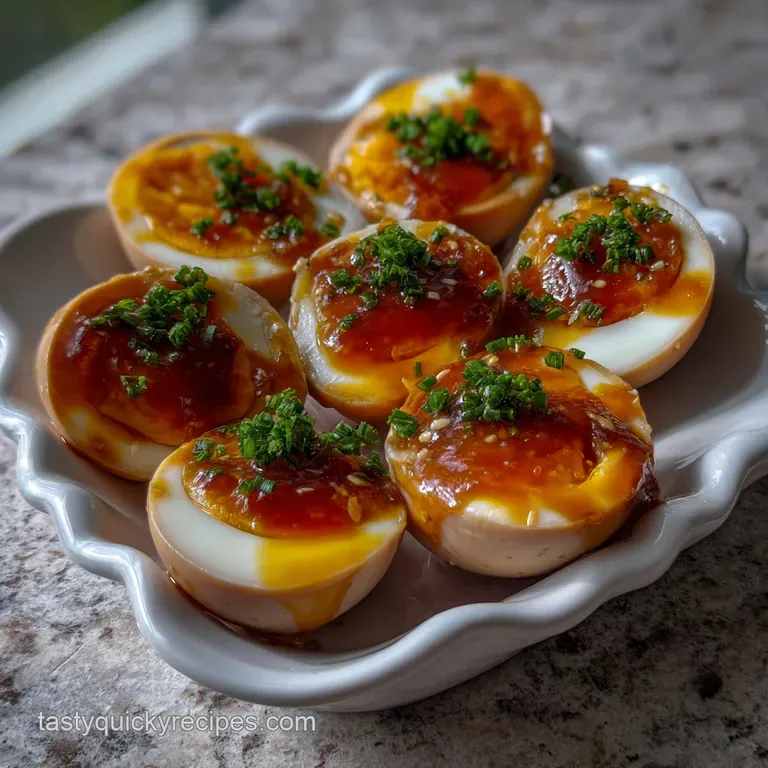
- Prepare the Aromatics: Take your 2 cloves of garlic and smash them with the flat side of a chef's knife. Slice your 1 inch piece of ginger into thin coins and roughly chop the green onion.
- Mix the Marinade: In a small saucepan, combine 0.5 cup Soy Sauce, 0.5 cup Mirin, 0.25 cup Water, 2 tablespoons Sugar, the garlic, ginger, and green onion. Bring it to a simmer over medium heat for 2 minutes to dissolve the sugar and wake up those aromatics. Let this cool completely.
- Boil the Water: Fill a medium All-Clad Stainless Steel Saucepan with enough water to cover the eggs by at least an inch. Add 1 tablespoon White Vinegar and 1 teaspoon Salt. Bring it to a rolling boil.
- The 7 Minute Dance: Using a slotted spoon, gently lower the 6 large eggs (straight from the fridge!) into the boiling water. Immediately start a timer for 7 minutes. For the first 2 minutes, gently stir the eggs in a circular motion. This uses centrifugal force to help the yolk stay centered in the white.
- The Shock Treatment: While the eggs boil, prepare a large bowl with cold water and 2 cups of ice. When the timer hits 7 minutes, move the eggs to the ice bath immediately. Let them chill for at least 10 minutes. This is non-negotiable!
- Peel with Care: Crack the shells gently all over. I like to peel them under a thin stream of cool running water or submerged in the ice bath. The water helps lubricate the space between the membrane and the white.
- The Marination: Place the peeled eggs into a Ziploc Gallon Freezer Bag. Pour in the cooled marinade. Squeeze out as much air as possible so the liquid surrounds the eggs entirely. Seal and refrigerate for at least 4 hours, or up to 12 hours for maximum flavor.
Expert Tips and Common Mistakes to Avoid
Making a shoyu eggs recipe seems simple, but the difference between "okay" and "extraordinary" is in the details. Use an Instant read Digital Thermometer to ensure your marinade is below 70°F before adding the eggs, or you'll accidentally keep cooking them!
Chef's Expert Tip: For the ultimate easy peel experience, use a thumbtack to prick a tiny hole in the wide end of the egg before boiling. This releases the internal pressure and prevents that annoying flat spot caused by the air pocket!
Also, if you're in a hurry, pop the marinade in the freezer for 10 minutes to chill it down faster.
| Problem | Why It Happens | The Fix | Pro Protocol |
|---|---|---|---|
| Rubbery Egg Whites | Eggs were boiled too long or at too high a heat. | Reduce boiling time to exactly 7 minutes. | Use a Thermapen to check water temp; keep it at a steady rolling boil. |
| Off-Center Yolks | The yolk settled to one side during the initial set. | Stir the eggs gently for the first 2 minutes of boiling. | Create a gentle whirlpool to keep the yolk suspended in the center. |
| Hard-to-Peel Shells | The membrane is stuck to the white (common with very fresh eggs). | Add vinegar to the water and use an ice bath. | Use eggs that are 1 2 weeks old; the higher pH makes them easier to peel. |
| Over Salty Eggs | Eggs were left in the marinade for more than 24 hours. | Remove eggs from liquid after 12 hours. | Set a timer on your phone for "Egg Extraction" at the 10 hour mark. |
Boiling the Eggs for a Liquid Gold Center
The secret to the shoyu eggs recipe is the "cold start" vs "boiling start." I always use a boiling start. Dropping cold eggs into boiling water creates a "thermal shock" that helps the shell separate from the membrane.
If you start with cold water, the proteins heat up slowly and bond to the shell, making peeling a nightmare.
The Ice Bath Technique for Easy Peeling
Don't just use cold tap water. You need a true ice bath. The "shatter" sound of the shell when you crack a properly shocked egg is a sign of success. The cold causes the egg to shrink slightly inside the shell, creating a tiny gap that makes the shell slide right off.
Timing the Marination Process
You might be tempted to leave the eggs in the marinade for days. Don't. After about 12 18 hours, the texture of the white begins to turn tough and rubbery due to the high salt content.
If you want a deeper flavor without the rubbery texture, double the aromatics (ginger/garlic) instead of increasing the soak time.
Common Myths
Myth: You need "fresh from the farm" eggs for the best result. Truth: Actually, slightly older grocery store eggs (about a week old) are better for this shoyu eggs recipe.
As eggs age, the pH of the white rises, which weakens the bond between the membrane and the shell, making them much easier to peel.
Myth: The marinade can't be reused. Truth: You can absolutely reuse the marinade once! Just boil it again for 2 minutes to kill any bacteria, let it cool, and it's ready for another round. It’s a great way to save on ingredients.
Storage and Food Safety Guidelines
How long do soy sauce eggs last? Once removed from the marinade, these eggs will stay fresh in an airtight container in the refrigerator for up to 3 days. I recommend storing them without the liquid once the desired flavor is reached to prevent them from becoming over cured.
Can You Freeze This Shoyu Eggs Recipe?
No, you cannot freeze shoyu eggs. Freezing completely destroys the protein structure of the egg white, turning it into a spongy, watery mess. The yolk also loses its creamy, jammy texture and becomes grainy. These are definitely a "make and eat" item.
Reheating Without Overcooking the Yolk
If you want to add these to hot ramen, do not microwave them! The microwave will turn your jammy yolk into a solid puck in seconds. Instead, let the egg sit at room temperature for 15 minutes, then drop it into your hot broth right before serving.
The residual heat of the soup will warm the egg perfectly without overcooking the center.
Creative Serving Suggestions and Pairings
While these are the king of ramen toppings, they are also incredible when sliced in half and served on top of a warm bowl of rice with a drizzle of sesame oil. For a fun fusion snack, try serving them alongside a Boat Dip Recipe: The Ultimate 5 Ingredient Creamy Classic at your next gathering. The creaminess of the dip and the salty umami of the egg are a match made in heaven.
Another personal favorite is serving these eggs with fluffy bread. These eggs paired with my Texas Roadhouse Rolls Recipe | Fluffy Homemade Yeast Rolls make for a bizarrely delicious savory breakfast. Just smash the egg onto the warm roll and let the yolk soak into the bread. Trust me, it’s life changing.
Repurposing the Leftover Marination Liquid
Don't throw that liquid gold away! You can use the leftover marinade as a base for a stir fry sauce, drizzle it over steamed vegetables, or use it to season a batch of Blackeyed Peas: Classic Smoky Recipe with Ham Hocks to add a layer of Japanese inspired umami to a Southern classic.
This shoyu eggs recipe is a staple in my kitchen for a reason. It’s simple, scientific, and yields results that look and taste like they came from a high end restaurant. Give it a try this weekend your future self (and your ramen bowl) will thank you!
Shoyu Eggs Recipe (Shoyu Tamago) A foolproof guide to creating Japanese soy-marinated eggs with a signature jammy yolk and savory exterior.
- Yield: 6 eggs
- Prep Time:4 hours 10 minutes (includes marination)
- Cook Time:7 minutes
- Total Time:4 hours 17 minutes
- Key Ingredients: 6 large eggs, 0.5 cup soy sauce, 0.5 cup mirin, 2 tbsp sugar, garlic, ginger, and green onion.
- Nutritional Info (Per Egg): 86 calories, 6.5g protein, 5.1g fat, 1.8g carbs.
Quick Steps: 1. Simmer soy sauce, mirin, water, sugar, and aromatics; let cool. 2. Boil eggs for exactly 7 minutes in water with vinegar and salt. 3. Shock eggs in an ice bath for 10 minutes, then peel carefully. 4.
Marinate eggs in a Ziploc bag with the liquid for 4–12 hours in the fridge. 5. The Ziploc Bag Hack: Using a bag instead of a bowl ensures the eggs are fully submerged in the marinade without needing a massive amount of liquid. This results in an even, beautiful brown exterior. 6.
Use Cold Eggs: Using eggs straight from the fridge prevents the yolk from overcooking.
Shoyu Eggs FAQs
How do I make shoyu eggs?
To make shoyu eggs, you need to achieve a jammy yolk consistency through precise boiling and rapid cooling. The key is a 6.5-minute boil followed by an immediate transfer to an ice bath. This stops residual cooking instantly.
The general steps involve:
- Gently lower peeled, near room-temperature eggs into boiling water for exactly 6.5 minutes.
- Immediately plunge them into a prepared ice bath for at least 10 minutes.
- Marinate in a 1:1 mixture of soy sauce and mirin for a minimum of 4 hours, preferably overnight.
How to make soy sauce eggs fast?
The minimum recommended marination time for a noticeable flavor is 4 hours, but you can speed up absorption slightly. To achieve faster results, use slightly warmer marinade (not hot) and increase the surface area contact.
Tips for Faster Flavor Infusion:
- Use a vacuum sealer (like a FoodSaver) to remove air around the eggs in the marinade bag.
- Slice the eggs in half before marinating if you only need flavor on the surface, rather than deep penetration.
Why are my shoyu egg yolks runny instead of jammy?
This occurs due to inadequate temperature shock after boiling, allowing carryover heat to overcook the yolk. The rapid cooling process causes thermal contraction, setting the egg white while the center remains custardy.
If you find your eggs are too soft, consider pairing them with a hearty side dish, perhaps like the slow cooked depth found in our Chipotle in Adobo Sauce Recipes: Smoky Slow Cooked Chicken, as the texture difference can be complementary.
Is there a difference between Shoyu Eggs and Korean Mayak Eggs?
Yes, they are fundamentally different in marinade composition and final texture. Shoyu eggs rely on the simple soy sauce and mirin base for umami and curing the yolk.
Korean Mayak Eggs (or "drug eggs") are characterized by a much more complex, savory, and spicy marinade that typically includes:
- Chopped scallions and onions
- Garlic and sesame oil
- Gochugaru (Korean chili flakes)
Can I substitute mirin with something else when making soy sauce eggs?
Yes, you can substitute mirin, but you must balance the sweetness and acidity it provides. Mirin adds sweetness and a subtle rice wine tang necessary for balancing the aggressive salinity of the soy sauce.
For a direct substitute, use dry sherry or sake mixed with a small amount of sugar. This approach is similar in principle to balancing flavors when preparing rich meat dishes, such as achieving proper balance in our Abgoosht: Traditional Persian Lamb Stew Recipe (Dizi Style).
How long can I store marinated shoyu eggs?
Marinated shoyu eggs are best consumed within 3 days for optimal texture, but they are safe to eat for up to 5 days. After 5 days, the texture of the egg white can start to become rubbery due to prolonged exposure to the salt.
The process that allows for this storage is mild preservation via the high sodium content of the soy sauce, which inhibits bacterial growth, a process called 'curing.'
Should I use fresh eggs or older eggs for perfect peeling?
You should use eggs that are about 1-2 weeks old for the easiest peeling experience. Very fresh eggs (less than 5 days old) have a lower internal pH, causing the membrane to adhere tightly to the shell.
As eggs age, the internal pH rises, which loosens the membrane from the shell. This principle of precise pH control is critical in baking, much like ensuring you use the right ingredients when testing something like Albers Cornbread: The Chefs Classic Golden Skillet Recipe.
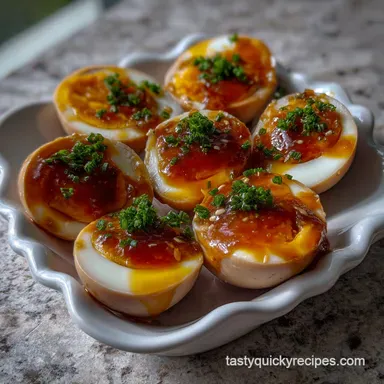
Easy Shoyu Eggs Recipe
Ingredients:
Instructions:
Nutrition Facts:
| Calories | 86 calories |
|---|---|
| Protein | 6.5 g |
| Fat | 5.1 g |
| Carbs | 1.8 g |
| Fiber | 0.1 g |
| Sugar | 1.4 g |
| Sodium | 595 mg |
