Easy Broiled Lobster Tails for Quick: Steakhouse Flavor Fast
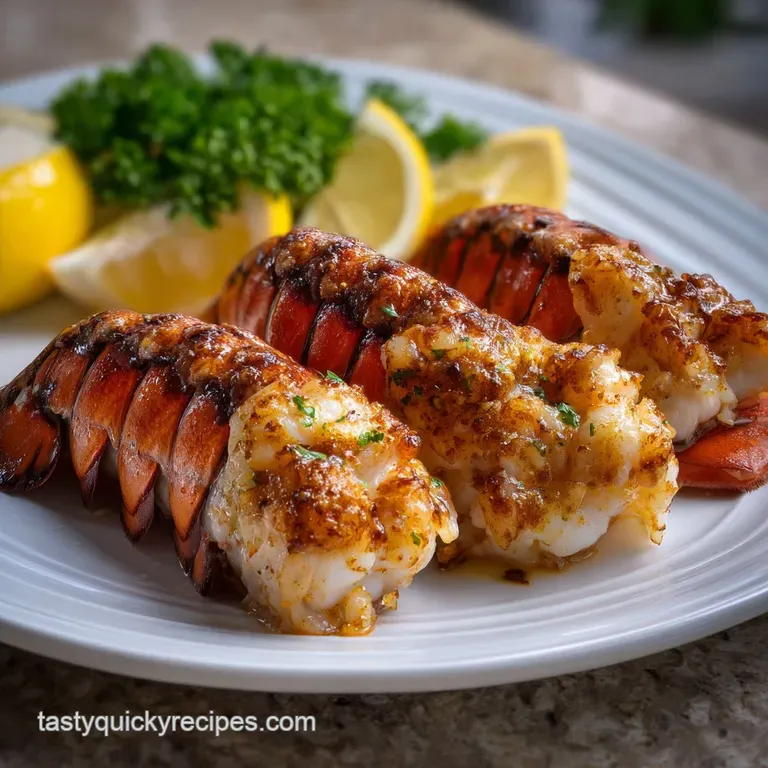
- Effort/Time: Low-effort prep with an 8 minute over high heat finish.
- Flavor Hook: Smoked-paprika-infused garlic butter meets charred, sweet lobster meat.
- Perfect for: Last-minute celebrations or a high-protein, low-carb luxury meal.
- Master the Technique for Easy Broiled Lobster Tails for Quick Results
- The Thermal Physics of High-Intensity Broiling
- Technical Specifications for Efficient Meal Architecture
- The Molecular Anatomy of Seafood Seasoning
- Essential Elements for Easy Broiled Lobster Tails for Quick Preparation
- Professional Culinary Toolset
- Precision Assembly and Thermal Application
- Troubleshooting the "Rubber" Texture and Structural Failure
- ⚗️ The Scaling Lab: Thermodynamics of Volume
- Debunking Common Crustacean Myths
- Strategic Storage and Zero Waste Philosophy
- Architectural Flavor Pairings for Your Quick Meal
- Recipe FAQs
- 📝 Recipe Card
Master the Technique for Easy Broiled Lobster Tails for Quick Results
There is a specific, sinking feeling that occurs when you pull $80 worth of cold water lobster tails out of the oven only to find they have the structural integrity of a Goodyear tire.
It’s a financial and emotional blow watching premium, translucent meat transform into a gray, shrunken, rubbery mess because the heat was too timid or the timing was off.
Most home cooks treat lobster with a fearful reverence that actually ruins the dish; they under season or over steam, resulting in a bland, watery texture that fails to justify the price tag.
I spent years apologizing for "tough" seafood before I realized my error: I was treating lobster like delicate fish when I should have been treating it like a ribeye. My biggest mistake was once butterfly cutting the shells so aggressively that the meat detached entirely, curling into a tight, dry knot during the broil.
It took four ruined dinner parties to understand that the shell isn't just a container; it's a thermal shield and a flavor conductor that requires specific mechanical preparation to work.
The scientific breakthrough for this Easy Broiled Lobster Tails for Quick protocol lies in the "Butterfly Elevation Technique" and the Maillard reaction. By perching the meat atop the shell, we expose the surface to direct infrared heat, creating a mahogany colored crust through protein sugar browning.
Simultaneously, the shell protects the underside, allowing the internal temperature to rise via gentle conduction. The result is a shattering, savory exterior and a velvety, butter saturated center that yields to the slightest fork pressure.
The Thermal Physics of High Intensity Broiling
- Radiant Heat Transfer: The broiler mimics an inverted grill, sending intense waves of energy that caramelize the smoked paprika and butter solids almost instantly.
- Protein Denaturation Control: By perching the meat above the shell, we ensure the heat penetrates from the top down, allowing the core to reach the target 140°F (60°C) without the bottom overcooking.
- The Shell Shield Effect: The chitinous exoskeleton acts as an insulator, trapping moisture and prevents the meat from tightening into a "rubber ball" texture.
- Emulsion Stability: Incorporating 1 tsp of fresh lemon juice into the melted butter provides an acid bridge that prevents the fat from feeling greasy on the palate.
Technical Specifications for Efficient Meal Architecture
- Preparation Phase: 10 minutes
- Thermal Application Phase: 8 minutes
- Total Elapsed Time: 18 minutes
- Output: 4 servings
- Caloric Load: 211 kcal per serving
The Molecular Anatomy of Seafood Seasoning
| Ingredient | Chemical/Physical Role (Science) | The Pro Secret (Why This Matters) |
|---|---|---|
| Cold Water Lobster Tails | Myofibrillar protein structure | Cold water species grow slower, resulting in denser, sweeter meat that resists mushiness. |
| Smoked Paprika | Phenolic compound infusion | Adds a "grilled" depth-of-flavor that the broiler lacks compared to a wood fire. |
| Unsalted Butter | Lipid based flavor carrier | Fat molecules trap the volatile aromatics of garlic and oregano, delivering them to the taste buds. |
| Kosher Salt | Osmotic pressure regulation | Draws out a microscopic layer of moisture to dissolve seasonings for better adhesion. |
Essential Elements for Easy Broiled Lobster Tails for Quick Preparation
- 4 cold water lobster tails (5 6 oz each): Why this? Specific weight ensures the meat cooks through before the shell chars excessively.
- 1 tsp extra virgin olive oil: Why this? Provides a higher smoke point base than butter for the initial sear.
- 0.5 tsp smoked paprika: Adds a deep, mahogany hue and earthy undertone.
- 0.25 tsp Diamond Crystal Kosher Salt: Controlled salinity without the harshness of table salt.
- 0.25 tsp freshly cracked black pepper: Provides a biting contrast to the sweet meat.
- 4 tbsp unsalted butter, melted: Why this? Allows for precise salt control while providing the necessary lipids for Maillard browning.
- 2 cloves garlic, finely minced: Use a microplane to create a paste for maximum surface area contact.
- 1 tbsp fresh parsley, finely chopped: Adds a chlorophyll driven brightness to finish.
- 1 tsp fresh lemon juice: Why this? Citric acid breaks down heavy fats for a cleaner finish.
- 0.25 tsp dried oregano: Adds a subtle, Mediterranean herbal backbone.
Professional Culinary Toolset
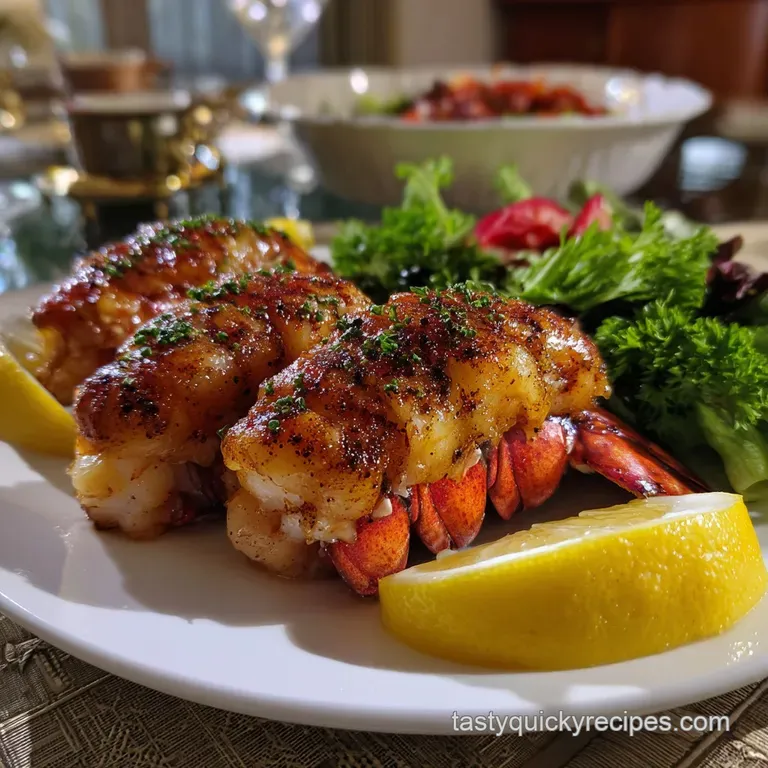
To execute this Easy Broiled Lobster Tails for Quick method with precision, utilize a Lodge Cast Iron Baking Pan or a heavy duty Nordic Ware Rimmed Sheet Pan. The thermal mass of cast iron helps maintain a steady temperature when the oven door is opened.
You will also need Wusthof Kitchen Shears for the butterfly cut standard knives risk crushing the delicate meat. A ThermoPro Instant Read Thermometer is non-negotiable; guessing lobster doneness is the fastest way to ruin the meal.
Precision Assembly and Thermal Application
- Position the oven rack 5 6 inches below the broiler element.
- Cut the top center of the lobster shell lengthwise using kitchen shears, stopping just before the tail fin. Note: This creates the "spine" needed for elevation.
- Separate the meat from the shell gently with your fingers, keeping the end attached to the tail.
- Lift the meat through the slit and rest it on top of the closed shell.
- Brush the meat with 1 tsp extra virgin olive oil to create a thin, conductive layer.
- Combine 0.5 tsp smoked paprika, 0.25 tsp kosher salt, and 0.25 tsp black pepper.
- Dust the seasoning evenly over the tails until they are a uniform rust orange color.
- Whisk 4 tbsp melted unsalted butter, 2 cloves minced garlic, 1 tbsp parsley, 1 tsp lemon juice, and 0.25 tsp oregano.
- Drizzle half the butter mixture over the tails until the crevices are saturated.
- Broil for 8 minutes until the meat is opaque, the shell is bright red, and the butter is bubbling vigorously. Note: Internal temperature must hit 140°F.
- Remove from heat and rest for 2 minutes until the residual sizzle subsides.
Troubleshooting the "Rubber" Texture and Structural Failure
If your lobster feels "bouncy" rather than tender, you've likely encountered protein over denaturation. This happens when the internal temp exceeds 150°F, causing the muscle fibers to squeeze out all moisture.
Why Your Lobster Shells Char Before the Meat Cooks
This is typically a rack positioning error. If the tails are within 2 3 inches of the element, the chitin burns while the dense center remains raw and translucent. This is similar to the temperature management needed in a Lobster Tail Recipe where balance is key.
| Problem | Root Cause | The Fix | Pro Protocol |
|---|---|---|---|
| Rubbery Meat | Carry over cooking overshot 145°F | Pull at 137°F-140°F | Use a digital probe for 100% accuracy. |
| Soggy Bottom | Meat stayed inside the shell | Use the "Elevation" technique | Ensure meat is completely perched on top of the shell. |
| Bitter Garlic | Garlic burned under the broiler | Use a garlic paste, not chunks | Mix garlic into the butter to insulate it from direct heat. |
⚗️ The Scaling Lab: Thermodynamics of Volume
When doubling this Easy Broiled Lobster Tails for Quick recipe to serve eight, the physics of your oven change significantly.
- Thermal Mass Recovery: Placing eight cold tails (approx. 3 lbs of mass) into the oven will drop the ambient temperature sharply. You must allow the broiler to preheat for at least 10 minutes to ensure the metal rack is radiating heat.
- The Evaporation Paradox: More tails in a single pan mean more moisture release. If the tails are touching, they will steam each other, resulting in a rubbery texture. Mandatory instruction: Space tails at least 2 inches apart.
- Non-Linear Spice Scaling: Do not double the salt and smoked paprika. Scale seasonings to 1.5x first. You can always add a finishing salt, but an over salted tail is unsalvageable.
- Carry Over Heat: A crowded pan retains more thermal energy. Pull the tails 5°F earlier (at 135°F) because the collective mass will continue to cook much longer once removed from the oven.
Debunking Common Crustacean Myths
Myth: You must boil lobster before broiling to ensure it's cooked through. Truth: Boiling leaches out the water soluble flavor compounds. Direct broiling preserves the natural sugars and creates a more intense "lobster" flavor through concentration.
Myth: Frozen lobster is always inferior to "fresh" in the tank. Truth: Most "fresh" grocery store lobster has been sitting in a tank for weeks, losing muscle mass. high-quality tails are flash frozen at sea, locking in the cellular structure and sweetness.
Strategic Storage and Zero Waste Philosophy
Storage: Store leftovers in an airtight glass container for up to 2 days. To reheat, do not use a microwave (it turns the meat into a pencil eraser). Instead, place in a 300°F oven with a splash of water and a foil cover for 5 7 minutes.
Freezing: I do not recommend freezing cooked lobster, as the ice crystals will rupture the delicate protein membranes, leading to a "mushy" thaw.
💡 ZERO WASTE: Don't discard the shells. Transform: Simmer shells in water with onion scraps for 45 minutes to create a concentrated lobster stock. Science: The shells are rich in glucosamine and calcium carbonate, which provide a deep, briny umami base for risottos or a quick Au Jus Recipe adaptation.
Architectural Flavor Pairings for Your Quick Meal
This Easy Broiled Lobster Tails for Quick entrée requires sides that respect its richness without competing for dominance. I recommend serving these atop a bed of lemon zested arugula or alongside a cluster of roasted asparagus.
If you're looking for a starch, a small portion of garlic herb pasta works beautifully.
For a truly decadent spread, pair this with a crisp, high acid Chardonnay. The acidity cuts through the 4 tbsp of unsalted butter, cleansing the palate between bites. If you have guests who prefer meat, this is the ultimate "Surf" for a "Surf and Turf" night.
Just ensure your timing is synchronized; lobster waits for no one. This recipe is the pinnacle of the Easy Broiled Lobster Tails for Quick Seafood Dinner experience because it respects the ingredient's integrity while acknowledging your time constraints.
Recipe FAQs
What is the ideal internal temperature for finished broiled lobster?
140°F (60°C) is the precise target for peak succulence. Pulling the tails at this temperature ensures the fibers are set but not yet contracted.
- Aim for 137°F upon removal
- Allow 3-5 degrees carry over heat
- Never exceed 145°F internal reading
Should I use salted or unsalted butter for the basting mixture?
Unsalted butter for precision control. Salted brands vary widely in sodium content, making accurate seasoning impossible when controlling a delicate protein. Unsalted butter provides a neutral fat base, allowing you to perfectly balance the paprika and garlic seasoning.
Can I use shrimp instead of lobster tails in this broiling technique?
No, shrimp requires significantly less time. Shrimp protein denatures much faster than dense lobster meat, leading to immediate toughness if broiled for the same duration. If you enjoy quick cooking seafood preparations, you might find success applying the quick sear logic to our Coconut Lime Fish Curry with Jasmine: Easy Weeknight Meal.
Why does my garlic mixture burn before the lobster is cooked?
Minced garlic burns due to direct, dry radiant heat exposure. Garlic's low sugar content caramelizes rapidly under intense infrared energy, creating a bitter layer on the meat.
- Ensure garlic is mixed well into the melted butter
- Do not use raw chunks directly on the meat
- Use a finer grating tool like a microplane for paste
Is it better to use a conventional oven or the broiler function?
The broiler achieves superior surface crust development. The broiler uses direct, intense infrared radiation focused only on the top surface, mimicking high heat grilling necessary for the Maillard reaction.
A conventional oven relies on convection, which heats too slowly and results in steamier, less flavorful meat.
Myth: I must thaw frozen lobster tails overnight in the refrigerator.
Myth: Thawing overnight is necessary for safety. Reality: Cold water tails can be safely submerged in cold water for 30 minutes to thaw rapidly without texture degradation. Rapid thawing prevents water absorption, keeping the meat firm.
Can I butterfly the tails ahead of time to save prep time?
Yes, but the meat must be kept refrigerated and covered. Pre-cutting the shell allows for faster meat elevation, but the exposed proteins are vulnerable to oxidation and drying. If you master the shell cutting technique here, the same dexterity applies to precise scoring needed for making Recipe for Date Nut Bread: Moist Loaf dough without tearing.
Easy Broiled Lobster Tails
Ingredients:
Instructions:
Nutrition Facts:
| Calories | 211 kcal |
|---|---|
| Protein | 20.8 g |
| Fat | 13.8 g |
| Carbs | 0.9 g |
| Fiber | 0.1 g |
| Sugar | 0.2 g |
| Sodium | 415 mg |
