Crockpot Chicken Thigh Recipe with Garlic and Herbs
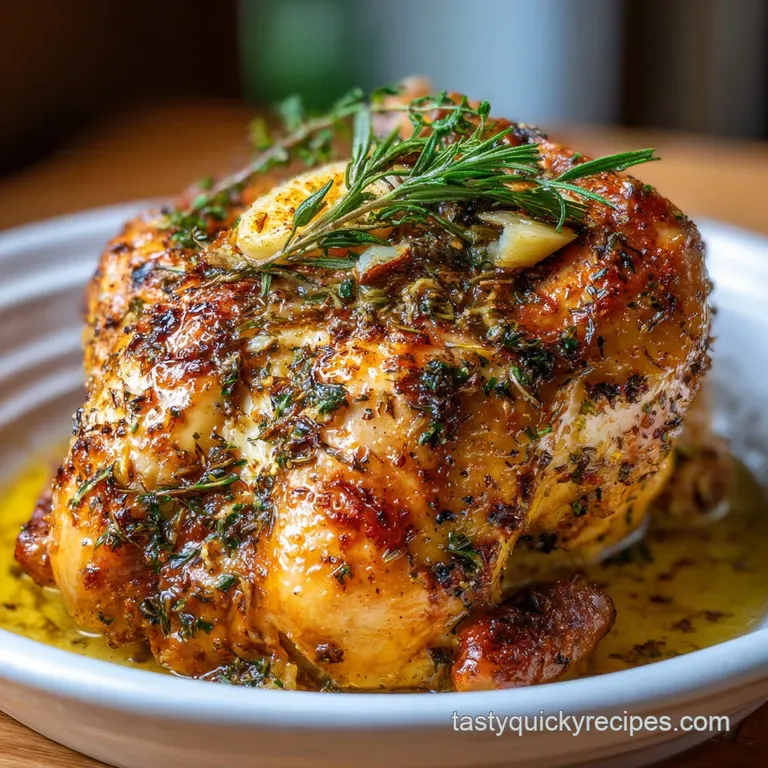
- Time: Active 15 minutes, Passive 4 hours, Total 4 hours 15 mins
- Flavor/Texture Hook: Shatter crisp skin meets velvety, garlic infused pan drippings.
- Perfect for: Busy families juggling weeknight schedules who refuse to settle for bland meals.
- Effortless Crockpot Chicken Thigh Recipe with Garlic and Herbs
- Science Behind the Succulent Texture
- Essential Ingredients and Smart Substitutes
- Reliable Tools for Tender Results
- Master the Step-by-Step Cooking Flow
- Troubleshooting Flavor and Texture Issues
- Scaling and Customizing Your Meal
- Myths Regarding Slow Cooking
- Proper Storage and Zero Waste
- Serving and Plating Your Dish
- Recipe FAQs
- 📝 Recipe Card
Effortless Crockpot Chicken Thigh Recipe with Garlic and Herbs
Ever walked through your front door after a long day and felt that heavy hit of savory garlic and woodsy herbs? It's like a warm hug for your senses. This article shares a foolproof Crockpot Chicken Thigh Recipe with Garlic and Herbs that's bursting with flavor.
I’ve spent years trying to get slow cooker poultry right without it turning into a soggy, grey mess, and I’ve finally cracked the code.
Between school runs and juggling work deadlines, I used to think a flavorful family dinner was a luxury we only had on Sundays. My first few attempts at this were, honestly, pretty disappointing. The skin was rubbery and the herbs just tasted like hay.
But after a few tweaks mainly learning when to sear and how to layer the aromatics this has become the most requested meal at our table.
We’re going to focus on getting that texture right. You want the meat to be so tender it barely needs a knife, but you also want that golden, crackling skin that makes everyone reach for seconds.
It isn’t difficult, but there are a few specific tricks regarding moisture control and temperature that make all the difference. Trust me, once you try this method, you won't go back to just tossing things in the pot and hoping for the best.
Science Behind the Succulent Texture
The success of this dish relies on two main pillars: temperature control and the transformation of connective tissue. When we cook bone in thighs at a low temperature, we are playing a long game with thermodynamics that lean, boneless cuts just can't win.
- Collagen Conversion: Long, slow heat turns tough connective tissue into liquid gelatin, creating a silky mouthfeel and naturally thickening the sauce.
- Fat Soluble Aromatics: Garlic and herbs release their essential oils more effectively into the rendered chicken fat than they would in a watery environment.
- Maillard Reaction: Searing the skin before or after slow cooking creates hundreds of new flavor compounds that are impossible to achieve through steaming alone.
Since we are dealing with bone in poultry, knowing exactly when to pull the meat out is the difference between juicy and dry. Use this quick guide to ensure you hit the sweet spot every single time without guessing.
| Chicken Thickness | Internal Temp | Rest Time | Visual Cue |
|---|---|---|---|
| 2.5 cm (Small) | 74°C | 5 mins | Meat pulls from bone |
| 4 cm (Medium) | 74°C | 8 mins | Clear juices run out |
| 5+ cm (Large) | 74°C | 10 mins | Bone feels loose |
I prefer using bone in thighs because the bone acts as an insulator, preventing the meat from overcooking as quickly as a breast would. It also adds a depth of flavor to the resulting broth that you just can't buy in a carton. If you're looking for another reliable way to cook this cut, my Chicken Thigh Recipe offers a great stovetop to oven alternative that uses similar seasoning profiles.
Converting Collagen to Gelatin
Inside the slow cooker, the internal temperature of the meat stays in the "danger zone" for collagen for hours. This isn't a bad thing here; it's exactly what we want for this specific cut.
As the fibers relax, the gelatin seeps out, coating the muscle fibers and keeping them moist even if the internal temperature technically exceeds the standard 74°C.
Maximizing the Maillard Reaction
The brown crust on the skin isn't just for looks. It provides a bitter, savory contrast to the rich, fatty meat. By searing the skin in 15 ml of olive oil before it goes into the pot, you start that chemical reaction early.
This ensures that even after a few hours in a humid crockpot, the flavor profile remains complex rather than one dimensional.
Infusing Fat Soluble Aromatics
Many of the flavor compounds in rosemary and thyme are hydrophobic, meaning they don't dissolve well in water. However, they love fat. By placing the herbs directly against the chicken skin and adding 30 g of cubed butter, we create a flavored oil that bastes the meat throughout the entire four hour window.
| Component | Science Role | Pro Secret |
|---|---|---|
| Chicken Thighs | High fat/collagen | Keep the bone in for structural integrity and marrow flavor. |
| Fresh Rosemary | Essential oil source | Slap the sprigs against your palm to "wake up" the oils before adding. |
| Unsalted Butter | Emulsification | Cold cubes melt slowly, creating a consistent baste rather than a greasy pool. |
While some people prefer using a broth heavy base, I find that keeping the liquid minimal preserves the integrity of the meat's texture. We use just enough 120 ml bone broth to create steam and prevent scorching, allowing the natural juices of the chicken to do most of the work.
Essential Ingredients and Smart Substitutes
To get that punchy, herb forward flavor, the quality of your garlic is non negotiable. I use 8 cloves, smashed but not minced, which allows them to soften and sweeten over time without burning or becoming bitter.
- 1.15 kg bone in, skin on chicken thighs Why this? The skin protects the meat from drying out during the long cook.
- 7 g kosher salt
- 5 g cracked black pepper
- 15 ml olive oil
- 8 cloves garlic, smashed
- 3 sprigs fresh rosemary
- 5 sprigs fresh thyme
- 120 ml low sodium chicken bone broth Why this? Provides a richer base than standard stock for the final pan sauce.
- 30 g unsalted butter, cubed
- 10 g fresh parsley, chopped
| Original Ingredient | Substitute | Why It Works |
|---|---|---|
| Bone Broth | Dry White Wine | Adds acidity that cuts through the fat. Note: Changes the sauce flavor profile significantly. |
| Fresh Rosemary | Dried Rosemary | Use 1/3 of the amount. Note: Texture can be slightly needle like; crush well. |
| Unsalted Butter | Ghee | Higher smoke point if searing at high heat. Note: Adds a slightly nutty, toasted aroma. |
If you are out of bone broth, you can use a high-quality Chicken Recipe with garlic and herb seasoning blend mixed with water as a backup. Just be careful with the extra salt that often comes in those pre made mixes.
Reliable Tools for Tender Results
You don't need a kitchen full of gadgets, but a few specific items make this recipe much smoother. I personally use a 6 quart slow cooker, which gives the thighs enough room to sit in a single layer. Overcrowding them will result in steaming rather than slow roasting, which affects the final texture.
A heavy bottomed skillet cast iron is best is essential for the initial sear. You want something that holds heat well so the temperature doesn't drop the moment the cold chicken hits the pan.
I also recommend a pair of sturdy silicone tipped tongs; you need to be able to flip the chicken without tearing that delicate, flavor packed skin.
Chef's Tip: Freeze your 30 g of butter for 10 minutes before cubing it. When you place these frozen cubes on top of the chicken in the crockpot, they melt much slower, ensuring the meat is basted during the most critical mid point of the cooking process.
Master the step-by-step Cooking Flow
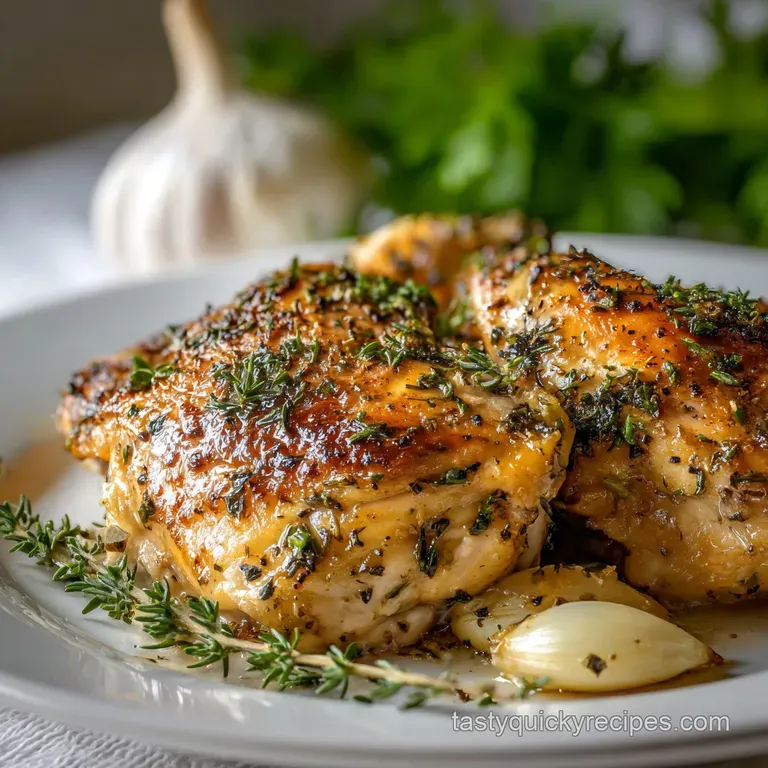
Right, let's crack on. The key here is organization. If you have everything prepped before you turn on the stove, you’ll avoid the stress of "juggling" too many tasks at once.
- Pat 1.15 kg chicken thighs completely dry with paper towels. Note: Moisture is the enemy of a good sear; dry skin equals crispy skin.
- Season the meat generously with 7 g salt and 5 g black pepper on all sides.
- Heat 15 ml olive oil in a skillet over medium high heat until the oil shimmers and barely smokes.
- Place chicken skin side down in the skillet. Press down slightly with a spatula.
- Sear for 4-5 minutes until the skin is deep golden and releases easily from the pan.
- Pour 120 ml bone broth into the slow cooker and drop in 8 smashed garlic cloves.
- Transfer chicken to the slow cooker, placing it skin side up on top of the garlic.
- Lay 3 sprigs rosemary and 5 sprigs thyme across the chicken, then top with 30 g cubed butter.
- Cover and cook on "Low" for 4 hours until the meat registers 74°C and is fork tender.
- Remove the chicken, strain the juices into a small pot, and simmer for 5 minutes until the sauce is velvety and slightly reduced.
Searing for Maximum Flavor
Don't rush the searing step. I once tried to skip this because I was in a hurry, and the results were mediocre at best. That golden crust provides a foundation of flavor that permeates the entire dish. If the skin is sticking to the pan, it's not ready to be flipped. Wait for it to release naturally.
Layering the Aromatics
Think of the slow cooker as a flavor chamber. By putting the garlic in the liquid and the herbs on top of the meat, you are attacking the chicken with flavor from both sides. The garlic infuses the steam from below, while the melting herb butter drizzles down from above.
Monitoring the Tenderness
Slow cookers can vary wildly in temperature. Around the 3.5 hour mark, give one of the thighs a gentle tug with a fork. If the meat offers no resistance and starts to pull away from the bone, you’re in the home stretch.
Don't let it go so long that the meat turns into a stringy mush we want tender, not disintegrated.
Troubleshooting Flavor and Texture Issues
Even with a foolproof plan, things can go sideways. The most common complaint with slow cooker chicken is the "boiled" texture. If your chicken looks pale or the sauce feels like flavored water, don't panic. These are usually easy fixes related to heat or liquid ratios.
Why Your Chicken Skin is Soggy
Slow cookers create a very humid environment. If you find the skin has lost its crunch during the 4 hours, it's simply because of the trapped steam. You can fix this in two minutes. Transfer the cooked thighs to a baking sheet and pop them under a broiler for 2-3 minutes.
Keep a close eye on them; they go from golden to burnt very fast.
Why Your Sauce is Too Thin
Sometimes the chicken releases more juice than expected, diluting your 120 ml of broth. If the sauce is too runny, whisk 5 g of cornstarch with 15 ml of cold water and stir it into the bubbling pan juices at the end. It will clear up and thicken into a beautiful glaze within seconds.
| Problem | Root Cause | Solution |
|---|---|---|
| Tough Meat | Undercooked collagen | Cook for another 30 mins on low; check temp. |
| Bitter Flavor | Burnt garlic | Ensure garlic is smashed, not minced; don't sear it. |
| Greasy Sauce | Too much skin fat | Skim the top with a spoon or use a fat separator. |
Common Mistakes Checklist
- ✓ Forgetting to pat the chicken dry before searing (results in steaming).
- ✓ Using "High" heat on the crockpot (can make the protein fibers tighten and toughen).
- ✓ Adding too much liquid (you only need enough to prevent scorching).
- ✓ Peeking under the lid (every time you open it, you lose 15-20 minutes of heat).
- ✓ Using old, dried herbs (they won't provide the same aromatic punch as fresh).
Scaling and Customizing Your Meal
If you're cooking for a larger crowd or just want leftovers for the week, scaling this recipe is straightforward. However, you can't just double everything and expect it to work the same way. The physics of the slow cooker change when you add more mass.
When doubling to 2.3 kg of chicken, you only need to increase the broth by about 20% (around 150 ml total). The chicken will release plenty of its own moisture. You should also stagger the chicken in the pot so steam can still circulate.
For a smaller batch (half recipe), use a smaller 3 quart crockpot to prevent the liquid from evaporating too quickly.
| Premium Ingredient | Budget Alternative | Flavor Impact | Savings |
|---|---|---|---|
| Fresh Thyme/Rosemary | Dried Poultry Seasoning | Less "bright", more earthy flavor | Save $3-5 |
| Bone Broth | Bouillon Cube + Water | Slightly saltier, less body | Save $2-4 |
| Organic Thighs | Conventional Thighs | Minimal impact if seasoned well | Save $5-8 |
If you want a different flavor profile, you can swap the rosemary for oregano and add a squeeze of lemon at the end. This gives it a punchy Mediterranean vibe that pairs beautifully with roasted potatoes or a simple Greek salad.
Myths Regarding Slow Cooking
One big misconception is that searing meat "seals in the juices." This simply isn't true. Moisture loss happens regardless of searing. The real reason we sear is for the Maillard reaction that complex flavor profile and the texture of the skin. Without it, the chicken tastes flat.
Another myth is that you must submerge the chicken in liquid. Because the crockpot is a sealed environment, very little moisture escapes. If you cover the chicken in broth, you're essentially poaching it, which results in a different, often less desirable texture for bone in thighs.
Proper Storage and Zero Waste
Store any leftover chicken in an airtight container in the fridge for up to 4 days. When reheating, I highly recommend using an air fryer or a toaster oven rather than a microwave. This helps revive the skin's crispiness. For freezing, remove the meat from the bone and store it in the sauce for up to 3 months.
This makes an incredible base for a quick pasta or a hearty chicken soup later on.
Don't throw away those bones! After everyone has finished at the table, toss the leftover bones and any herb stems back into the crockpot with a few liters of water and a splash of apple cider vinegar. Cook on low overnight to make a rich, "free" bone broth for your next meal.
Serving and Plating Your Dish
Presentation matters, especially when you've spent hours waiting for a meal. I love serving these thighs on a large wooden board or a shallow platter. The contrast of the golden brown skin against the bright green of the fresh 10 g of parsley is stunning.
Drizzle the reduced garlic herb sauce specifically around the chicken rather than over the top to keep the skin as crispy as possible.
If you’re looking for a complete menu, this pairs beautifully with a Weeknight Crockpot Dinners recipe for potatoes, or even just a simple crusty baguette to soak up all that liquid gold. It's an honest, flavorful meal that brings everyone to the table without you having to spend your entire evening over a hot stove. Enjoy the process, and don't forget to save those garlic cloves they turn into sweet, spreadable "butter" that is incredible on toast!

Recipe FAQs
What herb goes best with chicken thighs?
Rosemary and thyme are fantastic choices. Their robust, woodsy notes complement the richness of chicken thighs beautifully, enhancing depth without overpowering the meat. These herbs also stand up well to slow cooking, releasing their aromatic oils over time.
How long do you cook chicken thighs in a slow cooker?
Cook on low for about 4 hours. For bone-in, skin-on thighs, this timeframe allows the connective tissues to break down into gelatin, resulting in incredibly tender meat. Always check the internal temperature reaches 74°C for safety and tenderness.
Can you put raw garlic in a slow cooker?
Yes, you can put raw garlic in a slow cooker. Smashed or whole cloves will soften and sweeten over the cooking time, infusing the dish with a mellow, delicious garlic flavor. Avoid mincing it too finely, as it can sometimes burn if exposed directly to heat.
Do you need liquid in a slow cooker for chicken thighs?
A small amount of liquid is recommended, but not much. You only need about 120 ml of broth or water to create steam and prevent scorching on the bottom. Chicken thighs release their own juices, so too much added liquid can lead to a watery sauce and less flavorful meat.
How do I prevent soggy chicken skin in a slow cooker?
Sear the skin until golden brown before slow cooking. This initial crisping is crucial. After the slow cooker phase, you can also briefly broil the chicken skin under high heat for a few minutes to restore crispiness.
Can I use dried herbs instead of fresh in this recipe?
Yes, but use less. Dried herbs are more concentrated in flavor than fresh ones, so a general rule is to use about one-third the amount of dried herbs compared to fresh. Ensure you crush them well before adding them to the slow cooker.
What's the best way to thicken the sauce from the slow cooker?
Simmer the strained juices and optionally use a cornstarch slurry. After removing the chicken, you can reduce the accumulated juices on the stovetop for a few minutes. For a thicker consistency, whisk together 5g cornstarch with 15ml cold water and stir it into the simmering juices until thickened, much like you would for our Buffalo Chicken Dip: Ultra Creamy Party Favorite.
Crockpot Chicken Thigh Garlic
Ingredients:
Instructions:
Nutrition Facts:
| Calories | 353 kcal |
|---|---|
| Protein | 25.1 g |
| Fat | 24.6 g |
| Carbs | 1.6 g |
| Fiber | 0.3 g |
| Sugar | 0.2 g |
| Sodium | 592 mg |
