Delicious Creamy Southern Black Eyed Peas | Velvety Texture
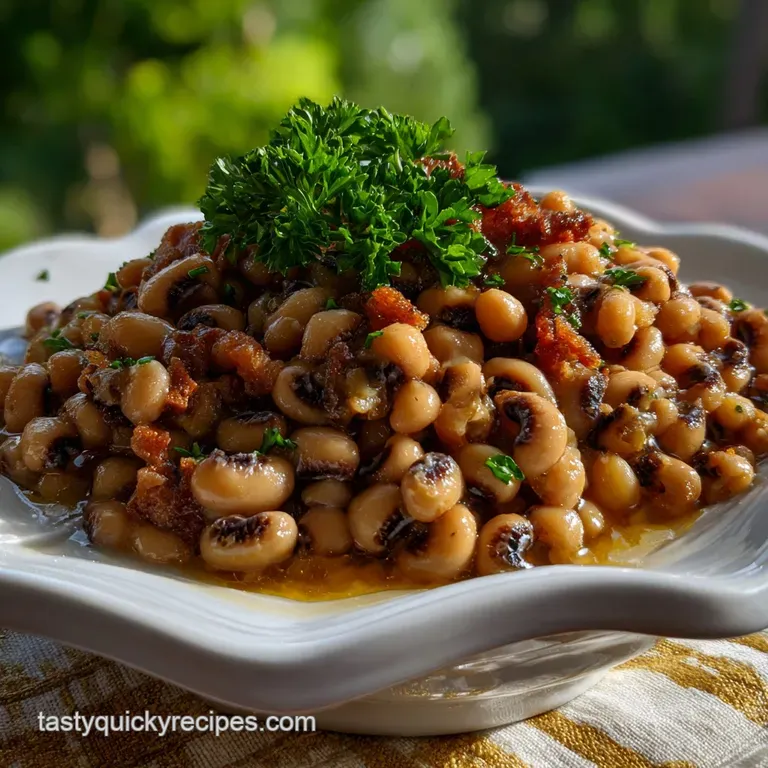
- Effort/Time: 15 minutes prep; 2 hours 30 mins active cooking.
- Flavor Hook: Smoked-salt umami balanced by the "Holy Trinity" of aromatics.
- Perfect for: New Year’s Day traditions or Sunday comfort-food feasts.
- The Science of Texture: Why This Delicious Creamy Southern Black Eyed Peas Recipe Works
- Culinary Architecture: Precision Specs for Your Delicious Creamy Southern Black Eyed Peas
- The Alchemy of Umami: Selecting Elements for Delicious Creamy Southern Black Eyed Peas
- The Precision Toolset: Professional Equipment for Success
- Mastering the Flow: Key Steps for Delicious Creamy Southern Black Eyed Peas
- Avoiding the "Crunch": Common Mistakes & Troubleshooting
- Flavor Architecture: Creative Variations & Substitutions
- Preservation and Renewal: Storage & Reheating
- Elevating the Feast: Serving Suggestions
- ⚗️ The Scaling Lab: Physics of Quantity
- Debunking Legume Lore: Common Myths
- 💡 Zero Waste Philosophy
- Recipe FAQs
- 📝 Recipe Card
The Soul of the South: Exploring the Delicious Creamy Southern Black Eyed Peas
There is nothing more disheartening than anticipating a bowl of comforting legumes only to bite into a pebble hard, flavorless disaster that cost you four hours of stove time. I’ve been there staring at a pot of gray, watery liquid where the bean skins have detached and floated to the surface like tiny, translucent ghosts while the centers remain chalky.
It’s a waste of a pound of quality legumes and, more importantly, a waste of your afternoon.
I spent years following "dump and simmer" recipes that resulted in uneven textures before I realized the physics of legume hydration. I once ruined a massive batch for a family gathering because I salted the soaking water too early, creating a tough outer skin that no amount of boiling could penetrate.
That failure taught me that patience and chemical timing are more important than the heat level of your stove.
The secret to this Delicious Creamy Southern Black Eyed Peas recipe isn't a secret ingredient; it's the mastery of starch gelatinization and collagen hydrolysis. By slowly simmering the 1 lb smoked ham hocks, we extract gelatin that provides a luxurious mouthfeel, while the 1 lb dry black eyed peas release just enough internal starch to emulsify the cooking liquid into a thick, mahogany colored pot liquor.
The result is a texture so velvety it coats the back of a spoon, punctuated by the savory snap of 4 oz thick cut bacon.
The Science of Texture: Why This Delicious Creamy Southern Black Eyed Peas Recipe Works
- Starch Gelatinization: As the peas reach 140°F (60°C), starch granules absorb liquid and swell, eventually bursting to thicken the chicken stock naturally.
- Collagen Hydrolysis: Simmering the ham hocks for 2 hours 30 mins converts tough connective tissue into liquid gelatin, providing a "lip-smacking" viscosity.
- Osmotic Balance: Waiting to add final salt ensures the bean skins remain permeable, allowing the interior to soften completely before the seasoning locks the structure.
- Aromatic Synergy: Sautéing the green bell pepper, onion, and celery (the "Holy Trinity") creates a flavor base through the Maillard reaction, developing complex sugars that survive the long simmer.
Culinary Architecture: Precision Specs for Your Delicious Creamy Southern Black Eyed Peas
| Metric | Value | Technical Note |
|---|---|---|
| Yield | 8 servings | Based on 1/2 cup cooked peas plus pot liquor per person. |
| Prep Time | 15 minutes | Includes "sorting" to remove stones or shriveled legumes. |
| Cook Time | 2 hours 30 mins | Necessary for the ham hock to reach "fall off-the-bone" tenderness. |
| Ideal Pot | 6 quart Dutch Oven | Enameled cast iron provides the most consistent thermal mass. |
| Service Temp | 185°F (85°C) | The sweet spot where the broth is most viscous and flavors are vibrant. |
The Alchemy of Umami: Selecting Elements for Delicious Creamy Southern Black Eyed Peas
Achieving a high level Delicious Creamy Southern Black Eyed Peas requires more than just following a list; it requires understanding the "why" behind each component.
- 1 lb Dry Black eyed Peas: Why this? Dry beans offer superior starch release compared to canned versions, essential for a thick broth.
- 1 lb Smoked Ham Hocks: Why this? The high bone-to-meat ratio provides the collagen necessary for a silky, non-watery texture.
- 4 oz Thick cut Bacon (diced): Why this? Rendered animal fat carries fat-soluble flavor compounds from the Cajun seasoning more effectively than oil.
- 6 cups Chicken Stock: Why this? Using stock instead of water increases the free glutamate count for deeper savory notes.
- 1 tbsp Cajun Seasoning: Why this? The blend of cayenne and paprika provides a gentle heat that cuts through the heavy fats.
- 1 tsp Liquid Smoke: Why this? Concentrated phenols reinforce the wood fired aroma of the ham hocks.
- 4 cloves Garlic (minced): Pungent aromatics that mellow into sweetness during the 2 hour 30 min simmer.
- 1 large Yellow Onion (finely diced): Provides the sulfurous foundation for the flavor profile.
- 2 stalks Celery & 1 Green Bell Pepper: Completes the aromatic trinity required for authentic Southern depth.
Ingredient Chemistry Breakdown
| Ingredient | Chemical/Physical Role (Science) | The Pro Secret (Why This Matters) |
|---|---|---|
| Ham Hocks | Collagen to gelatin conversion via long term thermal exposure | Creates the signature "velvety" mouthfeel that water alone cannot achieve |
| Black Eyed Peas | Starch granule swelling and amylose leaching | Naturally thickens the cooking liquid without needing a flour based roux |
| Yellow Onion | Pyrolysis of sugars and sulfur compounds during sautéing | Adds a base note of sweetness that balances the salty, smoky meat elements |
| Dried Bay Leaves | Release of eugenol and floral terpenes during simmering | Cuts through the "heaviness" of the animal fats with a subtle herbal lift |
The Precision Toolset: Professional Equipment for Success
- Lodge 6 quart Enameled Cast Iron Dutch Oven: The heavy lid and thick walls ensure even heat distribution, preventing the bottom of your Southern Black Eyed Peas Recipe from scorching.
- Stainless Steel Fine Mesh Strainer: Essential for the initial rinse and sorting to ensure no field debris or stones end up in the finished dish.
- Wooden Flat Edge Spatula: Best for scraping the "fond" (browned bits) off the bottom of the pot after rendering the bacon.
- Digital Instant Read Thermometer: Used to ensure the ham hock reaches 190°F+ internally, indicating the connective tissue has fully broken down.
Mastering the Flow: Key Steps for Delicious Creamy Southern Black Eyed Peas
- Sort and rinse the 1 lb black eyed peas in a fine mesh strainer. Note: Removes field dust and identifies "stone" mimics.
- Sauté diced bacon in the Lodge Dutch oven over medium heat for 6 minutes until fat renders and bits turn mahogany brown.
- Add onion, celery, and bell pepper to the bacon fat. Note: Starts the Maillard reaction in the aromatics.
- Sauté aromatics for 8 minutes until onion edges turn translucent and the "raw" pungent smell shifts to sweet.
- Stir in garlic, Cajun seasoning, and thyme for 1 minute until spices become intensely fragrant.
- Deglaze the pot with 6 cups chicken stock and 2 cups water, scraping the bottom vigorously. Note: Incorporates the concentrated savory fond into the liquid.
- Submerge ham hocks, peas, and bay leaves into the liquid and add the 1 tsp liquid smoke.
- Bring to a boil, then immediately reduce to a low simmer. Note: Rapid boiling causes the pea skins to rupture prematurely.
- Cover and simmer for 2 hours 15 minutes until peas are tender but not mushy and the liquid has thickened to a creamy consistency.
- Remove ham hocks, shred the meat back into the pot, and season with Diamond Crystal Kosher salt and pepper until the flavors pop and the smokiness is balanced.
Chef's Note: If the broth isn't as thick as you like, take one ladle of the peas, mash them into a paste against the side of the pot, and stir them back in. This releases instant starch for an ultra velvety finish. This technique is similar to how we manage body in our Blackeyed Peas recipe.
Avoiding the "Crunch": Common Mistakes & Troubleshooting
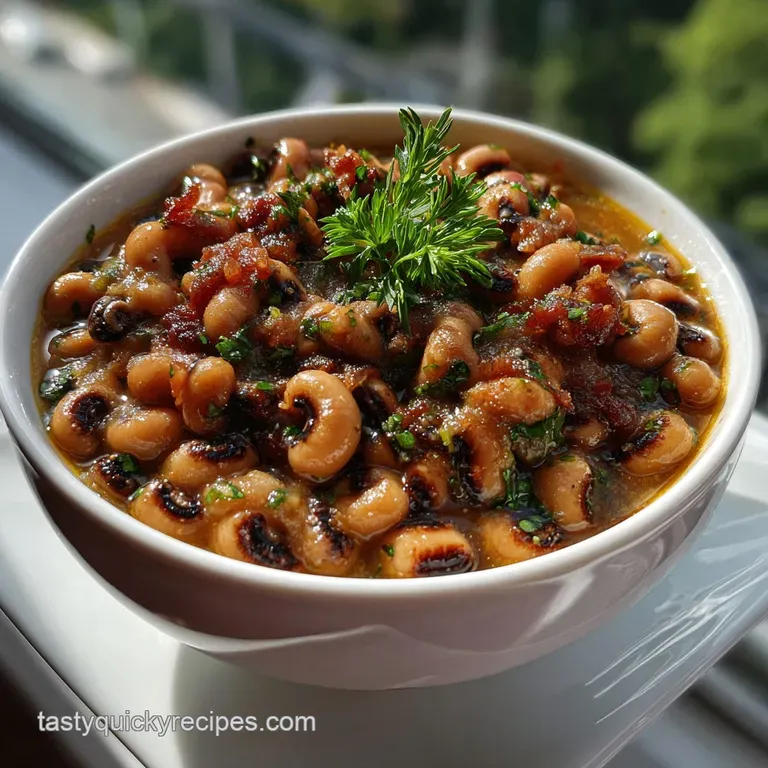
Why Your Black Eyed Peas Are Still Hard
If you find your legumes are still firm after two hours, you likely have "hard water" or old beans. High mineral content in water can react with the bean skins, creating a barrier that prevents hydration.
| Problem | Root Cause | The Fix | Pro Protocol |
|---|---|---|---|
| Crunchy Peas | Acid or salt added too early in the cook cycle | Simmer longer; add a pinch of baking soda to soften the water | Never salt until the final 30 minutes of cooking |
| Thin/Watery Broth | Insufficient starch release or too much liquid | Mash a 1/2 cup of peas and stir back in; simmer uncovered | Use a wider pot to increase evaporation surface area |
| Separated Skins | Excessive heat (rolling boil) vs. gentle simmer | Reduce heat immediately; add a splash of cold stock to drop temp | Maintain a "lazy bubble" throughout the entire 2.5 hours |
Flavor Architecture: Creative Variations & Substitutions
When modifying this Southern Black Eyed Peas Recipe, remember that fat and smoke are the pillars of the dish. Changing them will alter the "heaviness" of the final mouthfeel.
| Original Ingredient | Substitute | Why It Works |
|---|---|---|
| Smoked Ham Hocks | Smoked Turkey Wings | Lower fat but identical smoke profile. Note: Result will be slightly less viscous. |
| Bacon Fat | Duck Fat or Schmaltz | High smoke point and intense animal umami. |
| Chicken Stock | Vegetable Stock + Soy Sauce | Soy sauce provides the missing glutamates found in meat based stocks. |
| Cajun Seasoning | Smoked Paprika + Cumin | Provides the "red" flavor profile without the cayenne heat. |
If you enjoy the smoky, hearty nature of this dish but want something with a bit more variety in the legume department, you might find our Hoppin John Recipe to be the perfect next step in your Southern culinary journey.
Preservation and Renewal: Storage & Reheating
Delicious Creamy Southern Black Eyed Peas are actually better on day two because of Retrogradation. As the starch cools, it realigns into a more structured, creamy gel, allowing the spices to penetrate the center of the legumes.
- Fridge: Store in an airtight container for up to 4 days. The liquid will likely turn into a thick "jelly" due to the gelatin this is a sign of quality!
- Freezing: These freeze beautifully for up to 6 months. Leave 1 inch of headspace in the container as the liquid expands when frozen.
- Reheating: Reheat on the stovetop over low heat. You must add a splash of water or stock (about 2 tablespoons per cup) to loosen the gelatinized broth as it warms.
Elevating the Feast: Serving Suggestions
The "Traditional Pairing" for Delicious Creamy Southern Black Eyed Peas always involves a textural contrast. Because the peas are velvety and soft, you need something with a "shatter" or a "crunch."
- Skillet Cornbread: The gritty, buttery crumb of cornbread is the ultimate vessel for soaking up the pot liquor.
- Collard Greens: The bitter, acidic bite of vinegar drenched greens cuts through the richness of the bacon and ham hocks.
- White Rice: Serve the peas over a bed of fluffy long grain rice to turn it into a complete meal.
⚗️ The Scaling Lab: Physics of Quantity
When you decide to double this Delicious Creamy Southern Black Eyed Peas recipe for a large gathering, the physics of your kitchen changes:
- The Evaporation Paradox: If you double the ingredients but use the same diameter pot, your surface area for evaporation stays the same. Reduce the total added liquid by 15% (use 10 cups of stock instead of 12) to avoid a watery result.
- Flavor Saturation: Spices like Cajun seasoning and liquid smoke do not scale linearly. Use 1.5x the amount for a 2x batch, then taste and adjust at the end. You can easily over smoke a large pot.
- Thermal Mass: Doubling the bacon and ham hocks in one pan will drop the surface temperature drastically. Sauté the bacon in two batches to ensure you get a proper sear rather than steaming the meat in its own juices.
- Carry Over Heat: A 12 quart pot of peas holds massive thermal energy. It will continue cooking for 15 20 minutes after you turn off the burner. Pull the pot off the heat when the peas are just tender to prevent them from turning into mush during the rest.
Debunking Legume Lore: Common Myths
- Myth: You must soak black eyed peas overnight.
- Truth: Unlike kidney beans, black eyed peas are thin skinned and relatively small. A 2 hour 30 min simmer is sufficient for hydration without a pre-soak.
- Myth: Adding salt at the beginning makes beans tough.
- Truth: While excessive salt can slow softening, a small amount actually stabilizes the pectin in the skins. However, for this recipe, the ham hocks provide enough initial salt; adding more too early is the real danger.
💡 Zero Waste Philosophy
Don't discard those Ham Hock Bones once you've shredded the meat. Transform: Simmer them again with vegetable scraps for 4 hours to make a "remouillage" (second stock).
Science: Even after the main cook, the bones contain deep marrow flavor and residual calcium that enriches a secondary broth.
Similarly, if you have leftover Bacon Fat from the rendering stage, store it in a glass jar in the fridge. Transform: Use it to sauté greens or fry eggs the next morning.
Science: The smoke point of bacon fat (approx 325°F) is ideal for over medium heat cooking, and it contains fat-soluble smoky compounds that elevate simple dishes.
This Delicious Creamy Southern Black Eyed Peas recipe is a testament to the fact that great cooking isn't about expensive ingredients it's about understanding how heat and time interact with simple pantry staples to create something truly soul satisfying. Let's crack on!

Recipe FAQs
Can I skip soaking the dry peas entirely?
Yes, soaking is not mandatory. This recipe’s 2.5-hour simmer is long enough for full hydration due to the thin skin of black eyed peas. The key is maintaining a low, gentle simmer throughout the entire cooking duration.
What replaces the creaminess if I omit the ham hocks?
Use full fat coconut milk for richness. Omission removes necessary gelatin derived from collagen hydrolysis, which provides natural viscosity. You must supplement this mouthfeel using a different method, such as adding a tablespoon of cornstarch slurry at the very end.
Why is my broth thin and watery after cooking?
Excess liquid or rapid boiling disrupted starch release. High heat causes the starch granules within the peas to rupture unevenly before they fully hydrate, leading to a watery, grainy texture instead of a smooth emulsion.
- Reduce heat to a gentle simmer
- Mash 1/2 cup of cooked peas into the broth
- Ensure peas were rinsed to remove surface starch
Should I use smoked paprika instead of Cajun seasoning?
Smoked paprika offers depth without heat. Cajun seasoning provides heat (from cayenne) and savoriness, whereas smoked paprika focuses purely on the wood smoke essence. If using paprika, substitute the missing heat with a pinch of dried chipotle powder.
Is using canned peas faster and acceptable?
No, canned peas offer significantly less starch for thickening. Canned legumes have already released most of their starch into the canning liquid, meaning you will achieve a thin, soup like consistency rather than the desired creamy pot liquor.
How does adding salt early affect the peas?
Myth: Adding salt before cooking guarantees tough skins. Reality: Excess sodium interferes with the pectin’s ability to break down, causing the outer skin to harden and preventing internal softening. Wait until the last 30 minutes to season heavily.
Can I substitute chicken stock with water?
Chicken stock provides vital glutamates for umami. Using plain water dilutes the flavor profile significantly, requiring much more seasoning to compensate for the lost savory depth. This flavor layering principle is also key when making savory sauces, like those in the Pork Chops Supreme Recipe: Creamy Oven Bake.
Creamy Southern Black Eyed Peas
Ingredients:
Instructions:
Nutrition Facts:
| Calories | 349 kcal |
|---|---|
| Protein | 22g |
| Fat | 12g |
| Carbs | 39g |
| Fiber | 7g |
| Sugar | 4g |
| Sodium | 980mg |
