Classic Thanksgiving Recipe for Roasted Turkey
- Time: Active 45 minutes, Passive 3 hours, Total 3 hours 45 mins
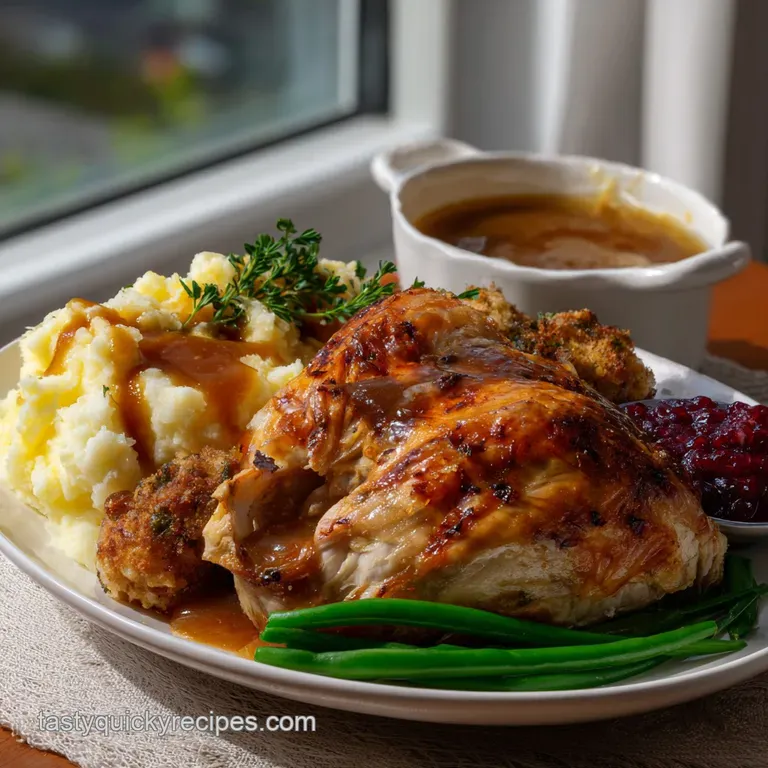
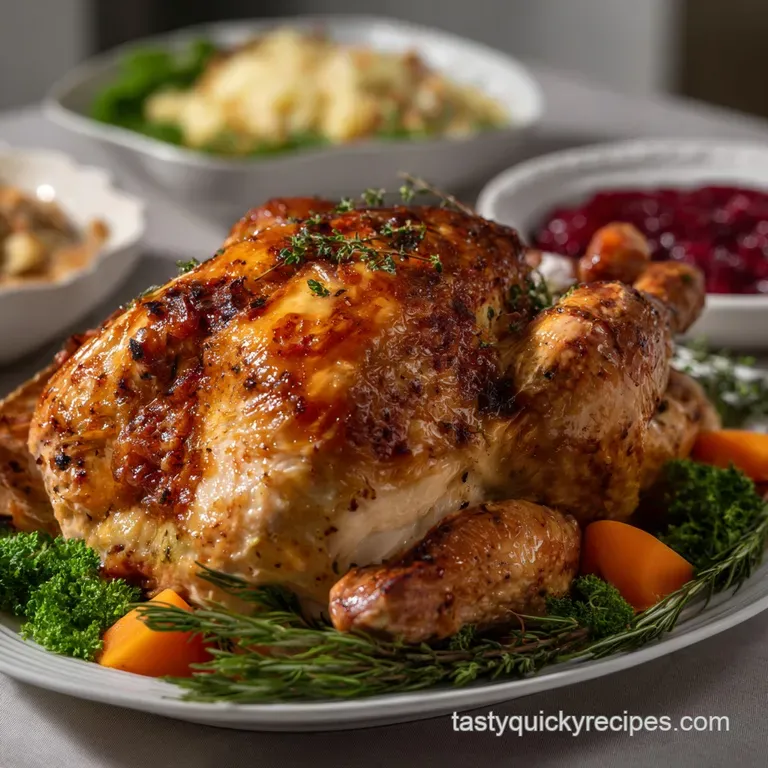
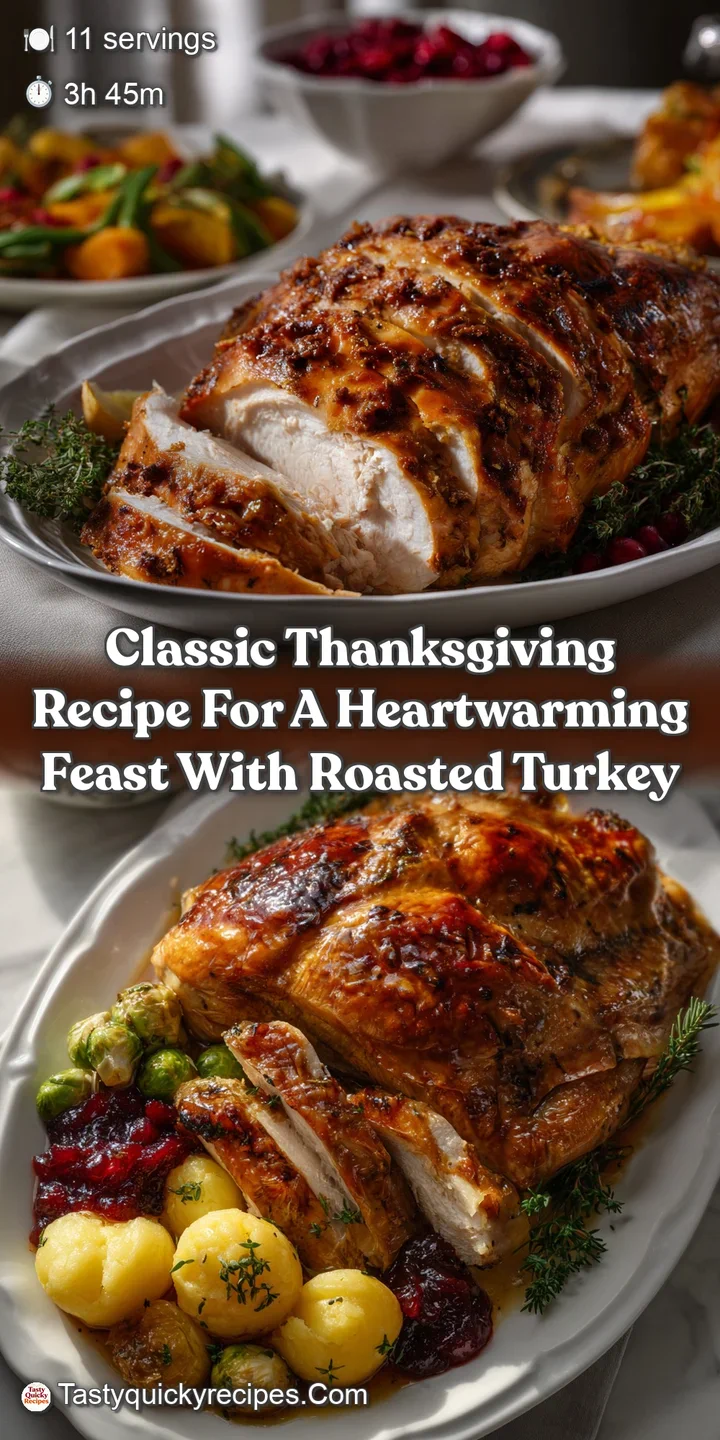
- Flavor/Texture Hook: Mahogany-colored, crackling skin with a velvety, herb-infused finish.
- Perfect for: A central holiday centerpiece for family gatherings and festive crowds.
- Mastering the Classic Thanksgiving Recipe for a Heartwarming Feast with Roasted Turkey
- Essential Methods for Perfectly Roasted Turkey
- The Science of Why it Works
- Ingredient Science Matrix
- Components for a Flavorful Thanksgiving Main
- Required Tools for Holiday Cooking Victory
- Executing the Perfect Thanksgiving Roast Strategy
- Solving Common Roasted Turkey Challenges
- Flavor Variations for Your Holiday Bird
- Batch Size Guidelines
- Kitchen Folklore Truths
- Storing Leftovers and Reducing Food Waste
- Perfect Pairings for Roasted Turkey Dinners
- Effective Timeline for Thanksgiving Success
- Common Questions
- 📝 Recipe Card
Mastering the Classic Thanksgiving Recipe for a Heartwarming Feast with Roasted Turkey
The scent of roasting poultry and aromatic herbs hitting a hot pan is the universal signal that the holidays have arrived. Juggling multiple side dishes can make the main event feel daunting, but a systematic approach ensures your bird is the star of the table.
This post shares a Classic Thanksgiving Recipe for a Heartwarming Feast with Roasted Turkey, perfect for a heartwarming feast featuring roasted turkey.
We have all experienced the tragedy of a dry, flavorless bird that requires a lake of gravy to swallow. By understanding how heat interacts with the protein structure of a 13 lb whole turkey, we can move from hopeful guessing to scientific precision.
This method prioritizes moisture retention and skin texture above all else, making this the ultimate guide for your Classic Thanksgiving Recipe for a Heartwarming Feast with Roasted Turkey.
Imagine pulling a bird from the oven that looks like a mahogany sculpture, with skin that shatters like glass under the knife. The meat beneath remains incredibly juicy, infused with the fragrance of fresh sage, rosemary, and thyme.
This is the flavorful result of a fast, efficient prep plan designed for the busy home cook employing this tried and true Classic Thanksgiving Recipe for a Heartwarming Feast with Roasted Turkey.
Essential Methods for Perfectly Roasted Turkey
Why Dry Brining Works
Applying 3 tbsp kosher salt directly to the skin 24 hours before cooking utilizes osmosis to pull moisture into the meat. This process seasons the bird deeply while simultaneously drying the skin for a superior Maillard reaction (browning).
Unlike wet brining, it doesn't dilute the natural turkey flavor with excess water.
Secrets of Herb Butter
Tucking 1 cup unsalted butter mixed with fresh herbs directly under the skin creates a self basting mechanism. As the fat melts, it fries the underside of the skin while the solids in the butter contribute to a deep, nutty flavor profile.
This barrier also protects the lean breast meat from the direct, aggressive heat of the oven.
The Importance of Resting
Pulling the bird at 160°F allows for carryover cooking (residual heat raising internal temp) to reach the safe 165°F mark. Resting for at least 30 45 minutes allows the muscle fibers to relax and reabsorb the juices.
If you carve too early, those precious liquids will end up on the cutting board rather than in the meat.
| Feature | Stovetop Searing (Partial) | Oven Roasting (Full) |
|---|---|---|
| Heat Distribution | Direct bottom-up heat | Indirect 360 degree convection |
| Skin Texture | Uneven browning | Uniformly crispy and taut |
| Juiciness | Higher risk of scorched exterior | Gradual internal temperature rise |
The Science of Why it Works
Salt restructures the protein filaments (actin and myosin), allowing the muscle cells to hold onto more water during the roasting process. The high initial heat triggers the Maillard reaction, where amino acids and sugars rearrange to create the characteristic savory aroma and mahogany color.
Ingredient Science Matrix
| Ingredient | Chemical/Physical Role (Science) | The Pro Secret (Why This Matters) |
|---|---|---|
| 13 lb Whole Turkey | Collagen hydrolysis via slow heat | Provides the structural gelatin for a silky mouthfeel |
| Unsalted Butter | Lipid based heat conduction | Acts as a thermal buffer to prevent protein denaturation |
| Fresh Herbs | Essential oil volatilization | Sage and rosemary oils are heat stable, providing lasting aroma |
| Lemon Zest | Citric acid enzymatic action | Brightens heavy fats and helps tenderize surface tissues |
Components for a Flavorful Thanksgiving Main
- 13 lb whole turkey: Why this? Medium size ensures even heat penetration without drying the exterior.
- 3 tbsp Diamond Crystal Kosher Salt: Why this? Large flakes allow for even coverage without over salting.
- 1 cup unsalted butter: Why this? High fat content ensures a crispy skin and rich baste.
- 1 tbsp smoked paprika: Adds a deep color and subtle wood fired note.
- 1 tsp cracked black pepper: Provides a sharp, pungent bite to balance the fat.
- 4 cloves garlic, grated: Releases allicin for a more intense savory profile.
- 1 large yellow onion, quartered: Provides steam and aromatics from the cavity.
- 1 bunch fresh poultry herbs: Sage, rosemary, and thyme for classic fragrance.
Substitution Table
| Original Ingredient | Substitute | Why It Works |
|---|---|---|
| Unsalted Butter (1 cup) | Duck Fat (1 cup) | Higher smoke point and incredible richness adds savory depth. |
| Kosher Salt (3 tbsp) | Sea Salt (2 tbsp) | Finer grain means more salt per volume; reduce quantity to avoid over seasoning. |
| Poultry Herbs (Fresh) | Dried Herbs (1 tbsp) | Concentrated flavor. Note: Lacks the bright, floral notes of fresh. |
Required Tools for Holiday Cooking Victory
To achieve a flavorful result while juggling multiple tasks, use a heavy duty All-Clad Roasting Pan with a rack to allow air circulation under the bird. A Thermapen One Digital Thermometer is essential for precision, as pop-up timers are notoriously inaccurate and often lead to overcooking.
For the herb butter, a Microplane Zester is the best tool for grating the garlic and lemon into a fine paste that integrates seamlessly into the fat.
Executing the Perfect Thanksgiving Roast Strategy
Prepping the Bird
- Remove the turkey from packaging. Note: Keeps the workspace clean.
- Pat the skin bone dry using paper towels. Note: Moisture is the enemy of crispy skin.
- Apply 3 tbsp kosher salt across the entire surface and inside the cavity. Note: Starts the osmosis process for seasoning.
Applying the Compound Butter
- Mix 1 cup softened butter with minced herbs, garlic, and lemon zest in a small bowl. Note: Creates a concentrated flavor paste.
- Loosen the skin over the breast meat using your fingers. Note: Creates a pocket for the fat.
- Stuff two-thirds of the herb butter under the skin. Note: Protects the lean meat from drying out.
- Rub the remaining butter over the outside of the skin. Note: Encourages uniform browning.
Roasting to Golden Perfection
- Place the onion, halved garlic head, and lemon halves inside the cavity. Note: Aromatics steam the meat from the inside.
- Roast at 325°F for 3 hours until the thickest part of the thigh reaches 160°F and the skin is a deep mahogany color.
- Rest the bird for 45 minutes until the internal temperature carries over to 165°F and the juices have redistributed.
Chef's Tip: Freeze your herb butter for 10 minutes before applying it; it becomes easier to handle and won't melt off the bird immediately in the hot oven.
Solving Common Roasted Turkey Challenges
Why Your Turkey Skin is Rubbery
When the oven temperature is too low or the skin is damp, the fat doesn't render effectively, leaving the skin chewy. High surface moisture prevents the temperature from rising above 212°F, which is necessary for the Maillard reaction.
This challenge is often the difference between a good roast and achieving the ideal Classic Thanksgiving Recipe for a Heartwarming Feast with Roasted Turkey.
| Problem | Root Cause | The Fix | Pro Protocol |
|---|---|---|---|
| Pale Skin | Low temperature | Increase heat to 425°F for last 20 mins | Brush with extra butter before blast |
| Dry Breast | Overcooking | Use a probe thermometer | Pull at 160°F exactly |
| Raw Joints | Uneven heating | Legs were tied too tightly | Cut the twine halfway through |
Flavor Variations for Your Holiday Bird
- Citrus Rubbed: Swap the poultry herbs for 2 tbsp orange zest and 1 tsp ground ginger for a bright, acidic profile.
- Smoky Chipolte: Mix 1 tbsp chipotle powder into the butter for a spicy, southwestern twist.
- Cider Glazed: Brush the bird with reduced apple cider during the last 30 minutes of roasting for a tacky, sweet finish.
In some regions, this bird is served alongside a Traditional New Year recipe to ensure prosperity for the coming year. While the pan drippings are excellent, an Au Jus Recipe adds a deep savory note that complements the poultry without the heaviness of flour based gravy.
Batch Size Guidelines
Scaling Down (1/2 Bird): If roasting a turkey breast or half bird, reduce the herb butter to 1/2 cup. Check temperature 40% earlier than the full bird time.
Scaling Up (20lb+ Bird):Flavor (Salt/Spices): Scale seasonings to 1.5x, not a full 2x, to avoid overwhelming the meat. Cooking: Reduce temperature by 25°F to ensure the center cooks before the exterior burns (Square Cube Law).
Kitchen Folklore Truths
Myth: You must baste every 30 minutes for a juicy bird. Truth: Opening the oven door drops the temperature significantly, extending cook time and drying out the skin. The butter under the skin handles the basting for you.
Myth: The pop-up timer is the most accurate way to check doneness. Truth: These are set to 180°F, which is far beyond the point of dryness. Use a digital probe for a flavorful result.
Storing Leftovers and Reducing Food Waste
Storage: Store sliced meat in an airtight container in the fridge for up to 4 days or freeze for 3 months. Zero Waste: Don't discard the carcass; simmer it with onion scraps and herb stems to create a gelatin rich stock. Transform: Leftovers are best served on a Sourdough Hoagie Roll Recipe for the ultimate sandwich. Science: The collagen in the bones breaks down into gelatin after 4 hours of simmering, creating a superior mouthfeel for future soups.
Perfect Pairings for Roasted Turkey Dinners
This roast is a fast, flavorful centerpiece that requires equally impressive sides. Consider serving with a Texas Roadhouse Rolls recipe to soak up the herb infused juices. A bright Lemon Pepper Sauce Recipe also works wonders as a zesty alternative to traditional gravy, perfectly complementing the flavors established in our Classic Thanksgiving Recipe for a Heartwarming Feast with Roasted Turkey.
Decision Shortcut
- If you want extra crispy skin, dry-brine in the fridge uncovered for 24 hours.
- If you want maximum juiciness, inject 1/2 cup of the herb butter directly into the breast meat.
- If you want faster cooking, spatchcock (butterfly) the bird by removing the backbone.
Effective Timeline for Thanksgiving Success
T-Minus 24 Hours: The Brine
Pat the 13 lb turkey dry and apply the 3 tbsp kosher salt. Leave it uncovered in the refrigerator on a rack. This ensures the skin is perfectly dehydrated for the oven.
T-Minus 4 Hours: The Preparation
Remove the turkey from the fridge to take the chill off. Prepare the herb butter and apply it under and over the skin. Stuff the cavity with the onion, garlic, and lemon.
T-Minus 3 Hours: The Roast
Slide the bird into the 325°F oven. This is when the kitchen fills with that quintessential festive aroma. Monitor the internal temperature closely after the 2.5 hour mark.
Precision Checkpoints
- Weight: Ensure the bird is exactly 13 lb for the 3 hour timing to remain accurate.
- Temperature: Pull the bird when the probe hits 160°F in the thickest part of the breast.
- Rest Time: Allow exactly 45 minutes of resting before the first slice is made.
Common Questions
What is the ideal internal temperature to remove the turkey from the oven?
160°F in the thigh, followed by a rest. Carryover cooking raises the temperature to the safe 165°F mark during resting. Resting allows muscle fibers to reabsorb juices, ensuring a succulent result.
Can I substitute Kosher salt with table salt for the dry brine?
No. Table salt has much smaller, denser crystals. Using the same volume of table salt will result in an inedibly salty bird due to density differences. Use 2 tablespoons of table salt for every 3 tablespoons of Kosher salt called for.
Why does my turkey skin always turn out pale and rubbery?
Surface moisture prevents the Maillard reaction from achieving crispness. Water on the skin must evaporate before the temperature can exceed 212°F, which is needed for browning.
- Dry the skin aggressively with paper towels
- Dry-brine uncovered for 24 hours
- Ensure the oven rack is centered for airflow
Is using compound butter under the skin better than pouring gravy over the top?
Compound butter applied internally yields superior flavor and texture. The butter melts slowly, self basting the meat while simultaneously crisping the skin from underneath. Pouring gravy on afterward only steams the exterior surface.
Do I really need to let the roasted turkey rest for 45 minutes?
Yes; resting is mandatory for juice redistribution. During cooking, high heat forces moisture to the muscle fiber centers; resting allows the fibers to relax and reabsorb those liquids. If you skip this step, the juices will flood your cutting board, not your plate.
Myth: Tying the legs tightly improves even cooking.
Myth: Tying the legs tightly improves even cooking. Reality: Tightly trussing can restrict airflow and prevent heat from reaching the innermost joints efficiently. This often leads to the breast overcooking before the thighs are safely done.
What is the best way to ensure the cavity has flavor while roasting?
Stuff the cavity only with aromatics, not bread stuffing. Aromatics like onion quarters and lemon halves create steam, adding moisture from the inside out, which complements the technique used in our Abgoosht: Traditional Persian Lamb Stew Recipe (Dizi Style). Stuffing a bird with bread significantly slows down the safe internal temperature rise.
Classic Roasted Turkey Feast
Ingredients:
Instructions:
Nutrition Facts:
| Calories | 645 calories |
|---|---|
| Protein | 71g |
| Fat | 38g |
| Carbs | 3g |
| Fiber | 1g |
| Sugar | 1g |
| Sodium | 890mg |
