Carnivore Thanksgiving Meat Roast
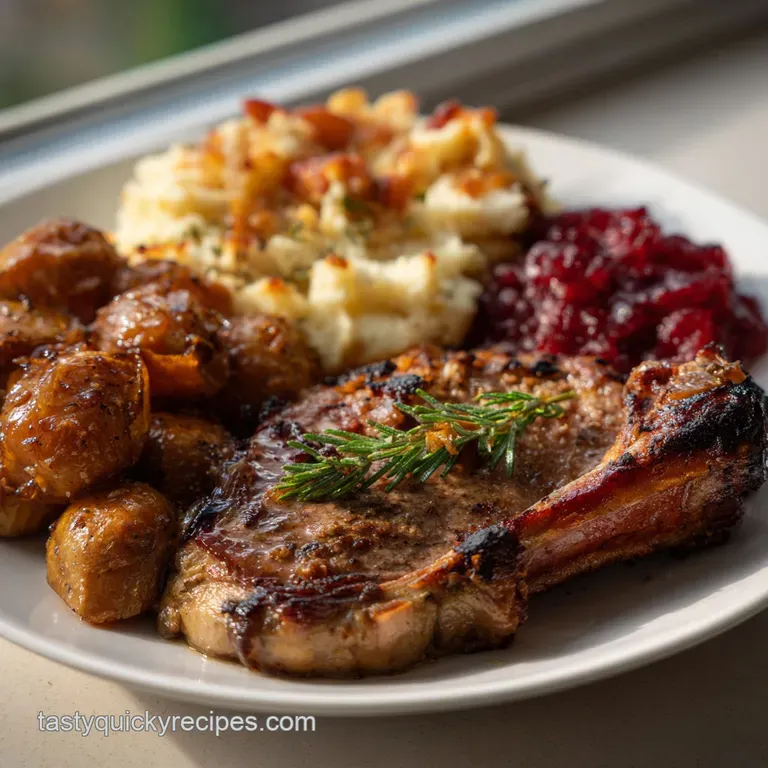
- Time: Active 30 minutes, Passive 1 hour 15 mins, Total 1 hour 45 mins
- Flavor/Texture Hook: Mahogany-colored crust with a velvety, edge-to-edge pink interior
- Perfect for: High-protein holiday gatherings and busy families juggling multiple oven dishes
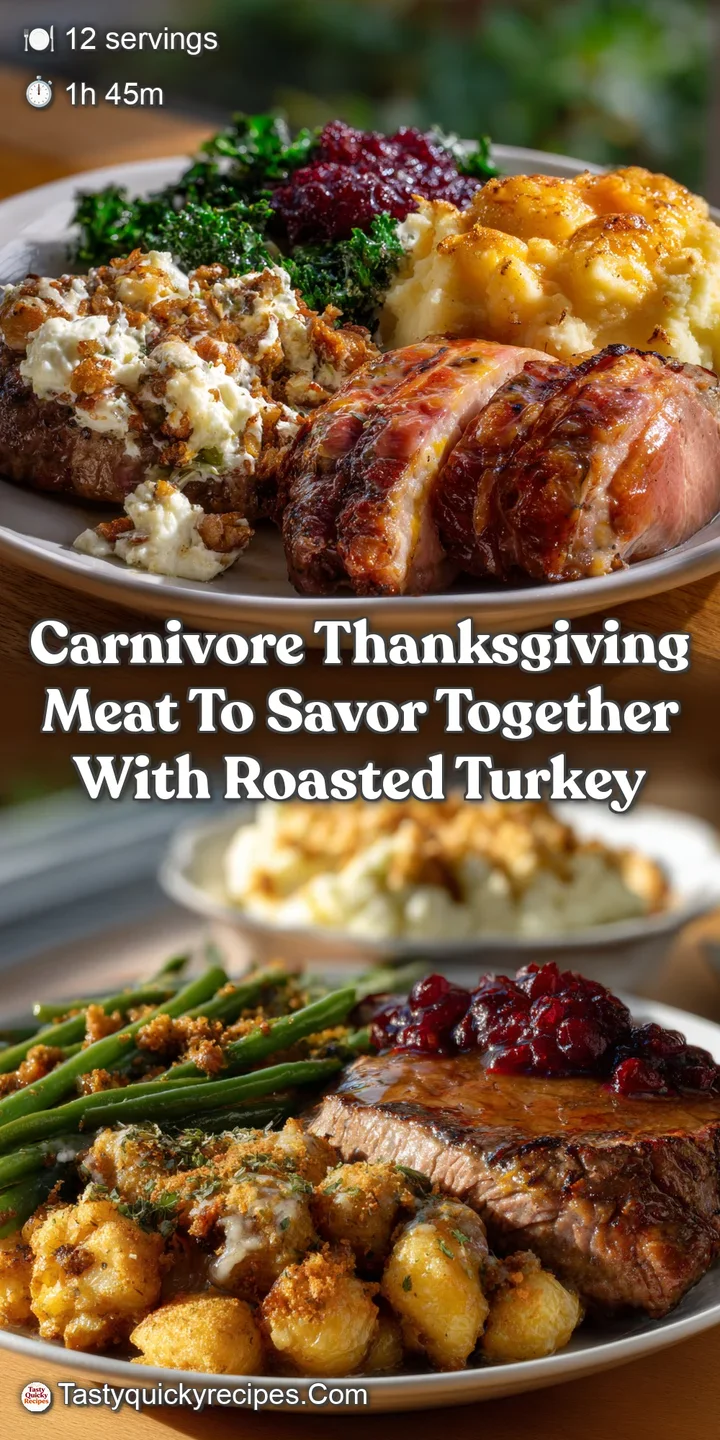
- Carnivore Thanksgiving Meat to Savor Together with Roasted Turkey
- Thermal Science for Perfect Roasts
- Chemical Function Table
- Essential Components and Substitutions
- Tools for Minimal Cleanup
- Precision Roasting Step by Step
- Correcting Common Cooking Errors
- Size Adaptation Protocol
- Protein Preparation Realities
- Storage and Waste Prevention
- Presentation and Pairing Advice
- Scientific Protein Clarifications
- Recipe FAQs
- 📝 Recipe Card
Carnivore Thanksgiving Meat to Savor Together with Roasted Turkey
Hosting a crowd means juggling oven space while trying to keep everyone satisfied. Discover a delicious Carnivore Thanksgiving meat option to enjoy alongside your roasted turkey. When the bird is resting, this high fat, high protein trio takes center stage, offering a rich contrast to the leaner turkey breast.
We focus on fast, flavorful execution so you spend less time hovering over the stove and more time at the table.
This recipe for Carnivore Thanksgiving Meat to Savor Together with Roasted Turkey is designed for the modern carnivore who appreciates the physics of a good roast. By staggering the entry of the pork, beef, and lamb, we ensure every cut hits its ideal internal temperature simultaneously.
You get the crunch of the pork fat cap, the buttery silk of the tenderloin, and the intense savor of the lamb. It is a bold, flavorful addition to any festive spread.
Forget the complicated marinades or corporate style catering platters. This is about raw quality and precision heat. The aroma of sizzling beef tallow and fresh rosemary will draw everyone to the kitchen long before the timer dings. Let's get these proteins prepped and into the heat.
The success of this Carnivore Thanksgiving Meat to Savor Together with Roasted Turkey relies heavily on thermal control.
Thermal Science for Perfect Roasts
- Maillard Reaction Optimization: High initial surface heat triggers carbon nitrogen bonding, creating a mahogany colored crust without overcooking the center.
- Thermal Staggering: Sequential oven entry accounts for the varying densities and thicknesses of the pork, beef, and lamb.
- Connective Tissue Softening: Maintaining steady heat allows collagen in the lamb to undergo hydrolysis, turning tough fibers into silky gelatin.
- Osmotic Brining: Coarse Maldon salt draws moisture out, concentrates flavor, and then re-absorbs, seasoning the meat deeply.
Chemical Function Table
| Ingredient | Chemical/Physical Role (Science) | The Pro Secret (Why This Matters) |
|---|---|---|
| Beef Tallow | High smoke point fat conduction | Prevents acrid smoke while facilitating even browning across uneven surfaces |
| Maldon Sea Salt | Osmotic pressure regulator | Creates a dry surface for a superior "shatter" crust while retaining internal juices |
| Center cut Pork Loin | Protein denaturation structure | Acts as the thermal anchor, requiring the longest time to reach safety |
Essential Components and Substitutions
| Original Ingredient | Substitute | Why It Works |
|---|---|---|
| 1.5 kg pork loin Why this? Fat cap provides self basting moisture | Pork Shoulder | Higher fat content but requires 20% more cooking time |
| 1 kg beef tenderloin Why this? Low connective tissue for buttery texture | Venison Loin | Similar lean profile; very fast cook time, monitor closely |
| 800 g lamb racks Why this? High surface-to-volume ratio for crust | Beef Riblets | Rich fat content; provides similar bone-in flavor profile |
| 45 ml beef tallow | Ghee (Clarified Butter) | Similar high smoke point; adds a slightly nutty, toasted note |
Tools for Minimal Cleanup
A Lodge Cast Iron Baking Pan is essential for heat retention and even distribution across all three proteins. You will also need a ThermoPro Digital Meat Thermometer to hit precise internal targets without guessing.
A Victorinox Fibrox Carving Knife ensures clean slices through the different grain structures of the pork and beef. This setup minimizes the need for multiple pots and pans, keeping your kitchen manageable during the holiday rush.
Preparing this Carnivore Thanksgiving Meat to Savor Together with Roasted Turkey streamlines cleanup considerably.
Precision Roasting step-by-step
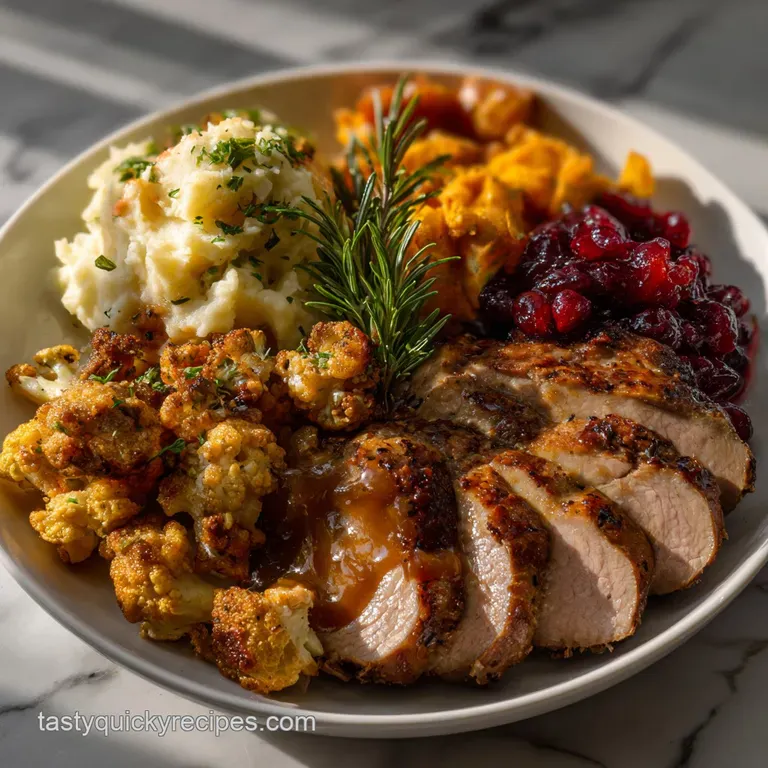
- Remove all meats from the fridge 60 minutes before cooking. Note: Tempering ensures even heat penetration.
- Pat the 1.5 kg pork loin, 1 kg beef tenderloin, and 800 g lamb racks dry with paper towels until the surfaces are completely matte.
- Score the pork loin fat cap in a diamond pattern using a sharp knife, stopping just before the meat.
- Whisk 45 ml melted beef tallow with 10 g minced rosemary and 10 g minced thyme in a small bowl.
- Rub the tallow mixture over all surfaces of the meat until every inch is glossy and coated.
- Sprinkle 30 g Maldon sea salt and 15 g black peppercorns evenly, pressing the granules into the fat.
- Place the pork loin in the center of the pan and roast at 400°F for 25 minutes until the fat cap begins to sizzle and turn golden.
- Add the 1 kg beef tenderloin to the pan and continue roasting for 20 minutes until the beef surface transitions from red to a grey brown.
- Nestle the 800 g lamb racks into the remaining space and roast for another 25 30 minutes until the internal temperature of the beef hits 130°F.
- Rest the entire platter for 15 minutes until the internal juices redistribute and the carryover heat finishes the cook.
Correcting Common Cooking Errors
If you find the exterior of the pork is darkening too quickly while the center remains cold, your oven's top heating element might be too aggressive. This often happens when the rack is positioned too high, causing the fat to burn before the protein denatures.
| Problem | Root Cause | The Fix | Pro Protocol |
|---|---|---|---|
| Tough Pork | High heat too long | Tent with foil | Pull at 140°F for carryover |
| Grey Beef | Lack of searing | Increase start temp | Use a heavy cast iron pan |
| Rubbery Lamb | Under rendered fat | Position fat-side up | Broil for last 2 minutes |
Uneven Beef Doneness
This usually occurs if the beef tenderloin isn't a uniform thickness. Tuck the thin "tail" of the chateaubriand under itself and secure it with kitchen twine. This creates a consistent cylinder, ensuring the entire cut reaches medium rare at the same moment. This technique is similar to how you might prep a Thanksgiving Dinner Plate recipe to ensure all components finish together. The resulting Carnivore Thanksgiving Meat to Savor Together with Roasted Turkey is perfectly balanced.
Soft Fat Cap
If the pork fat is soft rather than crispy, it hasn't reached the rendering point. Check your oven calibration. A quick fix is to move the pork to the top rack for the final 5 minutes of cooking. The proximity to the heating element will induce a rapid "shatter" texture.
Size Adaptation Protocol
Scaling Down (6 Servings): Reduce the pork loin to 750g and beef to 500g. Use a smaller 9 inch skillet to prevent the tallow from spreading too thin and burning. Reduce the total roasting time by approximately 15 minutes.
- Flavor/Spices
- Use 45g of salt instead of 60g (1.5x rule).
- Cooking
- Work with two separate roasting pans on different racks.
- Heat
- Rotate the pans halfway through to account for oven hot spots.
- Carryover
- Pull the meats 5°F earlier as the larger mass retains heat longer.
Protein Preparation Realities
- Myth: Searing meat "locks in" juices.
- Truth: Searing is purely for the Maillard reaction (flavor and color). Juices are retained through proper tempering and resting, which allows muscle fibers to relax and reabsorb moisture.
- Myth: You must wash meat before roasting.
- Truth: Washing meat spreads bacteria across your kitchen surfaces. A thorough pat-down with paper towels is safer and results in a much better crust.
Storage and Waste Prevention
Store leftovers in an airtight container in the fridge for up to 4 days or freeze for 2 months. To reheat, avoid the microwave, which turns beef rubbery. Instead, slice the meat thin and flash sear it in a hot pan with a little butter for 30 seconds per side.
Zero Waste Tip: Do not discard the accumulated pan drippings (liquid gold). This rendered fat and meat juice mixture is packed with gelatin and flavor. Save it to use as a cooking base for future meals or whisk it into a rich sauce like the one used in my Au Jus Recipe. You can also freeze herb stems to flavor stocks later. This ensures every element of your Carnivore Thanksgiving Meat to Savor Together with Roasted Turkey is utilized.
Presentation and Pairing Advice
Arrange the three meats on a large wooden board with the pork loin in the center, flanked by the sliced beef and the standing lamb racks. This creates a "mountain of meat" aesthetic that is visually striking. The different shades of brown and pink provide a beautiful contrast to the golden skin of a Classic Thanksgiving Recipe turkey.
The Grand Carnivore Platter
For a true feast, serve this with a side of marrow bones or a simple bowl of flaky sea salt. Since this is a carnivore focused dish, the emphasis is on the variety of animal fats. The richness of the lamb pairs exceptionally well with the lean, clean finish of the turkey breast.
Pairing with Turkey
When serving this alongside your bird, place the beef tenderloin closest to the turkey. Both share a delicate texture that allows the palate to transition smoothly between the poultry and the red meat. If you find yourself with a mix of everything the next day, it makes an incredible base for a Thanksgiving Pizza Ideas recipe.
Scientific Protein Clarifications
Why use tallow instead of butter?
Butter contains milk solids and water. At 400°F, the milk solids burn and the water creates steam, which prevents the meat from developing a "shatter" crust. Tallow is 100% fat and handles the high heat necessary for the Maillard reaction without smoking.
Does the rosemary actually penetrate?
The essential oils in rosemary and thyme are fat-soluble. By mixing them into the warm tallow, you create an infusion that coats the meat. While it won't penetrate deep into the muscle fibers, it creates a highly aromatic crust that seasons every bite as you chew.
Why rest for 15 minutes?
When meat cooks, muscle fibers contract and push moisture toward the center. If you cut it immediately, those juices spill out onto the board. Resting allows the fibers to relax (protein denaturation reversal) and the moisture to migrate back toward the edges, ensuring every slice is velvety. For a similar velvety texture in a pot roast, see my Irresistible Thanksgiving Pot recipe.
Recipe FAQs
What is the total active preparation and cooking time?
30 minutes active time. The recipe utilizes thermal staggering to ensure all proteins finish simultaneously for efficiency. Total time, including resting, is one hour forty five minutes.
Can I substitute ghee for beef tallow if I run out?
Yes, use ghee as a substitute. Ghee has a high smoke point but contains trace milk solids which might brown faster than pure tallow. Monitor the initial searing stage closely.
Why is my pork fat cap remaining soft instead of crispy?
Heat source is too weak or rack position is too low. Insufficient radiative heat prevents the fat from reaching its rendering temperature, leaving it gelatinous instead of brittle.
- Increase oven temperature to 425°F
- Position pan on upper rack
- Ensure surface is completely dry before seasoning
Is it better to use pork loin or pork shoulder for this roast?
Pork loin ensures a cleaner medium rare finish. Loin is leaner and cooks faster, aligning better with the short cooking window required for the beef tenderloin. Shoulder has high collagen but requires significantly longer cooking, disrupting the thermal stagger.
Myth: Washing raw meat removes harmful bacteria.
Myth: Washing raw meat removes harmful bacteria. Reality: Washing meat, including poultry, spreads pathogens via splashing water droplets onto surfaces. Cooking to the safe internal temperature kills all pathogens effectively.
Should I sear the beef before adding the other meats?
No, sear all three meats concurrently at the start. The recipe design relies on sequential addition based on density; starting them together at 400°F ensures the Maillard reaction occurs on all surfaces. If you enjoyed mastering temperature control here, apply the same precision when looking at our Carnivore Chicken Recipe: Ultimate Crispy Skin in 40 Mins.
Myth: A meat thermometer ruins the texture when checking doneness.
Myth: A meat thermometer ruins the texture when checking doneness. Reality: Using a high-quality, thin probe thermometer creates a minimal puncture hole. Guessing temperature leads to overcooking, which causes far greater moisture loss and texture degradation.
Carnivore Thanksgiving Meat Roast
Ingredients:
Instructions:
Nutrition Facts:
| Calories | 647 kcal |
|---|---|
| Protein | 55g |
| Fat | 48g |
| Carbs | 0g |
| Fiber | 0g |
| Sugar | 0g |
| Sodium | 975mg |
