Braised Beef Short Ribs Recipe
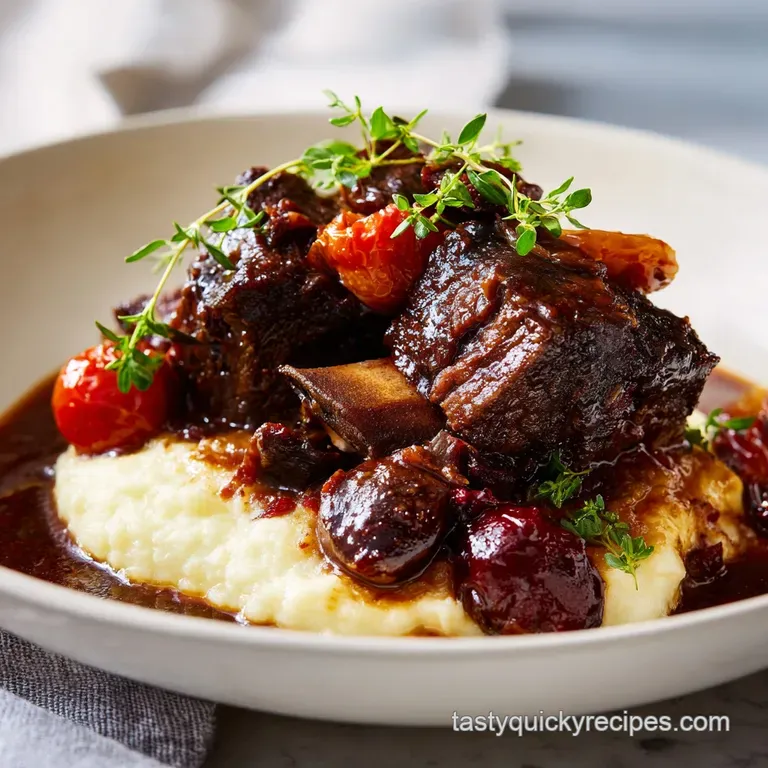
- Time: Active 25 mins, Passive 3 hours 30 mins, Total 3 hours 55 mins
- Flavor/Texture Hook: Velvety sauce with meat that falls apart at the touch of a fork.
- Perfect for: Weekend meal prep for high protein midday lunches.
- Master the Ultimate Red Wine Short Ribs Recipe
- The Mechanics of Successful Braising
- Component Analysis
- Selecting the Best Raw Ingredients
- Tools for Succulent Results
- The Step-by-Step Cooking Guide
- Troubleshooting Your Braised Beef Results
- Smart Variations and Substitutions
- Adjusting for More or Less
- Busting Common Braising Tall Tales
- Stashing and Repurposing Your Scraps
- Perfect Sides for Your Ribs
- High in Sodium (⚠️)
- Recipe FAQs
- 📝 Recipe Card
Master the Ultimate Red Wine Short Ribs Recipe
The first time I tried making a short ribs recipe, I was impatient. I cranked the heat, skipped the sear, and ended up with something that looked like gray rubber. It was a disaster. But then I heard that first sizzle of beef hitting hot oil in a heavy pot, and I realized that patience is an actual ingredient.
Now, when I walk into the kitchen and smell that deep, mahogany aroma of wine and beef reducing, I know I'm about to have the most satisfying meal of the week.
There is something grounding about the way these ribs look when they finally come out of the oven. They don't just sit there; they glisten in a dark, rich sauce that has been building flavor for hours.
This isn't just a fancy dinner; it is a fueling, high protein powerhouse that makes you feel energized and ready to tackle whatever comes next. We are going to skip the shortcuts and focus on the techniques that actually build flavor.
We're going to talk about the hard sear, the aromatic base, and the slow transformation that happens inside that pot. You won't find any vague instructions here. We're looking for that specific moment when the meat stops resisting and starts to melt.
Trust me, once you see that velvety sauce coat the back of your spoon, you'll never go back to any other version.
The Mechanics of Successful Braising
The Collagen to Gelatin Magic: Connective tissue in beef ribs requires prolonged heat to transform into silky gelatin. This process softens the protein fibers while creating a velvety mouthfeel in the surrounding sauce.
- Maillard Reaction: Searing the meat at high heat creates hundreds of new flavor compounds on the surface.
- Acidic Tenderization: The tannins and acidity in the red wine help break down tough muscle fibers over several hours.
- Emulsification: Tomato paste acts as a thickener and bridge between the fat from the beef and the water based broth.
- Aromatic Infusion: Slow simmering allows the essential oils in thyme and rosemary to penetrate the meat deeply.
| Thickness | Internal Temp | Rest Time | Visual Cue |
|---|---|---|---|
| 1.5 inch | 203°F - 205°F | 15 mins | Meat pulls away from bone |
| 2.0 inch | 203°F - 205°F | 20 mins | Fork twists through easily |
| 2.5 inch | 205°F | 20 mins | Bone can be slid out |
Selecting the right cut of meat makes a huge difference in the final texture. English style ribs are cut into individual rectangular blocks, which gives you more surface area for that vital sear compared to flanken style ribs.
Component Analysis
| Ingredient | Science Role | Pro Secret |
|---|---|---|
| Beef Short Ribs | Provides collagen and fat | Pat them bone dry before searing |
| Dry Red Wine | Acid for fiber breakdown | Use a Cab or Merlot you'd drink |
| Tomato Paste | Umami and thickening agent | Fry it until it turns dark brick red |
| Beef Bone Broth | Liquid base and gelatin | Opt for low sodium to control salt |
Getting the liquid ratio right is the difference between a braise and a soup. You want the liquid to come about halfway or two thirds of the way up the sides of the ribs, leaving the tops exposed to the dry heat of the oven for a bit of crust.
Selecting the Best Raw Ingredients
For this short ribs recipe, we are using 5 lbs of English style bone in beef short ribs. The bone is non negotiable here; it adds a depth of flavor and structural integrity that boneless cuts just can't match.
Look for ribs with plenty of white marbling throughout the meat, as that fat will render down and keep everything moist during the long cook.
- 5 lbs English style bone in beef short ribs Why this? Bone in meat provides more flavor and natural gelatin for the sauce.
- Substitute: 4 lbs boneless short ribs (reduce cook time by 30 mins).
- 2 tbsp neutral high smoke point oil Why this? Prevents smoking during the intense over high heat searing phase.
- Substitute: Avocado oil or Grapeseed oil.
- 1 tsp kosher salt Why this? Larger grains make it easier to season the meat evenly.
- Substitute: 0.5 tsp fine sea salt.
- 0.5 tsp freshly cracked black pepper Why this? Freshly ground offers a much sharper, floral heat.
- Substitute: Pre ground pepper (though flavor will be muted).
- 200g yellow onion, diced Why this? Provides the foundational sweetness and body for the sauce.
- Substitute: White onion or shallots.
- 150g carrots, peeled and sliced Why this? Adds natural sugar to balance the acidity of the wine.
- Substitute: Parsnips for an earthier flavor.
- 100g celery stalks, diced Why this? Adds a savory, herbal backbone to the aromatic base.
- Substitute: Fennel bulb for a slight anise note.
- 4 cloves garlic, smashed Why this? Smashed cloves release flavor slowly without burning.
- Substitute: 1 tsp garlic powder added with the broth.
- 30g tomato paste Why this? Concentrates the flavor and helps thicken the liquid.
- Substitute: 60g tomato sauce (reduce broth by 2 tbsp).
- 750ml dry red wine Why this? Tenderizes the meat and adds a complex, fruity acidity.
- Substitute: 1 cup balsamic vinegar plus 2 cups extra broth.
- 475ml high-quality beef bone broth Why this? Provides the liquid volume needed for a long braise.
- Substitute: Chicken stock (it's lighter but still works).
- 3 sprigs fresh thyme Why this? Classic woody herb that survives long cooking times.
- Substitute: 1 tsp dried thyme.
- 2 sprigs fresh rosemary Why this? Adds a piney, resinous depth to the beef.
- Substitute: 0.5 tsp dried rosemary.
- 2 dried bay leaves Why this? Subtle background note that rounds out the savory flavors.
- Substitute: 1 fresh bay leaf.
| Component | Fresh Method | Shortcut Method | Flavor Impact |
|---|---|---|---|
| Aromatics | Chopped fresh mirepoix | Frozen pre cut mix | Fresh is sweeter |
| Liquid | 750ml Red Wine reduction | Red wine vinegar + water | Wine is more complex |
| Herbs | Fresh sprigs tied up | Dried Italian seasoning | Fresh is more vibrant |
Using fresh aromatics is a key part of this Braised Beef Short recipe because it allows you to control the size of the dice, which affects how much they melt into the final sauce.
Tools for Succulent Results
You really need a heavy bottomed pot for this. A Dutch oven, like one from Le Creuset or Lodge, is the gold standard because it holds heat so evenly. This prevents the liquid from boiling too hard in one spot, which can toughen the meat.
A pair of long kitchen tongs is also essential for turning the ribs during the sear without burning your knuckles. You'll also want a fine mesh strainer if you prefer a silky, restaurant style sauce, though leaving the veggies in makes for a more hearty, rustic midday meal.
The step-by-step Cooking Guide
- Prep the meat. Pat the 5 lbs of short ribs with paper towels until they are bone dry. Note: Moisture creates steam, which prevents a good crust.
- Season heavily. Sprinkle the 1 tsp kosher salt and 0.5 tsp black pepper over all sides of the ribs.
- Sear the beef. Heat 2 tbsp oil in a Dutch oven over medium high heat. Brown the ribs in batches for 3-4 mins per side until a dark mahogany crust forms.
- Sauté the aromatics. Remove the ribs and set aside. Add the 200g onion, 150g carrots, and 100g celery to the rendered fat. Cook for 5-7 mins until the onions are soft and golden.
- Toast the paste. Stir in 30g tomato paste and 4 smashed garlic cloves. Cook for 2 mins until the paste turns brick red and smells toasted.
- Deglaze the pan. Pour in the 750ml red wine. Scrape the bottom of the pot with a wooden spoon until all the brown bits are dissolved.
- Simmer and reduce. Let the wine bubble for 10 mins until the liquid has reduced by half.
- Combine the liquids. Return the ribs to the pot. Add 475ml beef bone broth, 3 sprigs thyme, 2 sprigs rosemary, and 2 bay leaves.
- The long braise. Cover tightly and place in a 300°F (150°C) oven. Bake for 3 hours 30 mins until the meat is tender and pulling away from the bone.
- Final sauce check. Remove the ribs and herbs. Skim any excess fat from the surface and simmer the liquid for 5 mins until it coats the back of a spoon.
Chef's Tip: If you have the time, let the pot cool and put it in the fridge overnight. The next day, the fat will have solidified on top, making it incredibly easy to lift off. This results in an even cleaner, more concentrated flavor profile.
Troubleshooting Your Braised Beef Results
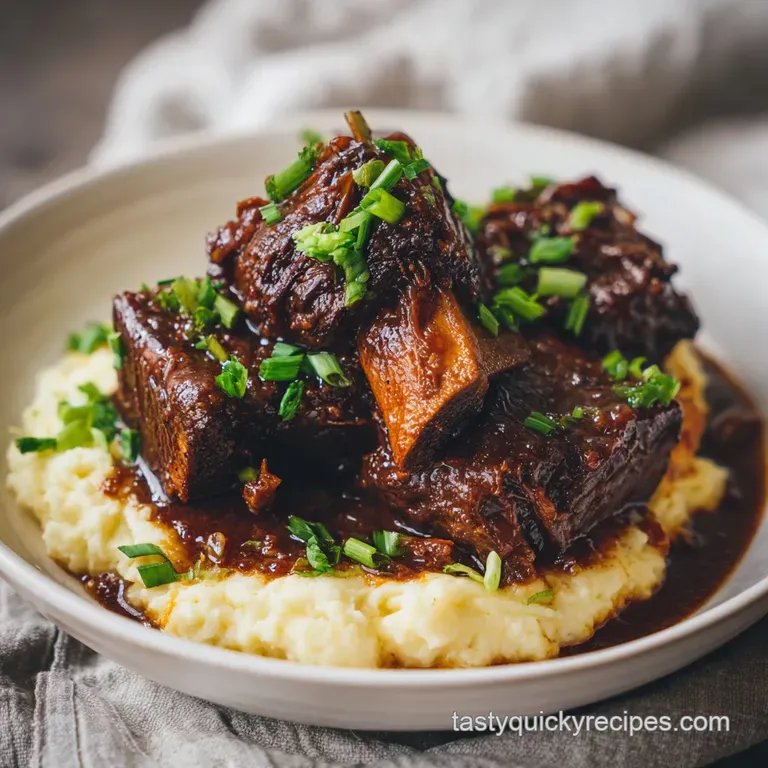
Meat Still Feels Tough
If you pull the pot out and the meat feels tight or resists a fork, it simply hasn't cooked long enough. Every cow is different, and some cuts have more stubborn connective tissue. Don't panic; just put the lid back on and give it another 30-45 minutes.
Sauce Looks Too Greasy
Short ribs are a fatty cut. Even if you sear them well, they will release a lot of oil into the braising liquid. If the sauce looks broken or oily, use a wide spoon to skim the clear fat off the top, or use a fat separator.
The Flavor Seems Flat
This usually happens if the wine didn't reduce enough or if you need a touch more acid. A tiny splash of balsamic vinegar or a squeeze of lemon juice right at the end can brighten the whole dish and make the beef flavors pop.
| Problem | Root Cause | Solution |
|---|---|---|
| Tough meat | Collagen hasn't melted | Increase cook time by 30 mins |
| Salty sauce | Broth was too concentrated | Add a splash of water or unsalted stock |
| Bitter taste | Garlic or tomato paste burned | Balance with 1 tsp of brown sugar |
- ✓ Skipping the sear
- You lose out on the deep savory flavor that only over high heat browning provides.
- ✓ Adding too much liquid
- If you submerge the ribs completely, they will boil instead of braise, leading to a "pot roast" texture rather than a succulent one.
- ✓ Not reducing the wine
- Raw wine flavor can be harsh; reducing it is essential for a mellow, fruity sauce.
- ✓ Rushing the temp
- Cooking at a higher temperature won't make it faster; it will just make the meat dry out. Keep it low and slow.
- ✓ Forgetting to pat the meat dry
- This is the number one reason people fail to get a good crust on their ribs.
Smart Variations and Substitutions
Slow Cooker Short Ribs Recipe
To adapt this for a slow cooker, follow steps 1 through 7 on the stovetop. This is vital because a slow cooker cannot sear or reduce wine. Once the wine is reduced, transfer everything to your slow cooker. Cook on Low for 7-8 hours or High for 4-5 hours.
You may need to thicken the sauce with a cornstarch slurry at the end since there is no evaporation in a slow cooker.
Korean Short Ribs Recipe Twist
For a different flavor profile, swap the red wine for a mixture of 1 cup soy sauce, 1/2 cup brown sugar, 1/4 cup rice vinegar, and a tablespoon of toasted sesame oil. Add ginger and green onions to the aromatics. This creates a sweet and savory glaze that is fantastic served over white rice.
Wine Free Liquid Bases
If you prefer not to use alcohol, you can replace the red wine with a mix of pomegranate juice and a splash of beef broth. The pomegranate provides the same acidity and deep color as the wine without the alcohol content.
If you're looking for a similar comforting vibe but with more pasta involved, the San Giorgio Lasagna Recipe uses similar flavor profiles of beef and aromatics that pair beautifully with these ribs.
Adjusting for More or Less
- Scaling Down (1/2 batch): Use a smaller Dutch oven to ensure the liquid level remains high enough. Reduce the initial searing time slightly as the pot will heat up faster. You can beat one egg and use half if you're making a side dish that requires it, but for the ribs themselves, just halve the weights exactly.
- Scaling Up (2x batch): Do not double the salt or spices immediately. Use 1.5x the salt and taste at the end. You will need to sear the meat in many more batches to avoid crowding the pan. If you crowd the pan, the temperature drops and the meat will gray instead of browning.
- Pressure Cooker: If you are in a massive rush, a pressure cooker can do this in about 45-60 minutes, but you will lose some of the depth that comes from the slow oven reduction.
Busting Common Braising Tall Tales
A popular misconception is that searing meat "seals in the juices." This is scientifically false. Searing actually causes the surface to dry out, but the reason we do it is for the Maillard reaction the chemical process that creates that savory, complex crust.
Moisture loss happens regardless of searing, but the crust adds the flavor that makes the meat taste juicy.
Another myth is that you must use expensive wine. The truth is that once wine is reduced and braised for three hours, the subtle nuances of a $50 bottle are lost. Use a decent, dry wine that you enjoy drinking, but don't break the bank.
Just avoid "cooking wine" from the grocery store, which is loaded with unnecessary salt.
Stashing and Repurposing Your Scraps
- Fridge
- Keep the ribs in their sauce in an airtight container for up to 4 days. They actually taste better on day two!
- Freezer
- These freeze beautifully. Store in a freezer safe bag or container for up to 3 months. Thaw in the fridge overnight before reheating.
- Reheating
- The best way to reheat is in a covered pan on the stovetop over low heat. Add a splash of broth if the sauce has thickened too much in the fridge.
Zero Waste Tips Don't throw away those braising liquid scraps! Any leftover sauce is essentially a concentrated beef demi glace. You can toss it with pasta, use it as a base for a beef barley soup, or even freeze it in ice cube trays to drop into future gravies.
The leftover carrot and onion bits can be blended into the sauce to create a thick, velvety gravy that ensures nothing goes to waste.
Perfect Sides for Your Ribs
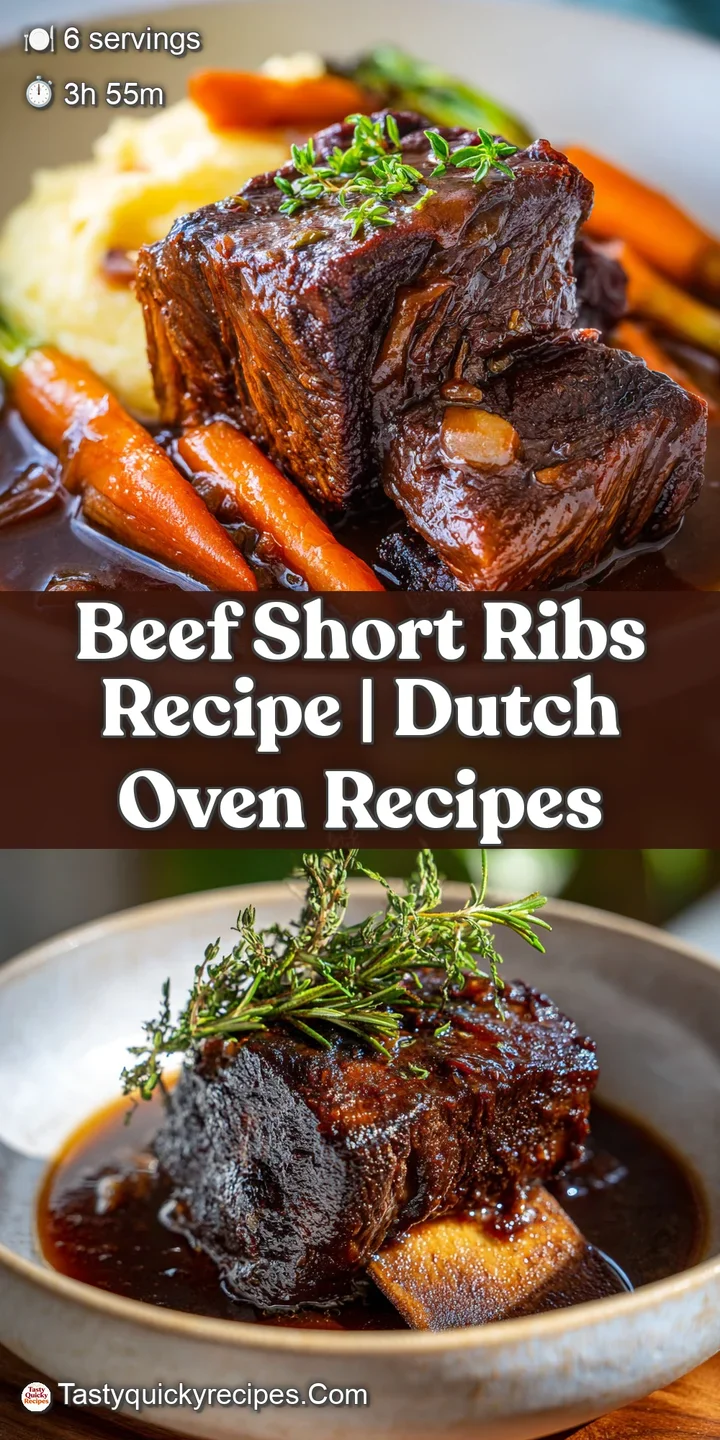
To keep this meal fueling and satisfying, I love serving these ribs over something that can soak up that incredible sauce. Creamy polenta or a thick cauliflower purée are great low slump options. If you want something more traditional, garlic mashed potatoes are the classic choice.
For a bit of contrast, a bright gremolata a mix of lemon zest, parsley, and minced garlic sprinkled over the top right before serving cuts through the richness of the beef perfectly.
You could also serve this alongside a crisp green salad with a sharp vinaigrette to balance out the heavy, savory notes of the short ribs recipe.
This dish is about more than just one dinner. It's about the lunches the next day that keep you energized and focused. When you pull a container of these ribs out of the fridge at noon, you'll be the envy of the entire office. Trust me, the effort is worth every single minute.
High in Sodium (⚠️)
840 mg mg of sodium per serving (37% % of daily value)
The American Heart Association recommends limiting sodium intake to no more than 2,300mg per day for optimal health.
Tips to Reduce Sodium in Your Short Ribs
-
Low-Sodium Broth-30%
Opt for a low-sodium or no-salt added beef bone broth. This simple swap can significantly reduce the sodium content without sacrificing flavor.
-
Reduce Added Salt-25%
Halve the amount of kosher salt initially added. Start with 1/2 tsp and adjust to taste after the short ribs have braised, if needed.
-
Herb Power
Enhance the flavor profile by using more fresh thyme and rosemary. These herbs add complexity and depth, allowing you to use less salt without compromising taste.
Recipe FAQs
What is the best method for cooking short ribs?
Braising low and slow is the best method. This process transforms the tough collagen in the connective tissue into silky gelatin, resulting in incredibly tender meat.
What are the common mistakes when cooking short ribs?
Skipping the initial high heat sear is the most common mistake. Searing creates the essential deep, savory flavor compounds (Maillard reaction) that define the final dish; without it, the ribs taste flat.
What is the 3 2 1 method for beef short ribs?
The 3-2-1 method typically applies to smoked ribs, not braised short ribs. Braising short ribs generally requires a single, long, consistent temperature period, such as 3 hours at 300°F in the oven for fork tender results.
How to cook beef short rib?
Sear the bone-in ribs aggressively on all sides until a dark mahogany crust forms. Deglaze the pan with red wine, add stock and aromatics, cover tightly, and bake at 300°F for about 3.5 hours until easily pierced by a fork.
Is it true I must use an expensive cut of beef for a good result?
No, expensive wine or expensive beef are not mandatory for success. The long, slow braising is what tenderizes the meat, not the initial quality of the wine; use one you enjoy drinking, similar to our approach in the Beef Gravy Recipe.
Can I skip searing the aromatics (onions, carrots) and just add them with the liquid?
No, you should always sauté the aromatics first. Cooking the mirepoix until soft and toasting the tomato paste until brick red deepens their sweetness and unlocks their essential oils, which forms the true base flavor.
How do I ensure my braising liquid thickens properly?
Reduce the initial liquid aggressively before adding the meat. After the braise, skim the fat, then simmer the remaining liquid uncovered for about 5 minutes until it coats the back of a spoon.
Braised Short Ribs Recipe
Ingredients:
Instructions:
Nutrition Facts:
| Calories | 785 kcal |
|---|---|
| Protein | 44 g |
| Fat | 56 g |
| Carbs | 12 g |
| Fiber | 2 g |
| Sugar | 5 g |
| Sodium | 840 mg |
