Braised Short Ribs: Ultimate Comfort Food
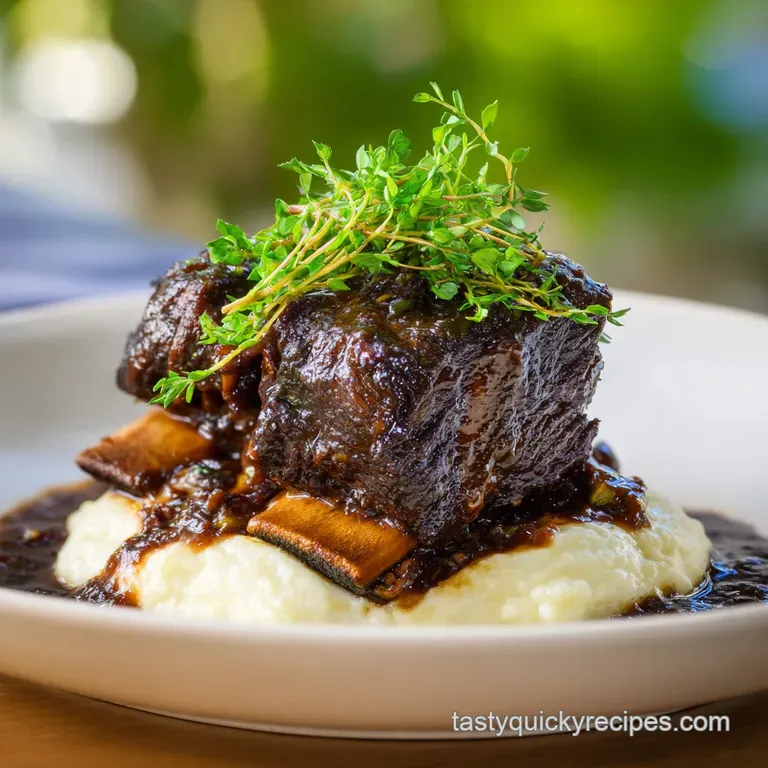
- Time: Active 25 minutes, Passive 3 hours 30 mins, Total 3 hours 55 mins
- Flavor/Texture Hook: Velvety sauce and fall apart beef
- Perfect for: High energy weekend lunch or meal prep
- The Ultimate Braised Short Ribs Guide
- The Science Behind Tender Meat
- Component Analysis and Roles
- Planning Your Hearty Midday Meal
- Essential Tools for Braising
- Mastering the Braising Technique
- Solving Common Braising Mishaps
- Creative Ways to Swap Flavors
- Myths About Braising Beef
- Storing and Repurposing Your Leftovers
- Serving Your Ribs With Style
- High in Sodium
- Recipe FAQs
- 📝 Recipe Card
The Ultimate Braised Short Ribs Guide
That first sizzle when the cold beef hits the hot oil is everything. I still remember the first time I tried making these years ago; I was so impatient that I didn't let the pan get hot enough, and the meat just kind of greyed and steamed. It was a total letdown.
But once you hear that aggressive crackle and smell the deep, nutty aroma of browning beef, you know you're on the right track for a satisfying, fueling meal.
We’re making a dish that feels like a warm hug but gives you enough energy to power through a busy afternoon. There’s no fancy footwork here, just honest ingredients and a bit of patience while the oven does the heavy lifting.
You’ll end up with meat so tender it practically melts, swimming in a sauce that’s rich enough to satisfy any craving without leaving you feeling sluggish.
I've streamlined this process to use the fewest tools possible because, honestly, who wants to do a mountain of dishes after a big meal? We’re focusing on reliable steps that work every single time.
By the time we’re done, your kitchen will smell incredible, and you'll have a pot full of the best Braised Short Ribs you’ve ever tasted.
The Science Behind Tender Meat
Collagen Conversion: Long, slow heat transforms tough connective tissue into liquid gelatin, creating a silky mouthfeel.
Maillard Reaction: Searing the meat at high heat creates new flavor compounds that aren't present in raw or boiled beef.
Acid Activation: The tannins and acidity in the red wine help break down muscle fibers while balancing the richness of the fat.
Osmotic Balance: Salting the meat early allows the seasoning to penetrate deep into the fibers rather than just sitting on the surface.
| Thickness | Internal Temp | Rest Time | Visual Cue |
|---|---|---|---|
| 2 inches | 203°F | 15 mins | Meat pulls away from bone |
| 1.5 inches | 203°F | 10 mins | Shreds easily with a fork |
| 3 inches | 205°F | 20 mins | Bone slides out cleanly |
Understanding these cues is the difference between a chewy lunch and a meal that stays with you. When the internal temperature hits that sweet spot around 203°F, the fat has fully rendered, leaving you with that classic "melt in your mouth" texture.
Component Analysis and Roles
| Ingredient | Science Role | Pro Secret |
|---|---|---|
| Tomato Paste | Umami booster | Fry it until it turns dark brick red |
| Red Wine | Solvent/Acid | Use a dry variety to avoid cloying sweetness |
| Beef Bone Broth | Body/Gelatin | Choose low sodium to control the final saltiness |
| Yellow Onions | Sugar/Structure | Don't over mince; chunks provide better sauce body |
The secret to a sauce that isn't greasy lies in how you handle these components. By frying the tomato paste before adding the liquids, you remove the "raw" metallic taste and unlock a savory depth that makes these Braised Short Ribs stand out.
Planning Your Hearty Midday Meal
This recipe is built for those who want a strong, energized start to their day. Since we are using 5 lbs bone in beef short ribs, you’ll have plenty for a crowd or great leftovers for the week. I love serving these over a Beef Steak Side Dish recipe because those crispy potatoes soak up the velvety sauce perfectly.
- 5 lbs bone in beef short ribs (English cut) Why this? The bone adds incredible depth and gelatin to the sauce.
- 2 tbsp avocado oil Why this? High smoke point prevents burning during the initial sear.
- 2 large yellow onions, diced
- 3 large carrots, cut into 1 inch chunks
- 2 stalks celery, diced
- 4 cloves garlic, smashed
- 2 tbsp tomato paste
- 750 ml dry red wine
- 2 cups beef bone broth
- 3 sprigs fresh thyme
- 2 sprigs fresh rosemary
- 2 dried bay leaves
- 1.5 tsp kosher salt
- 1 tsp freshly cracked black pepper
For substitutes, you can use 2 tbsp grapeseed oil if avocado oil isn't in your pantry. If you are out of fresh thyme, use 1 tsp dried, though the fresh sprigs are easier to fish out later.
For the wine, a Merlot or Cabernet Sauvignon works best, but if you're avoiding alcohol, replace the wine with an equal amount of beef broth and a splash of balsamic vinegar.
Essential Tools for Braising
You don't need a kitchen full of gadgets for this. A heavy bottomed Dutch oven is your best friend here because it distributes heat evenly and has a tight fitting lid to keep moisture in. If you don't have one, any deep, oven safe pot with a heavy lid will do.
You'll also need a pair of sturdy tongs for flipping the ribs without piercing the meat and losing those juices.
A simple wooden spoon is perfect for scraping up the browned bits (the fond) from the bottom of the pot. Those bits are pure flavor gold. I usually avoid using stainless steel spoons here as they can scratch the enamel of a Dutch oven. Keep it simple, keep it efficient, and let the pot do the work.
Mastering the Braising Technique
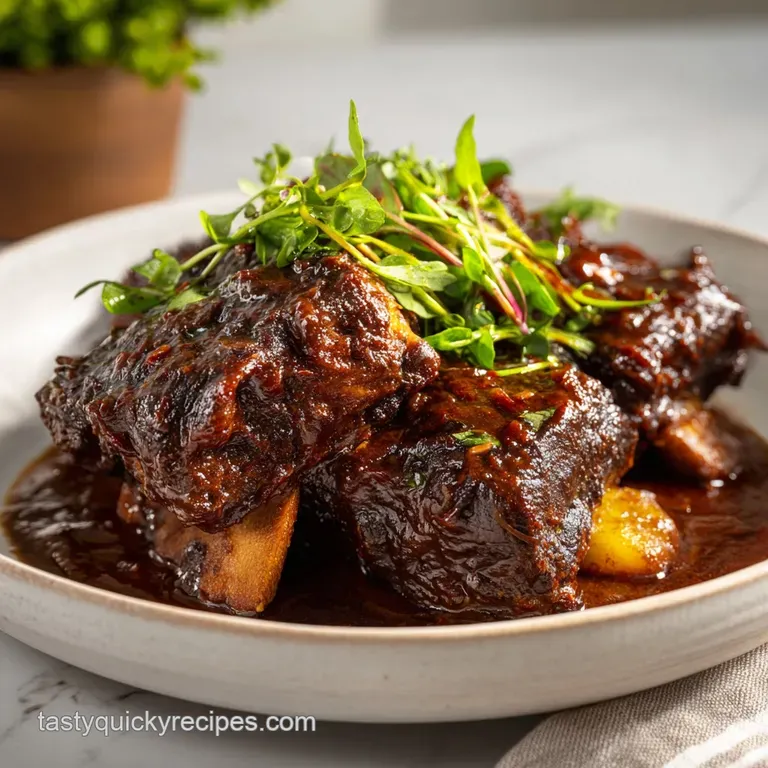
- Pat the 5 lbs of short ribs completely dry with paper towels. Note: Moisture is the enemy of a good sear.
- Season generously with 1.5 tsp salt and 1 tsp pepper.
- Heat 2 tbsp oil in the pot over medium high heat until it begins to shimmer and smoke slightly.
- Sear ribs in batches for 3 minutes per side until a deep brown crust forms.
- Remove meat and sauté onions, carrots, and celery for 5 minutes until softened and fragrant.
- Stir in garlic and 2 tbsp tomato paste, cooking for 2 minutes until the paste turns dark red.
- Pour in 750 ml wine and scrape the bottom of the pot to release the browned bits.
- Return ribs to the pot and add 2 cups broth plus the herbs.
- Cover and bake at 325°F (165°C) for 3 hours 30 mins until meat is tender and falling off the bone.
- Let the pot rest for 15 minutes before serving to allow the sauce to settle.
Chef's Tip: If you have 10 extra minutes, freeze your butter for a bit and whisk a cold tablespoon into the finished sauce. It creates a glossy, professional finish that binds the fats and liquids together.
Solving Common Braising Mishaps
Why Your Meat Stays Tough
If your meat isn't shredding after the allotted time, it usually means the collagen hasn't had enough time to melt. Every cow is different, and some cuts just need more time. Simply put the lid back on and check every 20 minutes. It will get there eventually; it’s a physical certainty.
Why Your Sauce Is Greasy
Short ribs are naturally fatty, which is why they taste so good. If the sauce looks oily, you can use a wide spoon to skim the fat off the top. Alternatively, making this a day ahead allows the fat to solidify in the fridge, making it incredibly easy to just lift off in one solid piece before reheating.
| Problem | Root Cause | Solution |
|---|---|---|
| Dry Meat | Overcooked or pot leaked steam | Ensure lid is tight; add more broth next time |
| Bland Sauce | Insufficient searing or salt | Season beef earlier; reduce sauce after cooking |
| Burnt Bottom | Heat too high or low liquid | Add 1/2 cup water; lower oven temp 25°F |
- ✓ Pat meat dry before searing to ensure a crust instead of steam.
- ✓ Don't crowd the pan; sear in batches to keep the temperature high.
- ✓ Use bone in ribs for a more flavorful, silkier sauce.
- ✓ Always deglaze thoroughly to capture the "fond" at the bottom.
- ✓ Let the meat rest; cutting it too soon lets the moisture escape.
Creative Ways to Swap Flavors
If you want to scale this down for a solo lunch, you can easily halve the ingredients. Just make sure you use a smaller pot so the liquid still covers the meat halfway. If you’re doubling it for a big gathering, increase the meat and vegetables, but only increase the salt and spices by 1.5x to avoid over seasoning.
| Premium Choice | Budget Alternative | Flavor Impact | Savings |
|---|---|---|---|
| Beef Short Ribs | Beef Chuck Roast | Slightly less fatty | Save $15-20 |
| Cabernet Sauvignon | Dry Cooking Wine | Less complex depth | Save $10-15 |
| Fresh Herbs | Dried Herbs | Less aromatic punch | Save $5 |
If you decide to go with the chuck roast, I recommend checking out my Chuck Roast in recipe which handles that specific cut beautifully. It’s a great way to get a similar vibe on a tighter budget.
Myths About Braising Beef
One common misconception is that searing meat "seals in the juices." Science tells us this isn't true; moisture loss happens regardless of the sear. The real reason we sear is for the Maillard reaction, which creates those complex, savory flavors that define a great braise.
Another myth is that you need to completely submerge the meat in liquid. If you do that, you're essentially boiling the beef. You want the top third of the ribs to be exposed to the hot air and steam under the lid.
This creates a better texture on the "crust" of the meat while the bottom halves get tender in the liquid.
Storing and Repurposing Your Leftovers
Short ribs are one of the few dishes that actually taste better the next day. Keep them in an airtight container in the fridge for up to 4 days. When reheating, do it gently on the stovetop over low heat so the meat doesn't get stringy. You can also freeze the cooked meat and sauce for up to 3 months.
Don't toss out the leftover braising liquid! It is packed with flavor and gelatin. I love using the leftover sauce as a base for a hearty vegetable soup or even as a shortcut gravy for roasted chicken.
If you have extra meat, shred it and toss it with pasta for a quick, high protein midday meal that will keep you energized for hours.
Serving Your Ribs With Style
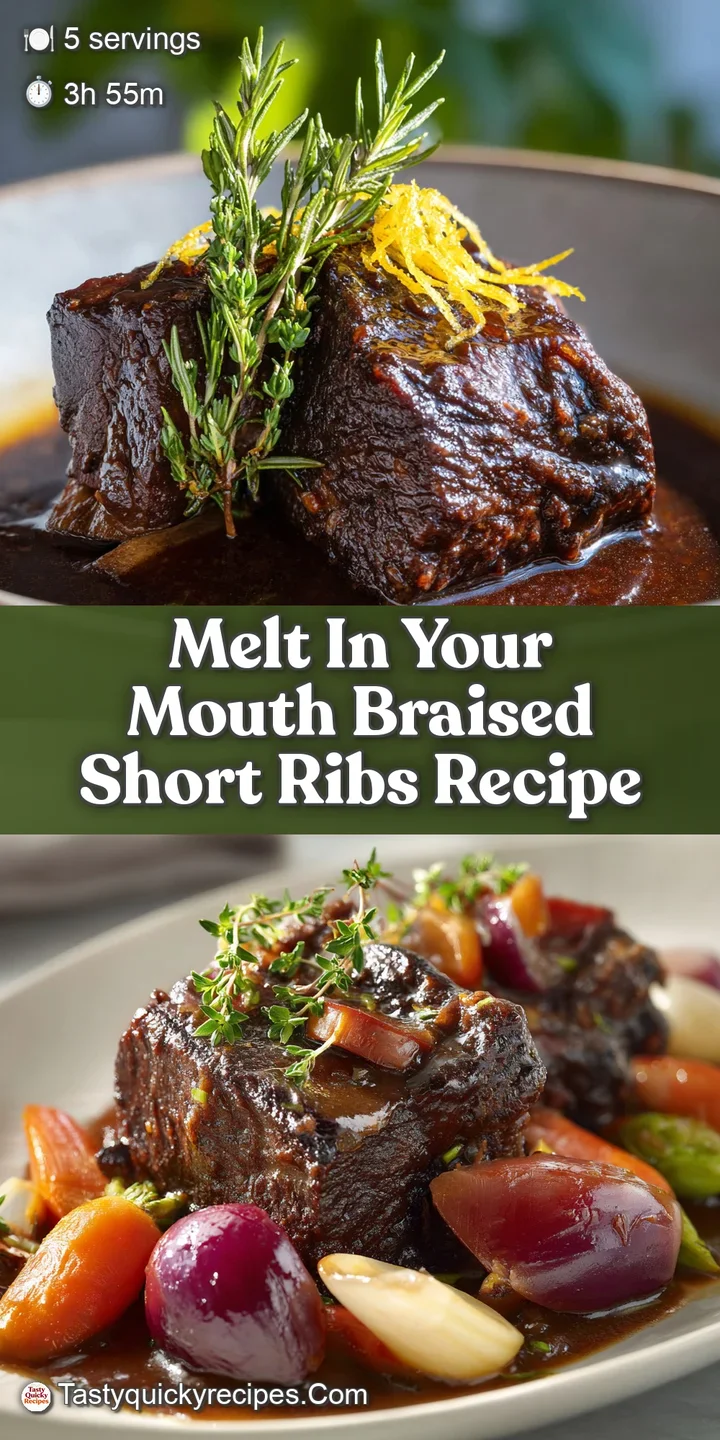
When it's time to eat, I like to keep things simple. Place a generous mound of creamy polenta or mashed potatoes in a shallow bowl, nestle a short rib on top, and ladle over plenty of that reduced sauce. A sprinkle of fresh parsley adds a pop of color and a bit of freshness to cut through the richness.
For those busy days when you need something fast, these ribs can be shredded and served inside toasted brioche buns for the ultimate beef sandwich. It’s a great way to turn a slow cooked meal into a handheld, energized lunch.
No matter how you serve it, the goal is the same: a satisfying, fueling meal that makes all that waiting totally worth it.
High in Sodium
980 mg 980 mg of sodium per serving (43% 43% of daily value)
The American Heart Association recommends limiting sodium intake to about 2,300mg per day for overall cardiovascular health.
Tips to Reduce Sodium in Your Short Ribs
-
Low-Sodium Broth-30%
Use low-sodium or no-salt added beef broth. This swap can significantly decrease the overall sodium content of the dish.
-
Reduce Added Salt-25%
Start by halving the amount of kosher salt (use 0.75 tsp instead of 1.5 tsp) and add more only to taste at the very end. Remember that the beef broth already contains sodium.
-
Check Wine Sodium-10%
While wine isn't typically high in sodium, some brands may contain added sulfites which can contribute to a salty taste for some individuals. Opt for wines known to be lower in additives.
-
No-Salt Added Paste-10%
Consider using no-salt added tomato paste. Although a small amount is used, every little bit helps to lower the sodium.
-
Flavor with Herbs
Enhance the flavor with fresh herbs and spices! Experiment with different combinations to boost the dish's complexity without relying on salt. Consider adding smoked paprika for a deeper flavor.
Recipe FAQs
What is the best method for braising short ribs?
Oven braising in a Dutch oven is best. Sear the ribs aggressively first, then simmer them partially submerged in liquid at a steady 325°F (165°C) for several hours until fork tender.
What is the best liquid for braising ribs?
A combination of dry red wine, rich beef bone broth, and aromatics is ideal. The wine introduces necessary acidity to balance the richness and tenderize the meat fibers.
Are braising ribs the same as short ribs?
No, short ribs are a specific cut of beef, but they are the best cut for braising. Short ribs come from the plate, brisket, or chuck section and are rich in connective tissue, which breaks down perfectly under long, slow braising.
How to cook braising beef short ribs in the oven?
Sear the seasoned ribs until deeply browned on all sides in a heavy Dutch oven. Sauté your vegetables, deglaze with wine, add the broth, return the ribs, cover tightly, and bake at 325°F (165°C) until they yield easily to a fork.
Why are my braised short ribs still tough after three hours?
Continue cooking them slowly until the collagen melts into gelatin. Toughness means the internal temperature hasn't hit the critical breakdown point, usually around 203°F, so just return them to the oven and check every 20 minutes.
Is it necessary to sear the short ribs before adding the liquid?
Yes, searing is crucial for flavor development. Searing creates a deep crust through the Maillard reaction, providing savory, complex notes that boiling alone cannot achieve, similar to the flavor base we build for our Jewish New Year recipe.
Can I use a different cut of beef instead of short ribs?
Yes, but the texture will change significantly. Chuck roast is the best substitute, as it has marbling suitable for long cooking; if you master the slow cooking technique here, you can apply that same low-and-slow principle when preparing a roast for a full Sunday Dinner.
Braised Short Ribs Dutch Oven
Ingredients:
Instructions:
Nutrition Facts:
| Calories | 1085 kcal |
|---|---|
| Protein | 52 g |
| Fat | 84 g |
| Carbs | 14 g |
| Fiber | 3 g |
| Sugar | 6 g |
| Sodium | 980 mg |
