Classic Pot Roast Recipe with Vegetables
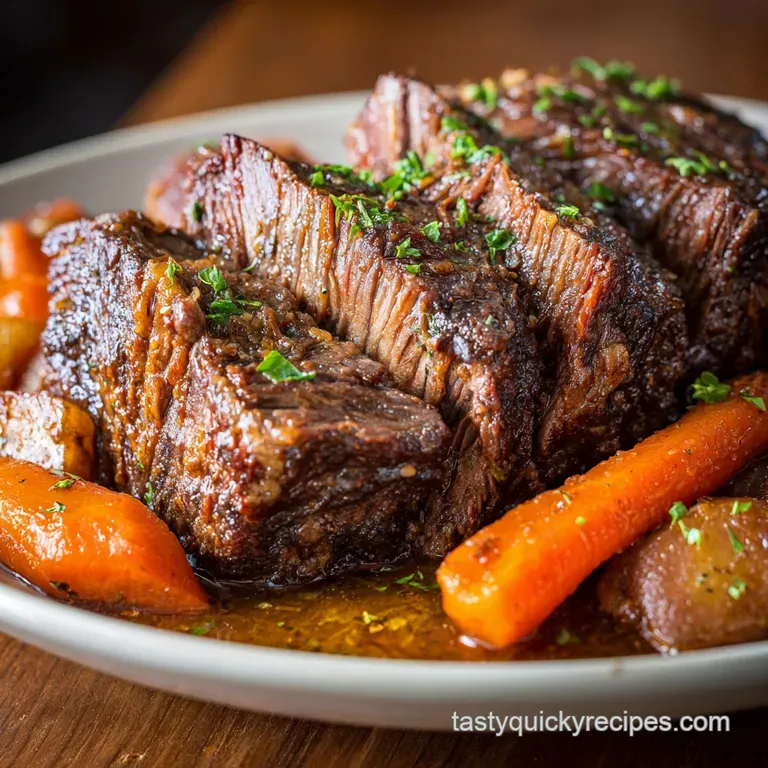
- Time: Active 20 minutes, Passive 3 hours 30 mins, Total 3 hours 50 mins
- Flavor/Texture Hook: Velvety beef with a rich, mahogany gravy
- Perfect for: A fueling Sunday lunch or cold weather meal prep
- The Most Reliable Pot Roast Recipe
- Why Low Heat Succeeds
- Recipe Performance Statistics
- Choosing The Best Components
- Essential Minimalist Tool Kit
- Step By Step Braising Guide
- Correcting Texture and Flavor
- Smart Ingredient Substitutions
- Debunking Kitchen Tales
- Safe Storage Guidelines
- Plating Your Sunday Meal
- Recipe FAQs
- 📝 Recipe Card
The Most Reliable Pot Roast Recipe
There is a specific sound that defines a cozy kitchen for me, and it is the aggressive sizzle of a 3.5 lb beef chuck roast hitting a hot pot. I remember the first time I tried making this for a group of friends. I was so worried it would come out dry or chewy, like a piece of old shoe leather.
I stood over the stove, nervously checking the clock, but as the aroma of rosemary and searing beef started to drift through the hallway, I knew something special was happening.
The magic of this pot roast recipe is that it actually gets better while you ignore it. Once you've done the heavy lifting of searing the meat and sautéing your aromatics, the oven does the hard work. It turns into this incredible, heart warming meal that makes the whole house smell like a warm hug.
It is the ultimate satisfying midday meal that leaves you feeling energized and ready to tackle the rest of your day, rather than slumping over on the couch.
We are going for a result that is falling apart tender but still holds its shape enough to feel like a proper meal. No mushy vegetables here either, because we time their entry into the pot to ensure they keep a bit of their integrity.
You'll get that silky, velvety sauce that coats the back of a spoon and makes every bite of potato taste like a dream. Trust me, once you nail this technique, you will never look at a plain piece of beef the same way again.
Why Low Heat Succeeds
- Collagen Conversion: Long exposure to low heat transforms tough connective tissue into liquid gelatin, providing a velvety mouthfeel.
- Maillard Reaction: Searing the meat at high heat initially creates hundreds of new flavor compounds that season the entire braising liquid.
- Aromatic Infusion: The closed environment of the pot forces the volatile oils from the rosemary and thyme into the fibers of the beef.
- Osmotic Balance: Salt draws moisture out initially, but as the meat relaxes, it pulls the seasoned beef bone broth back into the center.
| Roast Thickness | Internal Temp | Rest Time | Visual Cue |
|---|---|---|---|
| 2 inches | 195°F - 205°F | 15 minutes | Meat shreds easily with a fork |
| 3 inches | 195°F - 205°F | 20 minutes | Connective tissue appears translucent |
| 4 inches | 195°F - 205°F | 25 minutes | Bone (if present) pulls away clean |
Selecting the right cut of meat is half the battle when you want a satisfying result. While you might be tempted to grab a leaner cut, the chuck roast is king here because of its intramuscular fat. If you're looking for a low effort version that uses similar flavors, my Mississippi Pot Roast recipe is a great alternative for those days when you can't be near the oven.
Recipe Performance Statistics
The Science of Texture
When we talk about a "tender" roast, we are actually talking about the breakdown of proteins. Beef chuck is a hardworking muscle, which means it is packed with flavor but also very tough.
By keeping the temperature steady and the environment moist, we prevent the muscle fibers from tightening up and squeezing out all their moisture. Instead, they relax and absorb the rich liquid.
| Ingredient | Science Role | Pro Secret |
|---|---|---|
| 3.5 lb Chuck Roast | High Collagen Source | Pat dry with paper towels to ensure a dark, crispy crust. |
| 1 cup Red Wine | Acidic Tenderizer | Use a dry wine to break down surface proteins without adding sweetness. |
| 2 tbsp Tomato Paste | Umami Depth | Sauté until it turns brick red to remove the raw, metallic tin taste. |
| 4 cloves Garlic | Flavor Catalyst | Smash them to release allicin, which provides a pungent, earthy base. |
Chef Tip: For the deepest flavor, I like to freeze my tomato paste in one tablespoon dollops. This way, you always have exactly what you need without wasting a whole can, and it's ready to drop straight into the hot pan.
Choosing The Best Components
- 3.5 lb beef chuck roast: Look for heavy marbling (those little white flecks of fat). Why this? Fat melts during cooking, self basting the meat from the inside out.
- 2 tsp sea salt & 1 tsp black pepper: Essential for the initial crust. Why this? Salt is a flavor enhancer that penetrates deep into the meat fibers.
- 2 tbsp extra virgin olive oil: For the over high heat sear. Why this? It has a high enough smoke point for a solid browning phase.
- 1 large yellow onion: Quartered for sweetness. Why this? Onions provide a foundational sweetness that balances the savory beef.
- 4 cloves garlic: Smashed to release oils. Why this? Garlic adds a sharp, aromatic complexity to the braising liquid.
- 2 tbsp tomato paste: Concentrated tomato flavor. Why this? It acts as a thickener and adds a rich, dark color to the gravy.
- 1 cup dry red wine: Cabernet or Merlot works best. Why this? The acidity cuts through the heavy fat of the chuck roast.
- 2 cups beef bone broth: Low sodium is best to control salt. Why this? Bone broth has more natural gelatin than standard stock for a better body.
- Fresh Herbs: 2 sprigs rosemary, 4 sprigs thyme, 2 bay leaves. Why this? Fresh herbs provide a bright, resinous finish that dried herbs can't match.
- Vegetables: 1 lb Yukon Gold potatoes, 4 carrots, 2 stalks celery. Why this? These hold up well during long cooking times without turning to mush.
| Original Ingredient | Substitute | Why It Works |
|---|---|---|
| Red Wine (1 cup) | Beef Broth + 1 tbsp Balsamic | Provides the necessary acidity and liquid volume without the alcohol. |
| Yukon Gold Potatoes | Red Bliss Potatoes | Both have a waxy texture that prevents them from disintegrating. |
| Beef Bone Broth | Mushroom Stock | Offers a similar earthy depth and savory umami profile. |
This hearty meal reminds me of the richness in a classic Beef Stew Recipe, though the pot roast offers a more dramatic presentation when brought to the table whole. The key is in the layering of flavors, starting with that intense sear.
Essential Minimalist Tool Kit
You don't need a kitchen full of gadgets for this pot roast recipe. The most important tool is a heavy bottomed pot, specifically a Dutch oven. The thick walls of a cast iron pot (like a Lodge or Le Creuset) hold heat more evenly than thin stainless steel, which prevents the bottom from scorching during the long hours in the oven.
A pair of sturdy tongs is also a must have. You'll need them to turn the 3.5 lb roast without piercing the meat and losing those precious juices. Beyond that, a sharp chef's knife for chunking the carrots and potatoes is all you really need.
We are keeping it simple so you can focus on the process rather than the cleanup.
step-by-step Braising Guide
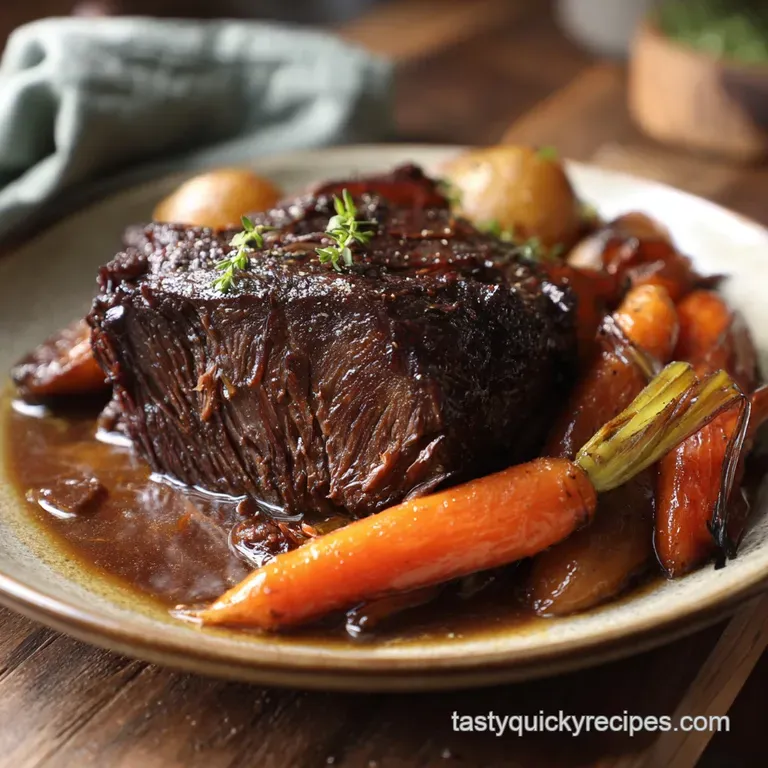
- Prep the meat. Remove the 3.5 lb beef chuck roast from the fridge 30 minutes before cooking and pat it completely dry with paper towels. Note: Dry meat sears; wet meat steams.
- Season heavily. Rub the 2 tsp sea salt and 1 tsp black pepper into all sides of the beef, pressing it in firmly.
- Sear the beef. Heat the 2 tbsp olive oil in a large Dutch oven over medium high heat. Brown the meat for 5 minutes per side until a dark mahogany crust forms.
- Sauté aromatics. Remove the beef to a plate and add the quartered onion and 2 stalks of celery to the pot. Cook for 4 minutes until the edges are softened and brown.
- Add flavor base. Stir in the 4 smashed garlic cloves and 2 tbsp tomato paste. Cook for 2 minutes until the paste smells sweet and looks dark.
- Deglaze the pot. Pour in the 1 cup dry red wine. Use a wooden spoon to scrape up all the brown bits (fond) from the bottom.
- Return and submerge. Place the beef back into the pot. Add the 2 cups beef bone broth, rosemary, thyme, and bay leaves. The liquid should come about halfway up the meat.
- Begin the braise. Cover tightly and place in a 300°F (150°C) oven. Let it cook for 2 hours 30 mins undisturbed.
- Add vegetables. Carefully pull the pot out and tuck the 1 lb halved potatoes and 4 chunks of carrots around the beef.
- Final simmer. Cover and return to the oven for 1 hours until the beef is fork tender and the vegetables are soft.
Correcting Texture and Flavor
Why Your Roast Is Tough
If you pull the meat out and it feels like a rubber ball, it simply hasn't cooked long enough. Many people think they've overcooked it when it's tough, but with chuck roast, it's usually the opposite. The collagen needs time to melt. Put the lid back on and give it another 30 to 45 minutes.
Fixing a Thin Gravy
Sometimes the juices from the vegetables can water down your sauce. If your liquid looks more like soup than gravy, don't panic. You can remove the meat and vegetables, then simmer the liquid on the stovetop for 10 minutes to reduce it.
Alternatively, whisk a teaspoon of cornstarch with a splash of cold water and stir it in to thicken it instantly.
| Problem | Root Cause | Solution |
|---|---|---|
| Meat is dry/stringy | Oven temp was too high | Keep it at 300°F (150°C) and ensure the lid is sealed tightly. |
| Gravy is too salty | Broth reduced too much | Add a splash of water or a little unsalted butter to mellow it. |
| Vegetables are mushy | Added too early | Follow the 2.5 hour rule before adding potatoes and carrots. |
Common Mistakes Checklist
- ✓ Never skip the sear; it is where 80% of your flavor comes from.
- ✓ Don't use a pot that is too large, or the braising liquid will evaporate too quickly.
- ✓ Always let the meat rest for 15 minutes before shredding to keep it juicy.
- ✓ Avoid using "cooking wine" from the grocery store; if you wouldn't drink it, don't cook with it.
- ✓ Check the liquid level halfway through; if it's too low, add another half cup of broth.
Smart Ingredient Substitutions
If you're cooking for a smaller crowd, you can easily cut this recipe in half. Use a 1.5 lb to 2 lb roast and reduce the braising liquid by about 20%. The cooking time will drop to around 2 hours 30 mins total.
Just be sure to use a smaller pot so the meat is still half submerged in the liquid.
Scaling up for a big party is just as easy. If you're doing two 3.5 lb roasts, you don't need to double the salt or herbs just increase them by about 50%. You'll want to sear the roasts one at a time so you don't crowd the pan and drop the temperature, which would result in grey, steamed meat instead of a beautiful crust.
| Cooking Method | Total Time | Texture | Best For |
|---|---|---|---|
| Oven Braise | 3 hours 50 mins | Traditional, concentrated flavor | Sunday dinner |
| Slow Cooker | 8 hours (Low) | Extremely shreddy, hands off | Busy weekdays |
| Pressure Cooker | 1 hours 15 mins | Sliced texture, very fast | Last minute meals |
For another satisfying beef dish that uses a similar slow cooking philosophy, you might enjoy my Chuck Roast in recipe which focuses specifically on the slow cooker method for maximum ease.
Debunking Kitchen Tales
One common myth is that searing "seals in the juices." Science tells us this isn't true; moisture loss happens regardless of the sear. However, we sear for the flavor. The crust provides that deep, savory "umami" that makes the gravy taste professional. Without the sear, your roast will taste boiled and bland.
Another misconception is that you need to completely cover the meat in liquid. If you submerge the roast, you are boiling it, not braising it. Braising uses both the liquid and the steam trapped under the lid to cook the meat.
Keeping the top half of the meat exposed to the steam allows the surface to stay intense and prevents the flavor from becoming diluted.
Safe Storage Guidelines
Storage: This pot roast recipe is actually a meal prep dream because it tastes even better the next day. Keep it in an airtight container in the fridge for up to 4 days.
The fat will solidify on top, which actually helps preserve the meat just scrape it off before reheating if you prefer a lighter sauce.
Freezing: You can freeze the cooked beef and gravy for up to 3 months. I recommend freezing the meat in the liquid to prevent freezer burn. The potatoes don't always freeze well (they can get a bit grainy), so you might want to eat those fresh and just freeze the beef and carrots.
Zero Waste: Don't throw away the leftovers! Leftover pot roast makes the best French Dip sandwiches or can be shredded and tossed into a quick beef barley soup. If you have extra carrots and onions, mash them into the gravy for an extra thick vegetable rich sauce.
Plating Your Sunday Meal
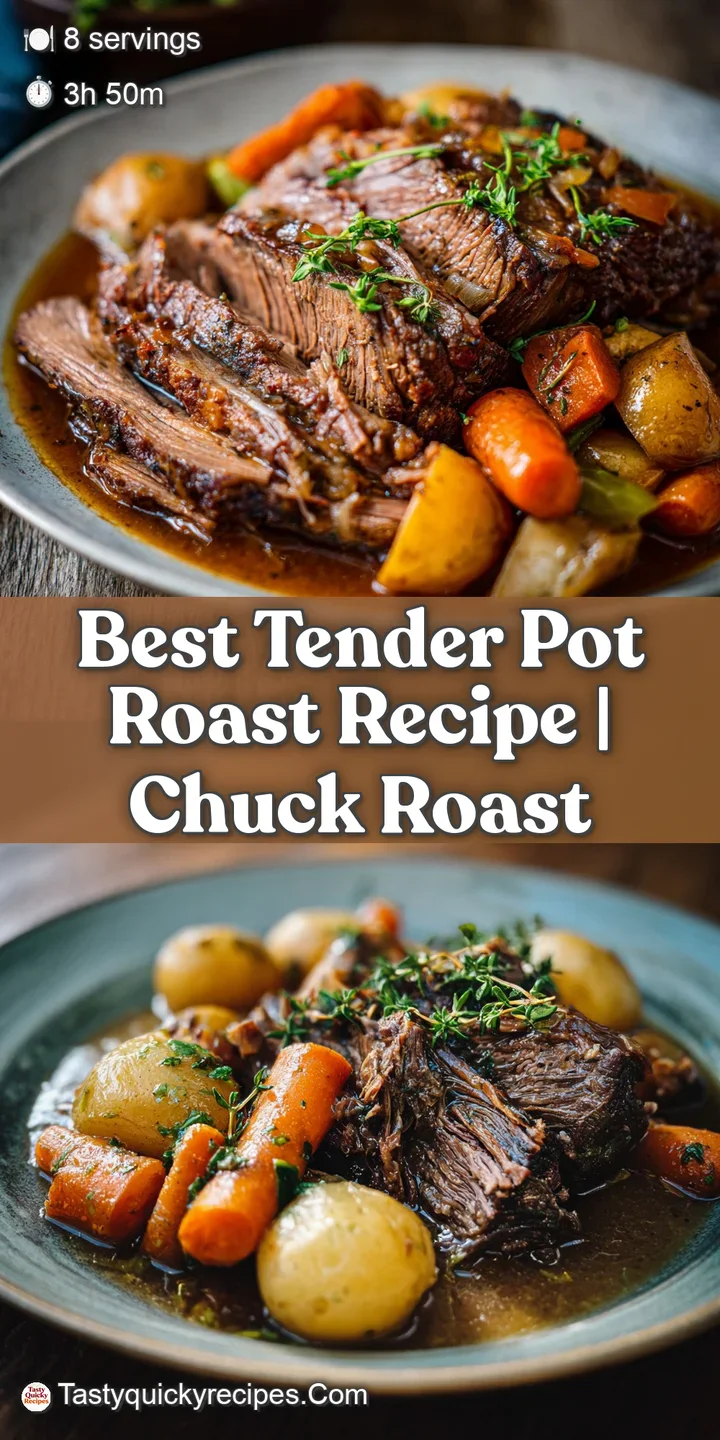
When it comes to serving, I love bringing the whole Dutch oven to the table. There is something so satisfying about lifting the lid and letting that cloud of steam hit everyone's faces. It's a communal experience that feels fueling and hearty.
I usually serve this in wide, shallow bowls so the gravy has plenty of room to pool around the meat.
If you want to take it a step further, serve the roast over a bed of creamy polenta or thick egg noodles. The noodles soak up the red wine sauce like a sponge. A side of crusty sourdough bread is also mandatory for wiping the bowl clean. It’s the kind of meal that leaves everyone feeling energized and satisfied, which is exactly what a good midday roast should do. For a different take on a comforting classic, you could also try the San Giorgio Lasagna Recipe for those Sunday afternoons when you're craving pasta instead of potatoes.
Recipe FAQs
What is the secret to a good pot roast?
Searing the meat first is crucial. The initial high heat sear creates the Maillard reaction, building hundreds of flavor compounds that season the entire braising liquid.
What is the best liquid to cook pot roast in?
A mixture of beef bone broth and dry red wine is superior. The broth provides gelatin for body, while the acidity in the wine tenderizes the meat fibers.
How many hours does it take to do a pot roast?
Plan for approximately 3.5 to 4 hours total cooking time. This includes 30 minutes of active searing/sautéing, followed by 3 to 3.5 hours of low and slow oven braising.
What cut of meat is pot roast usually?
Chuck roast is the ideal cut for pot roast. It is a hardworking muscle full of connective tissue (collagen), which dissolves into luscious gelatin during the long, slow cooking process.
How do I ensure my pot roast vegetables don't turn to mush?
Add heartier vegetables like carrots and potatoes only during the last hour of cooking. This staggered approach allows the beef to cook thoroughly while the vegetables finish without overcooking.
Is it true that I must cover the pot tightly when braising?
Yes, covering the pot tightly is essential for proper braising. The seal traps steam, which cooks the top half of the roast and prevents the meat from drying out during the long oven time.
What side dish pairs well with a rich, savory pot roast?
Creamy mashed potatoes or buttery noodles soak up the rich gravy perfectly. If you enjoyed learning how to achieve deep flavor through searing here, apply the same technique to our Beef Steak Side Dish recipe for crispier potatoes.
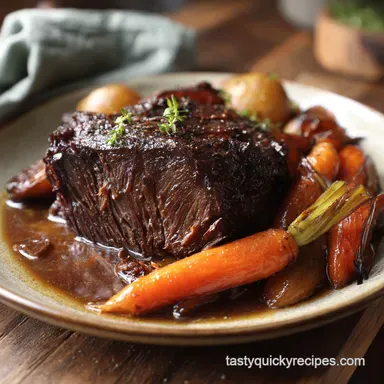
Best Tender Pot Roast Recipe
Ingredients:
Instructions:
Nutrition Facts:
| Calories | 632 kcal |
|---|---|
| Protein | 41 g |
| Fat | 34 g |
| Carbs | 17 g |
| Fiber | 3 g |
| Sugar | 4 g |
| Sodium | 645 mg |
