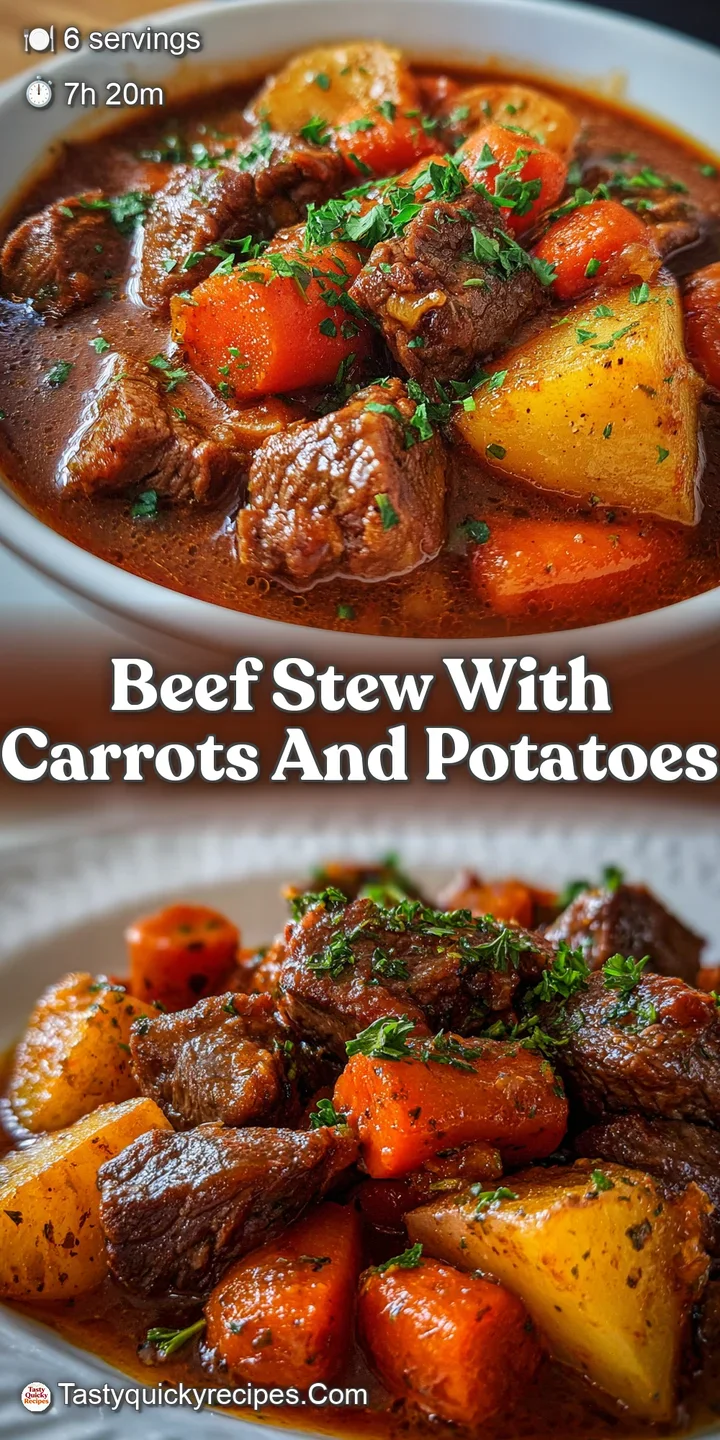
Beef Stew with Carrots and Potatoes
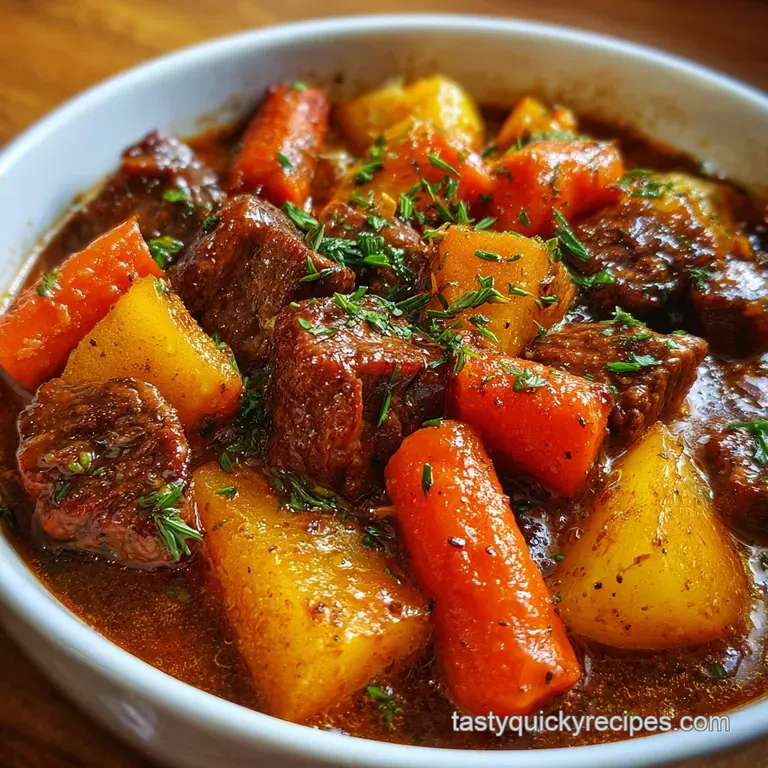
- Time: Active 20 minutes, Passive 7 hours, Total 7 hours 20 minutes
- Flavor/Texture Hook: Silky, melt in-your mouth beef with a velvety, wine infused gravy
- Perfect for: Stress free Sunday family dinners or meal prep for busy weeks
- The Physics of the Slow Simmer
- Slow Cooker Specs for the Busy Home Cook
- Selecting Your Elements for a Rich Braise
- Gathering the Best Essentials for Success
- The Essential Tools for a Thick Gravy
- Transform Raw Ingredients into a Velvety Braise
- Avoiding the Pitfalls of Greasy or Bland Stew
- Flexible Ingredient Swaps for Every Busy Kitchen
- Regulating Vegetable Integrity
- Preserving the Richness for Next Day Lunch
- Side Dishes that Love a Savory Sauce
- Recipe FAQs
- 📝 Recipe Card
The Physics of the Slow Simmer
The secret to this stew lies in the long term breakdown of connective tissue. Collagen Conversion: By maintaining a steady low heat, the tough collagen fibers in the chuck roast physically transform into silky gelatin, which provides the signature body and richness to the sauce.
Amylose Release: The Yukon Gold potatoes release just enough starch during the seven hour cook to act as a natural thickener, binding the beef bone broth and red wine into a cohesive, unctuous liquid.
Maximizing Collagen Conversion
The chuck roast is a hard working muscle, which means it is packed with connective tissue that can be tough if cooked too fast. When we keep the temperature low, we aren't just cooking the meat, we are melting the "glue" that holds the muscle fibers together. If you've ever had a Beef Tenderloin Recipe, you know that cut is tender because it does very little work, but the chuck roast actually has more flavor potential because of all that collagen. Once it melts, it coats every fiber of the meat, making it feel moist even though it has been cooked for hours.
Harnessing the Maillard Reaction
When the beef cubes hit the hot avocado oil, a chemical reaction occurs between the amino acids and reducing sugars. This creates hundreds of different flavor compounds that simply do not exist in raw or boiled meat.
By searing the beef first, we are depositing "flavor gold" onto the bottom of the pan, which we later scrape up with red wine. This deglazing step ensures that every drop of that caramelized goodness ends up in your slow cooker rather than in the dishwater.
Slow Cooker Specs for the Busy Home Cook
Before you start chopping, it helps to know exactly what you are aiming for. This isn't a "set it and forget it" recipe where you hope for the best; it’s a calculated process that ensures the carrots are soft but not mushy and the beef is tender but not disintegrated.
| Beef Cube Size | Cook Setting | Total Time | Visual Doneness Cue |
|---|---|---|---|
| 1.5 inches | Low | 7 hours | Meat flakes with a dull fork |
| 1.5 inches | High | 4 hours | Carrots are easily pierced |
| 2.0 inches | Low | 8 hours | Gravy has darkened to mahogany |
The timing for this beef stew crock pot meal with carrots and potatoes is forgiving, but I find that the seven hour mark on the "low" setting is the sweet spot. It gives the carrots enough time to sweeten and the onions enough time to practically melt into the sauce.
Selecting Your Elements for a Rich Braise
The quality of your ingredients is the silent partner in this recipe. Since we are using a slow cooker, the flavors are going to concentrate over several hours, so starting with a good foundation is non negotiable.
I always opt for Yukon Gold potatoes because they hold their shape better than Russets but have a creamier interior than red potatoes.
Ingredient Deep Dive
| Ingredient | Science Role | Pro Secret |
|---|---|---|
| Beef Chuck Roast | Primary Collagen Source | Choose a piece with heavy white marbling for maximum tenderness. |
| Dry Red Wine | Acidic Denaturant | The acid helps break down tough proteins while adding a complex fruity depth. |
| Tomato Paste | Umami Amplifier | Sautéing the paste for 1 minute before adding liquid removes the "tinny" taste. |
| Yukon Gold Potatoes | Natural Thickener | Leave the skins on for extra earthy flavor and a nutritional boost. |
Using low sodium beef bone broth is also a smart move. It allows you to control the salt levels perfectly. If you use a standard full sodium broth, the salt can become overwhelming as the liquid reduces during the long cook time.
Gathering the Best Essentials for Success
Here is what you will need to get this stew onto the table. I've included the exact measurements from my kitchen trials to ensure your gravy is thick and your beef is perfectly seasoned.
- 2 lbs Beef Chuck Roast: Cut into 1.5 inch cubes. Why this? It has the perfect fat to meat ratio for long braising. (Swap: Beef shanks)
- 3 tbsp All purpose flour: For coating the beef. Why this? It creates the initial thickening agent for the gravy. (Swap: Cornstarch)
- 1 tsp Sea salt: To draw out moisture and season deep. Why this? Fine grains dissolve evenly into the meat fibers. (Swap: Kosher salt)
- 1/2 tsp Freshly cracked black pepper: For a subtle heat. Why this? Freshly ground oils are more aromatic than pre ground. (Swap: White pepper)
- 2 tbsp Avocado oil: For over high heat searing. Why this? It has a high smoke point, so it won't burn. (Swap: Ghee)
- 1 large Yellow onion: Thick diced. Why this? Yellow onions have a high sugar content that sweetens as it cooks. (Swap: White onion)
- 3 cloves Garlic: Minced. Why this? Provides a sharp aromatic base that mellows over time. (Swap: 1 tsp Garlic powder)
- 1.5 lbs Yukon Gold potatoes: Chopped into 1 inch chunks. Why this? They provide a buttery texture without falling apart. (Swap: Red potatoes)
- 4 large Carrots: Peeled and cut into 1/2 inch rounds. Why this? Larger rounds prevent them from turning to mush. (Swap: Parsnips)
- 2 stalks Celery: Sliced. Why this? Adds a necessary savory, salty undertone to the broth. (Swap: Fennel)
- 3 cups Low sodium beef bone broth: The liquid base. Why this? Bone broth adds more body and gelatin than standard stock. (Swap: Vegetable broth)
- 1/2 cup Dry red wine: Use a Cabernet or Merlot. Why this? Adds acidity to balance the heavy fats. (Swap: Extra broth + 1 tbsp balsamic vinegar)
- 2 tbsp Worcestershire sauce: For fermented depth. Why this? It’s a "secret" shortcut to deep umami flavor. (Swap: Soy sauce)
- 1 tbsp Tomato paste: For color and body. Why this? It darkens the sauce and adds richness. (Swap: Tomato sauce, reduce broth by 1/4 cup)
- 2 sprigs fresh rosemary & 3 sprigs fresh thyme: The aromatics. Why this? Fresh herbs have volatile oils that dried herbs lack. (Swap: 1 tsp dried herbs each)
- 1 dried bay leaf: For a subtle herbal finish. Why this? It bridges the gap between the meat and vegetable flavors. (Swap: None, just omit)
The Essential Tools for a Thick Gravy
You don't need a professional kitchen to make this, but a few specific tools will make your life much easier. I always use a large cast iron skillet (like a Lodge) for the searing phase because it holds heat so much better than stainless steel.
- Slow Cooker: A 6 quart model is the perfect size to avoid overcrowding.
- Large Skillet: For searing the meat and sautéing aromatics before they hit the crock pot.
- Sharp Chef’s Knife: Necessary for getting those carrots and potatoes into uniform sizes.
- Wooden Spoon: Ideal for deglazing the pan and scraping up those browned bits.
- Peeler: For the carrots, though you can scrub them well if you prefer the rustic look.
Transform Raw Ingredients into a Velvety Braise
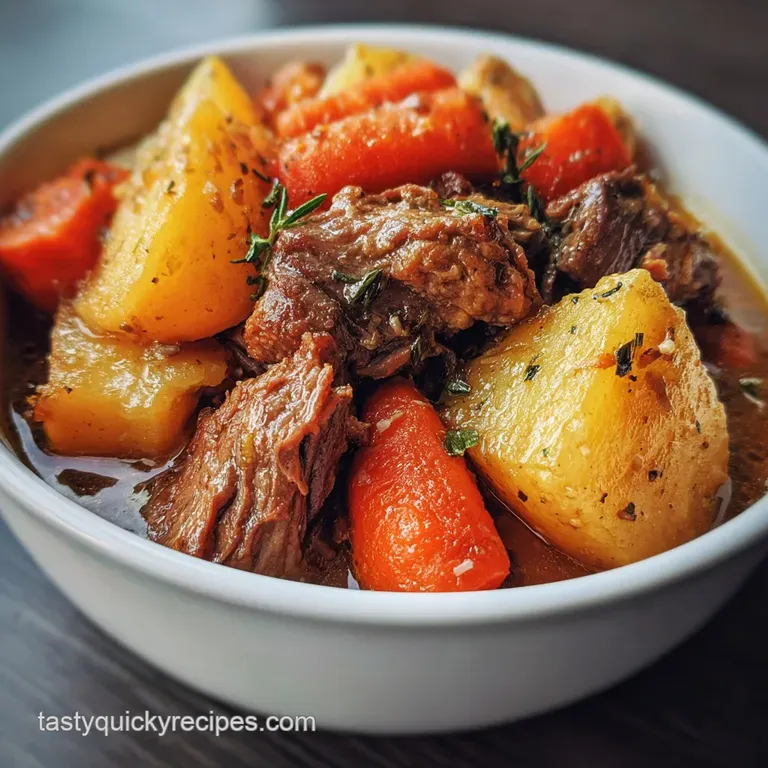
Follow these steps closely, especially the searing and deglazing. This is where the soul of the dish is created.
- Toss the beef. Place your 2 lbs of cubed chuck roast in a large bowl. Sprinkle with 3 tbsp flour, 1 tsp sea salt, and 1/2 tsp black pepper, tossing until every side of the meat is dusty and coated. Note: This flour will eventually thicken your entire stew.
- Sear in batches. Heat 2 tbsp avocado oil in a large skillet over medium high heat. Add half the beef and cook until a dark brown crust forms on at least two sides. Remove and repeat with the second batch.
- Soften the aromatics. In the same skillet, add the diced yellow onion. Cook for 3-4 minutes until the edges turn golden and soft. Add the minced garlic and cook for 30 seconds until fragrant.
- Blooming the paste. Push the onions to the side and add 1 tbsp tomato paste to the center of the pan. Stir it for 1 minute until it turns a deep rust color.
- Deglaze the pan. Pour in the 1/2 cup of dry red wine. Use your wooden spoon to scrape the bottom of the pan vigorously until all the browned bits have dissolved into the liquid.
- Layer the slow cooker. Place the 1.5 lbs of chopped potatoes, 4 sliced carrots, and 2 stalks of celery into the bottom of the crock pot.
- Add the proteins and liquids. Place the seared beef and the onion mixture on top of the vegetables. Pour in 3 cups of beef bone broth and 2 tbsp Worcestershire sauce.
- Tuck in the herbs. Place the 2 sprigs of rosemary, 3 sprigs of thyme, and the bay leaf on top. Push them slightly under the liquid so they can infuse during the cook.
- Slow cook. Cover and cook on "Low" for 7 hours or "High" for 4 hours until the beef is tender enough to be cut with a spoon.
- Final seasoning. Remove the herb stems and bay leaf. Stir the stew gently until the sauce looks glossy and thick. Taste and add a pinch more salt if needed before serving.
Avoiding the Pitfalls of Greasy or Bland Stew
Even the most seasoned home cooks can run into trouble with a slow cooked meal with carrots and potatoes. The most common issue is a "flat" flavor or a sauce that feels more like soup than stew.
Why Your Stew Lacks Depth
If your stew tastes a bit boring, it's usually because it lacks acidity or salt. Slow cooking can dull the perception of salt over time. I usually add a tiny splash of red wine vinegar or balsamic at the very end to "wake up" the flavors. It’s like turning on a light in a dark room.
Fixing Thin Gravy
If the stew is too watery at the 7 hour mark, don't panic. You can take a ladle of the liquid and whisk it with 1 tbsp of cornstarch in a small bowl to create a slurry. Stir that back into the crock pot and turn it to "High" for 15 minutes. It will thicken into a silky glaze almost instantly.
| Problem | Root Cause | Solution |
|---|---|---|
| Tough Beef | Under cooked | Cook for an additional 45 minutes on Low; the collagen hasn't melted yet. |
| Mushy Carrots | Cut too small | Cut carrots into 1/2 inch rounds next time to withstand the long heat. |
| Greasy Sauce | Excess fat in chuck | Skim the top with a wide spoon or use a fat separator before serving. |
Chef's Tip: If you have the time, let the stew sit for 20 minutes with the lid off after it finishes cooking. The sauce will naturally thicken further as it cools slightly, and the flavors will settle.
Common Mistakes Checklist: ✓ Never skip the searing step - it's the only way to get deep color and flavor. ✓ Avoid using "stew meat" packs from the store; they are often scraps from different cuts that cook at different rates. Buy a whole chuck roast and cube it yourself.
✓ Don't peek! Every time you lift the lid, you lose about 15-20 minutes of heat and moisture. ✓ Keep the potato chunks uniform - roughly 1 inch - so they all finish at the same time.
✓ Use fresh herbs if possible; the woody stems of rosemary and thyme hold up much better to long heat than dried flakes.
Flexible Ingredient Swaps for Every Busy Kitchen
We all have those days where we realize we are missing one key thing. This meal with carrots and potatoes is luckily very adaptable.
If you find yourself out of chuck roast, you could actually pivot to a Ground Beef Recipe style approach, though you'd have to adjust the cook time significantly. For this specific slow cooked version, sticking to a whole muscle cut is best.
| Original Ingredient | Substitute | Why It Works |
|---|---|---|
| Dry Red Wine | Beef Broth + Balsamic | Provides the necessary acidity without the alcohol. |
| Yukon Gold Potatoes | Red Potatoes | They have a similar waxy texture that holds up to long simmering. |
| Avocado Oil | Butter or Ghee | Adds a richer flavor, though watch for burning if the pan is too hot. |
Scaling for the Whole Family
If you are cooking for a crowd and need to double this recipe, keep a few things in mind. UP (2x): You will need a 7 quart or 8 quart slow cooker. Do not double the salt immediately; start with 1.5x and adjust at the end.
Liquid doesn't evaporate in a slow cooker, so you only need to increase the broth by about 50% (4.5 cups total) rather than doubling it to 6 cups.
DOWN (1/2): For a smaller 3 serving batch, you can use a 3 quart slow cooker. Reduce the cook time by about 20% since the smaller volume will heat through faster.
Regulating Vegetable Integrity
One myth people often believe is that you have to put the vegetables on top so they don't get mushy. Actually, in a slow cooker, the heat comes from the sides and the bottom. Placing the dense carrots and potatoes at the bottom ensures they are submerged in the hot liquid, allowing them to soften properly while the beef gently steams on top of them.
This "layering" technique is the key to perfectly cooked veggies every time.
Another common misconception is that you need to add flour at the end to thicken the sauce. While a slurry works, the most flavorful way is to coat the meat at the beginning. This "browned flour" (essentially a roux made on the surface of the meat) provides a much toastier, more complex flavor than raw flour or cornstarch added at the end.
Preserving the Richness for Next Day Lunch
This is one of those rare dishes that actually tastes better the next day. As it sits in the fridge, the starches from the potatoes and the gelatin from the beef continue to mingle, creating an even thicker, more cohesive sauce.
- Fridge: Store in an airtight container for up to 4 days.
- Freezer: This stew freezes beautifully for up to 3 months. Just leave about an inch of headspace in your container, as the liquid will expand when frozen.
- Reheating: I prefer reheating this on the stove over medium low heat. If the sauce has thickened too much in the fridge, just add a splash of water or broth to loosen it up.
- Zero Waste: Don't throw out those celery leaves or onion skins! I keep a "stock bag" in my freezer where I toss all my vegetable scraps. Once the bag is full, I simmer it with water to make my own homemade broth for the next batch of stew.
Side Dishes that Love a Savory Sauce
While this is a complete meal on its own, I usually serve it with something to soak up that extra gravy. A thick slice of crusty sourdough bread is my go to, but if I'm feeling like I need more variety, I'll sometimes serve it alongside a quick Beef Lo Mein recipe for a fusion style dinner week where we use up different beef cuts.
- Decision Shortcut
- If you want X, do Y
- If you want a thicker sauce
- Mash two or three of the cooked potato chunks directly into the liquid at the end.
- If you want more sweetness
- Add a handful of frozen peas in the last 10 minutes of cooking.
- If you want a deeper color
- Add 1/2 tsp of instant espresso powder to the broth; it darkens the gravy without making it taste like coffee.
Trust me on this: the patience required for this beef stew crock pot meal with carrots and potatoes is exactly what makes it so special. When you finally pull that lid off and the steam hits your face, and you see the beef just falling apart at the slightest touch, you'll know exactly why we didn't rush it.
Let's crack on and get that slow cooker started!
Recipe FAQs
Can I use cheaper cuts of beef for stew?
No, stick with chuck roast for best results. Cheaper cuts lack the necessary connective tissue (collagen) that breaks down into tender, rich gelatin during slow cooking, leading to a tougher, less flavorful stew. If you enjoyed mastering the technique of breaking down tough cuts here, see how the same principle applies to creating deeply flavorful Beef Short Ribs Slow Cooked in Red Wine.
How do I thicken the stew if it's too watery?
Whisk a slurry of cornstarch and liquid. Ladle out about 1/2 cup of the stew liquid, whisk in 1 tablespoon of cornstarch until smooth, then stir it back into the pot and cook on high for about 15 minutes until thickened.
Why is my beef stew still tough?
It likely needs more cooking time. Tough beef in stew is usually a sign that the connective tissues haven't had enough time to break down into gelatin. Continue cooking on low heat for another 30-60 minutes until the meat is fork tender.
Can I make this stew ahead of time?
Yes, it's even better made ahead. The flavors meld and deepen overnight, and the sauce continues to thicken as it cools, making it a perfect make-ahead meal. Store in an airtight container in the refrigerator for up to 4 days.
What's the secret to rich, savory gravy?
Sear the beef well and deglaze the pan thoroughly. The browning on the meat and the caramelized bits left in the pan after searing are crucial flavor foundations. If you enjoyed harnessing the Maillard reaction here, apply that same foundational browning technique to our Beef Gravy Recipe in 15 Minutes | Classic Roast Beef Gravy.
Do I need to peel the potatoes for beef stew?
No, leaving the skins on is recommended. The skins add extra fiber and nutrients, and for Yukon Golds, they contribute a lovely texture and subtle earthiness without becoming mushy during the long cook. Just make sure to scrub them well.
How can I add more vegetables to the stew?
Add heartier root vegetables or peas. Consider parsnips, turnips, or even rutabaga with the carrots and potatoes; add them at the beginning of the cook time. For softer vegetables like peas, stir them in during the last 15-20 minutes of cooking.
Beef Stew Carrots Potatoes
Ingredients:
Instructions:
Nutrition Facts:
| Calories | 578 kcal |
|---|---|
| Protein | 34 g |
| Fat | 31 g |
| Carbs | 29 g |
| Fiber | 4.5 g |
| Sugar | 5.2 g |
| Sodium | 540 mg |
